Bordeaux to Longeveau: golf, a manor and nearby Aubeterre
A 9-hole golf course and a cognac manor house converted into a vacation village: Longeveau combines a golf course, stone cottages, and the Dronne Valley, just 1 hour and 40 minutes from Bordeaux.
Longeveau at a glance
Longeveau is a vacation resort in southern Charente featuring a 9-hole golf course, stone cottages, and the nearby town of Aubeterre-sur-Dronne. From Bordeaux, the drive is 105 km and takes about 1 hour and 40 minutes. A private driver transfer starts at €188 one way, with a fixed price confirmed before booking.
Here are the key details you should know before you go. The distance, duration, and price are based on the figures displayed by the website’s booking engine. Information about the golf course and the resort comes from their official sources; golf course hours and rates are subject to change and should be confirmed before your visit.
| Landmark | Details |
|---|---|
| Nature | Locality / hamlet (not a municipality) · mailing address 16390 Pillac |
| The website | Aubeterre Golf Course – Manoir de Longeveau: 9 holes (par 32) + vacation rental complex |
| Location | South Charente · Address: 16390 Pillac · About 6 km north of Aubeterre-sur-Dronne |
| Things to See in the Area | Aubeterre and its monolithic church, the Dronne Valley, and the Poltrot Recreation Center |
| Distance from Bordeaux | 105 km · about 1 hour and 40 minutes by car (via the A10, then the N10) |
Where is Longeveau located?
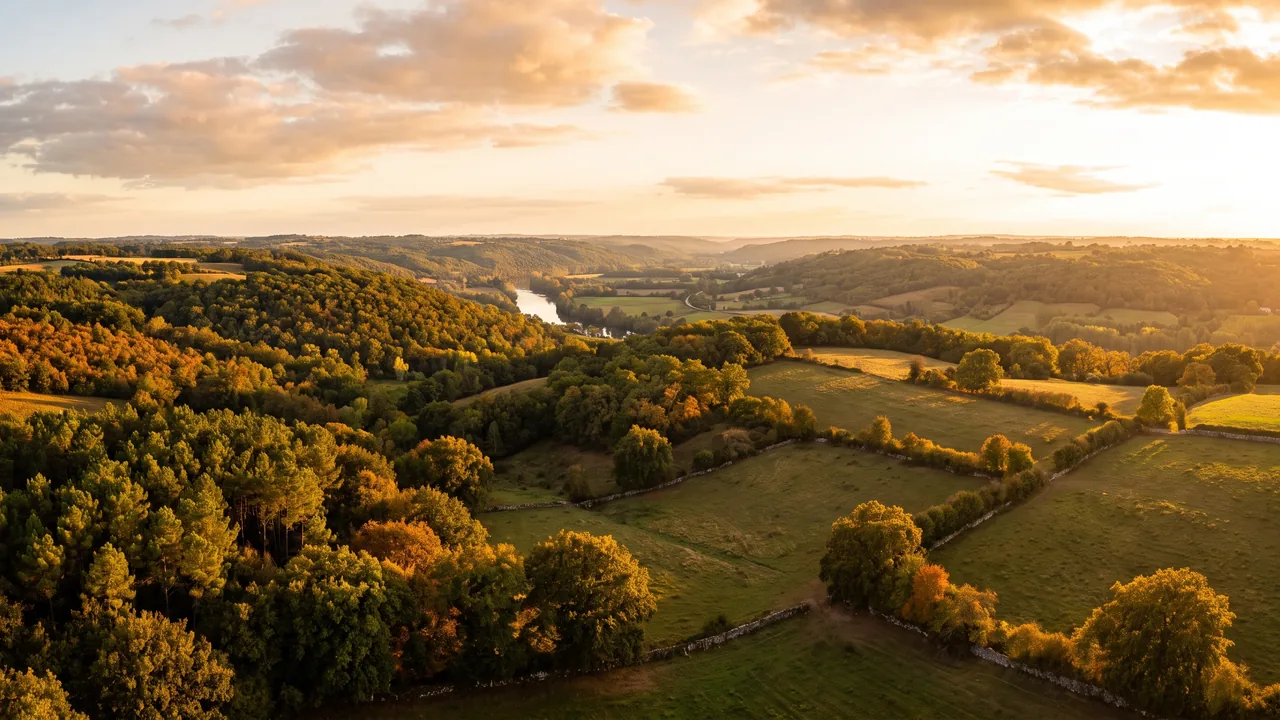
Longeveau is located in southern Charente, in the Aubeterre region, near the border with the Dordogne. The estate is 105 km from Bordeaux and six kilometers from Aubeterre-sur-Dronne. The Golf d'Aubeterre – Manoir de Longeveau has the mailing address 16390 Pillac (official source). Longeveau is a hamlet known for the Manoir de Longeveau estate and its golf course.
A hamlet on the border between two municipalities
The Aubeterre Golf Course – Manoir de Longeveau has a mailing address of 16390 Pillac (official source). The neighboring town of Nabinaud also has a hamlet spelled “Longevau,” which explains some variations on maps.
The Aubeterre region, between Charente and Périgord
Surrounding Longeveau lies a gentle, wooded landscape—that of southern Charente, which gradually gives way to the Périgord: hillsides covered with Cognac vineyards, oak and pine forests, and lush valleys. The Dronne, a river over 200 kilometers long that originates in Limousin, flows just a stone’s throw away on its way to Aubeterre and, further on, to the Isle and the Dordogne. This is a region of boundaries—administrative, geographic, and linguistic—where the Saintonge, Angoumois, and Périgord converge. It was precisely this sense of being in a quiet corner of the world that captivated the estate’s British founders in the 1990s.
Aubeterre Golf Course – Manoir de Longeveau
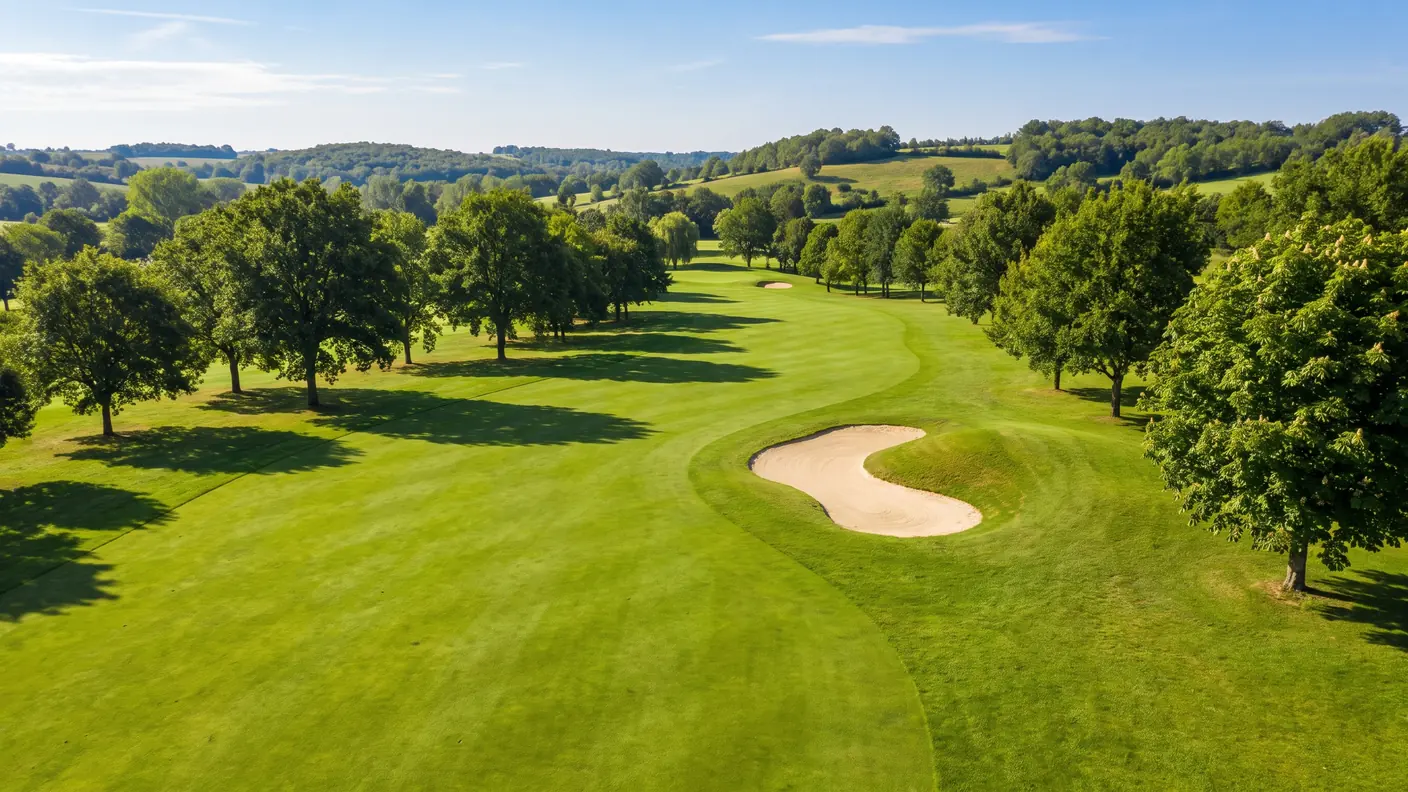
The Aubeterre Golf Course is a 9-hole course located on the Longeveau estate. The official website describes it as suitable for players of all skill levels and approved by the French Golf Federation (official source). Players can play the course twice to complete an 18-hole round.
Nine holes, par 32: small but tricky
The Longeveau project began in 1992 with the Peacock and Gammon families (official source). The course features nine holes of varying lengths, as well as bunkers and other obstacles. A driving range, equipment rentals, and reservations round out the offerings. The golf course’s official website provides a map of the course and up-to-date playing conditions.
An "Aubeterre" golf course that isn't in Aubeterre
The course’s official name is “Golf d’Aubeterre”—sometimes “Golf d’Aubeterre – Manoir de Longeveau.” This is a deliberate marketing choice: the resort has taken its name from the neighboring village, one of the Most Beautiful Villages of France, which is far better known than the obscure hamlet of Longeveau. But let’s be clear: the golf course is not located in the town of Aubeterre; it is six kilometers away. “Golf de Longeveau” is the local name, and “Golf d’Aubeterre” is the official name. The Golf d’Aubeterre – Manoir de Longeveau has a mailing address of 16390 Pillac. The neighboring municipality of Nabinaud also has a hamlet spelled “Longevau,” which explains some variations on maps.
Book and Play: How-To Guide
The course is operated by the Aubeterre Golf Association, and reservations are required. It’s best to call or write before arriving, since this is not a large club with tee times every eight minutes, but an intimate course where play is often limited to regulars and guests staying at the lodges. The 9-hole course lends itself to a two-round format for those looking for the equivalent of an 18-hole course. Its modest length and inviting greens make it suitable for beginners and children, while still offering enough challenge, with its bunkers and hazards, to keep seasoned players engaged. A driving range and equipment rentals are available for those travelling light. All in all, it’s more of a holiday course than a competitive one: people come for the enjoyment of the game and the peaceful setting, not to set a federation record.
The manor house, a converted cognac estate
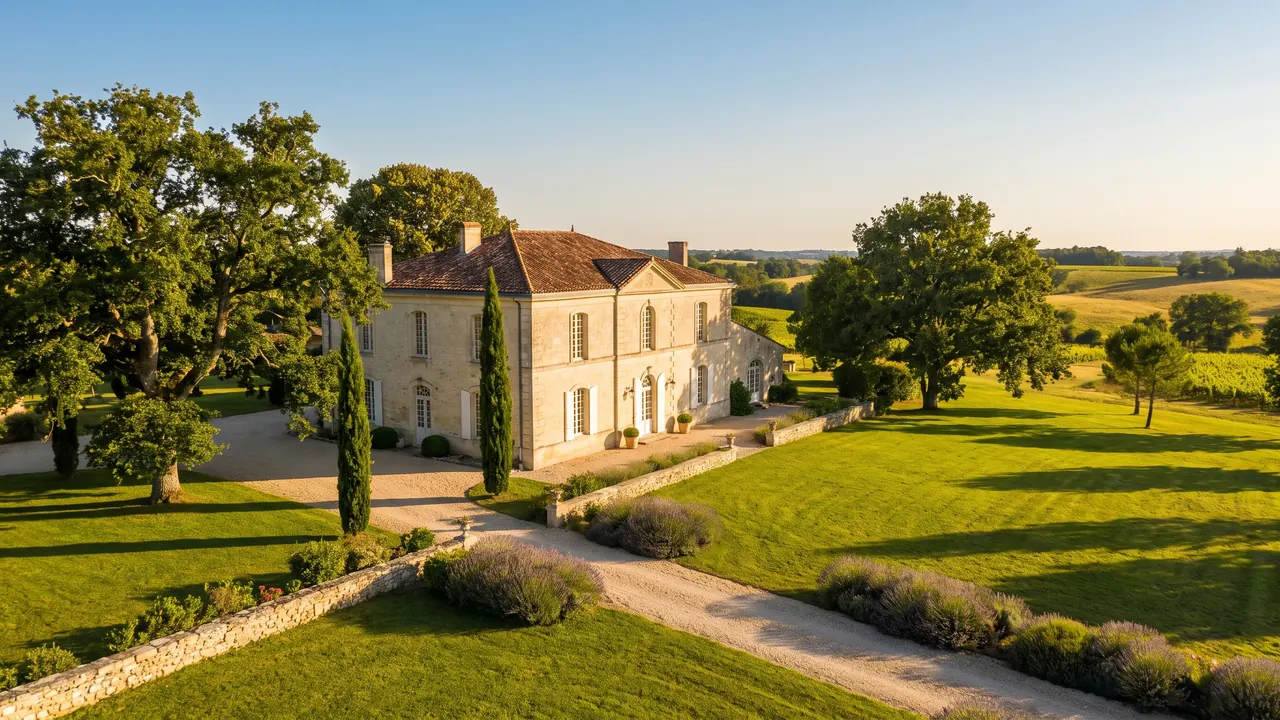
Golf is just one part of Longeveau: surrounding the course is a full-fledged vacation resort—a former Cognac wine-producing château, said to date from the 16th century, restored and surrounded by 34 to 35 stone cottages, complete with swimming pools, tennis courts, a bar, and a restaurant. It’s a place with two sides: a golf course by day, a year-round residential estate by night, with a strong British identity. Here’s what it has to offer.
Thirty-four to thirty-five stone cottages surrounding a manor house
The Longeveau Manor is described as an ancient winery, a restored cognac château; it is generally believed to be of a respectable age (16th century), although the exact date and style of the building are not well documented—so we remain cautious on this point. What is certain is its current use: the estate offers 34 to 35 stone cottages and villas, featuring oak beams and fireplaces, scattered around the manor and the grounds, with heated pools, tennis, bar, and restaurant. People come here with their families, but also for weddings and seminars: The setting—light-colored stone, lawns, old trees, and countryside stretching as far as the eye can see—is perfect for this. In its own way, it’s a small, discreet, and elegant rural resort.
A British enclave in Charente
There’s a touch of England about Longeveau. The estate was purchased in 1992 by two British couples, the Peacocks and the Gammons, who built the golf course and the vacation village there; and has been run by Olivia and Richard Peacock since 2007. This story is no mere anecdote: for decades, the Charente-Dordogne border region has been one of the most sought-after areas of the French countryside among English-speaking clients, who have purchased farms and manor houses there. Longeveau is the perfect example—a former cognac cellar transformed into a golf course and cottages, where you’re more likely to hear English than the Charente dialect. A slice of “British countryside” nestled in the hills of the Cognac region.
Why the British Chose This Country
The case of Longeveau is not an isolated one: since the 1980s, the entire South Charente region and neighboring Périgord have seen a large British community settle there, drawn by affordable stone houses, a mild climate, the proximity of the Bergerac and Bordeaux airports, and a certain way of life—wine, markets, unspoiled countryside—that no longer exists across the Channel. Many have opened vacation rentals, bed-and-breakfasts, or small recreational estates, much like Longeveau. Golf, the quintessential British sport, found its natural home here: creating a course amid former cognac vineyards meant offering this clientele the setting for their ideal vacation. For French visitors, the experience feels like a change of scenery—a corner of the Charente where tea time goes hand in hand with pineau tastings, and where the signs in the clubhouse are often in English.
A Turnkey Getaway in the Countryside
What makes Longeveau so special is its “everything on-site” concept: you can settle in for a week and never have to leave. The stone cottages, scattered around the golf course and the manor house, offer the privacy of a country home with the amenities of an estate—heated pools for the kids, a tennis court, a bar and restaurant so you don’t have to cook every night, and the golf course just down the road. It’s a very British model of a country vacation: a country retreat where you alternate between golf, relaxing by the water, and excursions to the surrounding villages. For weddings and seminars, the setting—light-colored stone, lawns, tall trees, and silence—offers a sought-after backdrop, far from the hustle and bustle of the cities, halfway between Angoulême and Bergerac.
What is there to do in Longeveau and the surrounding area?
In Longeveau itself, you can play golf, stay at the estate, and dine at the restaurant; but the real treasures lie in the immediate surroundings: the underground church of Aubeterre, six kilometers away; the Poltrot recreation center and its giant maze on the banks of the Dronne; the river itself, perfect for swimming and canoeing; and the Cognac vineyards all around. Here’s the actual itinerary, with most destinations less than a quarter of an hour’s drive away.
- Golf — 9-hole course (par 32) at the Aubeterre Golf Club, driving range, and equipment rental, by reservation (Aubeterre Golf Association)
- The estate—stone cottages, swimming pools, tennis courts, bar and restaurant; a venue for weddings and seminars
- The Monolithic Church of Aubeterre (~6 km), the tallest monolithic church in Europe, with a nave ~20 m high carved into the cliff face and designated a historic monument
- The Poltrot Recreation Center (Nabinaud)—7 hectares on the banks of the Dronne River: one of France’s largest permanent plant mazes, a tree-top adventure course, a mill, and adventure playgrounds
- The Dronne River: swimming, canoeing, and fishing on one of the most beautiful rivers in southwestern France, within a Natura 2000 area
- The Cognac Route—the Bons Bois region all around, and the town of Cognac just an hour's drive away
Poltrot, a giant maze by the water
Just a few minutes from the golf course, in the village of Nabinaud, the Poltrot Recreation Centre covers seven hectares on the banks of the Dronne River, right in the heart of a Natura 2000 site. It’s the area’s leading family attraction: one of the largest permanent plant mazes in France, a tree-top adventure course among century-old oak trees, a historic mill, and life-size adventure games (Explor Games). The site welcomed some 38,000 visitors in 2022, enough to fill half a day between rounds of golf, especially with children. The name “Poltrot” is far from insignificant: as we will see, it refers to one of the darker figures in French history.
| Activity | Where / When | Good to Know |
|---|---|---|
| 9-hole golf course | Longeveau Estate | by 32, ~2,011 m, reservations required |
| Vacation Rentals & Restaurant | Longeveau Manor | 34–35 vacation rentals, swimming pools, tennis courts, weddings/seminars |
| Monolithic Church | Aubeterre-sur-Dronne (~6 km) | Listed as a historic monument, nave ~20 m, the tallest in Europe |
| Poltrot Recreation Center | Nabinaud, on the banks of the Dronne | maze, tree-top adventure course, ~38,000 visitors (2022) |
| Canoeing & Swimming | La Dronne | Natura 2000 River, Aubeterre Sites |
Aubeterre-sur-Dronne and its underground church
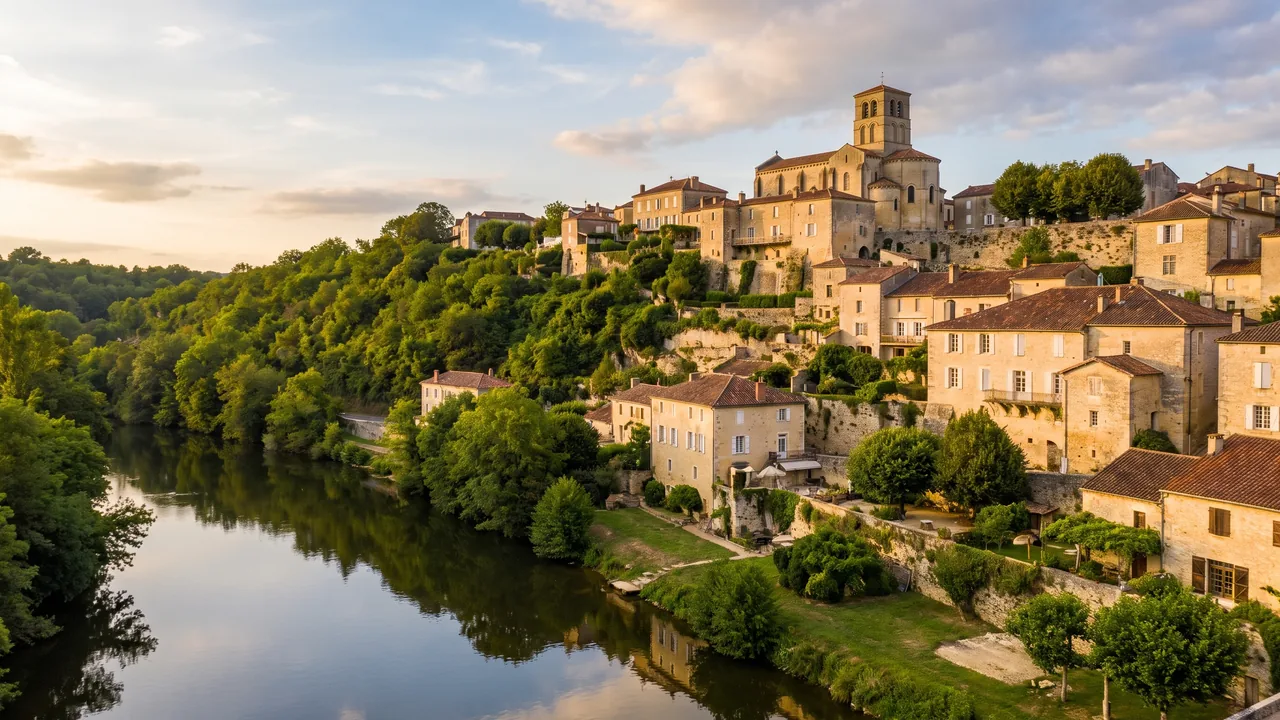
Longeveau’s nearest neighbor is Aubeterre-sur-Dronne, six kilometers away: a white-stone village perched on a cliffside, listed among the Most Beautiful Villages of France, and above all home to a stunning monument—an entire church carved out of the rock, the tallest monolithic church in Europe. It alone is worth the detour. Here’s why.
A Cathedral Beneath the Rock
The Monolithic Church of Saint John in Aubeterre was carved into the limestone cliff as early as the 7th century, then significantly enlarged in the 12th century by Benedictine monks. The result defies imagination: a nave approximately 20 metres high, the equivalent of a six- or seven-storey building, carved entirely out of the rock in a space approximately 27 metres long by 16 metres wide. At its centre stands an extraordinary six-metre-high hexagonal monolithic reliquary, carved from a single block and inspired by the Church of the Holy Sepulchre in Jerusalem; it is said to house relics brought back from the First Crusade. A necropolis containing approximately 170 graves remained buried until 1865; 80 sarcophagi were unearthed between 1958 and 1961. Designated a historic monument in 1912, the church has two “sister” monolithic churches in France: the one in Saint-Émilion and the hermitage of Saint-Martial in Mortagne-sur-Gironde.
Three "sister" monoliths in France
The church in Aubeterre belongs to an extremely rare family: that of the monolithic churches, carved rather than built, of which there are only three major examples in France. Its two “sisters” are the Monolithic Church of Saint-Émilion, in the heart of the famous Gironde wine region, and the Saint-Martial Hermitage in Mortagne-sur-Gironde, on the estuary. Aubeterre is known for its height of its nave—about twenty meters, the tallest in Europe according to the tourist office—though Saint-Émilion surpasses it in floor area. Having all three within a day’s reach, around Bordeaux and the Charente, is a privilege of the region: three sacred caverns carved out of the same limestone, centuries apart, by the faith and patience of men.
An artists' village by the water
Above the crypt, the village itself is worth a leisurely stroll: steep alleyways, light-colored limestone houses, a square lined with arcades, and the Romanesque Church of Saint-Jacques with its carved façade. Aubeterre—whose name means “white earth,” alba terra—stretches down to the Dronne River, where a river beach and a water sports center bring the town to life in the summer. It’s the kind of town where you park your car at the top and lose yourself on foot, wandering between a potter’s studio and a shaded terrace. The contrast with the absolute tranquility of Longeveau, six kilometers away, sums up the appeal of the stay: a peaceful golf resort as a base camp, and one of the most beautiful villages in France for an evening outing.
Poltrot of Méré, the regicide of Nabinaud
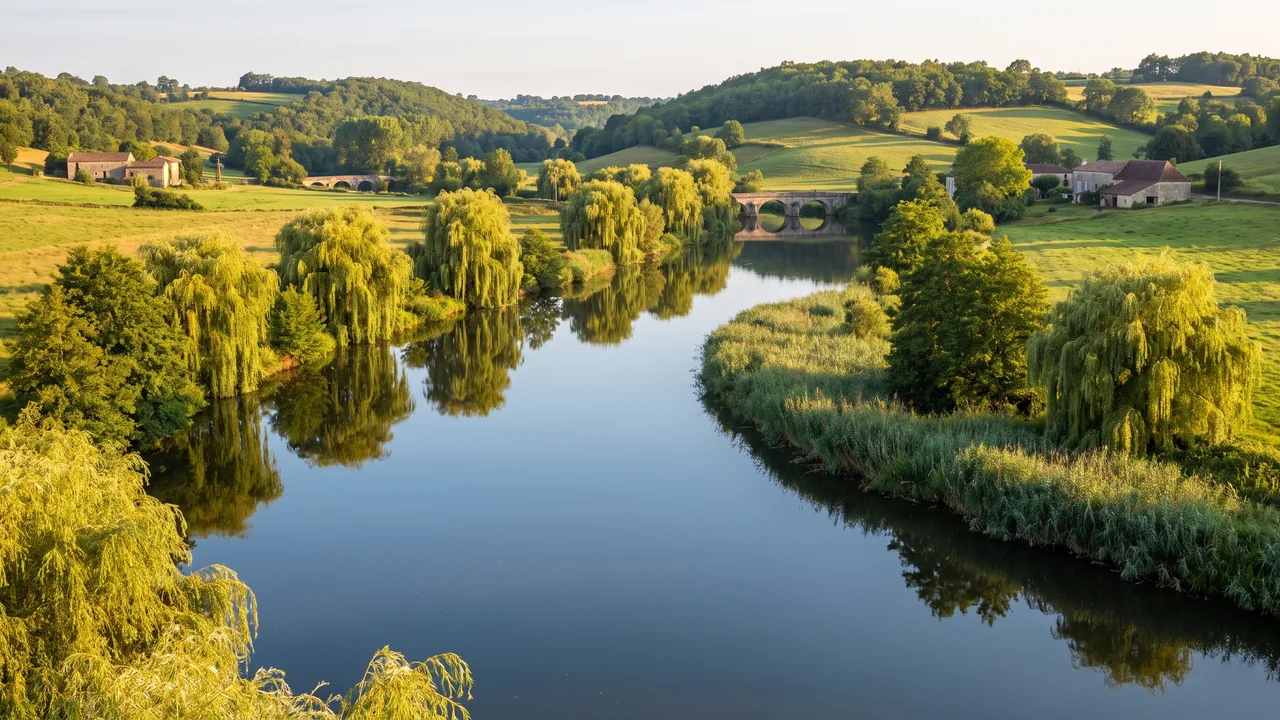
Behind the peaceful hamlet of Poltrot, near the golf course, lies one of the most sensational incidents in French history: it was here, in Nabinaud, that Jean de Poltrot de Méré was born—the man who assassinated Duke François de Guise in 1563, at the height of the Wars of Religion. The name of the maze conceals a regicide. Here is the story—dark and verified.
The gunshot that changed France
Jean de Poltrot, Lord of Méré, was born in the hamlet of Poltrot, in Nabinaud, where the ruins of a castle on the Dronne River still stand; according to the chronicler Brantôme — a native of the region himself — he was raised by the Viscount of Aubeterre. Having been won over to the Protestant cause, he committed an irreparable act on February 18, 1563: at the Siege of Orléans, he shot at François de Guise, leader of the Catholic party and one of the most powerful men in the kingdom. The duke died of his wounds a few days later. Poltrot was captured, subjected to torture, and then quartered at the Place de Grève in Paris on March 18, 1563. The assassination permanently intensified the hatred between Catholics and Protestants—a small spark from the Charente region in the great conflagration of the Wars of Religion.
From Tragedy to the Labyrinth
Five centuries later, this name steeped in history refers primarily to a family-friendly recreational park, where visitors lose themselves in a maze of greenery rather than in the intrigues of the Renaissance. That is the paradox of these remote areas: a region so peaceful today that it’s hard to imagine it connected, by a tenuous thread, to one of the great dramas of national history. Between golf holes, the curious hiker will be eager to make the connection—and to see the gentle slopes of the Dronne in a new light.
A Cognac Terroir: Les Bons Bois
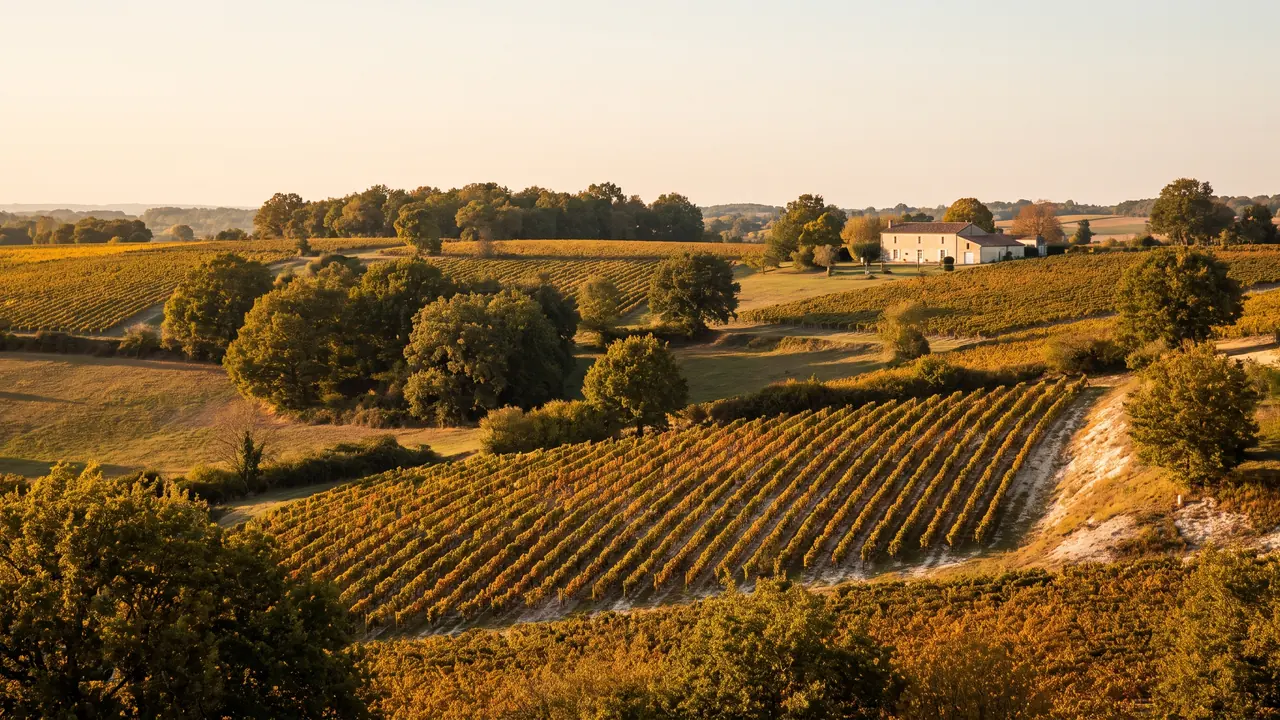
Longeveau and the entire Aubeterre region are part of the Cognac wine-growing area, and more specifically the Bons Bois cru—the vast outer belt of the appellation, with sandy and clay soils, the least calcareous of the six crus. The manor itself is a former Cognac estate: here, the vineyards form the backdrop to everything. This is the setting.
The second-largest vintage by area
Cognac is classified into six crus, as defined by the decree of January 13, 1938, following the work of geologist Henri Coquand (around 1860), within a designation of origin established as early as 1st May 1909. Aubeterre-sur-Dronne, and therefore the Longeveau area, falls within the Bons Bois cru. Contrary to a persistent misconception, this is not the largest cru: it is the second in area, behind Fins Bois. Bons Bois forms a wide ring around the central crus, on soils that are sandier and less chalky; its eaux-de-vie are more rustic and mature faster than those of the prestigious Champagnes. This is an everyday cognac, frank and direct: the terroir of the countryside where golf courses have sprung up on former vineyard land.
From the Vineyard to the Green
The story of Longeveau encapsulates, on a small scale, that of many estates in the Charente region: a wine estate that, in the wake of the cognac crisis and with the passage of time, has found a new lease on life through tourism. Here, it was the British who converted the wine cellars into vacation rentals and the land into golf courses; elsewhere, people have turned their properties into bed-and-breakfasts or wedding venues. But vineyards stretch as far as the eye can see, and a tour of a winery or a tasting at a local producer is the perfect way to round out a day in the great outdoors. Just an hour’s drive away, the town of Cognac and its grand houses—see our guide to Cognac—offer the luxury version of the same region.
Cognac or Pineau: an evening drink
The curious traveler won’t leave the Aubeterre region without sampling its two liquid treasures. First, there’s Bons Bois cognac—bold, straightforward, and best enjoyed neat or in a long drink—which you can find at the local distillers and small producers dotted along the area’s roads, often at much more affordable prices than the big brands in the city. Next, Pineau des Charentes: this mistelle, born from the blend of grape must and brandy, served chilled as an aperitif, is the quintessential social drink of the Charente region. Many estates open their cellars to visitors and offer direct sales by appointment—an opportunity to bring back, rather than a mass-produced souvenir, a bottle bearing the name of a neighboring estate and the story of an encounter. After a day of golf and exploring villages, it’s the perfect way to round out the evening on the terrace of a stone cottage.
What is there to see around Longeveau?
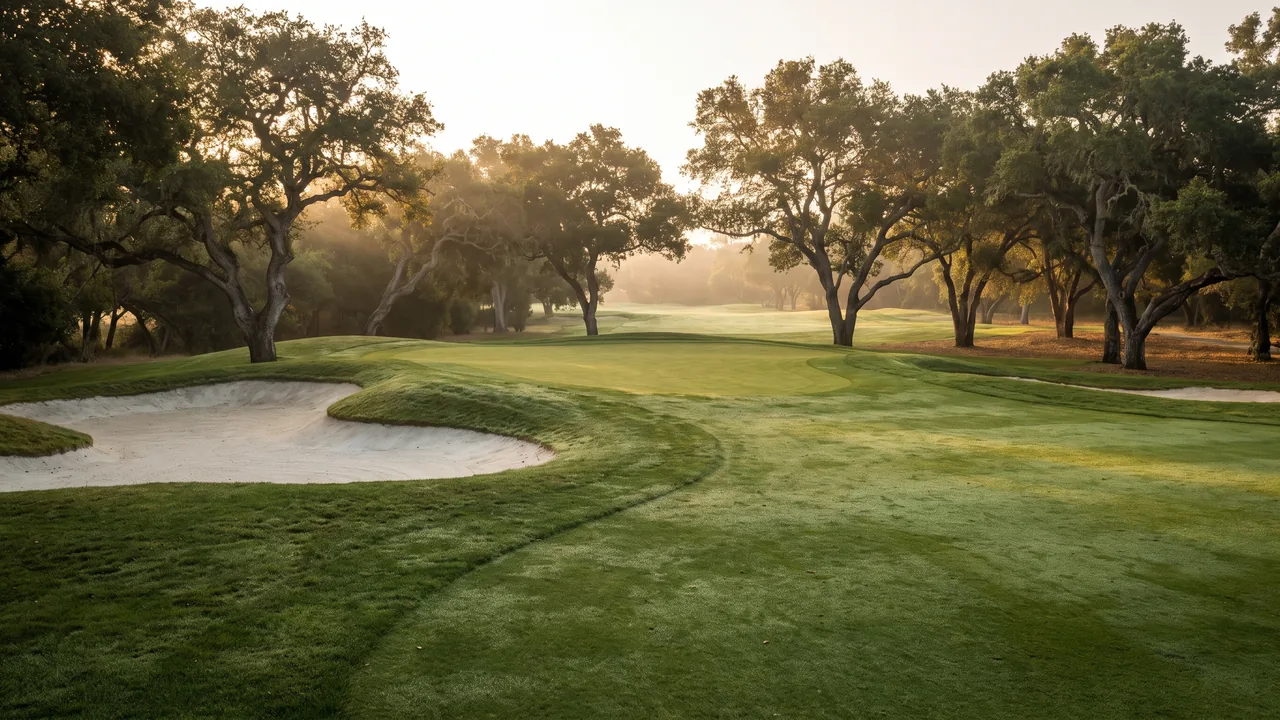
From Longeveau, it’s easy to explore a region full of charming villages and rivers: Aubeterre and its underground church, 6 km away; Chalais and its castle, about 20 kilometers away; Brantôme, the “Venice of the Périgord,” on the Dronne River; and the town of Cognac, an hour away. Here are the verified distances.
The must-see destination is still Aubeterre-sur-Dronne (~6 km), for its monolithic church and hilltop village. To the northwest, Chalais (~18 km) is home to the Château des Talleyrand-Périgord—a vast mansion overlooking the small town—and its TER train station on the Angoulême-Bordeaux line, which is convenient for those traveling without a car. To the southeast, the Dronne River leads further on to Brantôme, home to the abbey and caves of the “Venice of the Périgord”: see our guide to Brantôme. Finally, for those who want to explore the region in depth, Cognac (~75 km) and its century-old wine cellars are well worth a day trip.
The Aubeterre region is perfect for aimless wandering: scattered a few kilometers in every direction are sleepy stone villages—Saint-Séverin and its Romanesque church, Bonnes and its castle on the Dronne River, and the fortified towns and hilltop villages on the borders of the Charente and Périgord regions. It’s a region without any flashy monuments but with a wealth of unassuming heritage, where every country road reveals a Romanesque church, a washhouse, or a dovecote. Within a one-hour radius, you can easily plan a varied getaway: golf in the morning, a medieval village in the afternoon, a cognac or pineau tasting in the evening—and a return each night to the tranquility of the Longeveau vacation rentals.
| Destination | Distance / Time from Longeveau | Must-See |
|---|---|---|
| Aubeterre-sur-Dronne | ~6 km · ~10 min | Monolithic Church, "Most Beautiful Village," La Dronne |
| Chalais | ~18 km · ~22 min | Talleyrand Castle, Angoulême-Bordeaux TER Station |
| Angoulême | ~44 km · ~50 min | Comic Book City, city walls, cathedral, train station |
| Cognac | ~75 km · ~1 hr 10 min | Major Cognac Houses, Château de Cognac |
| Brantôme | ~40 km · ~45 min | abbey, caves, “Venice of the Périgord” |
The Dronne, the green thread of the Aubeterre region
Longeveau owes part of its charm to the Dronne, one of the most beautiful rivers in southwestern France: more than 200 kilometers of clear waters flowing from the Limousin region, a valley designated as a Natura 2000 site, and a string of villages — with Aubeterre at the forefront — dotted along its banks. It is the natural axis around which everything revolves. That is why it matters.
Two hundred kilometers of protected natural areas
The Dronne River originates at an elevation of approximately 479 meters in Bussière-Galant, in the Haute-Vienne department, and flows for more than 200 kilometers before joining the Isle River and then the Dordogne River; it is therefore, technically, a tributary of the Dordogne. It borders five departments and flows through both Brantôme, upstream, and Aubeterre, very close to Longeveau. Its valley, between Nabinaud and Aubeterre, is protected under the Natura 2000 program (Special Area of Conservation “Dronne Valley from Brantôme to its confluence with the Isle,” 2014 decree): cool waters, wet meadows, and riverside forests are home to rare wildlife. It’s the perfect setting for canoeing, swimming, and fishing—the aquatic counterpart to golf and the vineyard-covered hillsides.
From Brantôme to Aubeterre, the same water
A detail that will appeal to fans of sentimental geography: the river that winds around Brantôme—the “Venice of the Périgord,” with its abbey and caves—is exactly the same one that, a few dozen kilometers further on, laps at the feet of Aubeterre and Longeveau. You can thus follow the course of the Dronne from one charming village to the next, from the Périgord Vert to the Charente region, without ever losing sight of the same tranquil water. For a stay in Longeveau, the itinerary is clear: follow the river upstream toward Brantôme or downstream toward L’Isle, as if following a secret path. Canoe enthusiasts happily paddle down the gentlest stretches, between gravel banks and curtains of willows; anglers hunt for trout and grayling; casual strollers are content to take a break on a shaded bank, listening to the flow of one of the clearest rivers in the Southwest—a tranquil luxury, just a stone’s throw from the green.
When should you visit Longeveau?
Longeveau is best enjoyed outdoors, from late spring to early fall: the golf course is in full swing from May through October, the Dronne River is perfect for swimming in the summer, and the Poltrot recreation center is only open during the summer months. Here’s a handy calendar to help you plan your trip.
| Season | What's in Store for You |
|---|---|
| Spring (May–June) | Hiking trails in great condition, flower-filled countryside, peaceful lodging, and affordable rates |
| Summer (July–August) | golf, swimming in the Dronne River, the Poltrot recreation center is open, lively Aubeterre |
| Fall (Sept.–Oct.) | Golden light on the vineyards, the golf course still open, crowds have thinned out |
| Winter | Quiet area; golf is possible in good weather, but services are limited |
Seasonal Tip
To enjoy golf, the river, and local heritage without the crowds, aim for June or the first half of September: the days are long, the course is in good condition, the Dronne River is warm, and Aubeterre regains its off-season village tranquility. The height of summer (July–August) remains the season for families—vacation rentals are fully booked, the Poltrot recreation center is bustling, and the river beach is popular—so be sure to book well in advance. In winter, finally, the Aubeterre region winds down: it’s the time for fires in the stone cottages, but also when many services operate at a slower pace. Whatever the season, the charm of Longeveau remains the same: a slice of the English countryside nestled in the Cognac hills, where visitors come to seek silence as much as the golf course.
How much does the trip cost, and how do I get there?
A private transfer from Bordeaux to Longeveau starts at €188 one way for a 105-km trip that takes about 1 hour and 40 minutes. The fixed price is provided before booking. If you don’t have a car, the nearest train station is Chalais, on the Angoulême–Bordeaux line.
By car from Bordeaux
The route leaves Bordeaux via the A10, then takes the N10 and the roads through southern Charente. The website’s route calculator estimates 105 km and approximately 1 hour and 40 minutes. To reach the clubhouse, enter “Manoir de Longeveau, 16390 Pillac.” With a chauffeur service, you travel from your home, Mérignac Airport, or Saint-Jean station directly to the estate. Prices start at 188 € and are confirmed before the trip.
Without a car: Chalais, then the road
The nearest train station is Chalais (~18 km), served by TER trains on the Angoulême–Bordeaux line; Angoulême (~44 km), which has better service (including direct trains to Bordeaux and Paris), is the other point of entry. From either station, you’ll need to continue by car: there is no public transportation to the hamlet. For a golfer carrying equipment or a family heading to the vacation rentals, the simplest solution is a private transfer all the way from Bordeaux, or taking the TER to Chalais and then hiring a driver. Once you’re there, everything is within a few kilometers: the golf course, Aubeterre, the Dronne River, Poltrot—a quiet little world where the car is used only to move from one pleasure to the next.
| Option | Duration | What You Need to Know |
|---|---|---|
| Executive car service (Door-to-Door) | about 1 hour and 40 minutes | €188 (1–3 people), fixed price, 7-passenger van available upon request |
| Personal car | about 1 hour and 40 minutes | Take the A10, then the N10; head toward “Manoir de Longeveau, 16390 Pillac” |
| TER Bordeaux → Chalais + drive | ~1 hr + 20 min | ~18 km remaining; no public transportation to the hamlet |
Frequently Asked Questions
Where is Longeveau located?
Longeveau is a hamlet in southern Charente, on the border with the Dordogne, 105 km from Bordeaux—about 1 hour and 40 minutes by car. It is located six kilometers from Aubeterre-sur-Dronne. The estate features a 9-hole golf course and vacation rentals at 16390 Pillac.
Is Longeveau in Pillac or Nabinaud?
The Aubeterre Golf Course – Manoir de Longeveau has a mailing address of 16390 Pillac. The neighboring town of Nabinaud also has a hamlet spelled “Longevau,” which explains some variations on maps.
Is the Longeveau golf course an 18-hole course?
No: it’s a 9-hole course, par 32, measuring approximately 2,011 meters. Designed in 1993 by architects Gammon and Peacock and certified by the French Golf Federation, it is known for being surprisingly varied for its size—ranging from a 100-meter par 3 (No. 6) to a 337-meter par 4 (No. 7)—with an abundance of bunkers and a slope rating of around 111. A practice range and equipment rentals are available, and reservations are required (Aubeterre Golf Association).
Why is the golf course called “d'Aubeterre” if it's in Longeveau?
It’s a marketing decision: the estate took its name from Aubeterre-sur-Dronne, one of the “Most Beautiful Villages of France,” which is much better known than the hamlet of Longeveau. However, the golf course is not located in the town of Aubeterre; it is six kilometers away. The Golf d’Aubeterre – Manoir de Longeveau has a mailing address of 16390 Pillac. The neighboring town of Nabinaud also has a hamlet spelled “Longevau,” which explains some variations on maps. “Golf d’Aubeterre” is the official name, while “Golf de Longeveau” is the local name—two names for the same course.
What is the Manoir de Longeveau?
This is a former cognac estate, believed to date back to the 16th century, which has been restored and converted into a vacation village. Surrounding the manor house and the golf course, the estate offers 34 to 35 stone cottages and villas, complete with heated pools, tennis courts, a bar, and a restaurant. People come here with their families, but also for weddings and seminars. Purchased in 1992 by British owners (the Peacock and Gammon families), it has been run by Olivia and Richard Peacock since 2007, giving it a distinctly British character.
How much does a trip from Bordeaux to Longeveau cost with a chauffeured transfer?
A private transfer from Bordeaux to Longeveau starts at €188 one way, with a fixed price provided before the trip. The trip covers 105 km and takes about 1 hour and 40 minutes via the A10 and then the N10. The service picks you up from your home, Mérignac Airport, or the Saint-Jean train station and takes you to the resort, along with your golf clubs and luggage.
What is there to do around Longeveau?
Play golf and stay at the estate, of course, but above all, explore the surrounding area: visit the monolithic church of Aubeterre (~6 km), the tallest underground church in Europe; have fun at the Poltrot recreation center in Nabinaud, with its large plant maze and tree-top adventure course along the Dronne River; swim or paddle on the Dronne River, within a Natura 2000 area; and venture as far as Chalais, Brantôme, or the town of Cognac. A one-hour radius is all it takes to enjoy a varied getaway combining golf, heritage, and the river.
What is the monolithic church of Aubeterre?
It is an entire church carved into the limestone cliff of Aubeterre-sur-Dronne, six kilometers from Longeveau. Construction began as early as the 7th century, and it was expanded in the 12th century by Benedictine monks; it features a nave approximately 20 meters high—the equivalent of a six-story building—entirely carved out of the rock, and a six-meter-tall monolithic hexagonal reliquary inspired by the Holy Sepulcher. Designated a historic monument in 1912, it is the tallest underground church in Europe, a sister church to those in Saint-Émilion and Mortagne-sur-Gironde.
Who was Poltrot de Méré?
Jean de Poltrot, Lord of Méré, was born in the hamlet of Poltrot, in Nabinaud, very close to the golf course. It was he who, on February 18, 1563, assassinated Duke François de Guise, leader of the Catholic party, during the siege of Orléans, at the height of the Wars of Religion; the duke died of his wounds. After being captured, Poltrot was quartered at the Place de Grève in Paris on March 18, 1563. Today, his name is most commonly associated with a family recreation center on the banks of the Dronne River—a striking contrast between a national tragedy and a labyrinth of greenery.
In which cognac vintage is Longeveau found?
Longeveau and the entire Aubeterre region are part of the Bons Bois appellation, the vast outer belt of the Cognac wine region, with sandy and clay soils—the least calcareous of the six appellations. Contrary to popular belief, it is not the largest: it ranks second in size, behind the Fins Bois. The Manoir de Longeveau is itself a former cognac estate, and a tour of the cellar or a tasting at a local producer is the perfect way to round out a day spent outdoors.
What is the closest train station to Longeveau?
The nearest train station is Chalais, about 18 km away, on the Angoulême-Bordeaux TER line; Angoulême (~44 km), which has better service, is the other point of entry. Neither of these stations provides direct access to the hamlet without a car: you’ll need to take a taxi or hire a private chauffeur from there. The simplest option for travelers with luggage—such as golfers or families—is a direct private transfer from Bordeaux, or the TER to Chalais followed by a professional chauffeur.
Is Longeveau suitable for a family vacation?
Yes, absolutely: the estate offers stone cottages, heated pools, tennis, and a restaurant, all in a safe and peaceful rural setting. In addition to the golf course—which features a 9-hole course suitable for beginners—the Poltrot recreation center (maze, tree-top adventure course), swimming in the Dronne River, and a visit to Aubeterre offer plenty to keep both kids and adults entertained. It’s an ideal base camp for exploring golf, historic sites, and the river, away from the crowds.
When should you visit Longeveau?
From late spring to early fall: The best time to play golf is from May through October, when the days are long and the course is in good condition; this is also the season when the Dronne River is perfect for swimming and the Poltrot recreation center is open. In the summer, the countryside of southern Charente is mild and sunny, and Aubeterre comes alive; spring and early fall offer tranquility and more affordable rates at the resort. In the winter, the area takes on a more quiet, secluded atmosphere.
Further Reading
- The village of Pillac: see the Pillac Guide (Saint-Aignan Church and the golf course)
- The Capital of Brandy: See the Cognac Guide (the major houses and the six crus, about 1 hour away)
- The Venice of the Périgord: see the Brantôme Guide (the abbey and the caves along the same Dronne River)
- An Abbey on the Outskirts of Angoulême: Discover the Guide to La Couronne and Its Paper-Making Heritage
- Book your trip: Bordeaux–Longeveau trip page, or browse all our destinations
Sources and References
- Sud Charente Tourism — Longeveau Golf Course — 9-hole course, reservations and address: 16390 Pillac
- Longeveau Manor — Aubeterre Golf Course — 9-hole course, map, rates, and FFG membership
- Longeveau Manor — History of the Estate — A project begun in 1992 by the Peacock and Gammon families
- Wikipedia — Pillac — “The town is home to the Aubeterre Golf Course, located in Longeveau”; INSEE 16260, population 243 (2023)
- Wikipedia — Nabinaud — INSEE municipality 16240, population 99; hamlet of Longevau; locality of Poltrot (Jean de Poltrot de Méré, regicide of 1563)
- Wikipedia — Aubeterre-sur-Dronne — One of France's Most Beautiful Villages; the monolithic Church of Saint-Jean (7th–12th centuries, nave ~20 m, hexagonal reliquary 6 m, designated a Historic Monument in 1912, cemetery)
- Wikipedia — Cognac Crus — Bons Bois = the second-largest cru by area after the Fins Bois; 6 crus defined in 1938 (Coquand ~1860), area established in 1909
Article updated in July 2026.
Our Latest Guides
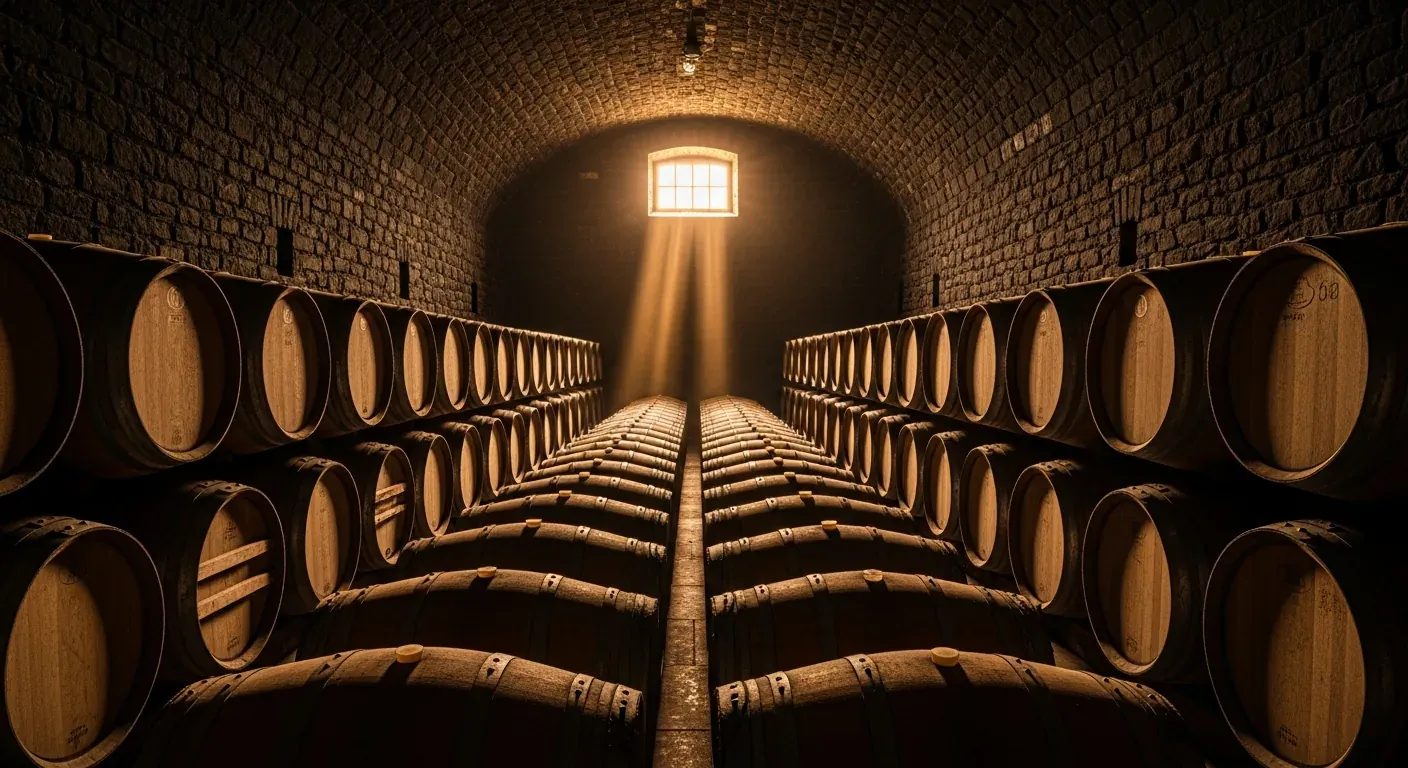
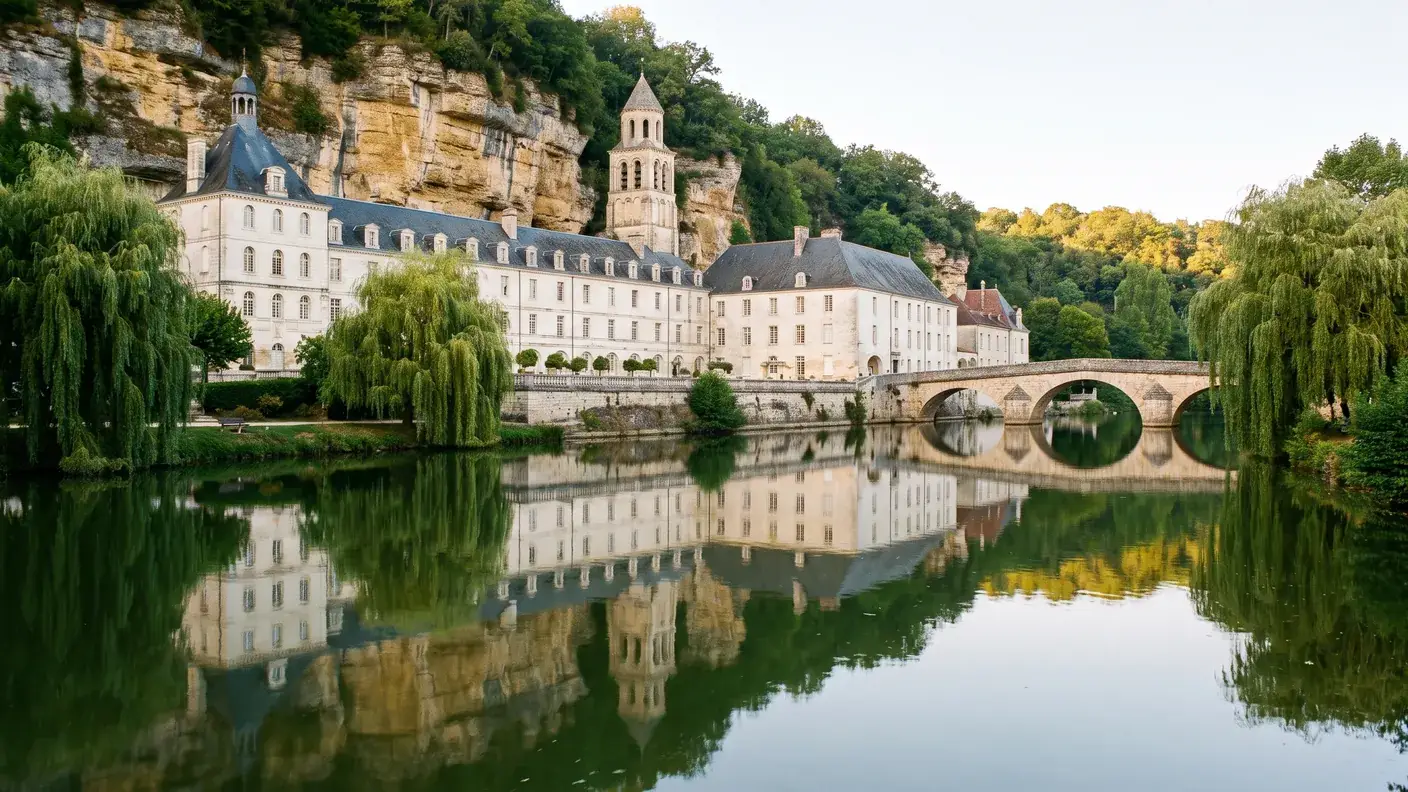
Heading to the Aubeterre Country Club
Direct transfer of 105 km from Bordeaux to the Aubeterre Golf Course – Manoir de Longeveau, taking approximately 1 hour and 40 minutes. Fixed price starting at €188 one way.