Bordeaux to Pillac: South Charente and Longeveau
A village of 243 residents in southern Charente, just outside Aubeterre-sur-Dronne: a Gallo-Roman name ending in “-ac,” a medieval viguerie first documented in 1015, a “Bons Bois” Cognac appellation—and, in the hamlet of Longeveau, a former vineyard revived by an English family, now a 9-hole golf course. About 1.5 hours from Bordeaux.
Pillac at a Glance
- Pillac (the residents of Pillac) is a rural village in southern Charente (16390), in Nouvelle-Aquitaine, about 8 km north of Aubeterre-sur-Dronne—INSEE code 16260, Angoulême arrondissement.
- An area of 19.64 km² between the Auzonne and Tude valleys, with a highest point of 165 m (Pechbrie); 243 residents in 2023, a population density of 12.4 people per km².
- A name ending in “-ac”: the Gallo-Roman estate of a man named “Pilius.” The site is documented from very early on—a vicariate attested as early as 1015 (“Vicaria Piliacensis”).
- A peculiarity: although located in Charente, Pillac fell under the jurisdiction of theformer Diocese of Périgueux — which is why it is still part of the AOP today Périgord Walnuts.
- The village is located in the Cognac region, within the “Bons Bois” cru—the outermost belt, which has the lowest limestone content of the six Charente crus.
- At the place known as Longeveau : a former wine and Cognac estate, revived from 1992 by an English family, now a 9-hole golf course (the “Aubeterre Golf Course”).
- Its neighboring town, Aubeterre-sur-Dronne, is listed among the “Most Beautiful Villages of France” and is famous for its monolithic church, the largest underground church in Europe.
- From Bordeaux: ~110 km, about 1 hour and 30 minutes — starting at €193 for a private driver, door-to-door. There is no train station in Pillac.
Before You Go: What Pillac Really Is
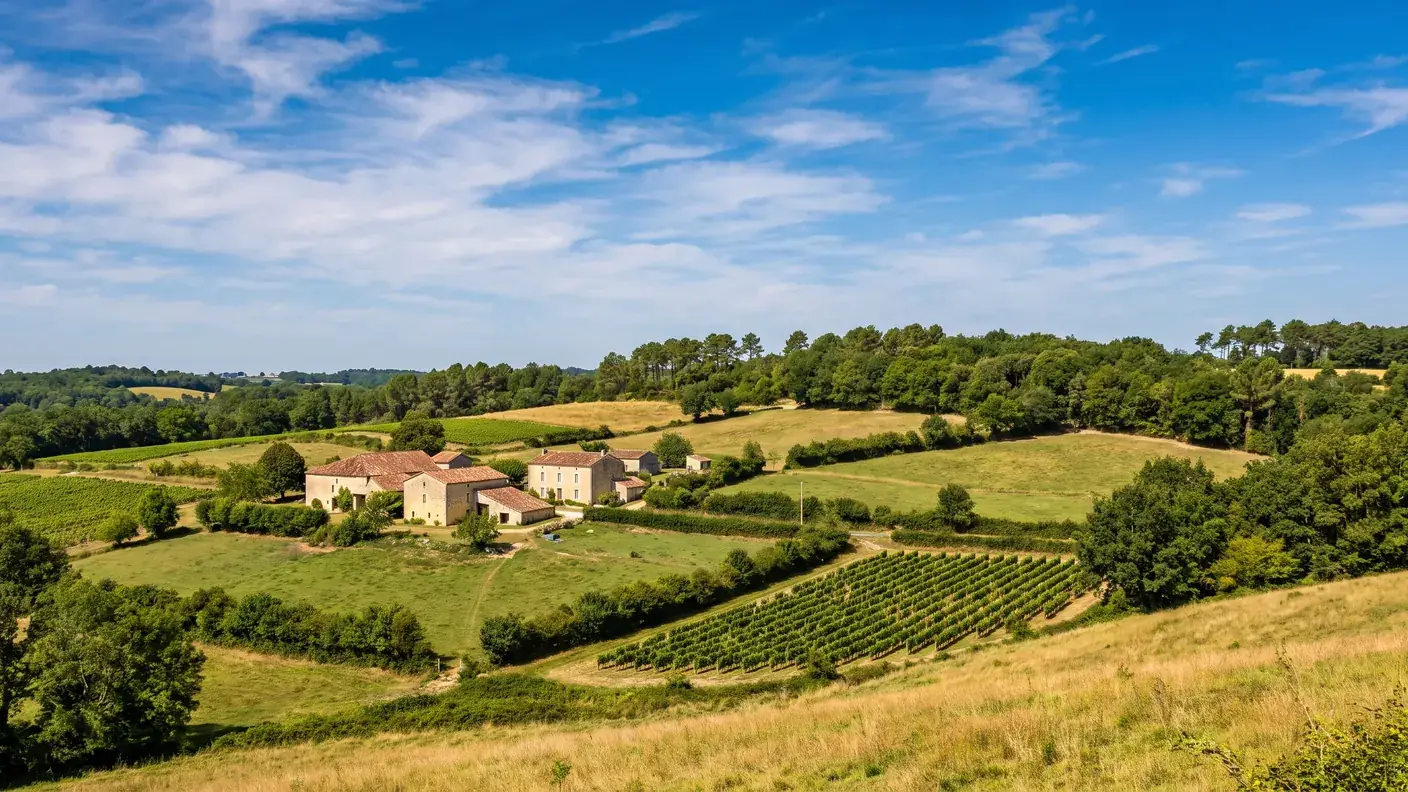
One September morning, on the hillsides of southern Charente. The mist clings to the chestnut and pine forests; below, the Cognac vineyards slope down toward the valley. You don’t stumble upon Pillac by chance: this small village of 243 residents lies off the beaten path, on the ridge separating the Auzonne from the Tude, just a stone’s throw from Aubeterre-sur-Dronne. And yet, within its borders, a former Cognac estate that had fallen into disrepair has been given a new lease on life—transformed into a golf course nestled among the vineyards. It’s a dual story: that of a quiet rural village and that of a reborn estate.
Pillac is a village in the Wine-growing Charente, on the border of the Dordogne. Its name suggests a Gallo-Roman estate; its past, a medieval fortification and an archpriesthood; its territory, the "Bons Bois" Cognac and the Périgord walnut. On its land, the hamlet of Longeveau is home to a truly unique story: that of a former vineyard that was revived in the late 20th century by British settlers who moved to the Southwest.
This guide distinguishes between verified facts and mere storytelling. At a site with a tourist attraction, storytelling abounds: a “17th-century” manor house, a “Louis XIII style,” an “original” roof structure… None of these details about the buildings are reliably sourced—we present them for what they are. Instead, we rely on solid facts: the viguerie of 1015, the Cognac appellation, Aubeterre’s classification, and the region’s location on the border between Charente and Périgord.
In terms of access, Pillac is a remote village: there’s no train station (the nearest ones, Montmoreau and Chalais, are about 12–15 km away), and no regular bus service. To travel from Bordeaux—about 1 hour and 30 minutes away—to visit Aubeterre, tour the vineyards, or attend an event at the Domaine de Longeveau, a private chauffeur from Bordeaux remains the simplest door-to-door option.
A village perched on a ridge between Auzonne and Tude
Pillac is located in southern Charente, the part of the department that borders the Dordogne, where the landscape gradually transitions from the chalky limestone of Charente to the hills of Périgord. The municipality covers 19.64 km², lying between the Auzonne and Tude valleys, which are separated by a wooded ridge running north-south that reaches a height of 165 meters at a place called Pechbrie. The town center lies at an elevation of about 94 m, and the lowest point (53 m) is in the Auzonne Valley.
Moors, forests, and rivers
This landscape of valleys and ridges forms a region of moors, chestnut groves, and maritime pines, shaped by a unique geology—slopes of Cretaceous limestone topped, in the center, by deposits of clay and sand that are not very fertile. Water plays a defining role here: in addition to the Auzonne and the Tude (two tributaries of the Dronne, itself a tributary of the Dordogne), a small stream, the Écrevansou, originates in the south and joins the Dronne at Laprade. The entire region is part of the greater Adour-Garonne basin.
| Data | Value |
|---|---|
| ZIP Code / INSEE | 16390 / 16260 |
| Department / Region | Charente / Nouvelle-Aquitaine |
| Borough | Angoulême |
| Area | 19.64 km² |
| Elevation | 53 m (Auzonne) to 165 m (Pechbrie) |
| Waterways | Auzonne, Tude, Écrevansou (Dordogne River basin) |
| Population | 243 residents (2023) — the residents of Pillac |
| Density | 12.4 people per square kilometer |
| Terroir | AOC Cognac “Bons Bois” · AOP Périgord Walnuts |
Eight neighboring municipalities
The village is surrounded by eight municipalities: Juignac (north), Bors (northwest), Montignac-le-Coq (northeast), Saint-Séverin (east), Nabinaud (southeast), Laprade (south), Saint-Romain (southwest), and Bellon (west)—a close-knit community typical of rural southern Charente.
A Dramatic Population Decline
The population history of Pillac alone tells the story of the tragedy that befell the Charente vineyards. At the turn of the 19th century, the village was densely populated: 1,027 inhabitants in 1793, and as many as 1,298 in 1800, its all-time high. Then came phylloxera: this aphid, native to America, destroyed the vineyards between 1863 and the end of the century, and with it the village’s livelihood. The decline is evident in the census figures—853 residents in 1881, 630 in 1891, and 598 in 1896—and the rural exodus of the 20th century did the rest.
In total, Pillac’s population fell from nearly 1,300 to 243 in 2023: a decline of about 81% over two centuries. The village is now very aged—43% of its residents are 60 or older (2022)—and continues to decline slowly (−8.65% from 2017 to 2023). This is the unvarnished reality of rural Charente in the wake of the wine industry crisis.
Two Centuries of Censuses
The series of censuses, conducted since the Revolution, allows us to track this decline step by step. We first see the heyday of the wine-growing village, followed by the phylloxera crisis — 793 residents in 1886, 630 in 1891, 598 in 1896 — and finally the long decline of the 20th century: the town’s population remained between 433 and 504 residents during the interwar period (504 in 1921, 433 in 1936), and did not fall below 400 until after the war, in 1962 (357 residents).
| Year | Population | Landmark |
|---|---|---|
| 1793 | 1,027 | The First Revolutionary Censuses |
| 1800 | 1,298 | All-time high for the series |
| 1881 | 853 | Phylloxera is ravaging the vineyards of the Charente region |
| 1896 | 598 | Population Falls Below 600 |
| 1936 | 433 | The End of the Interwar Period |
| 1962 | 357 | First time breaking the 400 mark |
| 2017 | 266 | INSEE Census |
| 2023 | 243 | Most recent official population figure |
A very old village
The demographic profile of residents confirms the trend: according to INSEE (2022 data), 43.4% of Pillac residents are 60 years old or older—29.8% are between 60 and 74 years old, and 13.6% are 75 years old or older. Over the 2017–2023 period, the population declined by an average of approximately −1.5% per year. These figures place Pillac among the most aged municipalities in rural Charente—a context that also explains the scarcity of local shops and services, and the importance of neighboring towns (Aubeterre, Montmoreau, Chalais) in daily life.
A region known for its vineyards… and PDO walnuts
While Cognac vineyards dominate the landscape, Pillac also shares—along with some twenty neighboring towns in the Charente region—a heritage that traces back to the Périgord: the town is specifically mentioned within the area of thePérigord Walnuts AOP. It is a remnant of its former affiliation with the Diocese of Périgueux—the Périgord walnut groves extend here into the Charente, and among the rows of vines and the woods, one comes across old walnut trees and drying sheds. The soil itself bears witness to this crossroads location: limestone hillsides to the west, formed from the seas of the Cretaceous period, some sand and clay to the east, originating in the Massif Central—a geological boundary that coincides with the boundary between the langues d'oïl and langues d'oc, running along the ridge between the Auzonne and the Tude.
Auzonne, Tude, and Dronne: A Land of Quiet Waters
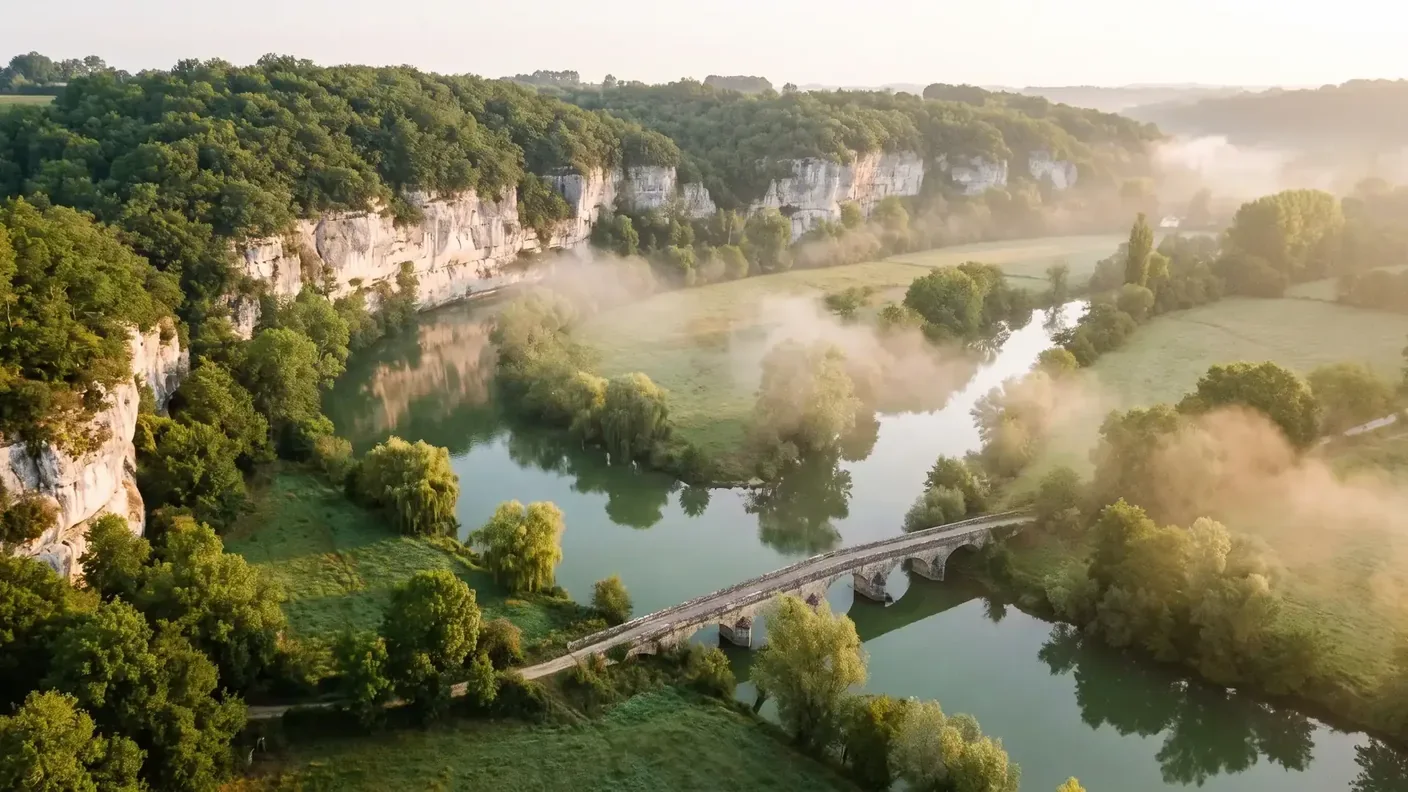
Pillac is not bordered by any major waterways, but it is surrounded by small rivers that shape its landscape. To the west flows the Auzonne; to the south, the Tude; and the Écrevansou, a stream that originates in the town, flows down to join the Dronne at Laprade, a few kilometers downstream. It is this same Dronne—the beautiful river of Aubeterre and Brantôme—that ultimately collects the waters of the area before flowing toward the Dordogne. The village itself is perched on a ridge at an elevation of about 94 meters, between the lowest point of the Auzonne Valley (53 m) and the summit of Pechbrie (165 m): a village perched on high ground, as its name “crête” (ridge) suggests, from which the view stretches far across the woods and vineyards. This commanding, dry, and healthy location explains why the site was settled so long ago and served as a lookout point on the border between Angoumois and Périgord.
"Pillac": The Pilius Estate, on a Linguistic Border
Like hundreds of towns in southwestern France, Pillac has a name ending in “-ac”—a hallmark of a Gallo-Roman estate. The most widely accepted theory traces it back to the Roman man’s name “Pilius,” combined with the Latin suffix -acum (“estate of”), resulting in Piliacum: “the estate of Pilius.” This is plausible and consistent with the long history of agricultural settlement, but it remains a hypothesis and should be stated in the conditional tense. The oldest attested forms are Pillaco (1110) and Pilhac (1299).
An interesting detail: on Cassini’s map (18th century), the village is listed by its Occitan name, Pilhac. Because Pillac is located exactly on a language boundary : The ridge separating the Auzonne from the Tude marks the boundary between the language area ofoïl (the Saintongeais dialect, in the west) and that of the Langue d'oc (the Limousin region, to the east)—with the town itself on the Occitan side. These dialectal boundaries, invisible today, serve as a reminder that southern Charente was long a meeting point between two major French cultural regions.
On the Language Divide
Pillac occupies a remarkable linguistic position: the village stands on the historical boundary between the Langue d'Oïl and the Langue d'Oc, which runs roughly along the ridge separating the Auzonne and Tude valleys. To the west and north loomed the from Saintonge (speaking of Oïl); to the east and south lay the domain Occitan (Limousin, Périgord) — and the town of Pillac is located on the western side. This invisible line is not merely a linguistic curiosity: it coincides with Pillac’s historical affiliation with the Diocese of Périgueux and the Périgord walnut, as if the village had always looked just as much toward the Périgord as toward the Charente. A place on the border, even in the words spoken there.
A vicariate first attested in 1015, a Perigord archpriesthood
Despite its small size, Pillac has deep historical roots. The site served as the seat of a viguerie—an administrative district dating back to the Carolingian era—from the 10th to the 18th century. It is mentioned in Latin as early as 1015 (“Vicaria Piliacensis”), then in 1117 (“Piliacum”): a significant presence in historical records, far beyond that of today’s simple village. This viguerie was one of seven, and later one of about twenty, in the county of Angoulême.
An archpriesthood in the “Périgord Charentais”
Religiously speaking, Pillac played an even more significant role. Its church served as the seat of an archpriesthood within the former Diocese of Périgueux—an ecclesiastical district that encompassed numerous parishes, including those beyond the Lisonne River, in what is now the Charente department. This is a key point to understand: Pillac belonged, in secular terms, to the county of Angoulême, but was under the ecclesiastical jurisdiction of the Diocese of Périgueux. This dual border affiliation explains a curious phenomenon that persists to this day: Pillac, a commune in Charente, is still included within the “Noix du Périgord” AOP (Protected Designation of Origin) area.
This religious geography has left behind precise documentary evidence. An archival map drawn up around 1317, preserved at the Dordogne Departmental Archives, still shows the Charente archpriesthoods of Pillac and Peyrat—a rare cartographic record of this medieval “Charente Périgord.” As for the exact extent of the archpriesthood of Pillac, a figure of 26 parishes is often cited, but it is not corroborated by any independent primary source: while the existence of the district is firmly attested, its precise boundaries remain to be confirmed.
Hospitaliers, Phylloxera, and Decline
One medieval detail is worth noting: the archives mention an “Espital de Pilhac” in the 12th century, in a land register of the Order of Saint John—evidence of a hospital’s presence in this transit area. The town began to lose its population mainly from the late 19th century onward, under the dual impact of phylloxera and rural exodus, as we have seen.
Seven acts of bravery and a regicide as a neighbor
The Pillac's Viguerie was no insignificant administrative unit: the county of Angoulême originally had only seven (about 20 after it was extended through the 11th century), and Pillac was one of them—a center of justice and tax collection that made the village a South Angoumois landmark from the 10th to the 18th century, a landmark in southern Angoumois. Part of the former Diocese of Périgueux and the seat of an archpriesthood (comprising about twenty parishes, depending on the source), Pillac is part of the “Périgord Charentais,” where administrative boundaries have never quite coincided with the boundaries of language and faith. A local curiosity: just a few kilometers away, the town of Nabinaud saw the birth of Jean de Poltrot de Méré, the assassin of Duke François de Guise in 1563—a reminder that even these seemingly peaceful backwaters have played their part in the great dramas of history.
From 1,000 residents to 243: The Shadow of Phylloxera
The history of Pillac is laid bare in its census records, like an open book. During the Revolution, the village was densely populated—1,027 inhabitants in 1793, and as many as nearly 1,300 around 1800—thanks to mixed farming and a thriving vineyard. Then came the catastrophe that affected the entire Charente region: phylloxera, the aphid from America that, beginning in the 1870s, ravaged the Cognac vineyards and ruined the rural economy. The decline was sharp: 853 residents in 1881, 630 in 1891, 598 in 1896… The town has never regained its former population level and today has 243 residents. This decline, shared by many villages in the Southwest, explains the profound tranquility of Pillac—and, paradoxically, the preservation of its heritage: because there were no demolitions or reconstructions, the church, homes, and farms have survived the centuries virtually intact.
The Church of Saint-Aignan and the Healing Fountain
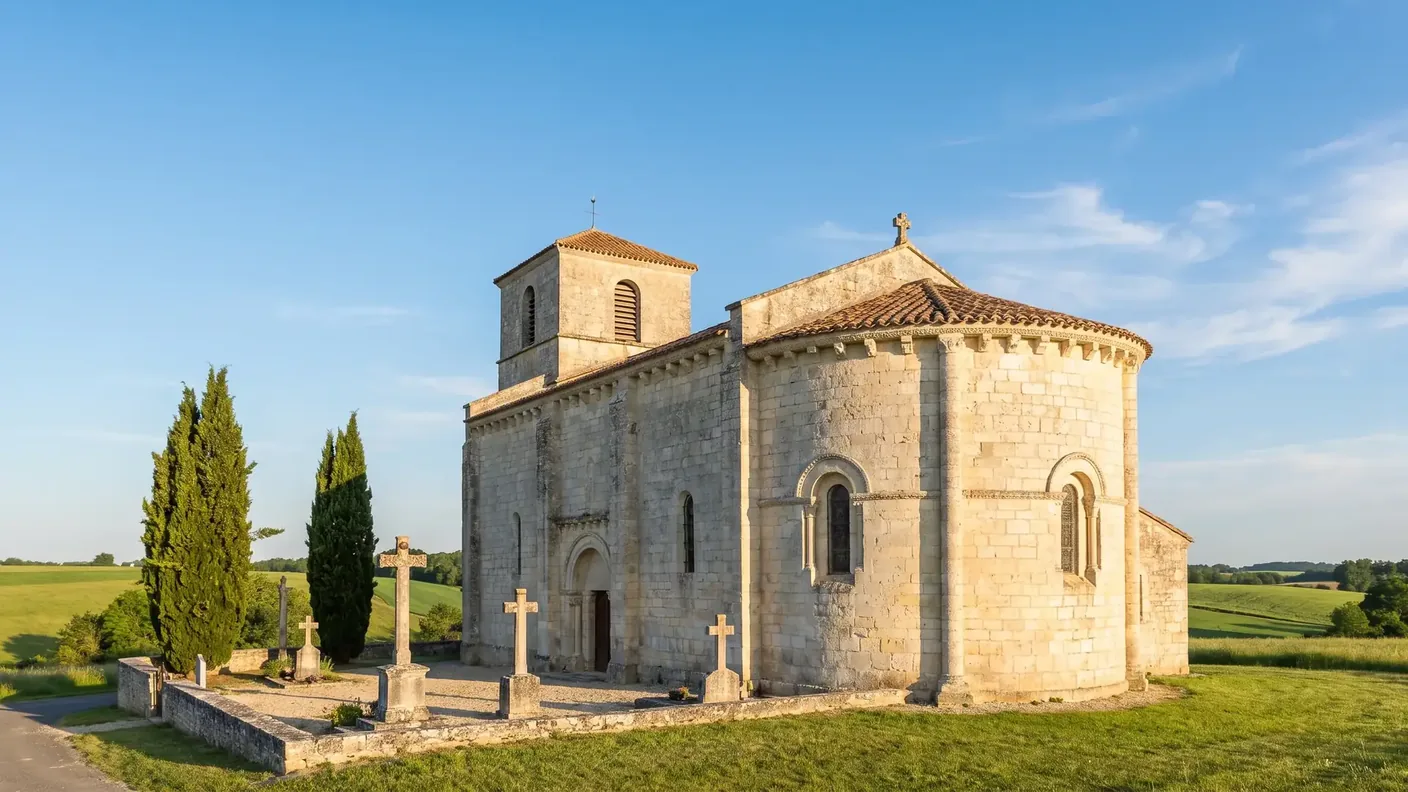
The historic heart of the village is its parish church, dedicated to Saint Aignan. Sources differ on its date of construction—the town dates it to the late 11th century, while others place it in the 12th century—but agree on its Romanesque Latin cross plan and its renovation in the 17th century, a period that, in Charente as elsewhere, with the reconstruction of rural buildings following the Wars of Religion.
Protected furnishings, but a building that isn't
The church is home to a remarkable heritage protected furniture under "Items" (the Ministry of Culture's official Palissy database, accessed July 24, 2026). The high altar (late 17th to early 18th century is listed since 1980 ; the south side altar altarpiece and two paintings dated 1806 are registered since 2002, as was the harmonium (listed in 2007). Importantly, the furnishings are protected, not the building itself—the Saint-Aignan Church in Pillac is not listed as a Historic Monument (not to be confused with the Saint-Aignan Church in Orléans, which is listed). A village of 243 residents that preserves four protected sites, dating from the Grand Siècle to the Empire period, is not all that common.
The Healing Fountain and the Tile Factory
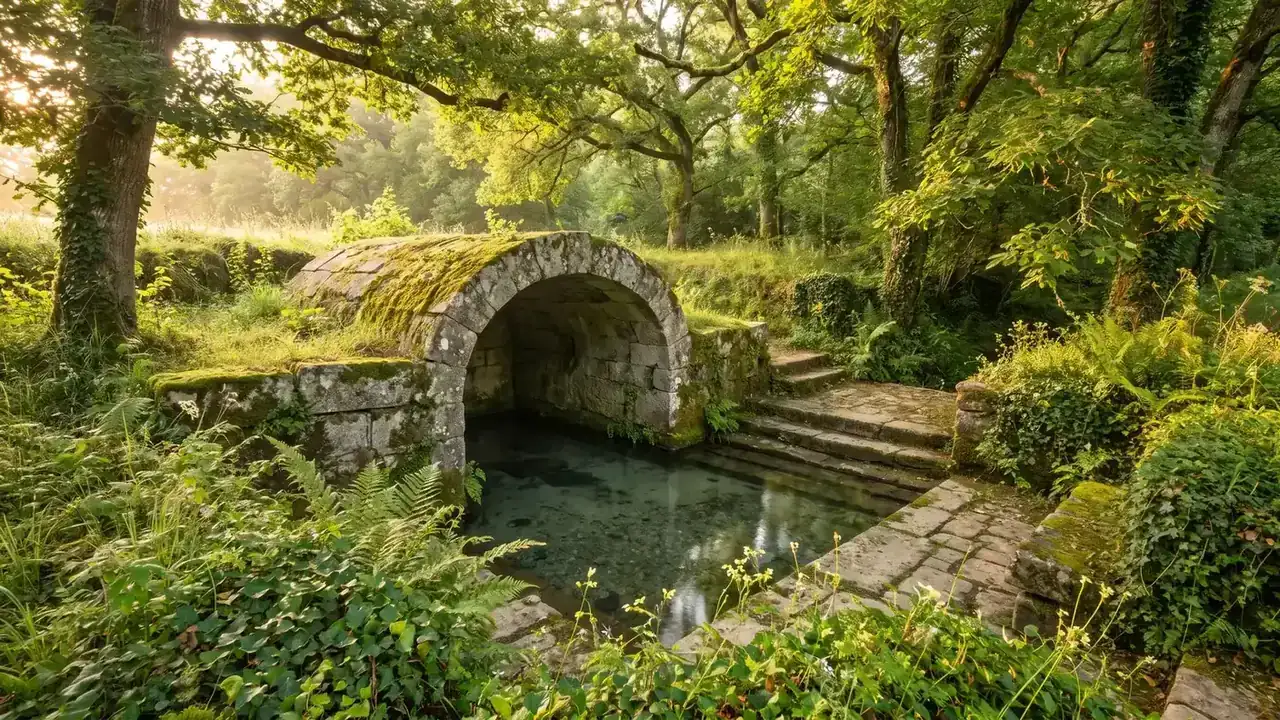
Nearby is the Saint-Aignan Fountain, a spring to which tradition attributed healing properties, particularly for ringworm—these healing fountains associated with the patron saint are a classic feature of rural folk heritage. The town’s artisanal past is evident in the Argilier tile factory, which made use of the area’s clay deposits: fired with wood, it was still in operation in 1989.
Longeveau: A Former Cognac Estate
The most interesting site in the municipality is located within the Pillac area, in a place called Longeveau. First, a clarification, as the name can be misleading: the estate and its golf course go by the trade name “Aubeterre,” but they are not located in the municipality of Aubeterre—they are indeed in Pillac. Longeveau is a former wine estate and Cognac producer, as noted on the estate’s official website (accessed July 24, 2026).
The “Bons Bois” vineyard, the sandy belt
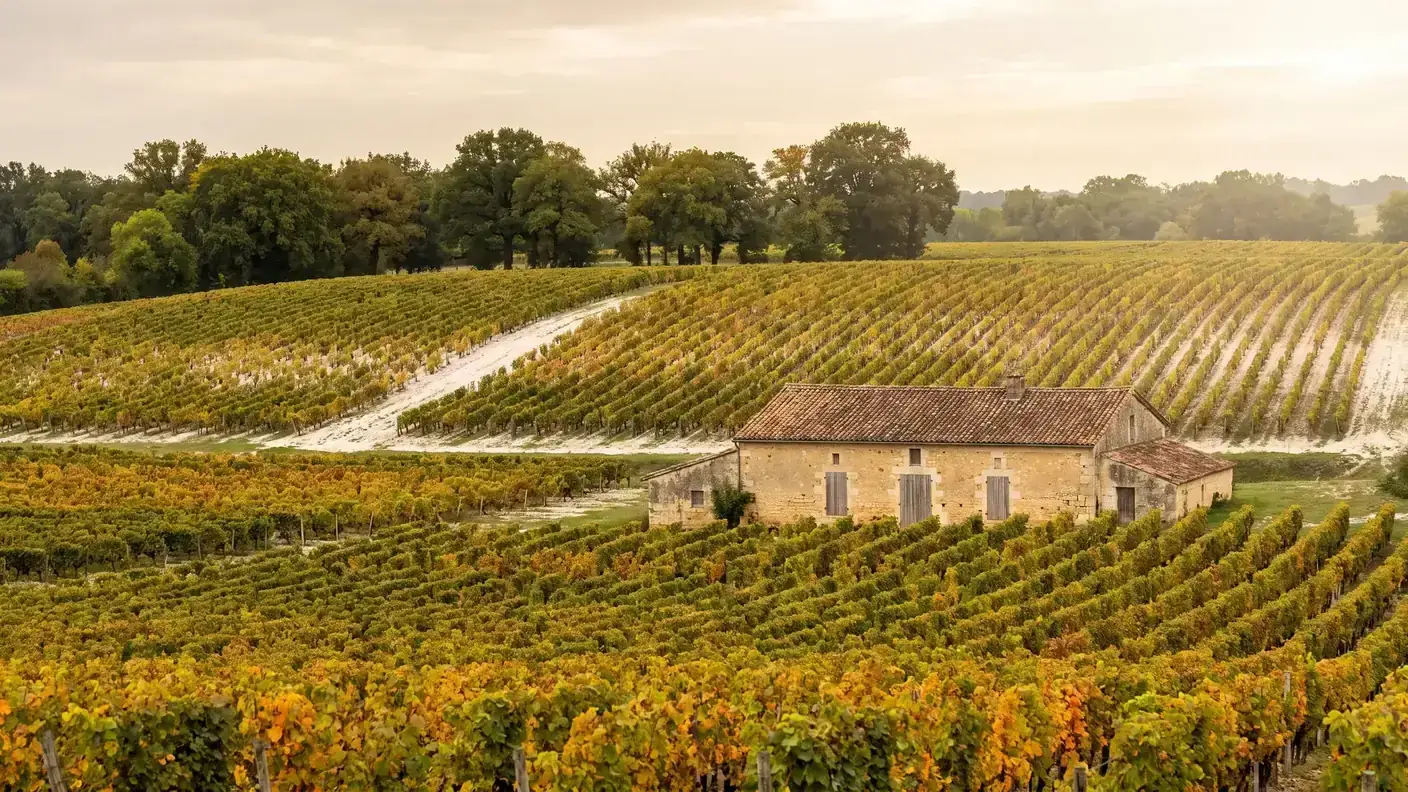
To understand Longeveau, you have to place it within the context of the Cognac region of Charente. The entire region has lived for centuries in tune with the vineyard: the local white wine—tart, low in alcohol, and difficult to preserve—found a new purpose as early as the 17th century thanks to the distillation — This marks the birth of Charente brandy, the future Cognac. Pillac is part of the vintage "Bons Bois", the outer belt, the least calcareous of the vineyard's six crus (INAO Official Product Specification for “Cognac Bons Bois”, accessed July 24, 2026): its sandy and clay soils, inherited from the Massif Central, surround the southern part of the production area.
A Manor House: A Story to Be Handled with Care
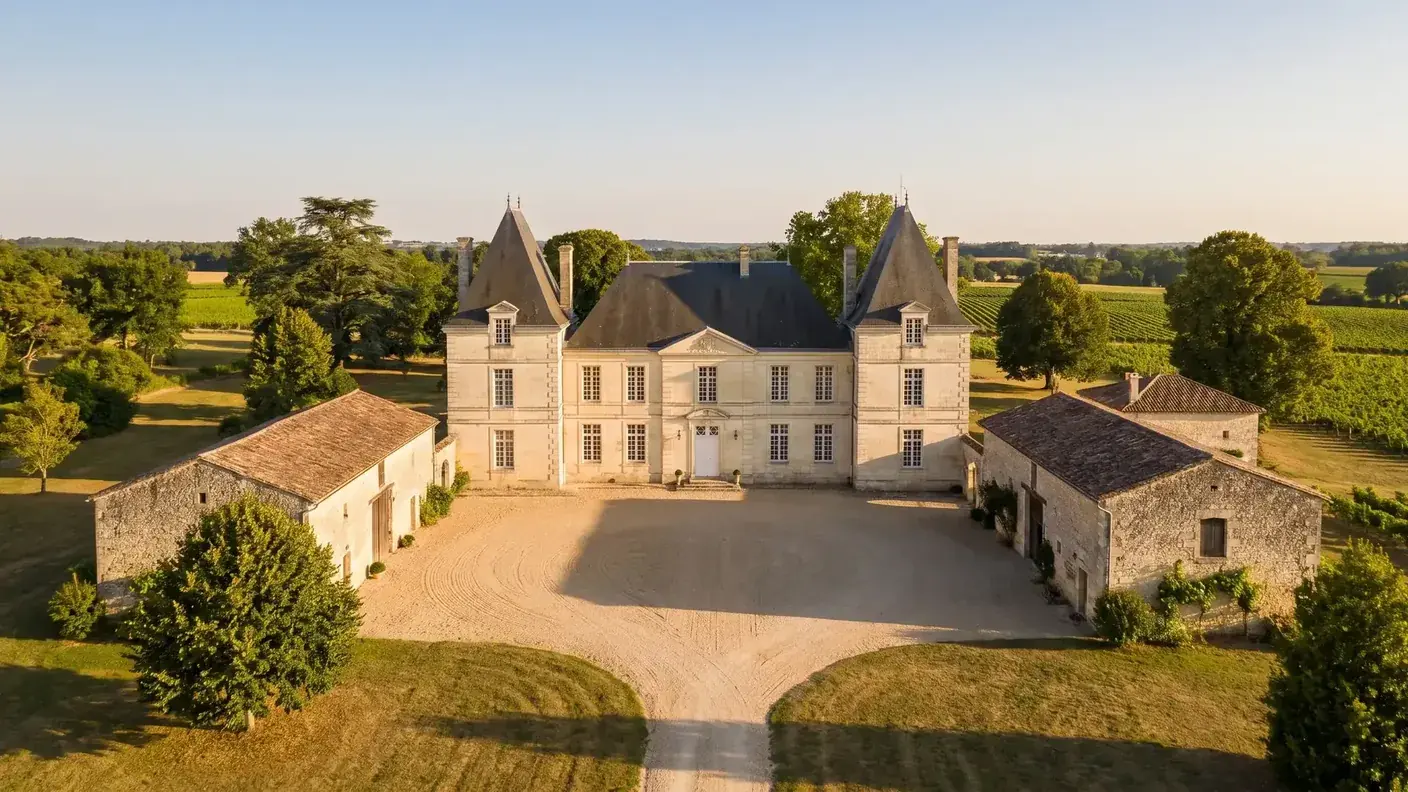
The Longeveau estate is part of this history—a complex built around a former wine-growing operation and a Cognac distillery. However, take the details you sometimes read with a grain of salt: the manor “built in the 17th century,” its “Louis XIII style,” its “original roof structure,” or an activity “dating back to the 16th century” are part of the estate’s marketing narrative and are not not supported by any financial source independent (the manor house, incidentally, does not have historic monument status). What is certain is the essence of the place: an old estate in the Cognac region of Charente, one of hundreds in the area.
1992: The Rebirth of an Estate, Now a Golf Course
What sets Longeveau apart from so many other Charente estates that have fallen into disuse is its revitalization. According to the estate itself, in 1992, an English family—Lynne and Rick Peacock, along with Sue and Leo Gammon—purchased the entire property and began restoring it. This was by no means an isolated case: as early as the 1980s and 1990s, parts of the rural heritage of southwestern France (Dordogne, Charente) attracted British buyers, drawn by affordable prices and charming, often neglected properties.
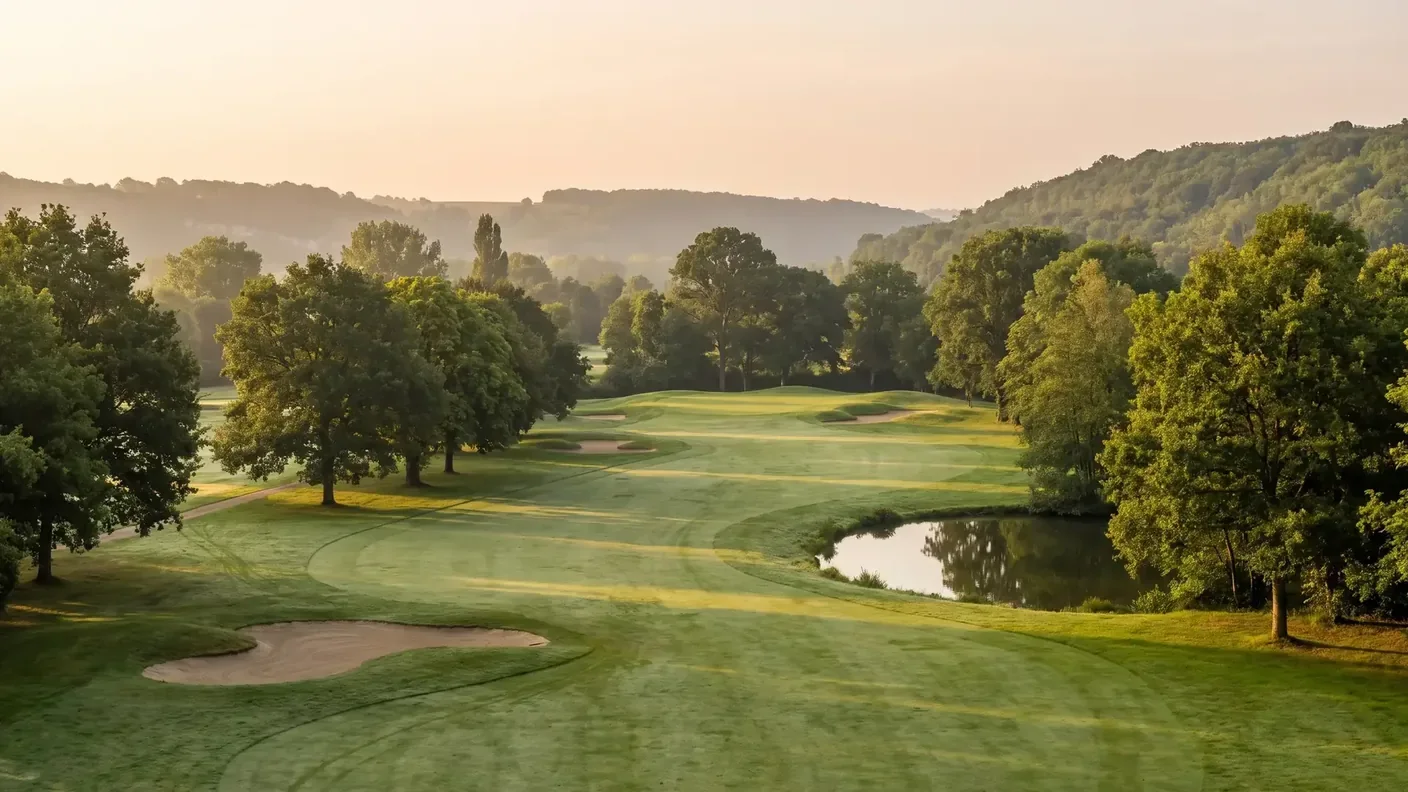
On the grounds of the former vineyard, a golf course, known as the “Aubeterre Golf Course.” Its exact founding date remains unclear—directories cite dates ranging from the early to the mid-1990s—but the course is credited to the architects Gamon & Peacock, is very real: 9 holes, par 32, approximately 2,011 meters, in a hilly setting near the Dronne Valley, dotted with numerous bunkers and obstacles. The estate’s old farm buildings have been converted into vacation rentals.
A family-run business since 2007
The estate is still run as a family business today: since 2007, Olivia and Richard Peacock (along with their son Thomas) have taken over from the founders. It’s a fine example of heritage revitalization: a Cognac estate in the Charente region, rather than fading into obscurity like so many others after the phylloxera crisis, has found a new lease on life—in sports and tourism—without erasing its winemaking heritage, which the estate’s name and the surrounding vineyards continue to reflect.
For visitors coming from afar, the distances are straightforward: the Longeveau Golf Course is located about 4.5 km from the town of Pillac (about ten minutes via back roads), about 44 km from Angoulême (about 47 minutes) and about 104 km from Bordeaux—roughly a 1.5-hour drive—as the course is located south of the town, toward the Dronne Valley. This makes it a natural stop for a “golf and heritage” day trip combining the course, Aubeterre-sur-Dronne, and the “Bons Bois” vineyard.
The estate and its golf course alone are worth a guidebook: we’ve devoted a separate article to them—see our guide to Longeveau Golf Club, with details on the 9-hole course, vacation rentals, and nearby attractions (Aubeterre, the Dronne River, and the Poltrot Recreation Center).
What is there to do in Pillac and the surrounding area?
Pillac is a tiny village: visitors can see the Saint-Aignan Church and its healing fountain, play golf at Longeveau, but the main attractions are in the immediate vicinity—the underground church of Aubeterre a few kilometers away, the Dronne Valley for swimming and canoeing, the Poltrot recreation center for families, and the Cognac Route all around. Here’s the actual itinerary, with most destinations less than a quarter of an hour’s drive away.
- The Saint-Aignan Church and the fountain—the Romanesque building, its four protected artifacts (1980–2007), and the spring reputed to cure ringworm, in the village
- Longeveau Golf Course — 9 holes (par 32) in the hamlet of Longeveau; reservations required; see our dedicated guide
- The Monolithic Church of Aubeterre (~8 km)—the largest underground church in Europe, with a nave approximately 20 m high carved into the cliff face, designated a historic monument
- The Poltrot Recreation Center (Nabinaud)—a giant plant maze, a tree-top adventure course, and a mill on the banks of the Dronne River
- La Dronne — swimming, canoeing, and fishing on a river designated as a Natura 2000 site
- The Cognac and Pineau Trail — Tastings at producers in Les Bons Bois, all around the village
A village as a base camp
Pillac should be taken for what it is: not a destination in and of itself, but a peaceful haven in the heart of a region with a surprising wealth of cultural heritage. Within a radius of about twenty kilometers, you can easily visit one of the Most Beautiful Villages of France (Aubeterre), a church carved into the rock, a protected river, a golf course, and cognac cellars—enough to fill several days. Hiking enthusiasts will find marked trails through the woods and along the Auzonne River; food lovers, the markets in neighboring towns (Aubeterre, Chalais); and the curious, a multitude of Romanesque churches and old farmhouses scattered throughout the countryside. The charm of Pillac lies precisely in its seclusion: you’ll sleep in absolute tranquility here, and each morning you’ll set out to explore a heritage that the crowds have yet to discover.
| Activity | Where / When | Good to Know |
|---|---|---|
| Saint-Aignan Church | Pillac Village | Romanesque building, 4 protected movable objects, healing fountain |
| Longeveau Golf Course | Longeveau hamlet | 9 holes (par 32), reservations required |
| Monolithic Church | Aubeterre-sur-Dronne (~8 km) | Listed as a historic monument, nave ~20 m, the largest in Europe |
| Poltrot Recreation Center | Nabinaud, on the banks of the Dronne | maze, tree-top adventure course, open during the season |
| Cognac and Pineau Tastings | Producers of Les Bons Bois | direct sales, often by appointment |
On the outskirts of Aubeterre-sur-Dronne
You can't talk about Pillac without mentioning its illustrious neighbor, Aubeterre-sur-Dronne, just ~8 km to the south. Nestled in the Dronne Valley, on the border between the Charente and the Dordogne, it is one of a very select group of municipalities classified as “ The Most Beautiful Villages of France ". Its white houses terraced along the hillside, its narrow streets, and its scenic viewpoints make it one of the most popular stops in the area.
Its treasure lies underground: theSaint John Monolithic Church, carved entirely out of the limestone cliff, is the the largest underground church in Europe — a nave approximately 27 meters long by 16 meters wide, under a vault reaching a height of about 20 meters. Enlarged in the 12th century by Pierre de Castillon upon his return from the Crusades, it was intended to house relics brought back from the Holy Land. A spectacular site, just a few minutes from Pillac.
This proximity places Pillac in a region at the crossroads of two identities: the Cognac region of Charente on one side, and the Périgord on the other—Pillac shares elements of both, through its “Bons Bois” terroir and its affiliation with the Noix du Périgord. Close enough to Aubeterre to enjoy its attractions, yet far enough away to retain the tranquility of a village of 243 residents.
A necropolis and two stone “sisters”
The site served as a necropolis until 1865: about a hundred graves were excavated and eighty sarcophagi were unearthed between 1958 and 1961, in the shadow of a six-meter-tall hexagonal monolithic reliquary, carved from a single block in the style of the Holy Sepulcher in Jerusalem. Listed as a historic monument since 1912, the church of Aubeterre belongs to an extremely rare category: France has only three large monolithic churches, its two “sisters” being those of Saint-Émilion, in the Gironde vineyards, and Mortagne-sur-Gironde, on the estuary. From Pillac, it’s about a ten-minute drive to Aubeterre—but the more adventurous make the trip on foot or by bike along the valley trails, arriving at the village from below, on the Dronne side.
What to See Around Pillac
Pillac is a great base for exploring southern Charente and the Dronne Valley. Here are the actual driving distances from the village:
| Destination | Distance / time from Pillac | Interest |
|---|---|---|
| Aubeterre-sur-Dronne | ~8 km · ~9 min | "Most Beautiful Villages of France," underground monolithic church |
| Aubeterre Golf Course (Longeveau) | ~4.5 km · ~10 min | A 9-hole course on the grounds of the former estate, at Pillac |
| Montmoreau | ~12 km · ~15 min | Castle, town, and TER train station (Angoulême–Bordeaux line) |
| Chalais | ~15 km · ~18 min | Talleyrand-Périgord Castle, TER Station |
| Angoulême | ~42 km · ~45 min | Comic Book City, city walls, Saint-Pierre Cathedral |
| Périgueux | ~58 km · ~1 hr | Gallo-Roman Vesunna, Saint-Front Cathedral |
The Dronne Valley, which winds its way between limestone cliffs and wooded meanders, is the central feature of the area: it collects the waters of the Auzonne and the Tude, which border Pillac, before continuing on toward the Dordogne. A region of natural beauty and stone villages, far from the main tourist crowds.
Cognac Within Tasting Reach
Since Pillac is located right in the heart of the vineyards, the Cognac Route begins at the village entrance: The local distillers and small producers in Les Bons Bois are happy to open their cellars to visitors and offer direct sales—often by appointment—for a much more intimate—and affordable—tasting of cognac and Pineau des Charentes than at the major houses. For the premium experience, the town of Cognac and its century-old cellars (Hennessy, Martell, Rémy Martin…) are just an hour’s drive away: our Cognac guide details the must-see spots. Between a round of golf, a church carved into the rock, and a glass of Pineau as the sun sets, the Pillac region is best savored at a leisurely pace.
Getting to Pillac from Bordeaux
Pillac is about 110 km from Bordeaux, or nearly 1 hour and 30 minutes by car—a far cry from the “80 km” sometimes cited, which is only the distance as the crow flies. Since the village has no train station and no regular bus service, access is almost exclusively by car.
| Fashion | Duration | Estimated cost | Details |
|---|---|---|---|
| Chauffeur Service (Executive Car Service) | ~1 hour 30 minutes | Starting at €193 · one-way | Door-to-door service from Bordeaux, with stops at your choice (Aubeterre, vineyards) |
| Personal car | ~1 hour 30 minutes | Varies depending on route, tolls, vehicle, and fuel | Via the N10/A10, then the departmental roads in southern Charente |
| Train + Transfer | 2–3+ hours | Check the TER fare plus highway rest stop fee for your selected trip | Take the TER to Montmoreau or Chalais, then ~12–15 km without public transportation |
| Regional bus | — | — | There are no scheduled flights to Pillac |
Compare the fixed-rate private chauffeur service quote of 193 € to the available TER fare and the actual cost of your vehicle on the date of departure; travel times are approximate.
By car and by train
From Bordeaux, you can reach the southern Charente via the major highways toward Angoulême, then take the departmental roads (D 458, D 10) that serve the Aubeterre area. The nearest train stations are Montmoreau (~12 km) and Chalais (~15 km), on the historic Angoulême–Bordeaux line—but there are still about a dozen kilometers to go without public transportation up to Pillac.
Locally, the road network is that of a rural town with a well-developed grid: the D 458 runs through the town, while the D 10—the Montmoreau–Aubeterre route—runs about 1 km to the west; the D 709, D 78, and D 140 also run through the municipality. This makes it easy to get around… provided you have a car.
A few words about the two train stations flanking the town, as they each have their own history: Montmoreau and Chalais are stops on the historic Paris-Austerlitz → Bordeaux-Saint-Jean line, which opened on this section in 1852 — Montmoreau is at kilometer marker 483, Chalais at KM 500, about 16 km apart, with Pillac located roughly halfway between the two, set back toward the east. The TER trains that stop there connect Angoulême and Bordeaux; this is the most realistic option for partial travel by train, to be supplemented by road afterward.
As a private chauffeur
For a village with such limited transportation options—and to then travel on to Aubeterre, the vineyards, or an event at the Domaine de Longeveau—a chauffeur service from Bordeaux is the simplest option: a direct, door-to-door trip of about 1 hour and 30 minutes, with no last-minute arrangements needed for the final stretch, flexible stops, and a fixed rate known in advance, starting at €193 one way.
Practical Information
- Recommended duration: half a day, combining Pillac with Aubeterre-sur-Dronne (~9 min) and the Dronne Valley.
- Must-see sights: the Church of Saint-Aignan and its fountain, the vineyard landscape of “Bons Bois,” and, above all, the nearby monolithic church of Aubeterre.
- Longeveau Golf Course: a 9-hole course open to the public with on-site lodging — the “Aubeterre Golf Course” is actually located in the municipality of Pillac.
- Shops & services: virtually nonexistent in the town; the nearest ones are in Aubeterre, Montmoreau, or Chalais.
- Transportation: No train station or bus service. A car or executive car service is essential. Nearest TER train stations: Montmoreau and Chalais (~12–15 km).
- Best time to visit: spring and fall (grape harvest, fall colors) for the vineyards; summer for Aubeterre and the Dronne River.
One final note about the atmosphere: Pillac isn’t a place you “visit” in the typical tourist sense—there’s no tourist office, no paid parking, and no lines. It’s a village of 243 residents where you have to earn the experience by stepping inside a church, searching for a fountain hidden in the grass, or knocking on the door of a local winemaker’s cellar. This unpretentious authenticity is precisely what appeals to those who make the detour: between the Longeveau golf course, the underground church of Aubeterre, and the Cognac hillsides, Pillac offers the rare luxury of a region full of character that has remained off the beaten path—the kind of place you leave feeling like you’ve discovered a secret.
Frequently Asked Questions
Where is the Longeveau estate located?
In the hamlet of Longeveau, in the municipality of Pillac, in Charente (16390), about 8 km north of Aubeterre-sur-Dronne. Despite its commercial name, “Aubeterre Golf Course,” the resort and its course are actually located in Pillac, not in Aubeterre.
Is the Aubeterre Golf Course really in Aubeterre?
No. Despite the commercial name “Aubeterre Golf Course,” the course is located at the Domaine de Longeveau, in the municipality of Pillac, about 4.5 km from the town center, and not in the municipality of Aubeterre-sur-Dronne. It has 9 holes, par 32, covering approximately 2,011 meters.
What is the history of the Longeveau estate?
Longeveau is a former wine estate and Cognac producer in the Charente region. After falling into disuse, it was purchased beginning in 1992—according to the estate—by an English family (the Peacocks and the Gammons), who restored it and built a golf course there. More precise dates for the manor house are based on marketing materials, not verified sources.
Is Pillac in Charente or in Périgord?
In Charente (Angoulême district). Historically, however, Pillac was part of the former Diocese of Périgueux: it is a village “at the crossroads.” This gives rise to a curiosity that remains to this day: although located in Charente, the municipality falls within the “Noix du Périgord” AOP region.
What is the “Bons Bois” Cognac vintage?
It is one of the six crus of the Cognac wine region, a vast outer belt that is the least calcareous of the six crus (nearly 9,300 ha): its sandy and clay soils surround the southern part of the production area. Pillac, like the entire southern Charente region, belongs to this cru.
How many residents are there in Pillac?
243 residents in 2023, with a population density of 12.4 people per square kilometer. This is a small number compared to its past: the village had nearly 1,300 residents in 1800, before phylloxera and rural depopulation caused its population to dwindle—a loss of about 81% over two centuries.
Where does the name “Pillac” come from?
The name is thought to derive from a Gallo-Roman estate: “Pilius” (a Roman male name) + the suffix -acum, meaning “the estate of Pilius.” The oldest dated forms are Pillaco (1110) and Pilhac (1299)—the latter being the Occitan form, as shown on the Cassini map.
Is Pillac close to Aubeterre-sur-Dronne?
Yes, about 8 km north (about a 9-minute drive). Aubeterre is listed among the Most Beautiful Villages of France and is home to the monolithic Saint-Jean Church, the largest underground church in Europe, carved entirely out of the cliff.
Is the Saint-Aignan Church in Pillac a designated historic site?
The building itself is neither classified nor listed as a historic monument (not to be confused with the Church of Saint-Aignan in Orléans, which is protected). However, its furnishings are: the high altar (classified in 1980), as well as the altarpiece of the south side altar and two paintings from 1806 (listed in 2002), are protected as cultural objects.
How far is Pillac from Bordeaux?
About 110 km, or ~1 hour and 30 minutes by car. With a chauffeur service, the door-to-door trip starts at €193 one way. Be careful with the “80 km” distance sometimes listed: that’s just the distance as the crow flies, not the actual road distance.
How can I get to Pillac without a car?
It's difficult: Pillac has neither a train station nor regular bus service. The nearest TER train stations are Montmoreau (~12 km) and Chalais (~15 km), on the Angoulême–Bordeaux line, but there are still about a dozen kilometers without public transportation. Hiring an executive car service is still the simplest solution.
What is a "viguerie," and why was Pillac its headquarters?
A viguerie is an administrative district dating back to the Carolingian era, headed by a viguier. Pillac served as the seat of one such district from the 10th to the 18th century—one of the seven vigueries in the County of Angoulême, which numbered about twenty following its expansion in the 11th century. It is mentioned in Latin as early as 1015 (“Vicaria Piliacensis”), which gives the village a remarkable medieval documentary record for its size.
How far is the Longeveau Golf Course from Bordeaux and Angoulême?
The golf course is located about 104 km from Bordeaux—about a 1.5-hour drive—and about 44 km from Angoulême (about 47 minutes). From the town of Pillac, it’s about 4.5 km, or about 10 minutes. Since there is no public transportation to the estate, access is by road—either by car or with a chauffeured transfer from Bordeaux.
What's there to see around Pillac?
Aubeterre-sur-Dronne and its monolithic church (~9 min), the Longeveau Golf Course, the castles of Montmoreau and Chalais, the Dronne Valley, and further afield, Angoulême (~45 min) and Périgueux (~1 hr). An area of natural beauty and stone villages, between Charente and Périgord.
Further Reading
- The capital of Cognac, about 1 hour away: see the Cognac Guide (the major houses, the Charentais method, the cellars)
- The jewel of the Périgord Vert, on the Dronne River: see the Brantôme Guide (abbey, caves, “Venice of the Périgord”)
- Another rural village described in detail: see the Bertric-Burée Guide (millennial yew tree, Gary Gygax Alley)
- The 2,000-Year-Old Prefecture: See the Guide to Périgueux (Vesunna, Saint-Front)
- Plan your trip: Book a private chauffeur from Bordeaux to Pillac or explore all our destinations
Sources and References
- Wikipedia — Pillac — geography, toponymy, parish, demographics, Longeveau
- INSEE — Complete Pillac dataset (16260) — population, density, age groups, RP2022
- Wikidata — Pillac (Q742436) — area, elevations, population series
- Town of Pillac (official website) — Saint-Aignan Church, fountain, local heritage
- INAO — AOC Cognac (Bons Bois vintage) & AOP Périgord Walnuts — vintage region, Pillac designation
- Domaine de Longeveau / Aubeterre Golf Course (official website) — history of the estate (marketing overview), golf, vacation rentals
- POP / Palissy Database — Objects from the Pillac Church — Protected altarpiece and paintings (historically designated objects)
- Wikipedia — Aubeterre-sur-Dronne — Most Beautiful Villages, Saint-Jean Monolithic Church
- BNIC / Cognac.fr — The Six Crus — Bons Bois Cru, Terroirs, and Geology
Article updated in July 2026.
Heading to Southern Charente
Direct trip from Bordeaux (~1.5 hours) to southern Charente, with stops of your choice along the way—Aubeterre-sur-Dronne, the Cognac vineyards, and the Dronne Valley. Fixed-price quote in writing within 30 minutes; sedan or 8-passenger van; English-speaking driver.