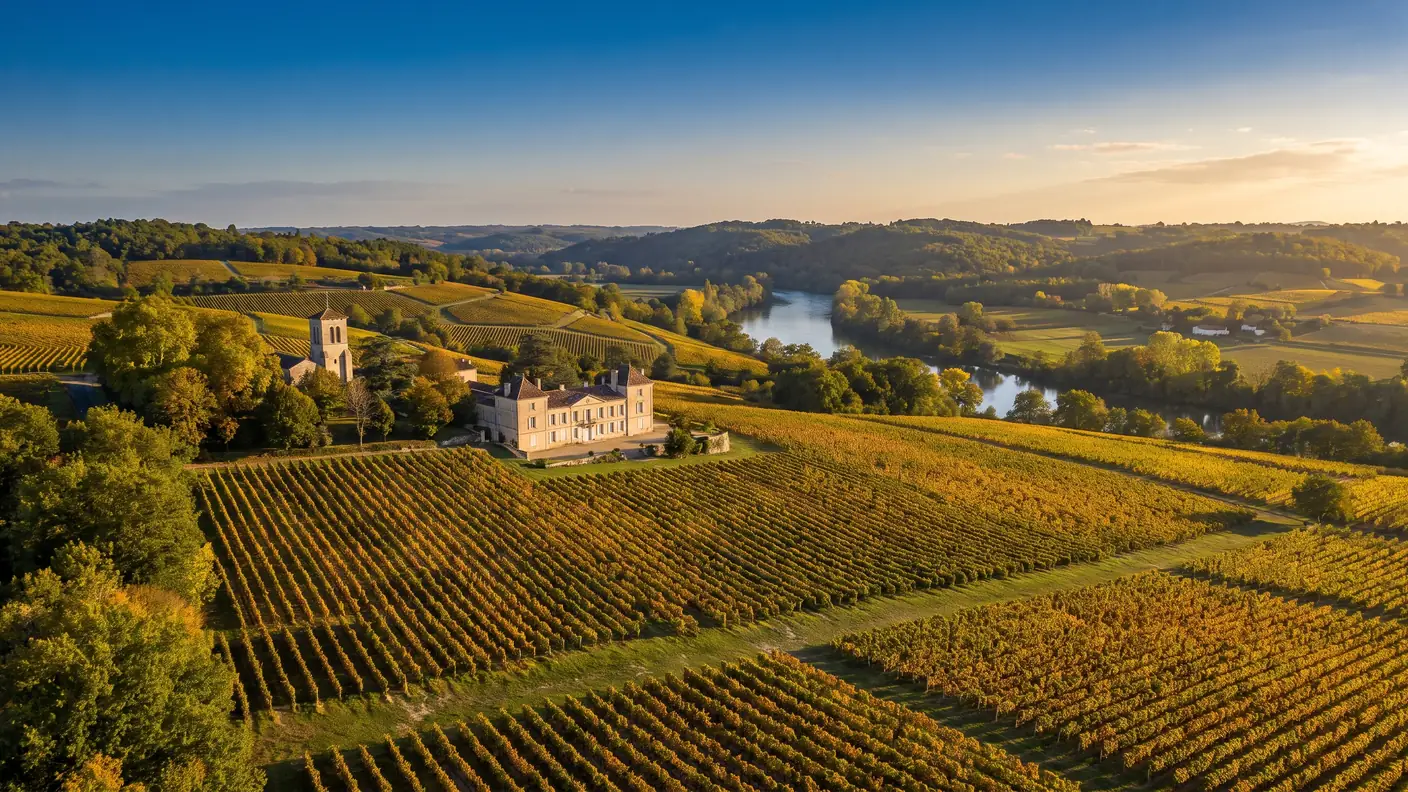
Private driver from Bordeaux to Mouliets-et-Villemartin: church and commandery
A wine-growing village in the Castillonnais region, nestled on the hillsides of the Dordogne, home to two medieval landmarks: Mouliets-et-Villemartin, its Romanesque Saint-Martin Church, the ruins of its Hospitaller commandery, and its Bordeaux Supérieur wines—plus your private door-to-door transfer from Bordeaux, without having to rent a car.
Mouliets-et-Villemartin at a glance
Mouliets-et-Villemartin is a wine-growing village in the Gironde department, in the Castillonnais region, on the hillsides overlooking the Dordogne Valley, a few kilometers from Castillon-la-Bataille and about 56 km east of Bordeaux. It is home to vineyards producing Bordeaux and Bordeaux Supérieur wines, a beautiful Romanesque church listed as a Historic Monument, and the poignant ruins of a former commandery. This guide distinguishes fact from fiction: contrary to what is often written, the village is not part of the Castillon Côtes de Bordeaux appellation; the attribution of the Villemartin commandery between the Knights Templar and the Knights Hospitaller remains to be documented; the church and the chapel have two distinct protection statuses, and the merger of the two villages dates back to the First Empire, not to recent times. We then outline the easiest way to get there from Bordeaux: a private door-to-door transfer, without renting a car—which is invaluable for reaching this hillside village that has no train station.
Here are the key details to know before you go. The distance, duration, and price are based on the information displayed by the booking engine. The heritage designations are taken from the official listings of the Ministry of Culture; opening hours and building access are subject to confirmation before your trip.
| Landmark | Details |
|---|---|
| Municipality | Mouliets-et-Villemartin (Gironde, Libourne district) |
| Location | Castillonnais, hills overlooking the Dordogne, near Castillon-la-Bataille |
| Residents | 1,041 residents of Mouliet (2023) · 15.91 km² · Source: INSEE |
| Must-See | the Romanesque Church of Saint-Martin (designated a historic monument), the ruins of the Villemartin Commandery (classified as a historic monument) |
| Distance from Bordeaux | about 56 km · about 1 hour and 3 minutes by car · route source |
Where is Mouliets-et-Villemartin located?
Mouliets-et-Villemartin is located in the eastern part of the Gironde department, in the Castillonnais region, on the hillsides overlooking the banks of the Dordogne River, a few kilometers east of Castillon-la-Bataille. It is a region of vineyards, hillsides, and rivers. Agriculture accounts for 30.6% of the active businesses recorded by INSEE at the end of 2023. The village is part of the Libourne district, the Coteaux de Dordogne canton, and the Castillon-Pujols community of municipalities.
In the Castillonnais region, on the banks of the Dordogne
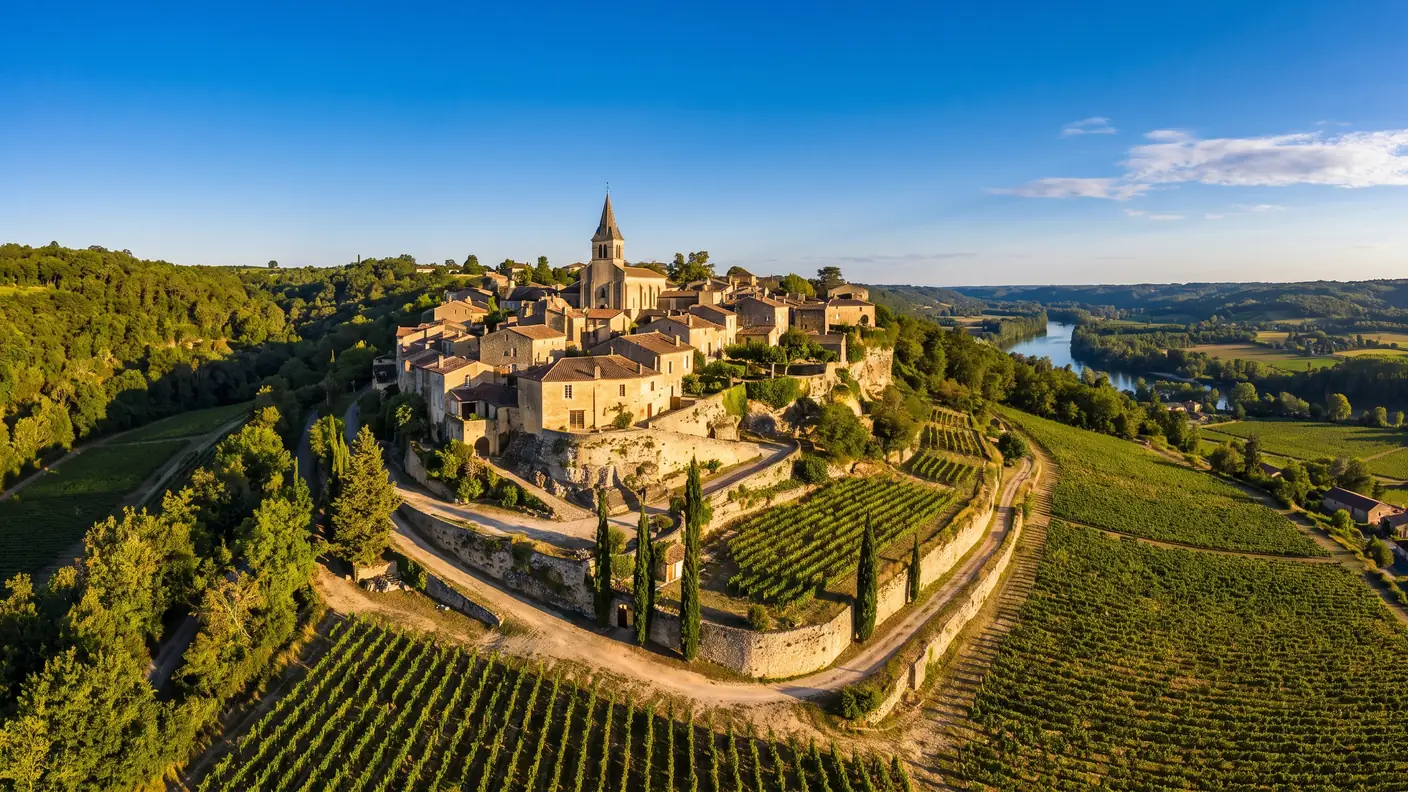
The village belongs to the Castillonnais, this area of eastern Gironde centered around Castillon-la-Bataille, at the crossroads of the Libourne wine region and the Entre-deux-Mers region. The town is on the banks of the Dordogne: The river runs along its northern border, exposing the low-lying lands to the risk of flooding, while the village and the vineyards are carefully terraced on the hillsides. So we should avoid saying that “the Dordogne River flows through the village” or that it is a river port: Mouliets overlooks the river from its hillside, without even dipping its toes in it. This sunny hillside location is what gives its vineyards their quality and affords sweeping views of the valley. All around lie the winegrowing villages of the Castillonnais and Entre-deux-Mers regions—Sainte-Radegonde, Pujols, Flaujagues, Doulezon—set in a landscape of vine-covered hills, away from the major tourist routes.
One name, two former villages
The name, which is a bit confusing, tells two intertwined stories. The current town originated from the merger of two former parishes: Mouliets and Villemartin. Villemartin, which became a municipality during the Revolution, was formerly part of the Diocese of Bazas and was home to a commandery; it was incorporated into Mouliets under the First Empire, in Year IX (around 1800–1801)—an ancient merger, not the result of a modern consolidation in the 1970s or 2000s, as is sometimes believed. Each of the two original centers left behind its own monument: the St. Martin's Church in Mouliets, the chapel in ruins in Villemartin. This dual origin explains the scattered settlement pattern in hamlets—typical of the region’s wine-growing towns—where houses and wine cellars are spread out along the hillsides rather than clustered into a compact village center. It is a commune shaped by the landscape, the vineyards, and the history of religious orders.
The Romanesque Church of Saint Martin
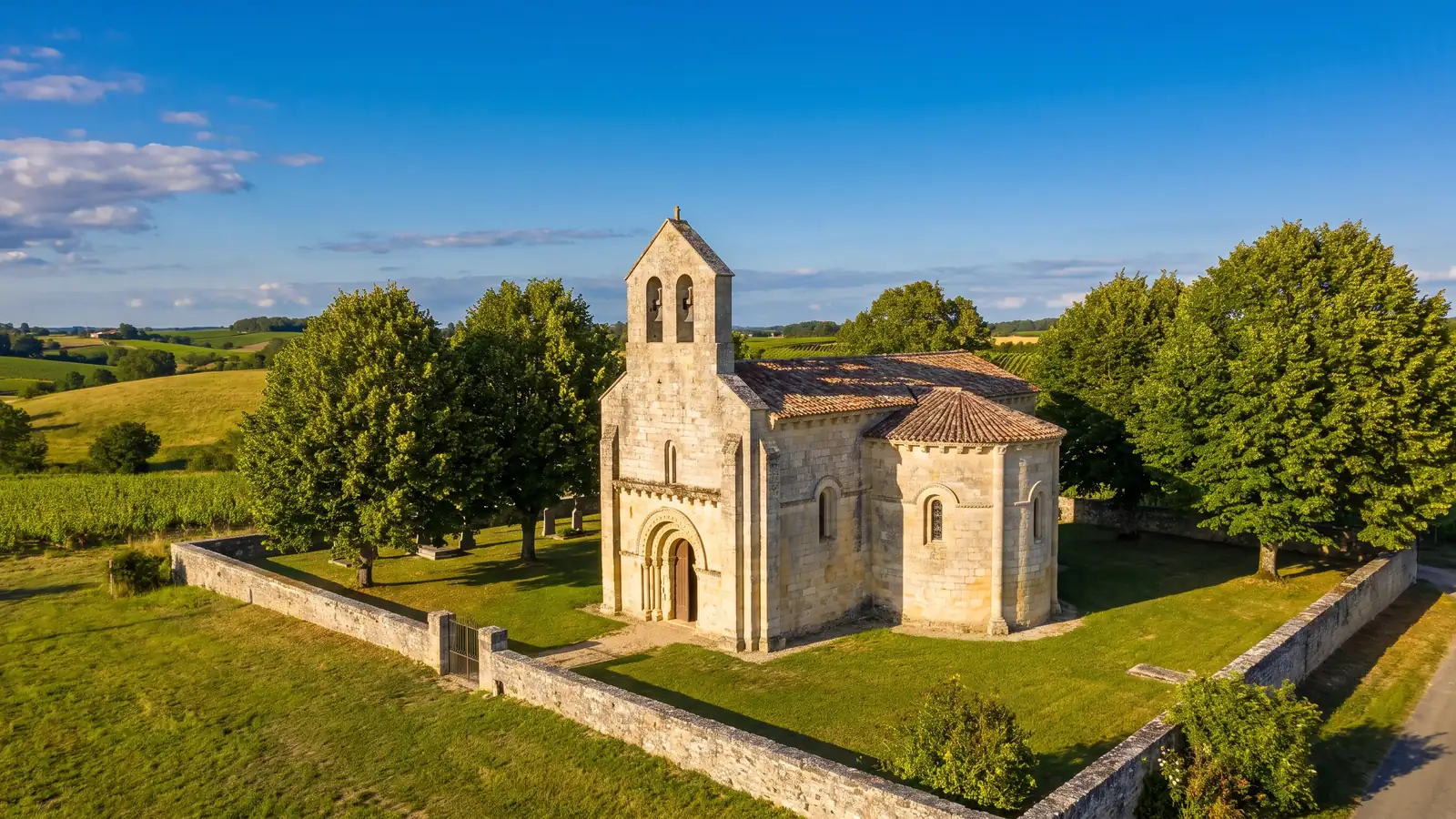
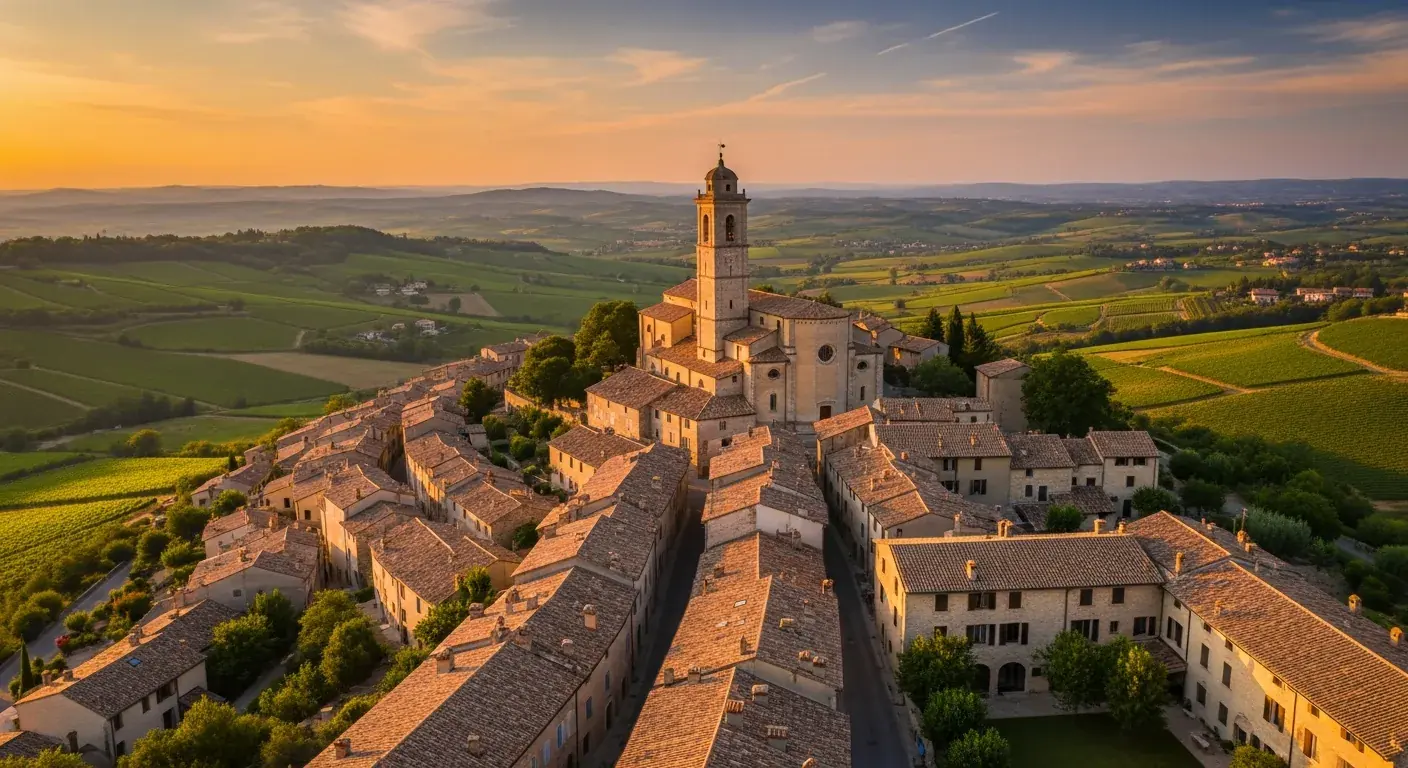
The Church of Saint-Martin-de-Mouliets is a beautiful Romanesque building dating from the 11th and 12th centuries, listed as a Historic Monument. Although no longer in use, it bears witness to the rich medieval past of this hillside village. Here is what the sources say, without adding anything further.
An Early Romanesque Church Listed as a Historic Monument
The St. Martin's Church, in the heart of the old village of Mouliets, dates from the 11th and 12th centuries. The church was listed as a Historic Monument by order of February 26, 2001 [official notice]. Today decommissioned, it is best viewed from the outside; no regular visiting hours are listed in the heritage description.
Saint Martin, a patron saint of the countryside
The church is dedicated to Saint Martin, one of the most popular saints in Western Christianity and one of the great patron saints of the countryside and rural parishes of Gaul. A bishop of Tours in the 4th century, famous for having shared his cloak with a poor man, he has lent his name to thousands of village churches, particularly in the Southwest. It is therefore no surprise that the parish of Mouliets is dedicated to him: this is a sign of an ancient foundation, undoubtedly predating the Romanesque building itself, on land once used for vineyards and farming. This dedication, combined with the presence of a nearby commandery, paints a picture of a region deeply shaped, from the Middle Ages onward, by the Church and religious orders—pilgrims, monk-soldiers, and peasants shaped a landscape that is still dominated by vineyards today.
The Commandery of Villemartin
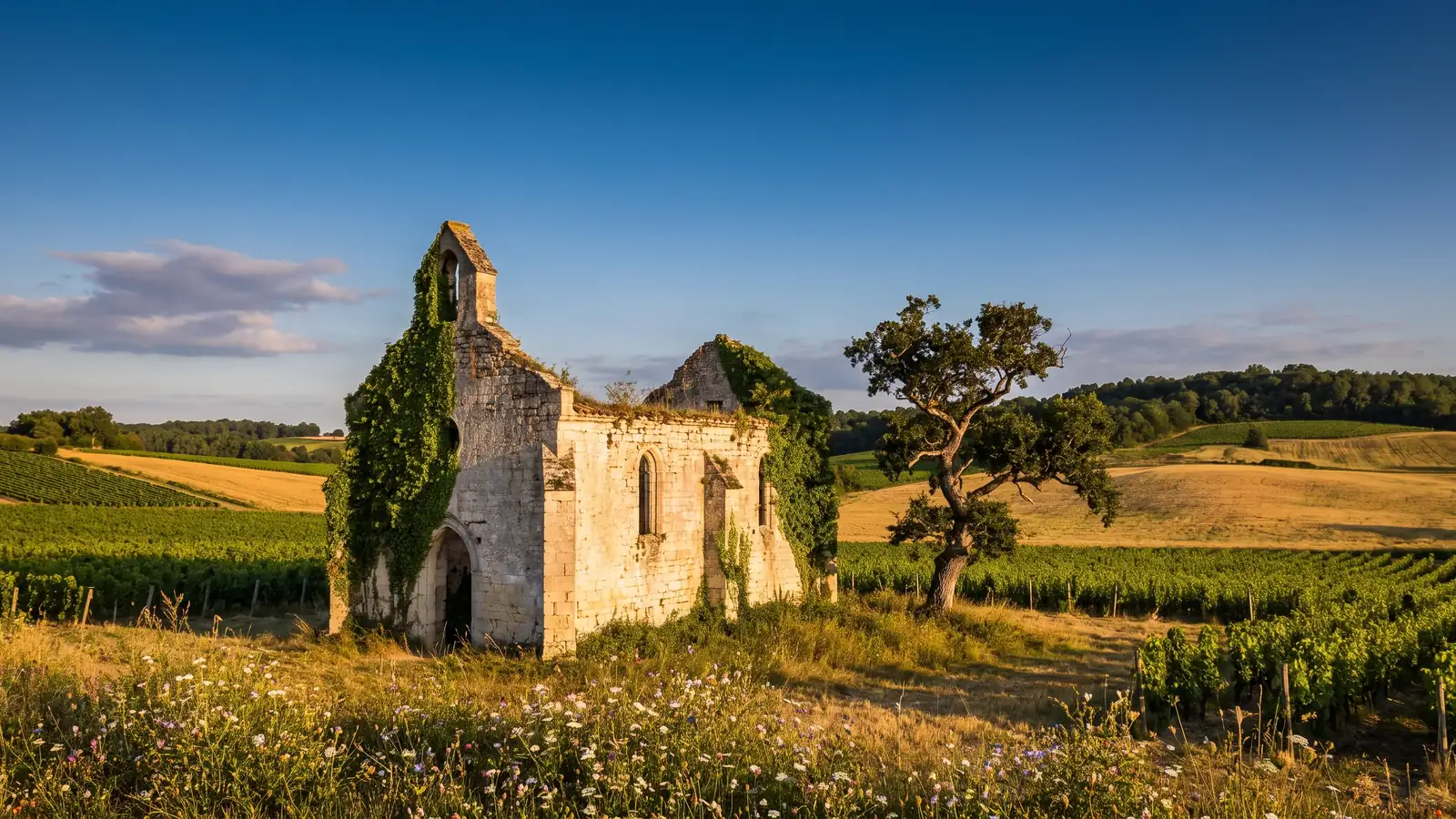
In Villemartin, the ruins of a former commandery remain; it was designated a Historic Monument by decree on November 6, 1920 [official description]. The description refers to it as the “Templar commandery”; this guide does not go beyond the information provided in that source.
A historical attribution to be documented
The Mérimée entry uses the term “Templar commandery,” while a secondary source cited in the article attributes it to the Knights Hospitaller of Saint John of Jerusalem and links it to Arcins. In the absence of archival references or signed publications that would allow for a definitive conclusion, this guide presents both attributions and does not label either one as an error.
A Remnant of the Monk-Soldiers in Guyenne
Military orders—the Knights Templar, followed by the Knights Hospitaller—had a profound impact on medieval Guyenne. Their commanderies—which served as farms, shelters for pilgrims, and logistical bases—dotted the roads of southwestern France, particularly those leading to Santiago de Compostela. Villemartin stands as a testament to this, in a region—between the Dordogne and Entre-deux-Mers—where other traces of their presence can be found (such as the St. James iconography in the nearby Church of Sainte-Radegonde). Today, the chapel is little more than open walls overgrown with ivy, set amid fields and vineyards—but its designation as a historic monument as early as 1920 speaks volumes about the value attributed to it.
Looking at these stones, one can imagine the life that once bustled within the commandery: the Hospitaller brothers, the harvests and livestock, the pilgrims welcomed for the night on the Way of St. James, and the rents and tithes that were sent up to the Grand Priory. Few of these estates have left visible traces in the Gironde; the one at Villemartin, however modest it may be today, is all the more precious for it. It is a place to be explored with respect (check the property and surrounding area on site), adding a rich layer of medieval history to a wine-tasting getaway, far off the beaten path.
Mouliets-et-Villemartin Through the Centuries
Two former parishes, a Hospitaller commandery, and a merger during the First Empire: the history of Mouliets-et-Villemartin is that of a region shaped by the Church, military orders, and viticulture. Here are the verified facts about this small village in the Castillonnais region.
From Two Parishes to One Municipality
In the Middle Ages, the territory of the present-day municipality was divided between two settlements: Mouliets, with its Saint-Martin Church, and Villemartin, with its Hospitaller commandery, which was under the authority of the Diocese of Bazas. The two parishes coexisted for a long time, set amid a landscape of vineyards, farmland, and woods. The Revolution established Villemartin as a municipality; then, under the First Empire (in Year IX, around 1800–1801), the two municipalities were gathered into a single municipality, under the compound name Mouliets-et-Villemartin. This merger, often incorrectly dated, is therefore much older than is commonly believed: it dates back more than two centuries. From this dual origin, the municipality retains two monuments and an identity of municipality-landscape, scattered in hamlets along the hillsides, like so many wine-growing villages in the area.
Castillon, the Dordogne, and the Vineyards
Mouliets-et-Villemartin retains a rural and wine-growing character. Agriculture accounted for 30.6% of active businesses as of the end of 2023, according to economic data from INSEE. Vineyards, the neighboring Dordogne River, and the legacy of the Battle of Castillon continue to shape the landscape.
Appellation, commandery: terms you often see
Several claims are circulating about Mouliets-et-Villemartin that warrant correction, backed by sources—which is the whole point of a reliable guide. The name, the commandery, the property statutes: here’s what’s true and what’s false.
Neither Castillon Côtes de Bordeaux nor Templiers
Mouliets is often described as a village within the Castillon Côtes de Bordeaux appellation. This is inaccurate: this AOC for red wines, established in 2009, covers only nine municipalities around Castillon-la-Bataille (Belvès-de-Castillon, Gardegan-et-Tourtirac, Sainte-Colombe, Saint-Magne-de-Castillon…), and Mouliets-et-Villemartin is not part of it. Its vineyards fall under the generic appellations Bordeaux and Bordeaux Supérieur—so we would say “on the outskirts of the Castillon appellation,” not “in Castillon Côtes de Bordeaux.” The Mérimée entry uses the term “Templar commandery,” while a secondary source consulted by the article attributes it to the Hospitallers of Saint John of Jerusalem and links it to Arcins. In the absence of archival references or signed publications that would allow for a definitive conclusion, this guide presents both attributions and does not label either as an error.
Two monuments, two protection measures, a river in the distance
We must also distinguish between the two buildings and their two protection statuses, which we readily mix together. The Villemartin Chapel is listed as a Historic Monument (decree of November 6, 1920); the St. Martin's Church is only registered (Decree of February 26, 2001). Two separate Mérimée references (PA00083644 and PA33000046), two levels of protection—not to be confused. Finally, in terms of geography: the municipality is on the banks of the Dordogne, but the village is perched on the hillsides—we wouldn’t say it’s “on the riverbank” or that it was once a “port.” And the small stream sometimes attributed to it, the Engranne, actually flows further south, toward Pujols and the Sauveterrois region; it is not connected to Mouliets. These details are what distinguish a verified guide from a text copied in haste.
Wine: Bordeaux and Bordeaux Supérieur
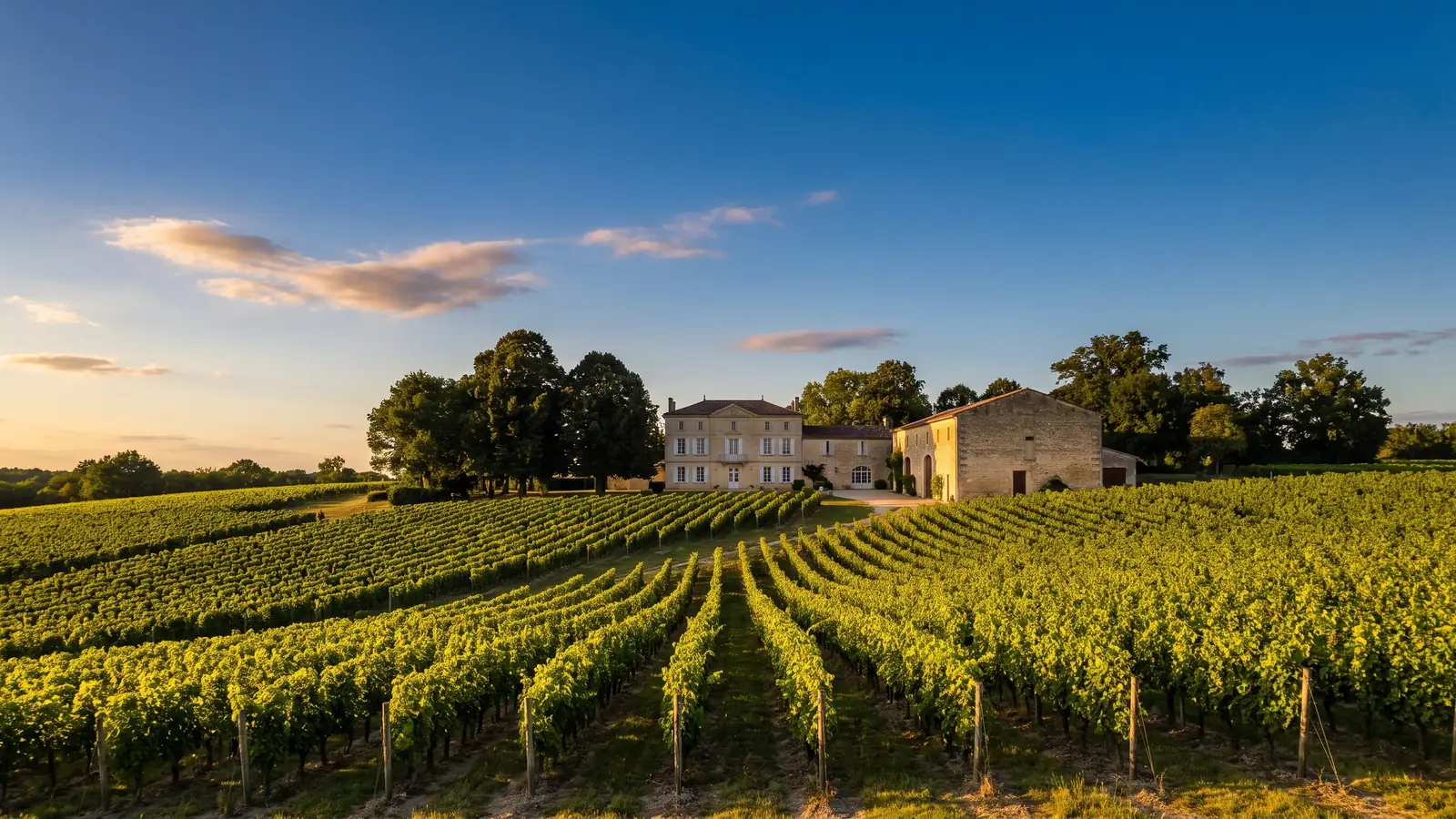
Mouliets-et-Villemartin is a wine-growing village whose agricultural activity is still reflected in INSEE data [source]. Its hillsides overlook the Dordogne Valley, on the edge of the Castillon vineyard.
On the edge of the Castillon vineyard
The Mouliets-et-Villemartin vineyard is located on the hillsides overlooking the Dordogne River, on well-exposed clay-limestone soils. Its wines fall under the major regional appellations—Bordeaux and Bordeaux Supérieur—and are primarily reds made from Merlot and Cabernet. This area is very close to the Castillon Côtes de Bordeaux vineyards, whose renowned wines—often neighboring those of Saint-Émilion—are produced just a few kilometers away; however, as mentioned, Mouliets does not belong to this appellation. The area is home to fine estates, such as Château Chapelle d’Aliénor (52 hectares) and Château La Rose Belair, which carry on a long-standing winemaking tradition. Prices vary depending on the estate, the cuvée, the vintage, and the sales channel; check the current prices for each property before comparing appellations.
Wine Tasting Along the Hillsides
On the hillsides of Mouliets and neighboring towns, family-run wineries are happy to welcome visitors for tastings, often by appointment. This is a chance to sample red wines with aging potential, chat with the winemakers, and leave with a few bottles. Many estates offer direct sales; some of the more prestigious ones organize carefully curated cellar tours. It’s easy to combine, in a single day, exploring Mouliets’ landmarks—the Romanesque church, the ruins of the commandery—with two or three stops at wineries, before heading on to Castillon or Saint-Émilion. Here again, the benefits of private transportation are clear: you’re driven from one estate to the next, you can enjoy tastings without worrying about the kilometers of winding wine roads, and you return to Bordeaux or your lodging stress-free. Since opening hours and visit policies vary, be sure to confirm them directly with each winemaker before your visit.
| Wine at Mouliets-et-Villemartin | Details (according to sources) |
|---|---|
| Appellations | Bordeaux and Bordeaux Supérieur (reds) — on the edge of the Castillon AOC |
| Terroir | clay-limestone hillsides overlooking the Dordogne Valley |
| Grape Varieties | Merlot, Cabernet (reds) |
| Fields | e.g., Château Chapelle d'Aliénor (52 ha), Château La Rose Belair |
| Good to Know | Wine tastings at the vineyards, often by appointment |
What is there to do in Mouliets-et-Villemartin and the surrounding area?
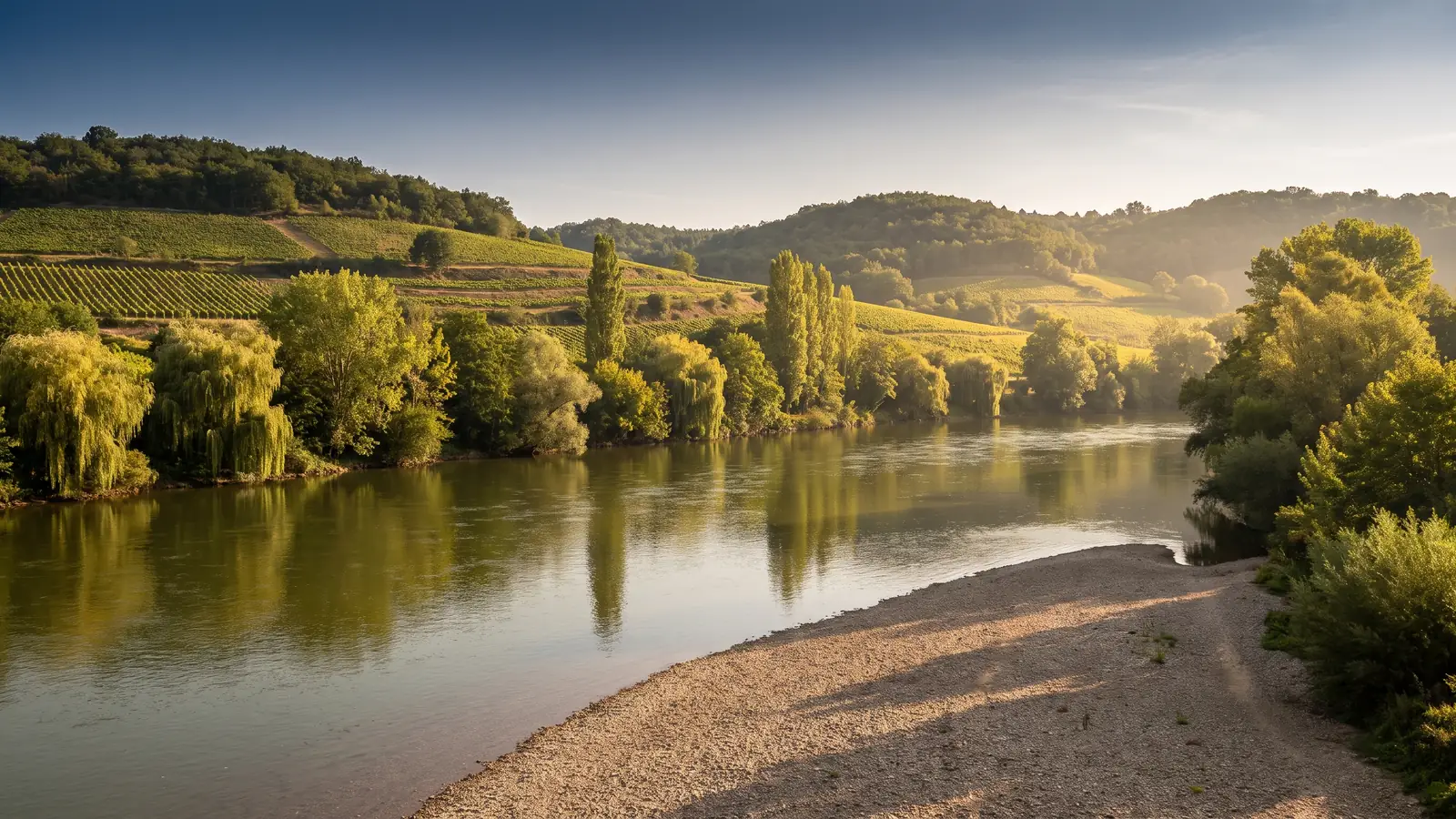
In Mouliets-et-Villemartin, you can explore the Romanesque church and the ruins of the commandery, taste wines from the hillsides, and venture out to Castillon-la-Bataille and its spectacular nighttime show, then on to Saint-Émilion and the Dordogne. Here, in concrete terms, are the actual, verified activities in the area. Since the village is primarily a wine-growing community, many of these activities take place in the immediate vicinity—we’ll specify this each time.
- Visit the Romanesque Church of Saint-Martin and the ruins of the Villemartin Commandery—two medieval monuments (check access and surrounding area on site)
- Taste wines from the hillsides—Bordeaux and Bordeaux Supérieur—at local wineries (often by appointment)
- The show “The Battle of Castillon” — about 8 km away (Belvès-de-Castillon): a grand summer nighttime spectacle featuring 600 volunteers and 40 horses
- Castillon-la-Bataille — about 6 km away: the gateway town, its market, the banks of the Dordogne, and the legacy of the 1453 battle
- Saint-Émilion—a medieval town listed as a UNESCO World Heritage Site, with its monolithic church and grand cru wines, just half an hour away
- Canoeing on the Dordogne — downstream trips, during the season, between vineyard-covered hillsides
- The neighboring wine-growing villages—Sainte-Radegonde and its historic church, and Pujols, just a few minutes away
The monuments, the vineyards, and the Dordogne
A tour of Mouliets-et-Villemartin begins with its two medieval monuments: the Saint-Martin Romanesque Church, to admire from the outside, and the moving Ruins of the Villemartin Commandery, lost in the middle of the fields (check access and surroundings on site, as the chapel is in ruins). This is supplemented by a tasting at a local winery, to sample the Bordeaux Supérieur reds. Below, the Dordogne Valley offers its riverbanks and the opportunity to travel down the river by canoe during the season, departing from nearby bases. It’s a slow, authentic way to explore, set to the rhythm of the hillsides and the river, made enjoyable for much of the year by the mild climate of the Gironde.
The nearby markets—Castillon’s, in particular—round out the experience with local produce, cheeses, and wines from the region. And for those who enjoy walking, the ridge trails connecting the hamlets offer a new view of the valley and the vineyards from every hillside. You’ll appreciate this unspoiled countryside all the more when you let yourself be driven—without worrying about driving or parking—along the small roads of the Castillonnais region.
Castillon, Its Summer Show and Saint-Émilion
The industry’s major event takes place in Castillon-la-Bataille, just a few kilometers away: this small town in the Dordogne Valley is inextricably linked to the final battle of the Hundred Years’ War, fought on July 17, 1453. Every summer, a grand nighttime spectacle reenacts the battle in nearby Belvès-de-Castillon, featuring some 600 volunteers and 40 horses—one of the region’s largest outdoor shows (and not in Castillon itself, contrary to what is sometimes reported). Half an hour west lies the jewel of the area: Saint-Émilion—a medieval town listed as a UNESCO World Heritage Site, featuring its astonishing monolithic church carved into the rock, its cobblestone streets, and its world-renowned fine wines.
From Mouliets, it’s easy to plan a trip that combines Romanesque art, French history, and the great wines of the Right Bank. For example, you could spend the morning exploring the village’s monuments and a local winery, the afternoon in Saint-Émilion, and the evening at a show in Castillon—all within a radius of about twenty kilometers, without ever having to head back toward Bordeaux.
| Activity | Where / When | Good to Know |
|---|---|---|
| Romanesque Church & Commandery | on site | Saint-Martin (listed), Villemartin (designated) |
| Wine Tasting | Mouliets and the surrounding area | Bordeaux, Greater Bordeaux, by appointment |
| Battle of Castillon (play) | ~8 km · summer | Nighttime mural, 600 volunteers |
| Castillon-la-Bataille | ~6 km | market, Dordogne, chronicle from 1453 |
| Saint-Émilion | ~30 min | UNESCO World Heritage Site, monolithic church, fine wines |
What's there to see around Mouliets-et-Villemartin?
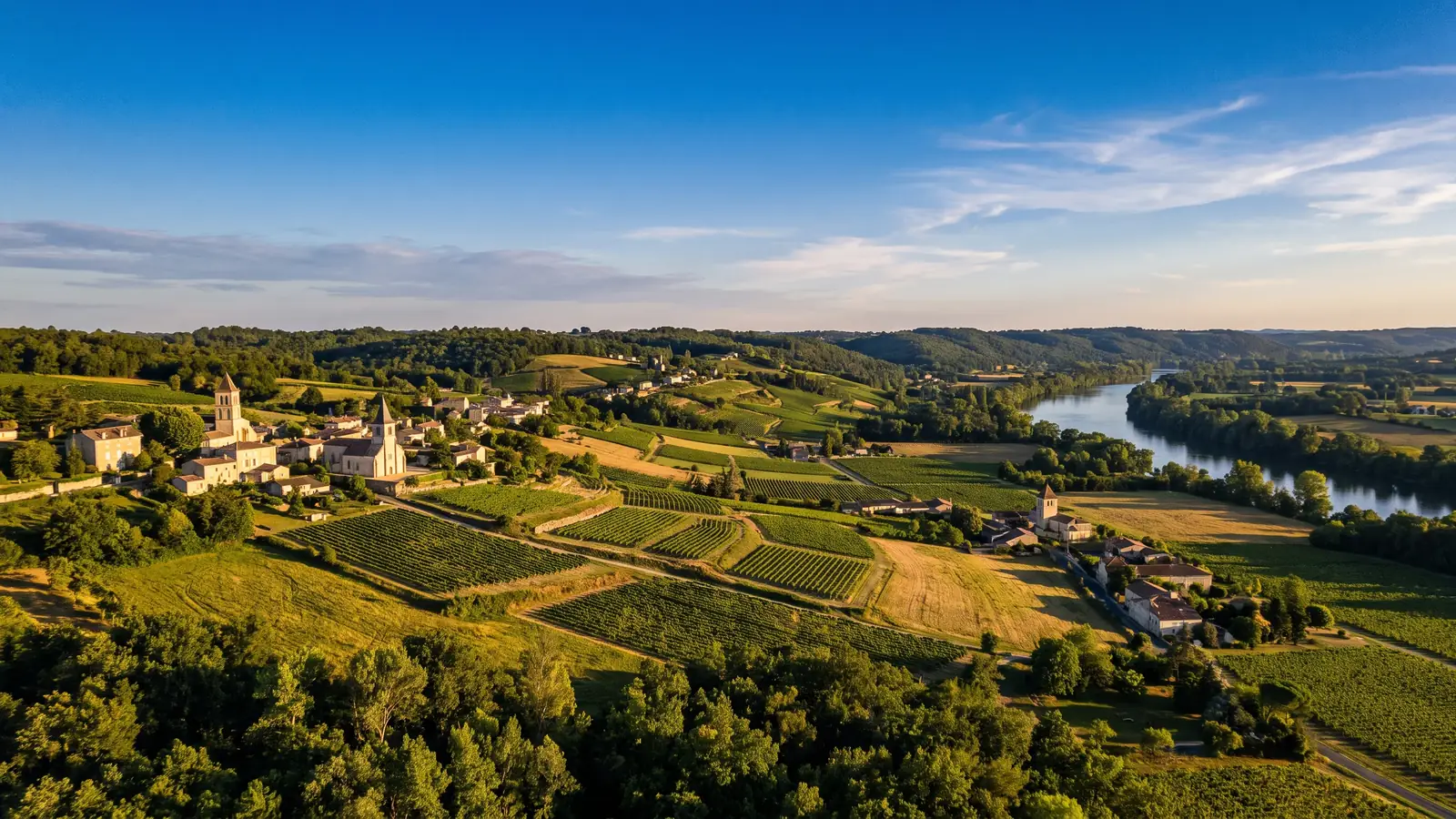
Near Mouliets-et-Villemartin, you’ll discover Castillon-la-Bataille and its battlefield, Saint-Émilion and its grand cru wines, and the villages of the Entre-deux-Mers and the Dordogne Valley. The village is ideally situated between the Castillon vineyards and the Entre-deux-Mers region: here are the must-see attractions, all of which can be visited on a day trip.
Castillon, Saint-Émilion, and the Valley
To the northwest, Castillon-la-Bataille (~6 km) is the gateway town to the valley: it features a market, the banks of the Dordogne, and, every summer, the grand spectacle of the Battle of 1453. To the west, half an hour away, Saint-Émilion boasts one of the most beautiful medieval complexes in France, listed as aUNESCO: a monolithic church, cloisters, cobblestone streets, and world-renowned vineyards. In between, the vineyard of Castillon Côtes de Bordeaux offers a range of distinctive wines, often excellent value for money. Traveling eastward up the valley, you reach the hilltop villages on the slopes of the Dordogne—such as Gensac and its view of three valleys—and, further on, Sainte-Foy-la-Grande, an elegant riverside village famous for its Saturday market. Three worlds—viniculture, history, and the river—are all within easy reach by bike from Mouliets.
The Villages of Entre-deux-Mers
South of Mouliets lies the heart of the Entre-deux-Mers, one of the most charming rural areas in the Gironde, dotted with medieval villages, abbeys, and mills. Nearby, Sainte-Radegonde (bordering Mouliets) is home to a remarkable, listed Romanesque church, whose tympanum is carved with pilgrims on the Way of St. James—a direct echo of the Villemartin commandery. Pujols and Rauzan preserve the ruins of castles and beautiful stone villages; further on, Sauveterre-de-Guyenne displays the arcades of its bastide, and the Abbey of La Sauve-Majeure (a UNESCO World Heritage Site as part of the Routes of Santiago de Compostela) stands with its Romanesque ruins. It is a land of vineyards and Romanesque heritage, where you can take the time to stroll, savor local flavors, and lose yourself on the ridge roads. An executive car service who knows the region will be able to tailor an itinerary just for you, freeing you from the hassle of driving.
When is the best time to visit Mouliets-et-Villemartin?
Mouliets-et-Villemartin and the Castillonnais region are best enjoyed from spring through fall, when the vineyards are green, the wineries welcome visitors, and the Castillon Festival brings summer evenings to life. The spring (May–June) offers vibrant hillsides, soft light, and perfect days for exploring the sights, sampling local delicacies, and strolling along the Dordogne. The summer (July–August) is the peak season: tastings, markets in Castillon, canoeing on the river, and, on summer evenings, the grand nighttime show at the Battle of Castillon just a stone's throw away—it's the hottest time of year, when the valley's coolness is a welcome relief. The fall (September–October) is perhaps the most beautiful time of year: it's the season of grape harvest, the light bathes the hillsides in gold and the crowds thin out; the vineyards of the Castillonnais take on stunning hues. No matter the season, the mild climate of the Gironde makes Mouliets a pleasant place to visit for much of the year. A weekend is all it takes to experience the highlights: Romanesque art, vineyards, and history, between Castillon and Saint-Émilion.
| Season | Atmosphere | Ideal for |
|---|---|---|
| Spring (May–June) | green hillsides, soft light | sights, food tastings, Dordogne |
| Summer (July–August) | High Season, Castillon Show | family, canoeing, lively evenings |
| Fall (Sept.–Oct.) | grape harvest, golden light, tranquility | wine tourism, heritage, photography |
Travel from Bordeaux to Mouliets-et-Villemartin
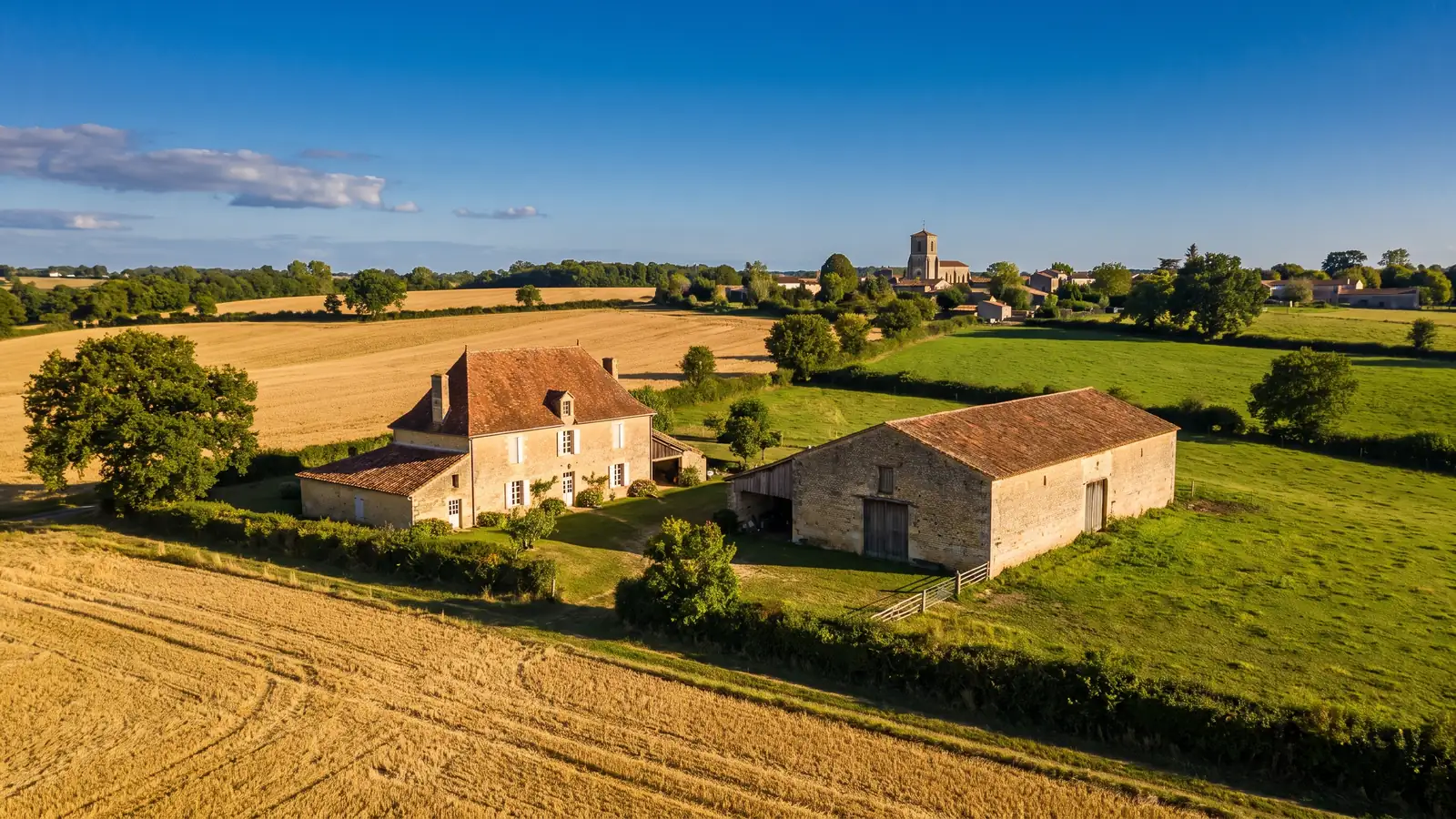
Mouliets-et-Villemartin is about 56 km from Bordeaux, or about a 1-hour, 3-minute drive. The route heads east through Libourne and Castillon-la-Bataille, then along the hillsides of the Castillonnais region. The village does not have a train station; the nearest one is in Castillon-la-Bataille, a few kilometers away, which is served by direct trains from Bordeaux.
| Route | Distance | Duration | Details |
|---|---|---|---|
| Bordeaux → Mouliets-et-Villemartin | ~56 km | ~1:03 | Starting at ~€108 for a chauffeured transfer |
| Bordeaux-Mérignac Airport → Mouliets | ~67 km | ~1:05 | pickup at the terminal |
| Castillon-la-Bataille Station → Mouliets | ~6 km | ~10 min | Direct TER train from Bordeaux |
| Mouliets → Saint-Émilion | ~15 km | ~20 min | UNESCO Medieval City |
By car, it takes about 1 hour and 3 minutes to reach Mouliets-et-Villemartin from Bordeaux: the route follows the Dordogne Valley through Libourne and Castillon-la-Bataille, then heads up into the hills. By train, the nearest station is Castillon-la-Bataille (about 6 km away), on the TER Nouvelle-Aquitaine Bordeaux–Bergerac–Sarlat line, with direct connections from Bordeaux-Saint-Jean. From the station, it’s still a few kilometers to the village, and there’s no direct local transportation to get there. That’s the whole point of a private transfer: door-to-door service that eliminates the need for transfers and drops you off directly in Mouliets, at the winery, or at the lodging of your choice, then picks you up at the agreed-upon time.
Whether you’re planning a wine-tasting getaway, exploring Romanesque heritage, or enjoying an evening at a show in Castillon, booking a private chauffeur guarantees a comfortable and punctual ride—book a driver from Bordeaux → Mouliets-et-Villemartin or explore all our destinations.
Frequently Asked Questions
Where is Mouliets-et-Villemartin located?
According to INSEE, Mouliets-et-Villemartin had a population of 1,041 in 2023. This wine-growing village in the Gironde department is located in the Castillonnais region, on the hillsides overlooking the Dordogne Valley, about 56 km from Bordeaux. From Bordeaux, the drive takes about 1 hour and 3 minutes.
How much does a transfer from Bordeaux to Mouliets-et-Villemartin cost?
The website's pricing tool shows the Bordeaux → Mouliets-et-Villemartin transfer starting at €108 one-way, based on a distance of 56 km and an approximate travel time of 1 hour and 3 minutes [route data]. A fixed quote is provided before departure.
Is Mouliets-et-Villemartin part of the Castillon Côtes de Bordeaux appellation?
No, contrary to what is often reported. The Castillon Côtes de Bordeaux appellation (red wines, established in 2009) covers only nine communes around Castillon-la-Bataille—Belvès-de-Castillon, Castillon-la-Bataille, Gardegan-et-Tourtirac, Les Salles-de-Castillon, Sainte-Colombe, Saint-Genès-de-Castillon, Saint-Magne-de-Castillon, Saint-Philippe-d'Aiguilhe, and part of Puisseguin—and Mouliets-et-Villemartin is not included. Its vineyards fall under the generic Bordeaux and Bordeaux Supérieur appellations (reds), on clay-limestone slopes overlooking the Dordogne River. One might therefore say that the village lies “on the edge of the Castillon appellation,” which in no way detracts from the quality of its wines or the pleasure of a tasting at its estates. Its proximity makes it possible to combine Mouliets-et-Villemartin and Saint-Émilion into a single itinerary. Compare the available tours, bottles, and accommodations separately for your chosen dates.
Was the Villemartin commandery a Templar or a Hospitaller commandery?
The Mérimée entry uses the term “Templar commandery,” while a secondary source cited in the article attributes it to the Knights Hospitaller of Saint John of Jerusalem and links it to Arcins. In the absence of archival references or signed publications that would allow for a definitive conclusion, this guide presents both attributions and does not label either one as an error.
What sights should you see in Mouliets-et-Villemartin?
The Ministry of Culture lists two monuments: the Church of Saint-Martin-de-Mouliets, listed since 2001, and the ruins of the Villemartin Chapel, classified since 1920. No regular visiting hours are listed in these descriptions; please check for access and respect the property.
What is there to do in Mouliets-et-Villemartin?
People come here primarily for its two medieval monuments—the Romanesque Church of Saint-Martin and the ruins of the Villemartin Commandery—and to taste Bordeaux and Bordeaux Supérieur wines at the vineyards on the hillsides. Since the village is very small, visitors tend to explore the surrounding area: about 6 km away is Castillon-la-Bataille, and in the summer, the grand nighttime spectacle of the Battle of Castillon in Belvès-de-Castillon; half an hour away, the medieval town of Saint-Émilion (UNESCO) and its grand cru wines; below, the Dordogne Valley, where you can canoe down the river. Nearby, Sainte-Radegonde and its listed Romanesque church are also worth a visit. Enough to fill a wonderful weekend, exploring Romanesque art, vineyards, and French history, without ever straying too far.
Where does the name Mouliets-et-Villemartin come from?
The town’s dual name stems from the merger of two former parishes: Mouliets, with its Saint-Martin Church, and Villemartin, with its Hospitaller commandery, which once belonged to the Diocese of Bazas. Villemartin, established as a municipality during the Revolution, was merged with Mouliets during the First Empire, in Year IX (around 1800–1801). This merger is therefore much older than is sometimes believed: it dates back more than two centuries and bears no resemblance to a modern consolidation from the 1970s or 2000s. From this dual heritage, the municipality retains two monuments—the church and the ruined chapel—and an identity as a “landscape municipality,” scattered in hamlets along the hillsides, like so many wine-growing villages in the Castillonnais region. It is a story of vineyards, the Church, and military orders.
What is the distance between Bordeaux and Mouliets-et-Villemartin?
The route information on the website indicates a distance of 56 km, a travel time of approximately 1 hour and 3 minutes, and a fare starting at €108 for a one-way trip [source]. The fixed quote is provided in advance.
Is Mouliets-et-Villemartin near Saint-Émilion?
Yes: Saint-Émilion is about 15 kilometers away, or about a 20-minute drive. This proximity makes it easy to combine Mouliets-et-Villemartin and Saint-Émilion into a single itinerary. Compare the available tours, wines, and accommodations separately for your chosen dates. This way, you can combine, all in one day, exploring the landmarks of Mouliets (the Romanesque church, the ruins of the commandery), a wine tasting at a Bordeaux Supérieur estate, and a visit to Saint-Émilion, its monolithic church, and its grand cru wines. Castillon-la-Bataille, with its summer night show, is even closer (~6 km). A professional chauffeur familiar with the area can tailor an itinerary for you between these sites, pacing the visits and tastings as you wish, without any worries about driving or parking.
When is the best time to visit Mouliets-et-Villemartin?
From spring to fall, preferably. Spring (May–June) offers green hillsides and soft light, perfect for exploring the monuments, sampling local delicacies, and strolling along the Dordogne River. Summer (July–August) is peak season: wine tastings, the markets in Castillon, canoeing on the river, and, on summer evenings, the spectacular Battle of Castillon reenactment just a stone’s throw away. Fall (September–October) is perhaps the most beautiful time of year: it’s harvest season, the light bathes the hillsides in gold, and the crowds thin out. The mild climate of the Gironde makes Mouliets pleasant for much of the year. A weekend is enough to experience the highlights: the Romanesque architecture of the church and the commandery, the Castillonnais vineyards, and a trip to nearby Castillon or Saint-Émilion.
Is it possible to go canoeing near Mouliets-et-Villemartin?
Yes, the Dordogne Valley, below Mouliets, is ideal for canoeing during the season. Several water sports centers in the valley offer river tours that wind through vineyards and wooded banks along a calm river that’s perfect for families. It’s a wonderful way to explore the Castillonnais countryside from the river, and it pairs perfectly with a tour of the village’s historic sites and a wine tasting. A door-to-door car service can drop you off at the starting point and pick you up at the end, saving you the hassle of coordinating two cars. Be sure to check the operating seasons and water levels with the canoe centers in the Dordogne Valley before you go, especially in the spring and fall.
How do I get to Mouliets-et-Villemartin by train?
Mouliets-et-Villemartin does not have a train station, but the station in Castillon-la-Bataille, just a few kilometers away, is well-served. It’s located on the TER Nouvelle-Aquitaine Bordeaux–Bergerac–Sarlat line, with direct connections from Bordeaux-Saint-Jean. From the station, it’s a short trip to the village, though there’s no direct public transportation—which is where a private transfer really comes in handy. You get off the train in Castillon, and a driver takes care of the final leg of the journey, door-to-door, to Mouliets, the winery, or your chosen accommodations. It’s also the best way to explore the Castillonnais region and head toward Saint-Émilion without renting a car. Be sure to book your driver in advance, providing your train schedule.
Further Reading
- The village next to the historic church: see the Sainte-Radegonde Guide (Romanesque architecture and the pilgrims’ tympanum)
- The nearby hilltop village: see the Gensac Guide (panoramic view of three valleys)
- The nearby Cité du Vin: see the Saint-Émilion Guide (UNESCO-designated medieval town and fine wines)
- The battle that ended the Hundred Years' War: Read the guide to Castillon-la-Bataille and the Castillonnais region
- Understanding our rates and vehicles: see the "Book a Driver" page (sedan & van, fixed-price quote)
- Plan your trip: book a chauffeured car from Bordeaux to Mouliets-et-Villemartin or explore all our destinations
Sources and References
- INSEE — Municipality of Mouliets-et-Villemartin (33296) — Population 2023, accessed July 24, 2026
- INSEE — Complete report on Mouliets-et-Villemartin — Active establishments by sector as of the end of 2023, accessed July 24, 2026
- Ministry of Culture, POP database — Villemartin Chapel (PA00083644) — heritage protection, accessed July 24, 2026
- Ministry of Culture, POP database — Saint-Martin Church in Mouliets (PA33000046) — heritage protection, accessed July 24, 2026
- Executive transfer in Bordeaux — Route and rates from Bordeaux to Mouliets-et-Villemartin — 56 km, approximately 1 hour and 3 minutes, and prices starting at 108 €, as shown by the search engine
- The Battle of Castillon — a performance — a summer nighttime spectacle in Belvès-de-Castillon (~8 km), 600 volunteers, 40 horses; the battle of July 17, 1453
Article updated in July 2026.
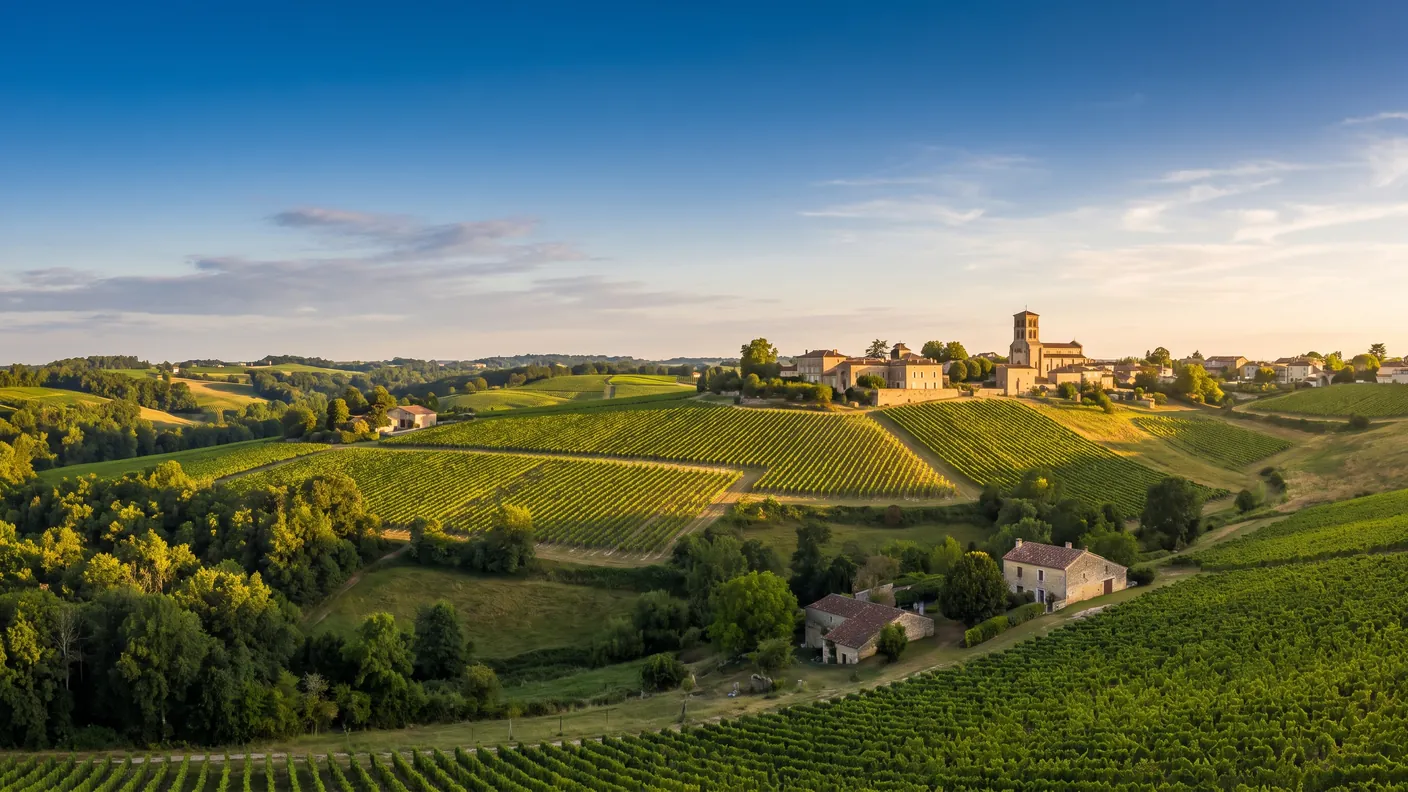
Off to the Castillonnais
Direct transfer from Bordeaux (~1h03) to Mouliets-et-Villemartin, with its Romanesque church and commandery, in the heart of the Castillonnais wine region—from the airport, train station, or hotel to the village, luggage included. Fixed-price written quote, with no unexpected meter charges.