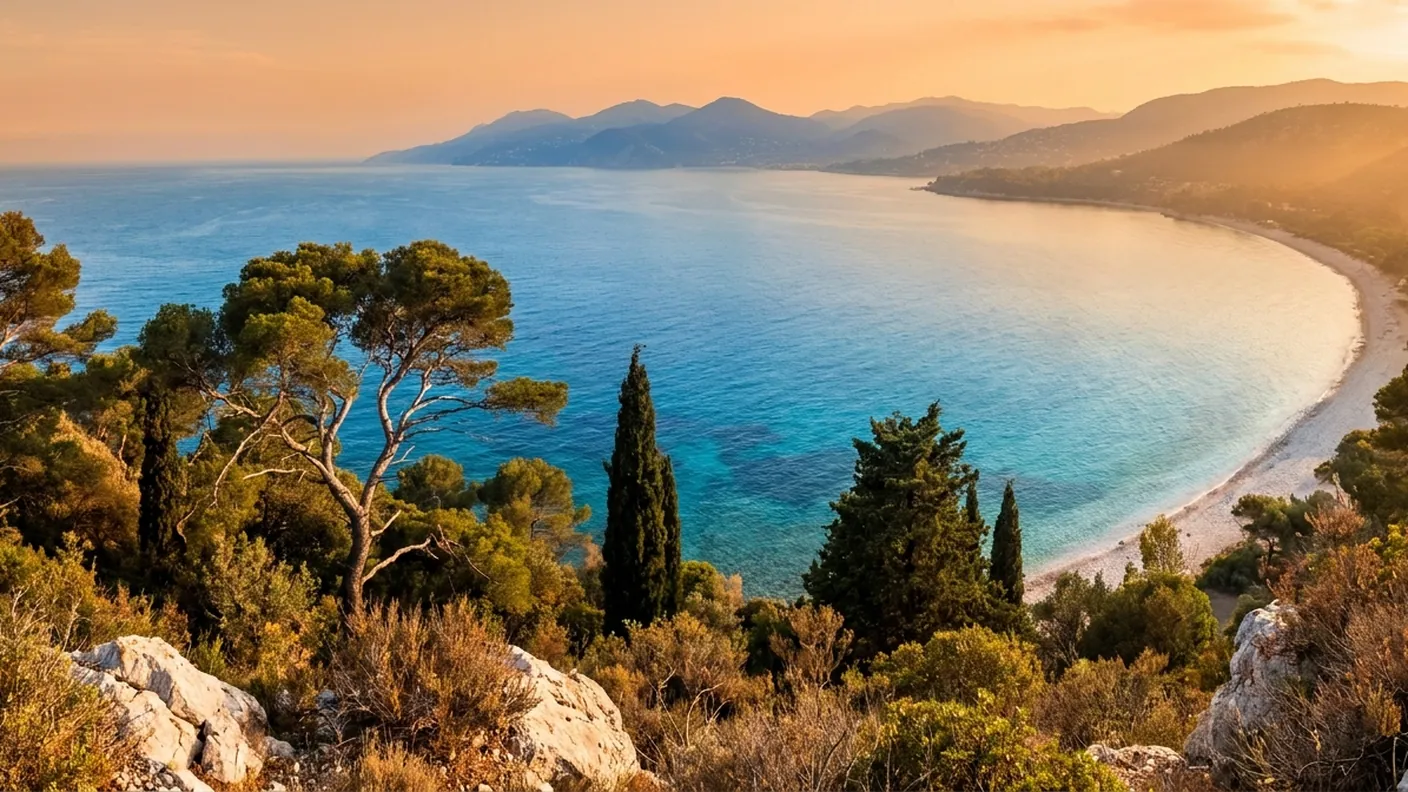
Nice, the winter capital of the Riviera
The fifth-largest city in France, the prefecture of Alpes-Maritimes, and a UNESCO World Heritage Site since 2021 — but not for the reasons one might think. Born twice—first as a Greek city, then as a Roman one, Savoyard for nearly five centuries, and French only since 1860—Nice is a city that deserves a fresh look. About 7 h 55 from Bordeaux.
Nice at a Glance
- Nice (the people of Nice) is the Alpes-Maritimes Prefecture, on the banks of the Baie des Anges — and the fifth-largest municipality in France by the population.
- 357,737 residents (municipal population in 2023) across 71.92 km², which is nearly 90,000 more than Bordeaux.
- Since July 27, 2021, 522 hectares are listed by UNESCO under the name “ Nice, Winter Resort Town of the Riviera "— not the whole city, and not for its Roman ruins."
- It was born twice: Nikaia, a Greek coastal town, and Cemenelum, the Roman city of Cimiez and the provincial capital—two distinct cities that were long rivals.
- It was not conquered in 1388 or in 1860: In 1388, it voluntarily came under Savoyard rule; in 1860, it became part of France under the Treaty of Turin.
- Garibaldi, a hero of Italian unification, was born in Nice in 1807—a French subject—and opposed his home town's annexation to France.
- Its beaches are pebbles, its urban river flows under the town, and its AOC Bellet vineyard lies within the town's boundaries.
- From Bordeaux: ~804 km, approximately 7 h 55 on the road — from 1164 € by private driver. There are no direct trains.
Before You Go: What Nice Really Is
Eight hours earlier, you were standing by the Garonne River. The road wound through the Lauragais, the Languedoc lakes, and the Crau, then the highway plunged between the sea and the mountains—and on the right, there was nothing but a strip of water whose shade of blue changed every kilometer. Nice approaches from above: the city comes into view from the hills before drawing you into its ochre-colored alleyways. This isn’t a seaside resort that has grown over time. It’s a winter capital—a city that aristocratic Europe built to do not to spend the summer there.
Nice occupies the eastern part of the Baie des Anges, in a department where the Alps literally plunge into the Mediterranean. It is the fifth-largest municipality in France, the Alpes-Maritimes prefecture, and, since 2021, a World Heritage Site.
It's also a city about which there are a lot of misconceptions—and it's best to be aware of them before visiting Nice. This guide distinguishes between the established fact of the tradition, and there's plenty to do. No, the city of Nice is not a "UNESCO World Heritage Site": it is an area of 522 hectares that is registered, under a very specific heading. No, Nice was not conquered by Savoy in 1388: it surrendered to Savoy. No, Garibaldi was not in favor of annexation by France. No, Catherine Ségurane is not a historically documented figure. And no, salade niçoise does not contain any potatoes. Each of the following statements comes from a source cited at the end of the article.
Between the Alps and the sea, a city in a corridor
Nice fits into a confined space, and that explains almost all of its shape. The municipality covers 71.92 km² and its elevation ranges from 0 to 520 meters: It includes the shoreline, but also distinctly mountainous hills to the north. In between, the city stretches from west to east, wedged between the hills and the water. The Mont Boron, often mistakenly described as the highest point of Nice, does not exceed 191.3 meters: it is merely the highest point along the eastern coastline.
Baie des Anges is not exclusive to Nice
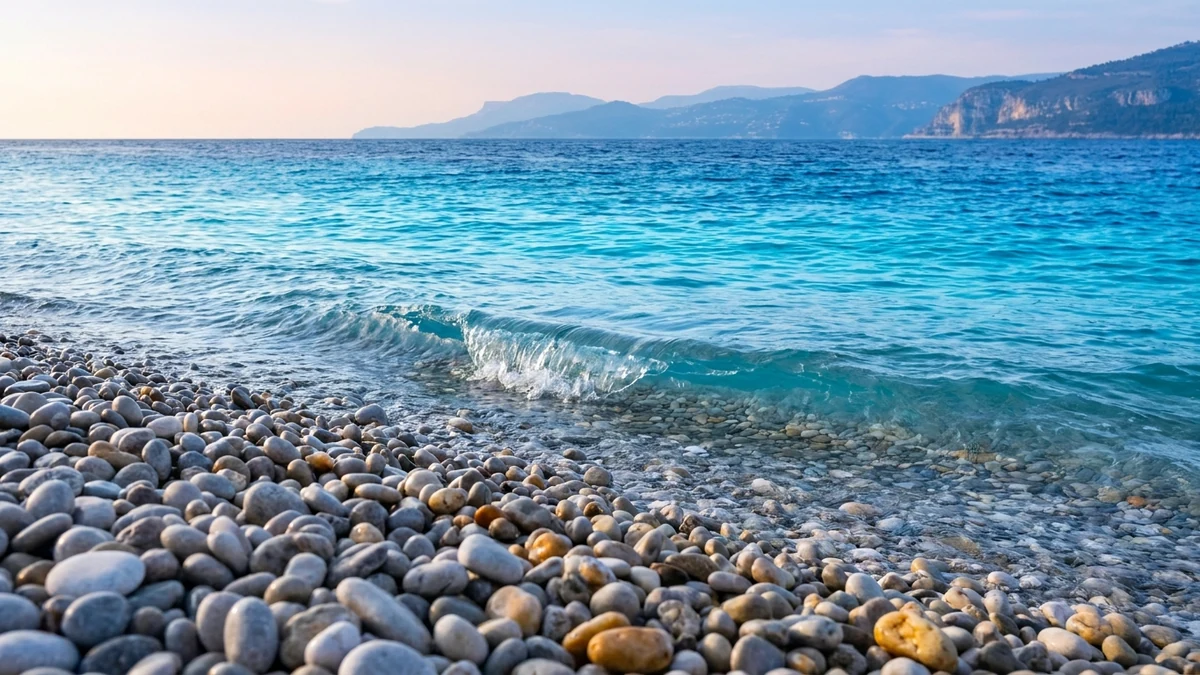
People often refer to “Nice bay.” That’s too restrictive: the Baie des Anges stretches for about 20 kilometers, from the Cap d'Antibes to Mont Boron, and five municipalities border it—Antibes, Villeneuve-Loubet, Cagnes-sur-Mer, Saint-Laurent-du-Var, and Nice, which occupies only the eastern part of it.
There are two competing explanations for its name, and neither has been definitively established: Christian tradition sees in it the angels who are said to have guided the boat carrying the body of Saint Reparata to shore; the naturalistic explanation refers to the “angels of the sea,” harmless sharks with wing-shaped fins that fishermen used to catch. Legend on the one hand, disputed etymology on the other—no facts. The Var, which borders Nice to the west, has another surprise in store: this 114.3 km alpine torrent does not cross the Var department. The neighboring department simply retained the river's name after losing it during the 19th-century border changes.
A river that flows beneath the city
Nice's other waterway is more unassuming, for one simple reason: you can't see it. The Paillon, which is about 35.8 kilometers long, was covered on the lower reaches of its course, in successive phases, of 1868–1972. Note the phrasing: it has never been filled in. It still flows beneath the slabs—and it is precisely this covering that made it possible to develop the Place Masséna, the Risso Esplanade, and then the Promenade du Paillon on the surface.
| Data | Value |
|---|---|
| Department | Alpes-Maritimes (06) — Nice is the prefecture |
| Region | Provence-Alpes-Côte d'Azur (Regional Prefecture: Marseille) |
| INSEE Code | 06088 |
| ZIP codes | 06000, 06100, 06200, and 06300 |
| Municipal area | 71.92 km² (7,192 hectares) |
| Elevation | 0 m to 520 m |
| Intermunicipal Cooperation | Metropolitan Area Nice French Riviera (51 municipalities) |
| From Bordeaux | ~804 km, about 7 hours and 55 minutes by car |
A few words about the Metropole Nice French Riviera, the first metropolitan area established in France (decree of October 17, 2011; powers exercised as of 1 January 2012). It includes 51 municipalities, and it has a feature that is unique in the country: its territory extends down to sea level and rises to 3,143 meters at the summit of Gélas, encompassing the resorts of Isola 2000 and Auron. It is the only French intermunicipal community to combine beaches and ski lifts.
357,737 residents of Nice, and a city on the rise again
The municipal population of Nice is 357,737 residents for the 2023 vintage—a figure that took effect on 1 January 2026 — for a density of 4,974.1 people per square kilometer. This is the fifth-largest municipality in France, behind Paris, Marseille, Lyon, and Toulouse. This reference will mean something to people in Bordeaux: Bordeaux is 9th with a population of 267,991, or 89,746 fewer — and yet more densely populated, since Nice’s 71.92 km² include hills and a sparsely built-up hinterland.
| Indicator (2023 data, INSEE) | Nice | Bordeaux |
|---|---|---|
| Municipal population | 357 737 | 267 991 |
| National ranking | 5th | 9th |
| Population density (people/km²) | 4 974,1 | 5 429,3 |
| Municipal area | 71.92 km² | ~49 km² |
The low point, then the rebound
We still often read that “Nice is losing residents.” That used to be true, but it isn’t anymore. The town has indeed lost 8,704 residents between 2007 and 2017, but the trend has since reversed: +17,720 residents between 2017 and 2023 (+5.21%), the highest level since the INSEE series began in 1968. The driving force is not the birth rate—over this period, the annual growth rate of +0.9% breaks down into +0.1% from the natural increase and +0.7% net migration.
Its reputation as a city for retirees also deserves to be qualified. The People aged 65 and older account for 23.4% of the total of the population, compared with 22.2% for the French average: there is a gap, but it is modest. It is at the departmental level that the trend becomes clear—Alpes-Maritimes stands at 25.1% and a negative natural balance, when Nice maintains a positive balance. The central city has a younger population than its surrounding areas.
Three figures for the “metropolitan area”
To say that “Nice metropolitan area has nearly a million residents” is true—provided you specify which of the three defined areas you are referring to. This is rare enough in France to be worth noting: here, theThe urban unit has a larger population than the catchment area, because the coastline is so densely developed that zoning regulations have grouped Cannes, Antibes, and Grasse into the same urban area, even though Cannes-Antibes constitutes a distinct employment area.
| Geographic Area (INSEE 2023) | Population | Municipalities |
|---|---|---|
| Municipality of Nice | 357 737 | 1 |
| Metropole Nice French Riviera | 574 287 | 51 |
| Service Area for Nice | 641 721 | 100 |
| Nice Urban Unit | 987 709 | 51 |
| Alpes-Maritimes Department | 1 128 418 | 163 |
Nikaia, Cemenelum: A City Born Twice
The name Nice comes from Greek: Nicaea oppidum in the 1st century, Nikaia (Νίκαια) in the 2nd. In Niçard Occitan — the Nissart —, the city calls itself Nissa or Niça, a form attested as early as 1436.
A goddess, not a battle
The most common explanation we hear is that Nice gets its name from a victory of the Greeks of Marseille against the Ligurians—does not hold up. No ancient source mentions such a founding battle, and this connection to warfare was first formulated in the 17th century, by scholars seeking a heroic origin. Place-name scholars cite a divine epithet: (théa) nikaia, “the one that brings victory.”
As for the date, travel guides often state that it was “founded in 350 B.C. by the Phocaeans.” This figure is not based on no ancient sources: the range selected extends from the mid-3rd to the mid-2nd century BC, and the Phocaean origin itself remains a theory that “no archaeological evidence or ancient account can confirm.” Finally, one point of confusion deserves to be cleared up: the Nice The city of the Councils of 325 and 787 is a city in Bithynia, present-day İznik in Turkey—same Greek root, but no connection.
Two rival cities in the same area
Here is the most misunderstood aspect of Nice’s history. Cimiez is often described as “the Roman quarter of Nice.” This is inaccurate: Cemenelum and Nikaia were two separate urban areas, and long-time competitors. Nikaia was the Greek seaside trading post, affiliated with Marseille; Cemenelum was founded by the Romans at the end of the 1st century BC on the hill, stretched over at least 20 hectares and housed a permanent garrison of at least three cohorts along the route of the via Julia Augusta.
Above all, it's Cemenelum, not Nikaia which was the capital of the Roman province of Alpes-Maritimes, elevated to the status of an imperial province in A.D. 63 under Nero. Nice, which was under the jurisdiction of Marseille, was not incorporated into it until the 3rd century. Then the hierarchy was reversed: Nikaia supplanted Cemenelum in the 4th century, and in the 6th The diocese of Cemenelum has been dissolved and absorbed into the diocese of Nikaia. The name that has survived is the Greek name, not the Roman one.
From the cession of 1388 to the annexation of 1860
The history of Nice defies intuition in two ways: the city was neither conquered by Savoy nor forcibly annexed by France. The two major turning points were, at least on paper, volunteers.
1388: a city that gives itself away
On September 28, 1388, at Saint-Pons Abbey, the Launch of Nice in Savoie. The legal term matters: a “dedition” refers to submission volunteer of the inhabitants of a political entity to a sovereign, formalized by contract. It was neither a conquest nor an annexation. The charter included 34 articles and guaranteed Nice military protection while preserving its municipal privileges. The context explains this: upon the death of Queen Jeanne Ire In 1382, Provence was torn apart; Aix sided with Anjou, and Nice found itself isolated. Its governor negotiated secretly with Amadeus VII, Count of Savoy.
In August 1543, the city was besieged in what is often referred to as the “Turkish” siege: this description is incomplete. It was a siege Franco-Ottoman, the result of the alliance between Francis I and Suleiman the Magnificent, with command shared between Barberousse and the Count of Enghien. The lower town surrendered, but the castle held out and was never taken. It is to this siege that Catherine Ségurane, the washerwoman who is said to have torn down the Turkish banner—and it must be stated clearly: this is not a historical fact. The two contemporary chroniclers of the siege make no mention of such an event; the first written reference dates from 1608, 65 years later, and the very existence of the character is disputed. It is a Nice tradition, and it deserves to be told as such.
1860: The Treaty, the Plebiscite, and the Date That Matters
After initially coming under French rule during the Revolution and then returning to Sardinian rule in 1814, the region’s permanent annexation took place in 1860. The Treaty of Turin is signed on March 24, 1860, on the Sardinian side, according to Cavour: the King of Sardinia “consents to the annexation of Savoy and the district of Nice to France,” subject to consultation with the local populations.
| Step | Date | Details |
|---|---|---|
| Treaty of Turin | March 24, 1860 | Sale subject to consultation |
| Nice Poll | April 15–16, 1860 | 25,743 "yes" votes, 160 "no" votes, out of 30,712 registered voters |
| Ratification by the Sardinian Parliament | May 29, 1860 | — |
| Transfer of Sovereignty | June 14, 1860 | Ceremony at the Sardinian Governor's Palace |
| Establishment of the current department | June 23, 1860 | Nice Province + Grasse District |
Two points need to be clarified. Nice did not become French “on the day of the plebiscite”: the transfer of sovereignty took effect on June 14, 1860, at noon. And the famous “99% ‘yes’” needs to be interpreted correctly: the 25,743 “yes” votes versus 160 “no” votes do indeed add up to 99.1% of the votes cast, but relative to the 30,712 registered users, the "yes" vote now accounts for only 83,8 % — nearly 4,800 voters heeded the call for a boycott. About 11,000 residents of Nice subsequently emigrated to Italy. Moreover, the annexation did not encompass the entire county: Tende and La Brigue were excluded because Victor Emmanuel II was determined to retain his hunting grounds in the Mercantour, and did not become part of France until 1947.
Garibaldi Against Annexation
Giuseppe Garibaldi was born in Nice on July 4, 1807, in Vieux-Nice. Nice was then part of the French Empire: the hero of the Italian unit is therefore born a French citizen, as his hometown did not return to the Kingdom of Sardinia until 1814. And he was opposed to the annexation: on April 12, 1860, three days before the plebiscite, he denounced the cession before the Turin Parliament as contrary to international law and the vote as unconstitutional. He would later declare himself a “stranger in his own homeland.”
The Winter Capital, a World Heritage Site
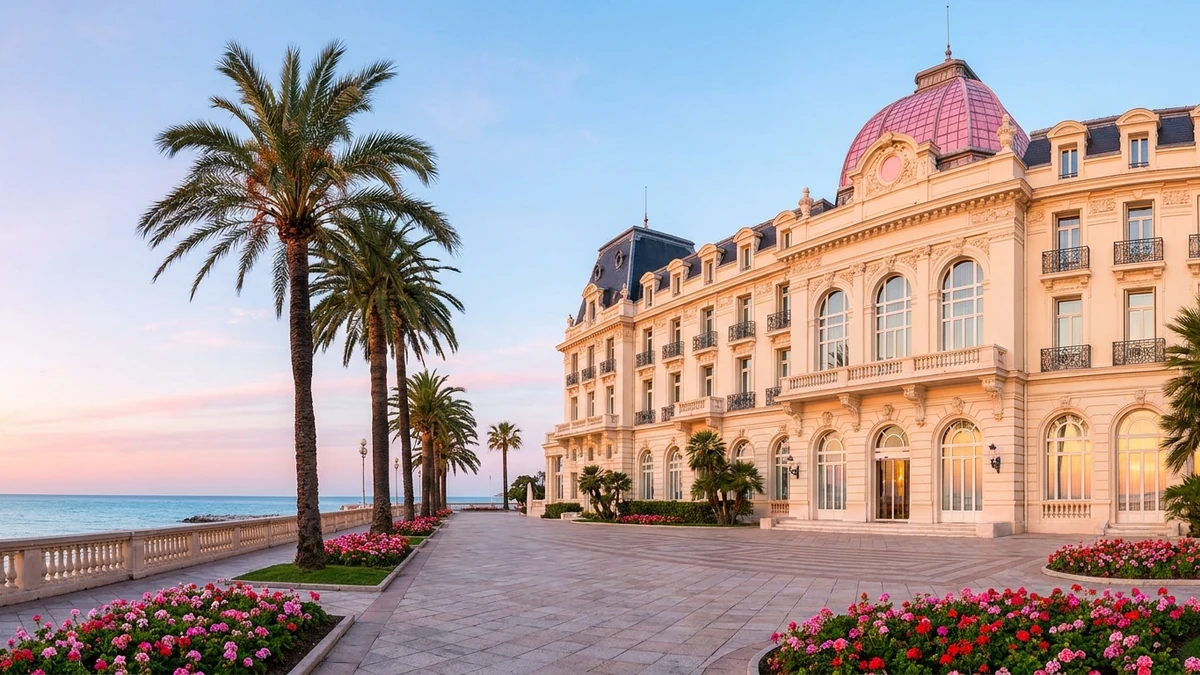
This is the distinction that Nice talks about the most, and the one that’s hardest to explain. No, “the city of Nice” isn’t a UNESCO World Heritage Site. What is registered — The term “classé” refers to French law governing historic monuments—it is a clearly defined property with a specific designation: “ Nice, Winter Resort Town of the Riviera ", states the July 27, 2021. The property covers 522 hectares, compared to the municipality's 7,192 hectares: less than one-tenth Nice area.
Why is Nice listed by UNESCO?
Only one criterion was selected: the Criterion (ii), that of the exchange of cultural influences. According to UNESCO, the property “represents an important example of the fusion of British, Italian, French, Russian, and other cultural influences … which reflect its cosmopolitan character as a winter resort, particularly in the 19th century, under the leadership of the Ornato Council ».
We must therefore rule out three incorrect interpretations. It is not not neither for the bay nor for the scenic beauty of the landscape: no natural criteria were considered. It is not not for the Roman ruins at Cimiez, which are subject to national protection. And that's not not for Promenade des Anglais alone. It's about a city that was entirely shaped, over the course of a century and a half, by foreign visitors who came there to spend the winter.
UNESCO also cites a remarkable document: a letter from the municipality to the Piedmontese sovereign, in 1821. To attract English, Russian, or German families who stay during the harsh winter months, she writes, “we must build houses with ornamental gardens and make their stay pleasant through public improvements and walking paths.” This is winter vacationing described as public policy, a century before modern tourism. The property ends at 1939: In the postwar period, “the summer season definitively supplanted the winter season.” The city listed by UNESCO is therefore, literally, a winter city.
Promenade des Anglais, a crowd-funded dirt road
Nothing suggested that the most famous avenue in French Riviera would become what it is today. It came into being around 1824 like a humble dirt and gravel path, the “ Camin dei Ingles ", built along the shore by the British overwinterers themselves. Local tradition attributes its funding to the Reverend Lewis Way, through a fundraising campaign launched to provide work for the people of Nice after a harsh winter—but the award remains uncertain, and UNESCO refrains from naming anyone. The official name was adopted between 1854 and 1856; today, the avenue runs along nearly 7 kilometers.
| Building | Protection | Date of the Order |
|---|---|---|
| Negresco Hotel | Listed as a Historic Monument — partial (facades, roofs, royal salon) | June 13, 2003 |
| St. Nicholas Russian Cathedral | Listed as a historic monument—partially (including the Tsarevich Chapel) | August 11, 1987 |
| Palace of the Mediterranean | Listed as a historic monument — only two facades | August 18, 1989 |
| Cimiez Arena | Listed as Historic Monuments | May 13, 1865 |
| Roman Baths at Cimiez | Listed and then designated as historic monuments | 1943, 1947, and 1958 |
About a dozen places of worship typical of the immigrants’ countries of origin—Anglo-Saxon Protestant churches, Russian Orthodox churches—began to dot the landscape of Nice after 1850. This is the most direct indication of this clientele: a city where foreign places of worship were built because winter visitors stayed there for several months each year. The St. Nicholas Russian Orthodox Cathedral (1903–1912) is the most spectacular of these—and its significance has been recognized by the Russian Federation by the French courts in 2010.
The Vieux-Nice, the Hill, and the Squares
The Vieux-Nice is a compact neighborhood bounded by the sea to the south, Paillon to the west, Place Garibaldi to the north, and the harbor to the east. It has long been protected by a protected area Established in 1969—it is this status, not UNESCO, that protects its narrow streets.
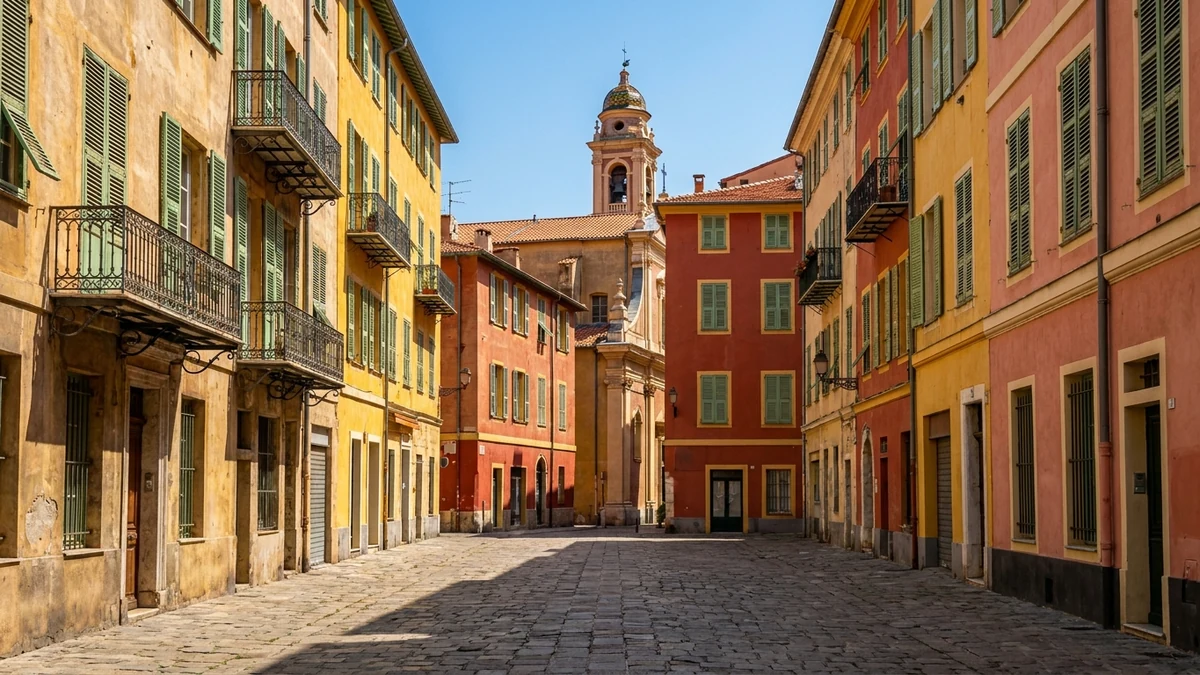
Rossetti Square, the Sainte-Réparate Cathedral surprises those who were expecting a novel or a Gothic tale: it is quite frankly a structure Baroque, construction began in 1650, the vault collapsed in 1658, and it was consecrated in 1699. Its bell tower partially obscures a dome covered with Genoese-style glazed tiles. The medieval cathedral, however, was not located there: it was on Colline du Château. Two other common misconceptions about the neighborhood: the church colloquially known as “le Gesù” is actually named Saint James the Greater; and the Lascaris Palace, a Genoese Baroque mansion on Rue Droite, is not an art museum but a Museum of Antique Musical Instruments — approximately 500 pieces, the second-largest collection of its kind in France.
Is there still a castle on Colline du Château?
The name is misleading, and it's important to say this right off the bat: There is no longer a castle. The fortress occupied the hill from the 11th to the 18th century century, up to the siege of 1705–1706, whose figures are staggering — 113 cannons and mortars fired 644,296 pounds of gunpowder and 39,045 cannonballs in the square.
Above all, the castle was not “abandoned” or “ruined by the passage of time”: it was deliberately shaved. Louis XIV ordered its complete destruction on January 2, 1706 — that is, two days before the surrender on January 4. The demolition order stipulated that nothing was to remain, with the walls razed down to their foundations. Upon returning to Nice in 1713, Victor Amadeus II chose not to rebuild, and the city became an open town.
What remains is a 19.3-hectare park about 92–93 meters above Vieux-Nice, open from 8:30 a.m. to 8:00 p.m. from 1 April through October 31, and until 6 p.m. the rest of the year. The hill has been protected since 1935, but under the terms of the sites and landscapes, not historic monuments—a designation obtained, as it turns out, as part of the fight against excessive advertising: a permanent “Grand Marnier” neon sign was then perched on the platform of the Bellanda Tower.
Two common misconceptions to correct right away. The waterfall is not natural: it is an artificial structure that was filled with water on July 11, 1885, built on the ruins of the old keep and fed by water from the Vésubie River. And the Bellanda Tower, which many mistake for a medieval relic, was built in 1825–1826. Near the lookout, however, one can see the authentic base of the north wall of the old keep, marked by the impact of a cannonball. At the Château Cemetery Gambetta, Gaston Leroux, René Goscinny, Garibaldi's mother—and Emil Jellinek, the businessman whose daughter, Mercédès, lent her name to a car brand.
Two squares, two centuries
The Place Masséna, which dates from the 1820s–1830s and was modeled after the Turin style: its facades are plastered with Sardinian red and punctuated by porticos that give it its unity. On the other hand, the famous black-and-white checkerboard The flooring has nothing Sardinian about it—this paving dates from the pedestrianization project associated with the tramway, which was inaugurated on June 16, 2007. The seven figures perched on their masts are just as recent: they are “ Conversation in Nice " (2007), by the Catalan sculptor Jaume Plensa. We read everywhere that they represent the seven continents; this interpretation is very widespread, but it does not appear in the artist's official description, which refers only to seven elements.
Finally, the Paillon Ride is the development that has most transformed the city center over the past fifteen years. Opened on October 26, 2013, on the covered riverbed, its signature feature is a water mirror 3,000 m² and 128 jets. Take note of this figure: the area of 12 hectares, which is still cited by many guidebooks, is outdated — an expansion that opened on October 18, 2025 brought the total area to about 20 hectares, at the cost of demolishing the National Theater and the Acropolis Convention Center.
Matisse, Chagall, Cimiez: What's Really Worth Seeing
A guide published today should begin with a warning: MAMAC is closed. The Museum of Modern and Contemporary Art, which opened in 1990 on Place Yves-Klein, closed to the public on January 7, 2024 for a major renovation. The reopening, initially announced for 2026 and then 2028, is now expected by 2029 — a schedule that has already been pushed back twice. Don't include it in your plans.
The Matisse Museum is not Matisse's house
The Matisse Museum, at Cimiez, occupies the Villa des Arènes, a Genoese villa built between 1670 and 1685 and purchased by the city in 1950; the museum opened there in 1963. Note: This villa does not no link with the artist. Matisse lived in Nice from 1917 to 1954, first at the Hôtel Beau-Rivage on Place Charles-Félix, then at the Hôtel Régina—also at Cimiez, but that is not the museum. He died on November 3, 1954, and is buried at the cemetery at Cimiez, very nearby.
The collection is exceptional: 31 paintings, 454 drawings and prints, 38 cut-out gouaches, and 57 sculptures — that is, virtually the entire body of Matisse’s sculptural work, a collection without equal in Europe. It did not come from a single bequest but from contributions spread over sixty years, beginning with a donation by Matisse himself in 1953, while he was still alive.
The Marc Chagall National Museum, on the other hand, was inaugurated on July 7, 1973 — on Chagall's birthday, in the artist's presence. It was the France's first museum dedicated to a single artist, opened during the artist's lifetime. At its core is the cycle of the Biblical Message: 17 paintings donated to the government in 1966, including five compositions based on the Song of Songs, displayed in a specially designated room hexagonal, designed for them in collaboration with the artist. A practical note: it's a museum national, except for municipal pass holders; closed on Tuesdays and free for everyone on the first Sunday of the month.
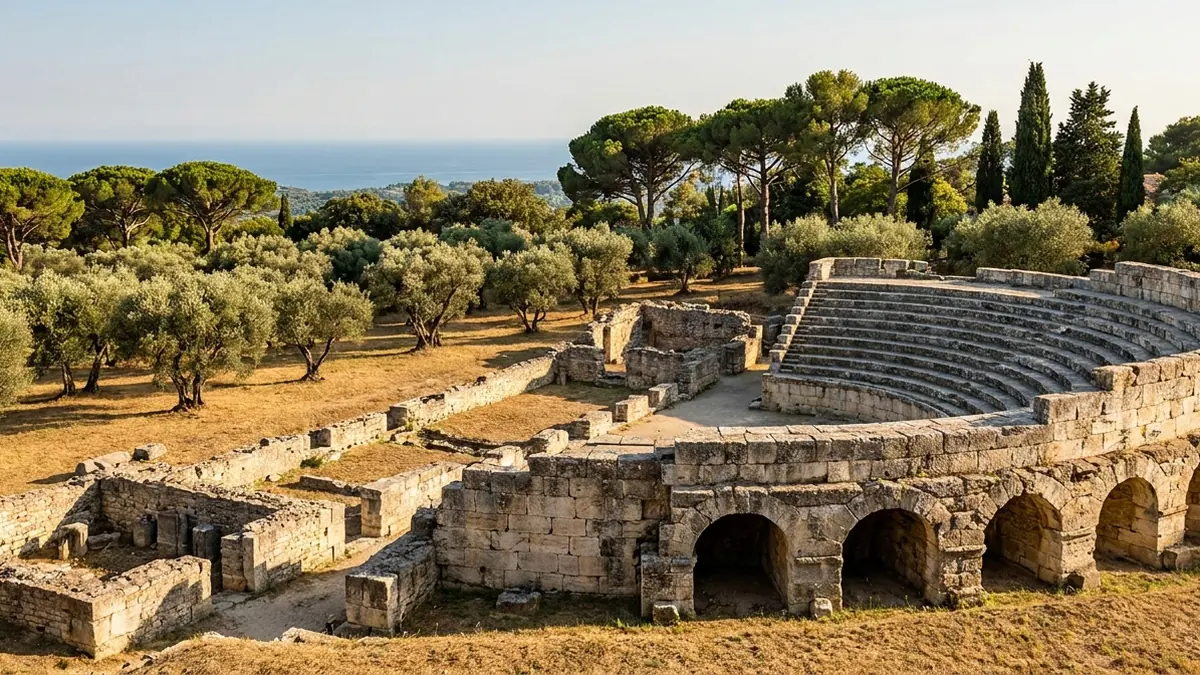
Cemenelum is still open to visitors
Of the ancient city's approximately 20 hectares, 2.5 are open to visitors: the amphitheater, three complete spa facilities, streets, a sewer system, a schola, a domus and shops. You have to adjust your expectations: the amphitheater is nothing like the ones in Arles or Nîmes. It’s an ellipse about 67 × 56 meters, built between 70 and 80 A.D. — one of the the smallest amphitheaters recorded in Gaul, with an estimated capacity of about 4,000 spectators. Its significance lies not in the monument itself, but in the complete ancient urban complex.
The fortifications are ancient and sturdy: the arenas are designated as a historic monument by decree dated May 13, 1865, just five years after Nice became part of France. Be aware of a mistake that’s circulating, even on highly visited websites: the date is indeed 1865, not 1965.
Two other museums are housed in former vacation villas—exactly the type of buildings that UNESCO has listed. The Jules Chéret Museum of Fine Arts is housed in the Kotchoubey Villa, built for a Russian princess, and features works by Van Loo, Monet, Sisley, Bonnard, Dufy, Rodin, and Carpeaux. The Villa Masséna was transferred to the City in 1919 under two contractual terms: turn it into a museum and opening the garden to the public—which explains why, even today, people can still walk freely through this garden from the Promenade des Anglais.
Niçoise cuisine, and what gets done to it
Nice cuisine is not a variation of Provençal cuisine: it is a distinct culinary tradition in its own right. The article “ Culinary Traditions of Nice Region, from the Sea to the Mountains " was added in 2019 to theInventory of Intangible Cultural Heritage in France, and it lists more than two hundred recipes. It is also a highly structured cuisine—which explains why its most famous dishes are so often poorly replicated elsewhere.
The salade niçoise contains neither potatoes nor green beans
This is the most useful debunk in this guide, because this mistake is made all over the world. The golden rule is simple: Nothing is cooked, except the hard-boiled eggs (and tuna, whether canned or grilled). The classic recipe consists of just a few ingredients: raw tomatoes cut into wedges, scallions, hard-boiled eggs, salted anchovy fillets or plain tuna, black olives from Nice, olive oil, basil, salt, pepper—plus, depending on the season, raw bell peppers, raw fava beans, and small raw purple artichokes.
Potatoes and green beans are two cooked vegetables: They directly contradict the rule. The version that includes them, which became popular outside of Nice, is often attributed to Auguste Escoffier — a traditional attribution that should be treated with caution, as there is no dated and signed recipe. The modern version, on the other hand, is well documented: it comes from The Cuisine of Nice County by Jacques Médecin (1972), a classic of the Cercle de la Capelina d'Or, which also excludes corn, mayonnaise, shallots, and lemon. The official entry from the Ministry of Culture, in fact, cites as major risk a hallmark of this cuisine is “the use of the term salade niçoise for all kinds of dishes, some of which are exotic.”
The other signature dishes are prepared with the same attention to detail. The pissaladière It's not a pizza: it's bread dough topped with caramelized onions 1½ to 2½ hours, pissalat or anchovies and black olives — without any tomatoes (There is a tomato version, but it's from Menton and is called the pichade). The pan-bagnat is served in a small roll round rubbed with garlic, topped only with raw vegetables, tuna, and/or anchovies: no mayonnaise, no butter, no green salad, and no cooked vegetables. And what makes the ratatouille The key to the Niçoise isn't the list of vegetables but the cooking method—they are fried separately then combined, which prevents a mushy texture. As for the socca, a flatbread made from chickpea flour and baked on a baking sheet tinned copper, it's eaten piping hot, cut with a spatula and generously seasoned with pepper, at the time of the snack.
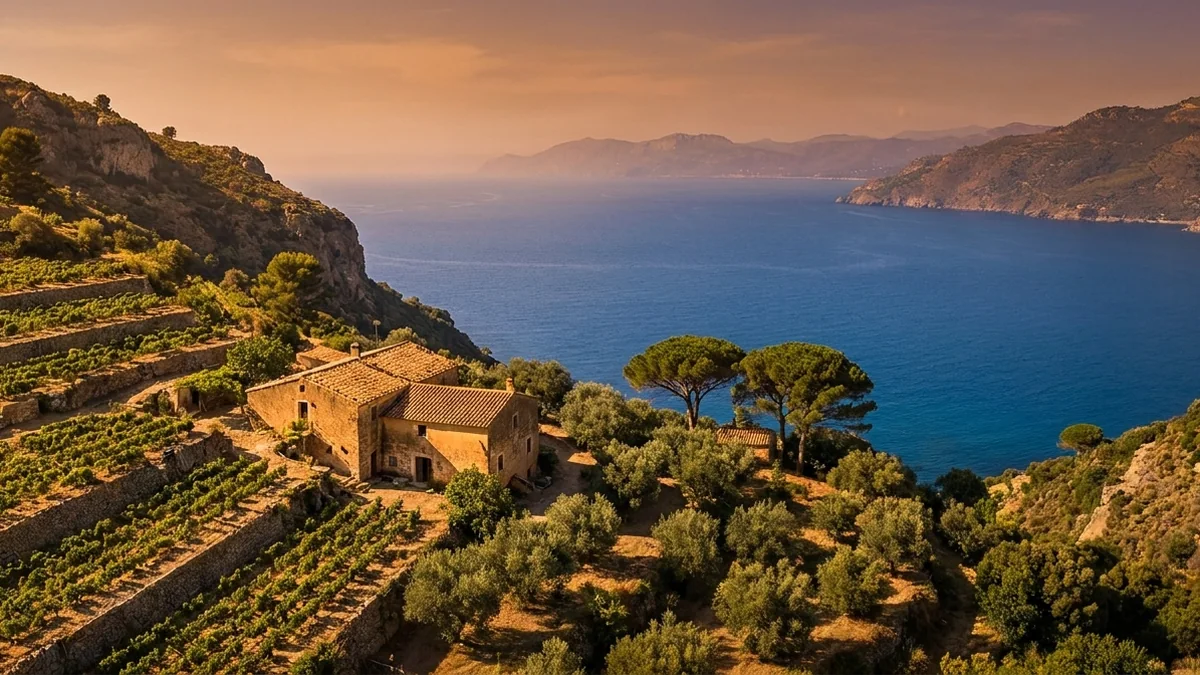
Two AOPs and a vineyard in the city
The Nice olive is protected in two ways. The PDO “ Nice Olive Oil " and " Olive from Nice "are based on the same area of 99 municipalities Among the Alpes-Maritimes—Nice series—it is just one town among many, alongside Cannes, Grasse, and Menton—and within the same variety, the cailletier, which must account for at least 95% of the trees on each plot. The specifications are instructively detailed: the olives It is prohibited to pick them up off the ground, no more than 7 days between harvesting and pressing, and the oil is produced in accordance with regulations gentle — sharpness capped at 2, bitterness at 1.5, with almond as the dominant flavor.
Even rarer: Nice has a vineyard located within its own municipal boundaries. TheAOC Bellet, recognized by a decree published in the Official Journal on November 11, 1941, is situated on puddingstone terraces at an elevation of between 200 and 400 meters, overlooking the left bank of the Var River to the northwest of downtown. It is not in the hinterland: it is in the city. Its grape varieties are local and rare — gear ratio and black ribbon (the "crazy black," referred to in the official specifications by its Nice-area name) in red, Vermentino white wine — from a tiny vineyard of about 60 hectares.
| A mark of quality | Acknowledgments | Distinctive Feature |
|---|---|---|
| Nice PDO Olive Oil | AOC 2004, AOP 2006 | 99 municipalities · Cailletier variety ≥ 95% · mandatory use of mild oil |
| Nice Olive PDO | AOC 2001, AOP 2005 | 40 to 70 olives per hg · brine ≤ 12% salt · no preservatives |
| AOC Bellet | Decree of November 11, 1941 | Vineyard located in the town of Nice · Braquet and Fuella Nera |
| Culinary Traditions of Nice Region | PCI Inventory, 2019 | More than 200 recipes listed |
| "Cuisine nissarde" Label | Founded in 1995 by Capelina d'Or | Taken over by the tourist office in 2014 · audited financial statements |
What is there to do in Nice?
At Nice, you can shop at the Cours Saleya In the morning (Tuesday through Sunday—Mondays are flea market days), walk or take the elevator up to the Colline du Château For a panoramic view from Baie des Anges, walk the 7 kilometers of the Promenade des Anglais by bike on its dedicated bike lane, visit the Matisse Museum and the Marc Chagall National Museum, wander through the Baroque alleyways of the Vieux-Nice for a socca and a portion of a pissaladière, walk through the Roman ruins of Cimiez amid the olive trees, settle down on the pebble beaches, cross the Paillon Ride and its reflecting pool, and—in February—attend the Carnival and its Flower Battles. Trips along the coast to Èze, Villefranche-sur-Mer, or Saint-Jean-Cap-Ferrat take less than half an hour.
- The Cours Saleya Market — flowers, fruits, vegetables, and seafood, from the Tuesday through Sunday, from 6:00 a.m. to 2:30 p.m.; the flower market alone is open until 5:30 p.m. Tuesday through Saturday. There are 77 stalls on the Cours and Place Pierre Gautier.
- The Monday Flea Market — The same Cours Saleya hosts a flea market and antiques fair on Mondays, from 5 a.m. to 6 p.m., with 157 stalls. The rules prohibit the sale of used clothing, counterfeit goods, and any new merchandise.
- The Colline du Château — Free parking about 93 m above Vieux-Nice, accessible via the stairs (Lesage ramp, Montfort ramp) or by elevator on Rue des Ponchettes, at the base of the Bellanda Tower.
- Promenade des Anglais by Bike — 7 km from Phoenix Park to the United States Pier, along a two-way, dedicated bike path built in 2007–2008, on the ocean side.
- The Cimiez Archaeological Site — an amphitheater, three thermal baths, and a domus from the Roman city, located in the arena garden planted with olive trees; the Matisse Museum and the Archaeology Museum are on site.
- The Garden of the Cimiez Monastery — 1 Bellanda Avenue, an Italian-inspired garden with a rose garden and ocean views, open from 8:30 a.m. to 8:00 p.m. starting from 1 April through October 31, and until 6:00 p.m. the rest of the year.
- Mont Boron Forest Park — 11 km of marked trails through 57 hectares of Mediterranean forest, 4 Boulevard Maurice Maeterlinck. The park has been certified as an EcoJardin and is managed without pesticides.
- Carnival, in February — about fifteen days spanning three weekends around Mardi Gras: day and night parades on Place Masséna, and flower battles on Promenade des Anglais.
- The Nice Jazz Fest, in July — founded in 1948, it has been held at the Albert I Garden since 2011 and at Place Masséna. It has not been held at the Cimiez arena since 2010.
The Cours Saleya—but not just any day
This is the most costly mistake you can make on a short trip. The Cours Saleya market is regulated by a municipal ordinance, and it is Closed on Mondays. On that day, the square is taken over by the flea market—a visitor who comes looking for tomatoes and olive oil on a Monday morning will find nothing but antique dealers. The market is open on Mondays only a few days a year—including Valentine's Day and 1 May, All Saints' Day, and Christmas.
The other point to note concerns the time. We often read that “the market closes at noon”; in fact, the regulated closing time is set at 2:30 p.m. for food vendors, and at 5:30 p.m. Tuesday through Saturday for florists. The atmosphere is indeed at its peak in the morning—all vendors’ vehicles must have left the street by 8:30 a.m., with one specific exception listed in the ordinance: the fishmonger. Finally, note that Cours Saleya is not the city’s largest market: with its 77 stalls, it is surpassed by the Liberation Market and its 103 benches.
Are the beaches in Nice sandy?
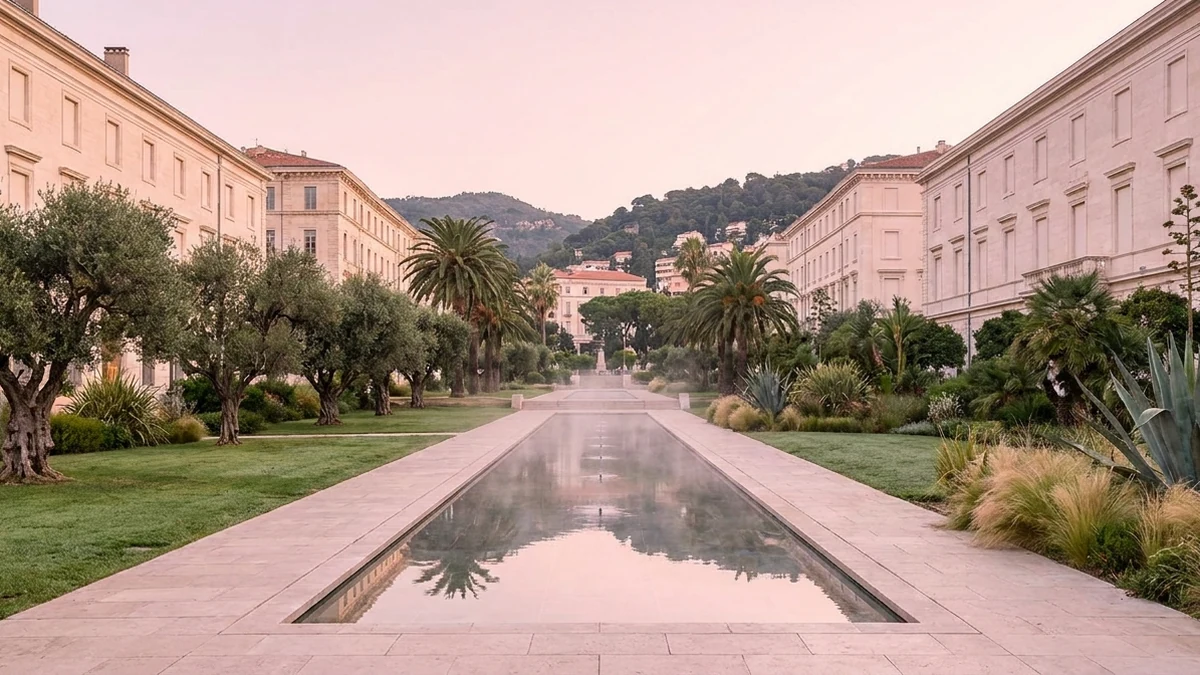
Here's what you need to know before you go: the beaches in Nice are pebble beaches, gray and white, rounded. No sand anywhere along the Baie des Anges. The explanation is geological: these pebbles were dislodged from the Alps and then carried to the sea by the Var, before being reshaped by ocean currents. An unexpected consequence of river regulation: since the construction of levees has cut off the natural flow, the city must to artificially recharge its beaches every year. The coastline has 23 public beaches free beaches, 14 concession beaches, and two beaches equipped for people with limited mobility. Helpful tip: Water shoes and a beach mat make all the difference—using just a towel on the pebbles is a real challenge.
| Activity | Where / When | Good to Know |
|---|---|---|
| Flower and Food Market | Cours Saleya · Tuesday through Sunday, 6 a.m.–2:30 p.m. | Flowers available until 5:30 p.m. Tuesday through Saturday; closed on Mondays |
| Flea Market | Cours Saleya · Monday, 5 a.m.–6 p.m. | 157 stalls; no secondhand clothing or new merchandise |
| Colline du Château | Montfort Stairs or the elevator on Rue des Ponchettes | Free park · artificial waterfall from 1885 · ~93 m |
| Matisse Museum + Cimiez website | Cimiez, 164 Avenue des Arènes | City ticket; free for those under 18 |
| Marc Chagall National Museum | Docteur-Ménard Avenue | State Museum · Closed on Tuesdays · Free admission on the first Sunday of the month |
| MAMAC | Yves-Klein Square | Closed since January 2024 · Reopening announced for around 2029 |
| Carnival and Flower Battles | Place Masséna and Promenade des Anglais · February | Variable date: ~2 weeks around Mardi Gras |
| Nice Jazz Fest | Albert I Garden and Place Masséna · July | Active in the Cimiez arena since 2010 |
Èze, Villefranche, Cap-Ferrat: the coast right at your doorstep
One of the appealing aspects of Nice is that you can get out of it quickly. The coastal road heading east passes, over the course of a few kilometers, a hilltop village at 429 meters, one of the deepest harbors in the Mediterranean, and a peninsula dotted with villas—all served by Nice–Ventimiglia rail line.
A hilltop village and a harbor with a depth of 500 meters
Èze is the iconic hilltop village of the Côte, located in 429 meters above sea level and about 12 km from Nice. A exotic garden occupies the ruins of the old castle, and the Nietzsche's Path connects the seashore to the village—the philosopher was staying in Nice. The village has only 2,144 residents, and its name is one of the few palindromes in French place names.
Villefranche-sur-Mer, founded in 1295 by Charles II of Anjou, is built on the slopes of a harbor whose depths exceed 500 meters deep: one of the deepest in the Mediterranean, which explains why it has always been a strategic anchorage. Visitors can explore the Saint-Elme Citadel (16th century), the Obscure Street medieval — a completely covered alley — and the St. Peter's Chapel, designed by Jean Cocteau. A little further on, Saint-Jean-Cap-Ferrat owes its reputation to the Ephrussi de Rothschild Villa and Gardens, a Belle Époque mansion surrounded by nine themed gardens, bequeathed to the Academy of Fine Arts in 1934 and open to the public since 1937.
Two excursions finally break away from the beach-oriented theme. The “ Pignes Train ", operated by Chemins de fer de Provence, connects Nice to Digne-les-Bains on 151 kilometers metric-gauge railway, through the hinterland and Haute-Provence. And the Valley of Wonders, in the Mercantour National Park, is home to nearly 40,000 rock engravings prehistoric open-air sites, mostly dating from around 3300 B.C. — with strict regulations: access to the wealthiest sectors requires a certified National Park guide. If you're coming for Carnival, the nature tour is Menton and its Lemon Festival, held during the same season.
| Destination | What You'll See There | Car-Free Access |
|---|---|---|
| Èze (~12 km) | A hilltop village at 429 m, an exotic garden, Nietzsche Trail | Èze-sur-Mer Station (Nice-Ventimiglia Line) |
| Villefranche-sur-Mer | Saint-Elme Citadel, Rue Obscure, Cocteau Chapel | Villefranche-sur-Mer Station |
| Saint-Jean-Cap-Ferrat | Villa Ephrussi de Rothschild and its 9 gardens, coastal trail | Beaulieu-sur-Mer Train Station, then on foot |
| Monaco | Principality, The Rock, Monte Carlo | Monaco-Monte-Carlo Station · ZOU! 600 bus |
| Menton | Lemon Festival (February), Biovès Gardens | Menton Train Station · ZOU! 600 bus |
| Digne-les-Bains | Train des Pignes, 151 km through the hinterland | Provence Railways, Nice CP Station |
Bordeaux → Nice: 804 km, and no direct trains
This is the longest trip in the entire catalog of destinations, and it presents a problem that few travelers anticipate: Bordeaux and Nice are no longer connected by any direct train. Two major cities in southern France, and not a single street that hasn't changed.
637 km as the crow flies, about 804 km by road
The Distance Bordeaux Nice has a surprise in store for anyone who looks closely. As the crow flies—the distance listed on airline websites—Bordeaux and Nice are separated by only 637 kilometers. By car, it takes about 804 kilometers: The Mediterranean route requires a detour of more than 160 km. The driving time is approximately 7 h 55 to 8 h 30 according to the calculator — a theoretical time, without stops or traffic. In real life, expect it to take 9 to 10 a.m., door-to-door, and even more so in July and August: the A8 is close to capacity in the summer.
To do Bordeaux Nice by car, the route is simple and straightforward: you leave Bordeaux via theA630 (the bypass), then we continue on to theA62 toward Toulouse, theA61 — the “Two Seas Highway,” via Carcassonne and Narbonne —, theA9 through Béziers, Montpellier, and Nîmes, and finally theA8 "La Provençale," which runs along the coast from Aix-en-Provence to Nice. A useful note about tolls: there are tolls on almost the entire route, but the A8 has some free sections — the bypasses around Aix and Cannes, and the route through Nice metropolitan area. The last few kilometers to Nice are toll-free.
| Fashion | Duration | What You Need to Know |
|---|---|---|
| Private Driver (Door-to-Door) | ~7 h 55 of driving | 804 km · no stops · free stops along the way · starting at 1164 € |
| Personal car | ~8 h to 8 h 30 of driving | ASF and Escota Tolls · A8 at Capacity in July and August |
| Train | ~9 to 12 h | No direct train · At least 1 transfer (Marseille or Paris) |
| Airplane | 1 h 15 flight | Bordeaux-Mérignac → Nice T2 · Air France, easyJet, Volotea |
| As the crow flies | — | 637 km, which is about 167 km less than by road |
Is there a direct train between Bordeaux and Nice?
It's not just a feeling: the connection has indeed disappeared. The historic cross-regional route—Téoz, then Intercités, nicknamed “ The Deep South "— connected Bordeaux to Nice via Agen, Toulouse, Narbonne, Montpellier, Marseille, and Toulon. It was deleted at the annual service on December 10, 2017. Its last two runs give a sense of what we've lost: the Intercités 4659 departed from Bordeaux at 10:34 a.m. and arrived in Nice at 7:39 p.m.—more than nine hours, but without any transfers.
Today, Bordeaux-Saint-Jean → Nice-Ville is mandatory at least one match: either the southern cross-country route to Marseille (6:20–6:30), then the TGV or TER, or a trip via Paris with a transfer between Montparnasse and Gare de Lyon. The estimated travel times range from approximately 9 hours to more than 12 hours. The restoration of a high-speed rail service depends on high-speed rail lines that have yet to be built: Bordeaux-Toulouse is expected around 2032, and Montpellier-Béziers around 2034.
By plane, and the tramway trap
Direct flights Bordeaux-Mérignac → Nice French Riviera are available, operated by Air France, easyJet, and Volotea, for 1 hour and 15 minutes flight. Nice Airport deserves a brief clarification regarding its terminology: it readily describes itself as “France's 2nd airport”, a phrase that makes sense only if the two Paris airports are considered a single system. With 15.23 million passengers in 2025, he is actually the 3rd-busiest French airport — so, to put it safely, the first outside the Paris region. Its location is remarkable: on the shores of Promenade des Anglais, 7 km from downtown, on 370 hectares of land, part of which was reclaimed from the sea.
From the airport, the Tram Line 2 takes less than 30 minutes to reach downtown and the harbor, and the trip is free between Terminal 2, Terminal 1, and the Grand Arénas station. Be careful, however, of outdated information that is still circulating: since January 6, 2025, the branch leading to CADAM was separated to form the Line B. A passenger boarding at the airport should check the destination displayed—Line B departs in the direction of opposite downtown. One last catch: the Pignes train doesn't depart from Nice-Ville station, but from the Nice CP Station, separate.
On a trip of this length, the advantage of a private driver isn't speed—the plane wins hands down—but theno load interruption: no transfers in Marseille or Paris, no need to transfer from Montparnasse to Gare de Lyon with luggage, no strict schedule, and the ability to stop wherever you want. The trip starts in 1164 € In an Eco vehicle for 1 to 3 passengers, door-to-door: a fare based on the actual distance and duration, which is fixed and provided in writing before departure.
Frequently Asked Questions
Where is Nice located?
Nice is located at the southeastern tip of France, on the Baie des Anges, in the Mediterranean Sea. It is the prefecture of the Alpes-Maritimes (06) department, in the Provence-Alpes-Côte d'Azur region—but not the regional prefecture, which is Marseille. The municipality covers 71.92 km² between the mouth of the Var River and Mont Boron, with hills rising up to 520 meters, and has four ZIP codes. From Bordeaux: approximately 804 km by road, or nearly eight hours of driving.
How much does a ride from Bordeaux to Nice cost with a private driver?
The fare starts at 1164 € in an Eco vehicle, for 1 to 3 passengers, one-way and door-to-door. The price is calculated based on the actual distance and travel time (approximately 804 km and 7 hours and 55 minutes of driving), then confirmed in writing before departure: it remains fixed, even if traffic causes the trip to take longer. For groups or bulky luggage, the 8-passenger van or the Mercedes van will affect the rate—the online quote shows the prices for all four vehicle categories at once.
What is there to do in Nice?
The Cours Saleya market in the morning (Tuesday through Sunday; Mondays feature a flea market), the climb to Colline du Château for the panoramic view of Baie des Anges, the 7 km stretch of Promenade des Anglais on foot or by bike, the Matisse Museum and the Marc Chagall National Museum, the Baroque alleyways of Vieux-Nice, the Roman ruins of Cimiez amid the olive trees, the Paillon Promenade, the pebble beaches, and the Carnival in February. Please note: the MAMAC is closed for renovations.
What is the distance between Bordeaux and Nice?
About 804 kilometers by road, with a driving time of roughly 7 hours and 55 minutes to 8 hours and 30 minutes according to the trip computer—allow 9 to 10 hours door-to-door, including breaks, and even longer in July and August when the A8 is congested. As the crow flies, the distance is only 637 km: the Mediterranean coastline forces a detour of more than 160 kilometers. The route follows the A630, A62, A61, A9, and then the A8, via Toulouse, Narbonne, Montpellier, and Aix-en-Provence.
Is there a direct train between Bordeaux and Nice?
No, not since December 10, 2017. The route used to exist: it was the Intercités service nicknamed “Le Grand Sud,” which connected the two cities via Toulouse, Narbonne, Montpellier, Marseille, and Toulon in just over nine hours. It has been discontinued, as the Intercités trains on the southern route are now limited to Marseille-Saint-Charles. The journey now requires at least one transfer—in Marseille, or in Paris with a transfer between Montparnasse and Gare de Lyon—taking about 9 to 12 hours in total.
Why is Nice listed as a UNESCO World Heritage Site?
Since July 27, 2021, under the exact title “Nice, the Riviera’s Winter Resort Town,” based solely on criterion (ii)—the exchange of cultural influences. UNESCO is recognizing the fusion of British, Italian, French, and Russian influences in the architecture of a town shaped by foreign visitors who came to spend the winter there. It is therefore neither for the beauty of the bay nor for the Roman ruins. And it does not encompass the entire city: the property covers 522 hectares, less than one-tenth of the municipality.
Are the beaches in Nice sandy?
No: All the beaches in the Baie des Anges area are pebble beaches, with gray and white, rounded pebbles. The explanation is geological—these pebbles were dislodged from the Alps and carried to the sea by the Var River, before being reshaped by the currents. Since river damming has cut off the natural supply, the city must artificially replenish its beaches every year. The coastline has 23 free public beaches and 14 concession beaches. Be sure to bring water shoes and a beach mat instead of just a towel.
When is Nice Carnival?
Carnival is a movable holiday based on the liturgical calendar: it takes place over about fifteen days spanning three weekends, centered around Mardi Gras—so it generally falls in February, though it sometimes extends into early March. The dates change every year, and no guidebook should list fixed dates. The earliest recorded mention of it dates back to 1294; the modern carnival began in 1873, and the Battle of Flowers in 1876.
On what day is the Cours Saleya market held?
The flower, fruit, vegetable, and seafood market is held Tuesday through Sunday, from 6:00 a.m. to 2:30 p.m.; the flower market alone stays open until 5:30 p.m. Tuesday through Saturday. It is closed on Mondays—when Cours Saleya instead hosts a flea market and antiques fair from 5:00 a.m. to 6:00 p.m. This is the classic pitfall of a short stay: coming on a Monday morning looking for fresh produce and finding only antique dealers.
Has Nice always been French?
No, not by a long shot. Nice voluntarily surrendered to Savoy on September 28, 1388—a “surrender,” a contractual agreement consisting of 34 articles—neither a conquest nor an annexation—and remained under Savoyard and later Sardinian rule for nearly five centuries, with the exception of periods of French occupation. The definitive annexation resulted from the Treaty of Turin of March 24, 1860, and, above all, from the effective transfer of sovereignty on June 14, 1860. Tende and La Brigue, on the other hand, did not become French until 1947.
What's there to see around Nice?
The eastern coast is where most of the highlights are concentrated: Èze, a hilltop village at 429 meters with its exotic garden and the Nietzsche Trail, about 12 km away; Villefranche-sur-Mer, with its harbor more than 500 meters deep, its citadel, and its chapel decorated by Cocteau; Saint-Jean-Cap-Ferrat; and Villa Ephrussi de Rothschild, with its nine gardens. Further away, the Pignes train runs 151 km to Digne-les-Bains, and the Vallée des Merveilles is home to nearly 40,000 rock engravings.
Are the museums in Nice free?
Not for everyone. The “Nice Museum Pass” is a free card, but it’s reserved for residents of the metropolitan area who are 18 or older, and is issued upon presentation of proof of residence. Those under 18 get free admission everywhere. Other visitors pay a single admission fee valid at all municipal museums. There are two exceptions: the Marc Chagall National Museum is operated by the national government, is closed on Tuesdays, and offers free admission to everyone on the first Sunday of the month; and the MAMAC has been closed since January 2024.
Is there still a castle on Colline du Château?
No, and it wasn't due to the ravages of time: the castle was deliberately razed. After 54 days of bombardment, the fortress surrendered on January 4, 1706—but Louis XIV had ordered its total destruction as early as January 2, two days before the surrender, with the walls razed down to their foundations. Today, all that remains is a 19.3-hectare park at an elevation of about 93 meters, some ruins, and an artificial waterfall, which was created in 1885 on the ruins of the former keep.
What is the real recipe for salade niçoise?
The rule is that nothing is cooked, except for hard-boiled eggs—and tuna, when it’s canned or grilled. The traditional combination includes raw tomatoes, scallions, hard-boiled eggs, salted anchovies or tuna in water, black olives from Nice, olive oil, basil, salt, and pepper, along with—depending on the season—raw bell peppers, fava beans, and small raw purple artichokes. No potatoes or green beans: two cooked vegetables added to the version popularized outside of Nice.
Further Reading
- The Other Great Southern Crossing: see the Marseille Guide (on the same road, about 2 hours from Nice)
- The Midpoint: see the Toulouse Guide, the first major city on the route
- How does an 800-km trip work?: see Long-distance private driver from Bordeaux (relays, breaks, pricing)
- For 8 passengers: see long-distance van (luggage, comfort, cost per person)
- All Destinations: Our destinations from Bordeaux · request a quote
Sources and References
- INSEE — Complete report, municipality of Nice (06088) — Municipal population in 2023, population density, age structure, trends since 1968
- UNESCO — Property No. 1635, “Nice, the Riviera Winter Resort Town” — exact title, 2021 inscription, criterion (ii), area of the property and the buffer zone
- POP / Mérimée database — Cimiez Amphitheater (PA00080775) — Designated as a historic monument by decree dated May 13, 1865
- Wikipedia — Dedication of Nice to Savoie — a voluntary act dated September 28, 1388; a charter consisting of 34 articles; set in the Provençal context
- Wikipedia — Treaty of Turin (1860) — Treaty of March 24, 1860; plebiscite of April 15–16; election results
- City of Nice — Colline du Château Park — area, seasonal hours, access
- Metropolitan Tourist Office Nice French Riviera — Cours Saleya and Promenade des Anglais markets, business activities
- Matisse Museum in Nice — The Collection — the exact composition of the permanent and historical collection of donations
- MAMAC by Nice — Closure and Renovation — Closed to the public since January 7, 2024; reopening schedule
- Nice-Cimiez Archaeology Museum — the archaeological site — Cemenelum, amphitheater, three thermal baths, provincial capital
- Nice Carnival — The Origins (official website) — first mentioned in 1294, modern carnival in 1873, Battle of Flowers
- BANATIC — Metropolis Nice French Riviera — 51 municipalities, geographic area, combined population
Article updated in August 2026.
Our Latest Guides
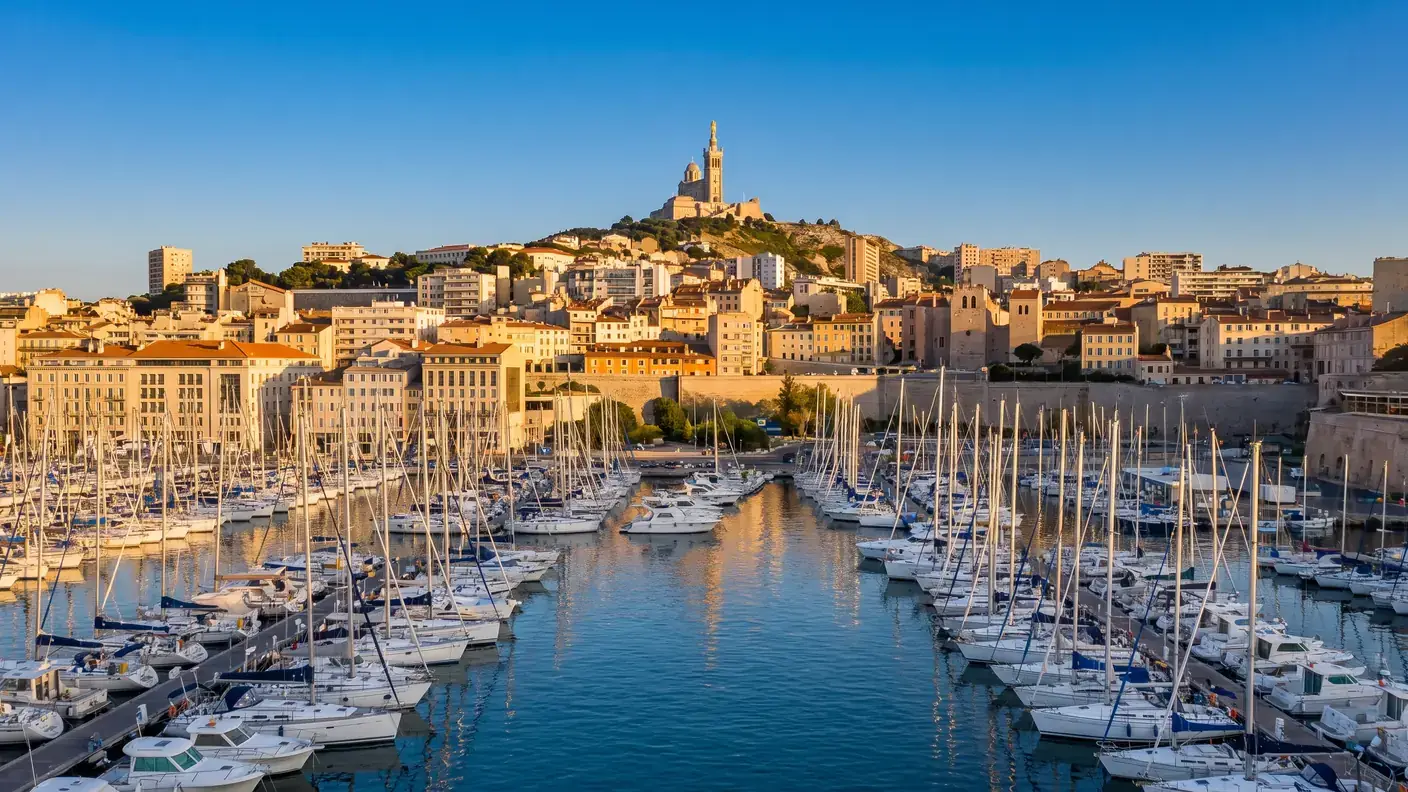
Bordeaux → Nice, no connection
There are no direct trains between Bordeaux and Nice. The road trip (~804 km, about 7 hours and 55 minutes) is a nonstop, door-to-door journey, with stops wherever you’d like along the way—Toulouse, Narbonne, Montpellier, Aix-en-Provence. Fixed-price quote in writing within 30 minutes; Mercedes sedan or 8-passenger van; English-speaking driver.