Things to do in Paris: 2,000 years across twenty arrondissements
Europe’s most visited city, and the one most often misrepresented: the Eiffel Tower is 330 metres tall, not 324; Notre-Dame has reopened and admission is free; the Centre Pompidou is closed until 2030; and swimming in the Seine has been permitted since 2025. This guide separates fact from fiction.
Paris at a glance
- Wondering what to do in Paris is like choosing from a 2,000-year-old catalogue: the French capital covers 105.40 km² — the 113th largest municipality in France by area — and is home to three UNESCO World Heritage Sites.
- 2,103,778 inhabitants according to the 2023 census, with a population density of 19,960 inhabitants per km². However, the Paris catchment area has a population of 13,320,752: five out of six Parisians ‘in the broadest sense’ live outside Paris.
- The city owes its name to the Gallic tribe of the Parisii, whose oppidum on an island in the Seine was mentioned by Caesar in 53 BC. The name ‘Lutetia’ was phased out in the 4th century in favour of ‘the city of the Parisii’.
- Twenty arrondissements arranged in a spiral pattern since the Act of 16 June 1859, which came into force on 1 January 1860: the annexation of the suburbs saw Paris’s area increase from 3,438 to 7,802 hectares – more than double its previous size.
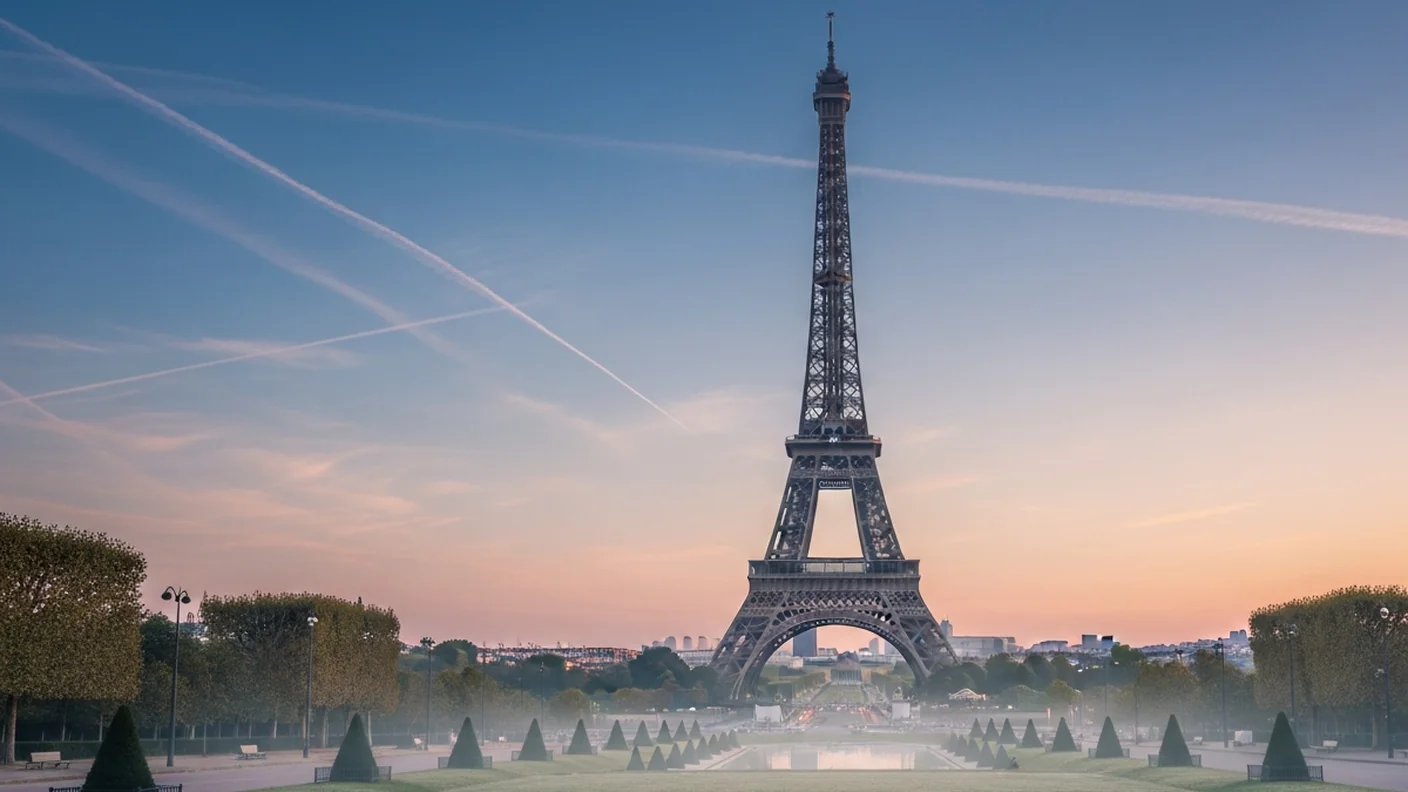
- The Eiffel Tower has stood at a height of 330 metres since 2022 (not 324), weighs 10,100 tonnes and welcomed over 6.75 million paying visitors in 2025. The Louvre welcomed 9.0 million.
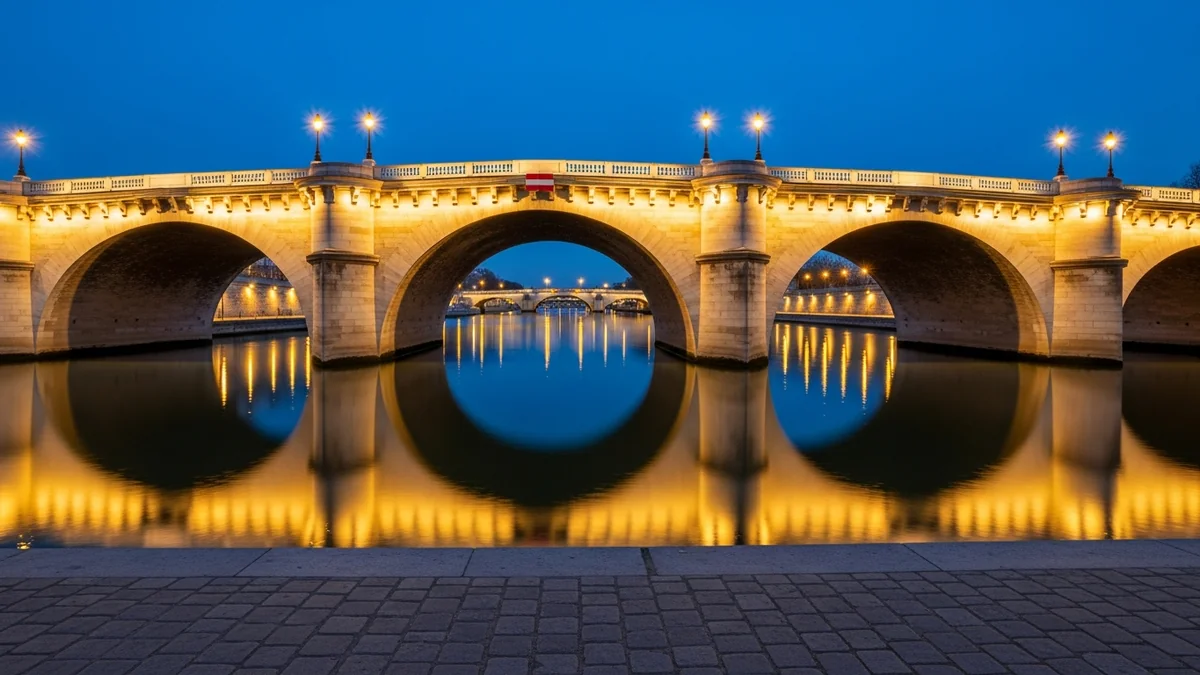
- There are 37 bridges spanning the Seine in Paris, along its approximately 13 kilometres of urban course. The oldest is called – in a local paradox – the Pont Neuf (1578–1607).
- Notre-Dame de Paris reopened on 8 December 2024, five years after the fire on 15 and 16 April 2019. Admission is free; it has become the most visited monument in France.
- From Bordeaux: ~594 km by road, a direct journey of 5 hours 33 minutes — or 2 hours 4 minutes by TGV since the LGV Sud Europe Atlantique high-speed line opened on 2 July 2017.
Go directly to: things to do in Paris · museums and closing days · neighbourhoods · travelling from Bordeaux · frequently asked questions
Before you go: what Paris is really like
Seven o’clock in the morning, a Saturday in July, Quai de Bercy. People in swimwear are walking down a metal staircase and wading into the water — the Seine, at the foot of the buildings. The scene would have seemed absurd five years ago: swimming there had been banned since 1923. This is by no means a publicity stunt: the three Parisian sites opened to the public for the first time on 5 July 2025, and the summer of 2026 runs from 4 July to 30 August. This is perhaps the best summary of what Paris is today: a 2,000-year-old city-museum that continues to transform itself faster than we can keep up with. Figuring out what to do in Paris in 2026 therefore means relying on up-to-date information — which is the purpose of this guide.
This guide distinguishes between verified facts and oft-repeated myths — and when it comes to Paris, the number of such myths is considerable. No, the Eiffel Tower is not 324 metres tall: it has actually been 330 metres since 15 March 2022. No, nobody has ever ‘decided to demolish it’: the 1887 agreement simply stipulated that Eiffel would retain the commercial rights to it for twenty years. No, ‘Fluctuat nec mergitur’ is not the ancient motto of the sailors of Lutetia: it appeared on municipal tokens in the late 16th century and was not made official until 1853, by a decree of Baron Haussmann.
Three common misconceptions to clear up before you go
Three further useful clarifications before you set off. Paris is not the most populous city in Europe: with 2.10 million inhabitants within its municipal boundaries, it ranks fourth in the European Union, behind Berlin, Madrid and Rome — it is its catchment area, with 13.3 million inhabitants, that ranks first in the EU. The ‘nearly 50 million tourists’ reported each year refer to the entire Paris Île-de-France region, not Paris proper. And the metro has 16 lines, not 14: people always seem to forget lines 3bis and 7bis.
One final point on how to approach the city. The best way to explore Paris is on foot: its density — nearly 20,000 inhabitants per square kilometre, a European record for a capital city — means that actual distances are short and that most places can be reached on foot, by metro or by bike. A car is only useful for getting there and back, or for travelling between places that are poorly served by public transport, early in the morning or late at night. It is with this in mind that a private chauffeur service from Bordeaux is offered: door-to-door, luggage included, at a time of your choosing.
Geography: the Seine, the hills and the ring road
Paris fits within an oval covering 105.40 km², encircled by a 34.98 km ring road. That’s not very big: the city ranks only 113th in metropolitan France by area, and Marseille and Toulouse are larger. Be wary of the figure often quoted: the 84.45 km² frequently cited refers to Paris within the ring road, not to ‘Paris excluding the woodlands’. If you subtract the two woodlands (1,841 hectares in total), the area is approximately 87 km².
The River Seine flows through the city in an arc for nearly 13 kilometres, entering from the south-east and exiting to the south-west. It ranges in width from 30 metres at the Quai de Montebello to 200 metres at the Pont de Grenelle, with a depth of 3.4 to 5.7 metres, and separates a right bank that is twice as large as the left bank. It is the riverbanks themselves — rather than the monuments lining them — that constitute the site inscribed on the UNESCO World Heritage List in 1991 under the title ‘Paris, Banks of the Seine’.
Thirty-seven bridges and three islands
37 bridges span the Seine in Paris — including footbridges, railway structures and the upstream and downstream bridges used by the ring road. The oldest surviving bridge is the Pont Neuf, built between 1578 and 1607: the paradox is amusing, but it certainly lived up to its name in its day. Set against the overall picture, this figure is almost modest: Paris had a total of 336 bridges and footbridges, 149 of which spanned the ring road alone.
Two inhabited islands form the historic heart of the city: the Île de la Cité, to the west, home to Notre-Dame, the Sainte-Chapelle and the Conciergerie, and the Île Saint-Louis, to the east, which has remained a residential area. Eight bridges connect the former to the banks, four connect the latter, and the pedestrian Pont Saint-Louis links them together. There is a third, artificial island: the Île aux Cygnes, a narrow causeway created in 1825 between the Bir-Hakeim and Grenelle bridges, on which stands a replica of the Statue of Liberty.
A city of hills
We tend to forget that Paris is hilly. The highest point of the natural terrain is 130.53 metres, within the Calvaire cemetery adjacent to the Church of Saint-Pierre de Montmartre — the highest public road, right next to it, reaches 128.21 metres. Next come Belleville (128.5 m), Ménilmontant (108 m) and the Buttes-Chaumont (103 m). On the Left Bank, the terrain is gentler: Montsouris 78 m, Montparnasse 66 m, the Butte-aux-Cailles 63 m, and Montagne Sainte-Geneviève 61 m. These are gypsum-rich outcrops, and this gypsum explains much of the city’s underground history — quarries, catacombs and subsidence.
The lowest point is 21 metres, and the average altitude is 62 metres. This generally low elevation, combined with the Seine, whose normal water level is 26.7 metres above sea level, explains Parisians’ fear of flooding — the very fear which, according to the City of Paris, prompted Haussmann to adopt the motto ‘Fluctuat nec mergitur’: ‘it is buffeted by the waves, but does not sink’.
| Data | Value |
|---|---|
| Area | 105.40 km² (including the Bois de Boulogne at 846 ha and the Bois de Vincennes at 995 ha) |
| Area within the ring road | 84.45 km² · ring road 34.98 km long |
| Altitude | 21 m (minimum) to 130.53 m (Montmartre, natural ground level) · average 62 m |
| Population | 2,103,778 inhabitants (2023 census) · 19,960 inhabitants per km² |
| Region / status | Île-de-France · local authority with special status ‘City of Paris’ since 1 January 2019 |
| Arrondissements | 20, grouped into 17 sectors (the 1st to 4th have formed ‘Paris Centre’ since 2020) |
| Seine | ~13 km within Paris · 37 bridges · 2 historic islands + Île aux Cygnes |
| UNESCO | Banks of the Seine (1991) · Saint-Jacques Tower (1998) · La Roche and Jeanneret houses (2016) |
How many people live in Paris? A city losing population, a region growing in size
The official figure is 2,103,778 inhabitants according to the 2023 census, published by INSEE. It is worth pausing to consider this, because it tells a story that runs counter to what one might expect: Paris is losing residents. The city’s population peaked at 2,906,472 in 1921; it has lost 802,694 residents since then, a decline of 27.6 per cent over the course of a century. Today’s Paris is demographically closer to that of 1890 than to that of the interwar period.
It is often claimed that the decline, which began in the 1950s, was halted in 1999. This was true — but the recovery has since stalled. The peak of this rebound was reached in 2011, with 2,249,975 residents; since then, the decline has been uninterrupted. Between 2017 and 2023, INSEE recorded a decline of 0.6 per cent per year, and the breakdown is clear: the natural increase remains positive (+0.5 per cent per year, with over 21,000 births per year); it is net migration that is driving the decline (-1.2 per cent per year). Parisians are not disappearing: they are leaving.
The real Paris has a population of 13 million
Everything changes in scale as soon as one steps outside the municipal boundaries. The urban area — the conurbation as defined by INSEE, comprising 406 municipalities — has a population of 11,013,774. The catchment area, which measures the actual catchment zone, has a population of 13,320,752: it is the most populous in France and the European Union. Compared with these 13.3 million, the 2.10 million Parisians account for just 15.8 per cent. So when a French person says ‘Paris’, 84 per cent of the time they are referring to something that is not Paris.
Population density follows the same sharp decline: 19,960 inhabitants per km² within the municipality, 3,900 in the urban area, 1,038 in Île-de-France, and 703 in the catchment area. A ratio of 1 to 28 between the centre and the outskirts. It is this compression that gives Paris its very distinctive character — and explains why a journey that would take an hour by car elsewhere can be covered on foot in twenty minutes.
Who lives in Paris today?
Three statistics sum up contemporary Paris better than a long speech. 53.5 per cent of Parisian households consist of a single person — more than one in two, compared with 40.9 per cent in the metropolitan area. Nearly one in five homes is not a main residence: 9.9 per cent are second homes and 9.9 per cent are vacant out of a total of 1,402,024 homes, and only 33.2 per cent are owner-occupied. Finally, the median standard of living is the highest in France — €33,650 in 2023 — but the poverty rate stands at 17 per cent, above the national average. Paris is simultaneously the richest city and one of the most unequal in the country.
As for visitors, the figures are staggering but often misinterpreted. The Paris Île-de-France region welcomed nearly 50 million visitors in 2025 — 25.9 million French nationals and over 23 million international visitors, a record — generating nearly €24 billion in economic benefits. The largest overseas market is the United States (2.8 million), ahead of the United Kingdom (2.5), Italy (1.6), Germany (1.5) and Spain (1.4). There are no equivalent figures for the city of Paris alone.
| Scale | Population (2023) | Population density (people/km²) |
|---|---|---|
| City of Paris | 2,103,778 | 19,960 |
| Urban area (406 municipalities) | 11,013,774 | 3,900 |
| Île-de-France region | 12,463,067 | 1,038 |
| Paris catchment area | 13,320,752 | 703 |
| Historical peak (1921) | 2,906,472 | — |
| Highest post-recovery figure (2011) | 2,249,975 | — |
Etymology: from Lutetia to the Parisii
It is a well-established fact: Paris owes its name to the Gallic tribe of the Parisii. The French word derives from the Latin *Parisiis*, the locative dative plural, which literally means ‘among the Parisii’. The chain of evidence is clear: Lutetia in the 1st century BC, then ‘Lutetia apud Parisios’ around 305, ‘Parisios’ between 400 and 410, and finally ‘Paris’ from 887 onwards. The name of the city thus replaced the name of the place with that of its inhabitants.
The Parisii had been settled in the region since the 3rd century BC and derived their power from their control of river traffic. They first appear in written history through Julius Caesar, who mentions Lutetia in 53 BC — he transferred the assembly of Gallic chieftains there — and then explicitly locates their stronghold ‘on an island in the River Seine’. The following year, in 52 BC, they provided 8,000 men for Vercingetorix’s revolt; facing Labienus, Caesar’s lieutenant, the Gauls employed a scorched-earth policy, setting the city alight and cutting the bridges.
What does ‘Lutèce’ really mean?
This is where the uncertainty begins, and many guidebooks gloss over it without warning. It is widely claimed that ‘Lutèce’ means ‘the muddy one’ or ‘the marsh’. This is a hypothesis, not a fact: the prevailing hypothesis (Dauzat and Rostaing, Billy, Delamarre) links the Gallic root *lut-* to the idea of mud, but a serious rival hypothesis, put forward by Pierre-Yves Lambert, exists. Even more puzzling: the meaning of the ethnonym ‘Parisii’ itself has not been established — too little is known about Old Celtic. Alfred Holder saw it as meaning ‘those who command’, whilst Xavier Delamarre proposes a different root. No one has reached a definitive conclusion.
Two ancient etymologies have long been in circulation, both of which have since been discarded. The Trojan myth, which traces the Parisians back to Paris, prince of Troy, originates with Rigord, biographer of Philip Augustus. The ‘Par-Isis’ hypothesis, which invokes a temple of Isis, comes from Gilles Corrozet in 1532: it runs up against the fact that the people are called Parisii, in the plural, and that the ‘s’ in Isis is not elided in either Latin or French. Rabelais, for his part, was already poking fun at this in *Gargantua*, deriving *Paris* from the Greek *leukós*, ‘white’ — ‘that is to say, in Greek, Blanchette’.
Where do the coat of arms and motto of Paris come from?
The Parisian coat of arms features a silver ship on a gules background, surmounted by an azure chief strewn with fleurs-de-lis. The ship is attested as early as 1210 on the seal of the Guild of Water Merchants, from which the municipality emerged — led by a provost of the merchants until 1789. Whether it dates back further, to the Gallo-Roman nautae Parisiaci, is a matter of tradition: the sources use the conditional tense, and this must be noted.
As for ‘Fluctuat nec mergitur’, its reputation for antiquity is unfounded. There is no evidence of the motto in antiquity: it first appeared on municipal tokens in the late 16th century, initially in the form ‘Fluctuat at nunquam mergitur’ on a token from 1581, then in its current form on those from 1582 to 1598. It was merely ‘one motto amongst many’ until the Revolution, and was only made official by a decree of 24 November 1853 signed by Haussmann. Incidentally, the correct translation, as adopted by the City, is not ‘it floats but does not sink’ but ‘it is battered by the waves, but does not sink’ — a nuance that changes everything.
The Nautes, for their part, left a far more enduring mark. The Pillar of the Nautes, a column dedicated to Jupiter erected during the reign of Tiberius (17–37 AD), is the oldest indigenous monument in Paris for which a date is known. It was unearthed on 16 March 1711 beneath the choir of Notre-Dame, where its broken blocks had been reused as foundations as early as the 3rd century. Its inscription reveals that the brotherhood had a common fund, and therefore legal personality: it is the first recorded society in Paris. It can be seen today in the frigidarium of the Cluny thermal baths.
History of Paris, from Lutetia to the Olympic Games
Gallo-Roman Lutetia was home to around 10,000 inhabitants, laid out on a grid plan organised around a cardo which probably corresponds to the present-day Rue Saint-Jacques. Two ancient remains can still be visited. The Cluny Baths (late 1st – early 2nd century) preserve a frigidarium whose cross-vault rises to a height of 14.50 metres: it is the only room to have retained its original roof, and one of the highest vaults in the Roman West still standing. The Arènes de Lutèce (51.80 × 44.40 m, with a capacity of between 15,900 and 17,000 seats according to estimates) have been listed as a Historic Monument since 31 March 1884.
A point worth noting about these arenas: what can be seen on Rue Monge is not a preserved Roman amphitheatre. Following the purchase of the plot in 1915–1916, the ‘restoration’ entrusted to Formigé effectively involved rebuilding an arena rather than consolidating the remains. Indeed, the site owes its survival solely to a close vote by the city council on 30 July 1883: 36 votes to 23, following a campaign led by a ‘Committee for the Arènes’ supported by Victor Hugo. Thirteen votes saved Paris’s last great ancient ruin.
508: Paris becomes the capital
In 508, Clovis made Paris his principal residence, after Tournai and Soissons: this marked the first time that ancient Lutetia attained the status of capital. He died there on 27 November 511. The Middle Ages then endowed the city with its enduring structures: the city walls built by Philip Augustus (on the right bank from 1190 to 1209, on the left bank from 1200 to 1215), a section of which can still be seen on Rue des Jardins-Saint-Paul; the construction of Notre-Dame, which began in 1163 under Bishop Maurice de Sully and was completed around 1345; and the Collège de Sorbonne, founded in February 1257 by Robert de Sorbon.
On this last point, a common misconception worth noting is that the Collège de Sorbonne is not the University of Paris. The university predates it — it took shape around 1200–1215 — and the college was merely an institution within the Faculty of Theology, which was abolished by the Convention in 1793. To write ‘the University of Paris, founded in 1257’ is incorrect.
Haussmann: twenty thousand houses demolished
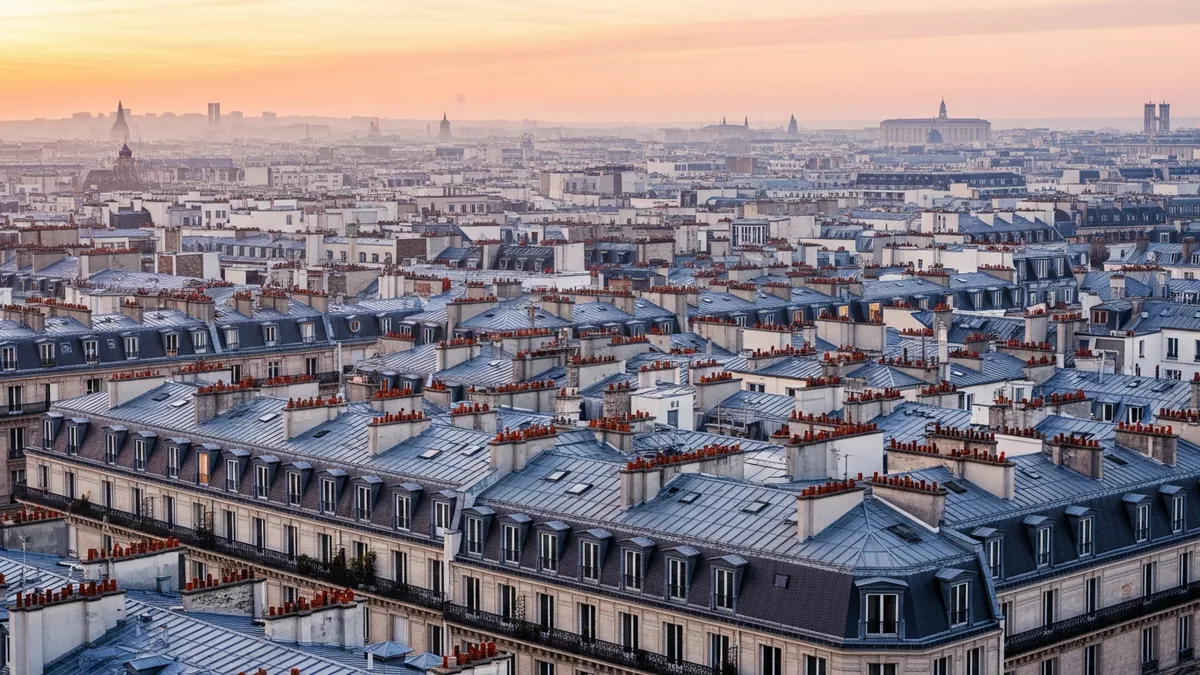
The Paris we photograph today dates, for the most part, from seventeen years ago. Georges Eugène Haussmann was appointed Prefect of the Seine on 22 June 1853 — he took up his post on 29 June — and remained so until his dismissal, 5 January 1870 — he did not resign; he was dismissed by the Ollivier cabinet. The physical toll is staggering: 20,000 houses demolished and more than 40,000 built between 1852 and 1870, more than 340 km of sewers, fully accessible to the public, dug under Belgrand’s supervision, and parks designed by Alphand.
To put the scale of the transformation into perspective: Rue Rambuteau, opened in 1836, had astonished Parisians with its width — 13 metres. Haussmann created streets 20 and 30 metres wide, and Avenue Foch reaches nearly 120 metres with its side lanes. It was also he who implemented the annexation of 1860: Paris absorbed 28 communes or parts of communes, expanding from 3,438 to 7,802 hectares and from 12 to 20 arrondissements. The motive was not purely urban planning — a five-year tax exemption was granted to factories on the outskirts to discourage industry from setting up in Paris and thereby reduce the influence of the working class there.
Two World’s Fairs, a Metro, a Liberation
The 1889 World’s Fair, which celebrated the centenary of the Revolution, attracted around 32 million visitors — and was boycotted by almost all the monarchies of Europe, though their industrialists attended in a private capacity nonetheless. The 1900 exhibition did even better, attracting 50.8 million visitors over 212 days, and left the city with four monuments that are still in use today: the Petit Palais, the Grand Palais, Orsay station and the Alexandre III Bridge.
The first metro line opened on 19 July 1900, running between Porte Maillot and Porte de Vincennes. Contrary to popular belief, it was not ready in time for the Exhibition, which opened to the public on 15 April: the metro began operating three months later. The Exposition served as the catalyst for the project, but no deadline was met.
Nor was the Liberation of Paris a single day but a series of events, from 19 to 25 August 1944. On the evening of the 24th, the first units of the 2nd Armoured Division entered via the Porte d’Italie: this was the ‘Nueve’, the 9th Company of the Chad Marching Regiment, composed mainly of Spanish Republicans whose half-tracks bore the names of battles from the Spanish Civil War. On the 25th, von Choltitz signed the surrender at Montparnasse station. Another peculiarity of the Republic: Paris remained without a mayor from 1871 to 1977, with executive powers entrusted to the prefect; Jacques Chirac was the first elected mayor since Jules Ferry, on 25 March 1977.
Notre-Dame and the third Olympic Games
The Notre-Dame fire raged on 15 and 16 April 2019, lasting nearly fifteen hours: it destroyed the entire spire — the one designed by Viollet-le-Duc, dating from 1859, and not a medieval spire —, the roofs of the nave and transept, and the roof structure. The cathedral reopened during a ceremony on 7 December 2024, and to the public on 8 December. The result has exceeded all expectations: around 11 million visitors in the first year, nearly 35,000 per day, which is 30 per cent more than before the fire. It is now the most visited monument in France.
Finally, the Olympic Games, held from 26 July to 11 August 2024, saw Paris host the first opening ceremony in Olympic history to take place outside a stadium: a parade of boats on the Seine, watched in France by 23.24 million television viewers, with a peak of 31.4 million. A little-known fact: as the sporting competitions at the 1900 Exhibition were retrospectively recognised as the second modern Olympic Games, those in 2024 are Paris’s third, after 1900 and 1924 — making the city the second in the world to have hosted three Summer Olympics, behind London.
The Eiffel Tower: what the guidebooks get wrong
It is the most misrepresented monument in France. Let’s start with the height: the Eiffel Tower measures 330 metres, not 324, following the installation of a DAB+ antenna at its summit on 15 March 2022 — a figure published by the monument’s operator. Nor was its original height 300 metres: ‘300-metre tower’ was the name of the project, as stipulated by the competition; when measured in 1889, it stood at 312 metres, including the flag. Nor is it made of steel, but of puddled iron, produced by the Pompey forges in Lorraine. Its steel framework weighs 7,300 tonnes; the 10,100 tonnes often cited correspond to the total weight of the monument, including masonry, lifts and floors. Finally, it comprises 18,038 iron components and 2,500,000 rivets, of which around one million were fitted directly on site, with the remainder fitted in the workshop at Levallois-Perret.
Who actually designed the Eiffel Tower?
Gustave Eiffel did not design the Eiffel Tower. The first sketch was produced by two engineers from his firm, Maurice Koechlin and Émile Nouguier, dated 6 June 1884 — Eiffel was initially sceptical. It was the firm’s chief architect, Stephen Sauvestre, who redesigned the project: masonry bases, decorative arches, and a reduction from five to two platforms. An interesting detail: to calculate the truss, Koechlin drew on a treatise on graphical statics which was itself inspired by an anatomist’s work on the bony structure of the head of the femur.
As for the persistent rumour of demolition: there was never any decision to demolish it. The agreement of 8 January 1887 stipulated that the City of Paris would become the owner of the tower after the Exhibition, whilst Eiffel would retain commercial use of it for twenty years, from 1 January 1890 to 31 December 1909. The concession was subsequently extended by seventy years in view of the monument’s scientific value — a value which Eiffel himself had funded: in 1903, when the Army deemed optical signals and carrier pigeons to be more reliable than wireless telegraphy, it was Eiffel who paid for Captain Ferrié’s trials out of his own pocket.
Actual visitor figures
The tower welcomed more than 6.75 million paying visitors in 2025, compared with 6.3 million in 2023 and 2024, in addition to nearly 10 million people on the forecourt, which is freely accessible. The figure of ‘7 million’ that is often cited is not corroborated by any of the operator’s annual reports. The exact phrase used on the official website is “the world’s most visited paid-entry monument” — the adjective is essential, as the Sacré-Cœur and Notre-Dame, which are free to enter, attract even more visitors.
Three levels are open to the public: 57 m, 115 m and 276 m, plus an outdoor viewing platform at 279.11 m, the highest in Europe accessible to the public. The staircase has 1,665 steps to the summit, which is open to the public up to the second level. Finally, the tower does not ‘sway by several metres’: the maximum recorded was 13 cm during the storm of December 1999. The actual movement is thermal — its height varies by around twenty centimetres between summer and winter.
Two final details. No workers lost their lives during construction — remarkable for the time; the only fatality occurred on a Sunday, whilst off duty. And the current colour, a yellow-brown applied for the 2024 Olympic Games, is not a new development: it is a return to the choice made by Gustave Eiffel in 1907. The paint is applied in three graduated shades, from the darkest at the bottom to the lightest at the top, so that the eye perceives it as uniform from a distance.
Which museums should you visit in Paris, and on which days are they closed?
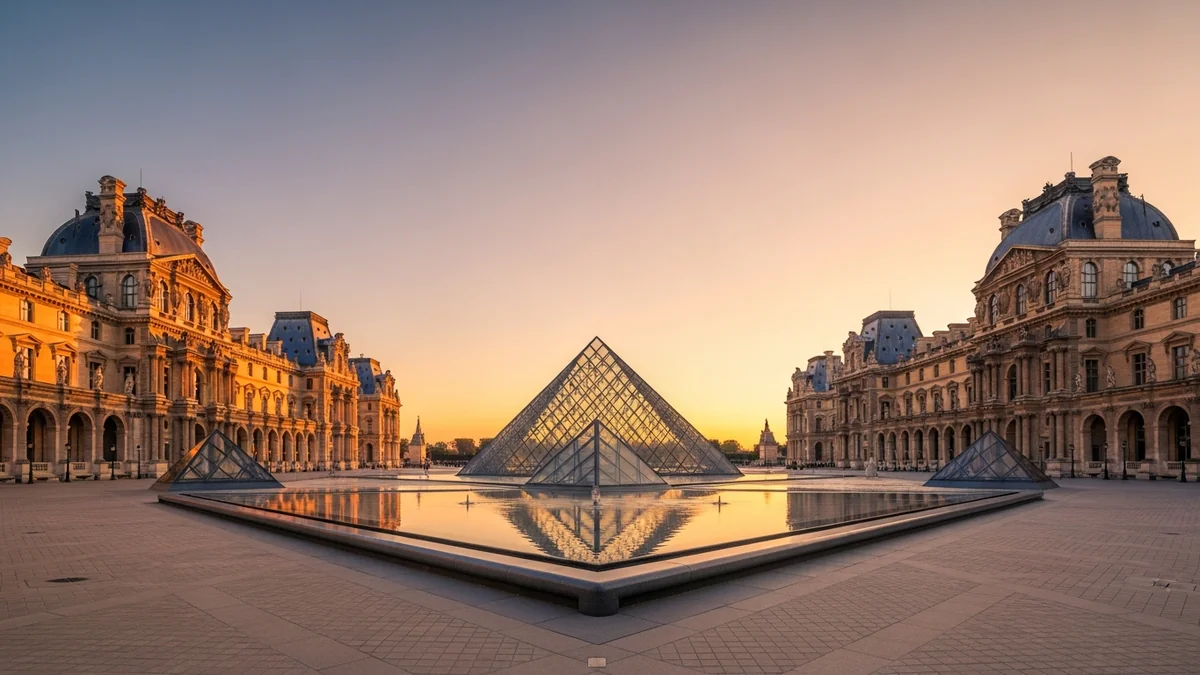
The Louvre is the world’s largest art museum, with 72,735 m² of exhibition space, ahead of the Hermitage and the National Museum of China. It welcomed 8.7 million visitors in 2024, 77 per cent of whom were foreign visitors, following 8.9 million in 2023 and around 9 million in 2025. It exhibits ‘more than 30,000 works’ from the nearly 500,000 entrusted to its care — the figure of 36,000 often cited is no longer the museum’s official figure — which have been organised since 2022 into nine departments, a ninth having been created for the arts of Byzantium and the Eastern Christian world. Housed in a palace that served as a fortress for Philip Augustus in 1190 and subsequently as a royal residence until Louis XIV chose Versailles instead in 1678, it became a museum in 1793, at the height of the Revolution, under the name Muséum central des arts.
Its pyramid, designed by Ieoh Ming Pei, was inaugurated on two occasions: on 4 March 1988 for the completed structure, and on 29 March 1989 for the opening of the entrance hall. It was the world’s first major structure made of laminated glass, comprising 603 diamond-shaped panes and 70 triangular panes — enough to dispel the myth of the ‘666 panes’. Good to know: a Louvre ticket grants free entry to the Eugène-Delacroix National Museum on the day of purchase or the following day.
The pitfall of closing days
This is the mistake that spoils the most visits: the major Parisian museums do not close on the same day. The Louvre is closed on Tuesdays. The Musée d’Orsay is closed on Mondays, as is the Palace of Versailles. However, the monuments managed by the Centre des monuments nationaux — Sainte-Chapelle, the Conciergerie, the Panthéon and the Arc de Triomphe — have no weekly closing day, and the Sacré-Cœur Basilica is open every day from 6.30 am to 10.30 pm, free of charge.
Two dated notices, valid for summer 2026. The Centre Pompidou has been closed since 22 September 2025 for major refurbishment — asbestos removal, façade work, fire safety upgrades — and its official website announces a reopening in 2030: there’s no point including it in your itinerary. And the viewing platform at the Panthéon is closed for works, whilst the lift at the Arc de Triomphe is undergoing maintenance, meaning access to the terrace is via the 284 steps. This information is subject to change: check the official websites before you set off.
Orsay, Sainte-Chapelle, Conciergerie: useful details
The Musée d’Orsay deserves a clarification: it is not ‘the museum of Impressionism’ but rather a museum of Western art from 1848 to 1914, encompassing all media. It does indeed house the world’s leading collection of Impressionist and Post-Impressionist art, but this comprises around 1,100 paintings out of a much larger collection. It is housed in the former Orsay railway station, built by Victor Laloux between 1898 and 1900 for the World’s Fair, and opened on 9 December 1986.
Finally, two Gothic gems, often overlooked in favour of the big names. The Sainte-Chapelle, consecrated on 26 April 1248, features 1,113 biblical scenes spread across 15 stained-glass windows — not 1,113 stained-glass panes, as is often claimed; it was built in four to six years at a cost of 40,000 livres tournois, whereas Saint Louis had paid 135,000 livres for the Crown of Thorns alone — the reliquary cost more than three times as much as the casket. And the Conciergerie, a remnant of the Palais de la Cité, where 2,780 prisoners, including Marie Antoinette, were held during the Revolution. A combined ticket grants access to both.
| Monument | Weekly closure | Useful information |
|---|---|---|
| Louvre Museum | Tuesday | 8.7 million visitors (2024) · 72,735 m² · Delacroix ticket included |
| Musée d’Orsay | Monday | Art from 1848 to 1914 · former railway station dating from 1900 · late-night opening on Thursdays |
| Sainte-Chapelle | None | Consecrated in 1248 · 1,113 scenes across 15 stained-glass windows · combined ticket with the Conciergerie |
| Conciergerie | None | 2,780 prisoners during the Revolution · no cloakroom or left-luggage facility |
| Panthéon | None | Soufflot · panorama closed for renovation in 2026 |
| Arc de Triomphe | None | 49.54 m · 284 steps · opening time changed to 11.00 am on Tuesdays |
| Sacré-Cœur | None | Free, 6.30 am–10.30 pm · ~11 million visitors per year, a figure commonly cited but not published in an operator’s financial report |
| Notre-Dame de Paris | None | Free · free and optional online booking |
| Centre Pompidou | — | Closed since 22 September 2025, reopening announced for 2030 |
Paris’s neighbourhoods: a guide
Exploring Paris by neighbourhood is more efficient than rushing from one monument to the next. The 20 arrondissements spiral outwards from the Louvre in a clockwise direction — a layout often attributed to Haussmann’s urban planning genius, though it owes much to a revolt by local dignitaries. The initial 1859 plan numbered the arrondissements from north to south: Passy-Auteuil would have been assigned number 13. However, at the time, ‘getting married at the town hall of the 13th’ was a euphemism for cohabitation, as there was no 13th arrondissement. The residents of Passy took offence at this, and their mayor proposed the spiral.
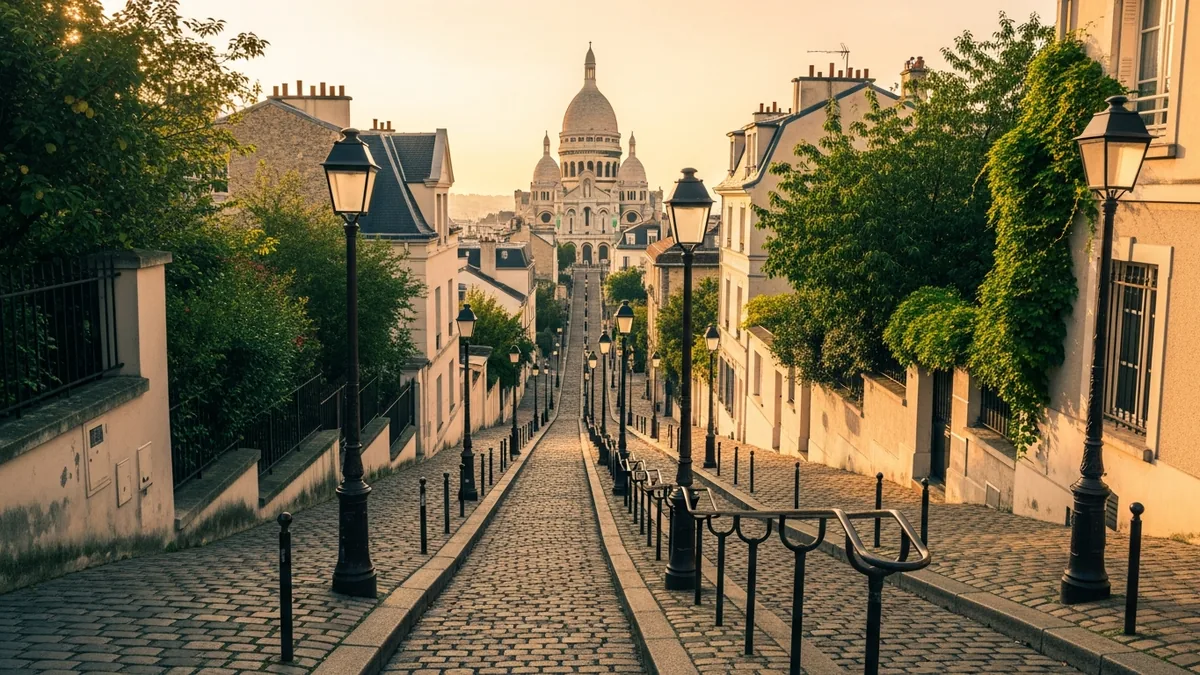
Right Bank: Montmartre, Marais, Belleville
Montmartre (18th arrondissement) occupies the highest point in the city — 130.53 metres above natural ground level, in the Calvaire cemetery adjoining the Church of Saint-Pierre. The Sacré-Cœur Basilica that crowns it is more recent than one might think: the foundation stone was laid on 16 June 1875, but it was not consecrated until 16 October 1919, as the ceremony planned for 1914 was prevented by the war. Its popular nickname, ‘Notre-Dame de la Galette’, comes from the neighbouring mill. Its grand organ, Cavaillé-Coll’s last major instrument, is undergoing restoration until the end of May 2027.
The Marais (3rd and 4th arrondissements) is pre-Haussmann Paris: a network of narrow streets and private mansions spared by the major urban redevelopment projects. It forms part of ‘Paris Centre’, the sector created in 2020 by merging the first four arrondissements — a merger which, contrary to what is often reported, did not abolish them: Paris still has 20 arrondissements, divided into 17 sectors. The name was chosen by local residents in a vote held in October 2018.
Further east, Belleville and Ménilmontant (19th and 20th arrondissements) reach heights of 128.5 and 108 metres respectively. The highest point in Belleville, at 40 Rue du Télégraphe, is exactly where Claude Chappe installed his optical telegraph in 1792 — hence the street’s name. These municipalities were deliberately split between several arrondissements during the annexation of 1860: deemed ‘traditionally turbulent’, the aim was to dilute their political influence.
Left Bank: the Latin Quarter and Montparnasse
The Left Bank is lower-lying and older in layout. Montagne Sainte-Geneviève (61 m) is home to the Panthéon, built by Soufflot on the orders of Louis XV as a church dedicated to Saint Geneviève, and converted into a funerary monument in 1791 to house Mirabeau’s remains. It is also home to the city’s two ancient remains: the Arènes de Lutèce — whose unassuming entrance is at 49 Rue Monge, beneath a portico topped by a bust of a gladiator that most passers-by never notice — and the Thermae of Cluny.
Montparnasse (66 m) and the Butte-aux-Cailles (63 m) complete the topography. Finally, a word on the official names: the twenty arrondissements all have administrative names that nobody uses — the 10th has officially been called ‘Enclos-Saint-Laurent’ since an imperial decree of 31 October 1859. This is worth knowing if you come across these names in an official document.
What to do in Paris?
In Paris, there are five things you can do that you can’t do anywhere else, and which cost next to nothing. Swim in the Seine, free of charge, at three supervised sites open from 4 July to 30 August 2026. Go shopping at the city’s oldest covered market, the Enfants Rouges, established in 1615 and listed as a historic monument. Take in the view of the city from above for free, from the 9th-floor terrace of the Arab World Institute or the 8th-floor terrace of Galeries Lafayette. Cruise up the Seine on the Batobus, which serves nine stops and allows you to get off wherever you like. And, once a year, take part in the grape harvest at the Clos Montmartre vineyard, planted in 1933 to prevent a building from being constructed on the site. The rest — museums, monuments, neighbourhoods — should be planned around two factors: closing days, which vary from place to place, and the dates of major annual events.
Five things to do in Paris and nowhere else
- Swim in the Seine – three free, supervised spots: the Bras Marie (opposite Île Saint-Louis), the Bras de Grenelle (with the Eiffel Tower in the background) and Bercy, the largest. From 4 July to 30 August 2026, no booking required. Must be able to swim, be at least 1.20 m tall, and wear a life jacket (provided).
- Visit the markets — Paris has around 91 of them. Les Enfants Rouges (3rd arrondissement, 1615, closed on Mondays), Bastille (11th arrondissement, Thursdays and Sundays only), Aligre (12th arrondissement, closed on Mondays) and Raspail Bio (6th arrondissement, Sundays only, 7.00–14.30).
- Hunting for bargains at the Saint-Ouen Flea Market — around 2,000 stallholders spread over 7 hectares, every weekend of the year: Friday 10.00–13.00 (antique hunters’ morning), Saturday and Sunday 10.00–18.00, Monday 11.00–17.00.
- Take the Batobus — a river shuttle with multiple stops, 9 stops (Eiffel Tower, Orsay, Saint-Germain, Notre-Dame, Jardin des Plantes, Hôtel de Ville, Louvre, Concorde, Invalides), with a 24-hour or 48-hour pass: get on and off as often as you like.
- Free access — the terrace at the Arab World Institute (5th arrondissement, Tuesday–Sunday 10am–6pm, free entry) and ‘La Terrasse’ on the 8th floor of Galeries Lafayette Haussmann, no ticket or booking required.
- Walk along the René-Dumont Green Corridor — a 4.7 km elevated linear park stretching from the Bastille to the ring road, following the former Vincennes railway line. It pioneered the concept in 1993, sixteen years before New York’s High Line.
- Cycling — Vélib’ Métropole, 1,518 stations as of 8 August 2026, open 24 hours a day. Little-known tip: the ‘V’+ bonus offers 15 minutes’ credit when you return a bike to an elevated station (Montmartre, Belleville).
- Stroll down Rue Mouffetard or Rue Montorgueil — two shopping streets, the former 650 metres long (5th arrondissement, one of the oldest in Paris), the latter 360 metres long (1st–2nd arrondissements, behind Saint-Eustache).
The calendar of major events
Four dates mark the Parisian year, and three of them are free — enough to plan a trip around if you can choose when to visit Paris. The Fête de la Musique takes place on 21 June, all over the city, and has done so since the first national edition in 1982 — the idea, often attributed to Jack Lang, actually came from the American musician Joel Cohen, who had been proposing ‘Saturnales de la musique’ as early as 1976. Paris Plages takes place in the Rives de Seine park and the Bassin de la Villette: the 24th edition runs from 4 July to 30 August 2026, coinciding with the swimming season. The European Heritage Days will open venues that are usually closed on 19 and 20 September 2026 — the 43rd edition, on the theme of photographic heritage, to mark the bicentenary of its invention.
The fourth is the most Parisian of them all: the Montmartre Grape Harvest Festival, the 93rd edition, from 7 to 11 October 2026. Contrary to what you might read, it’s not a weekend but five days, and the entire official programme is free: the Ban des Vendanges, the Grand Parade, the Parcours du Goût, and the closing ball. It celebrates the vintages of the Clos Montmartre, at 14 rue des Saules, home to around 2,000 vines that yield up to 1,300 kg of grapes in good years. Please note: the vineyard can only be visited on a guided tour; independent visits are not permitted. Finally, a word about the Nuit Blanche: don’t look for it in October any more — the 2026 edition took place on Saturday 6 June, simultaneously in Paris, the Greater Paris area and Le Havre.
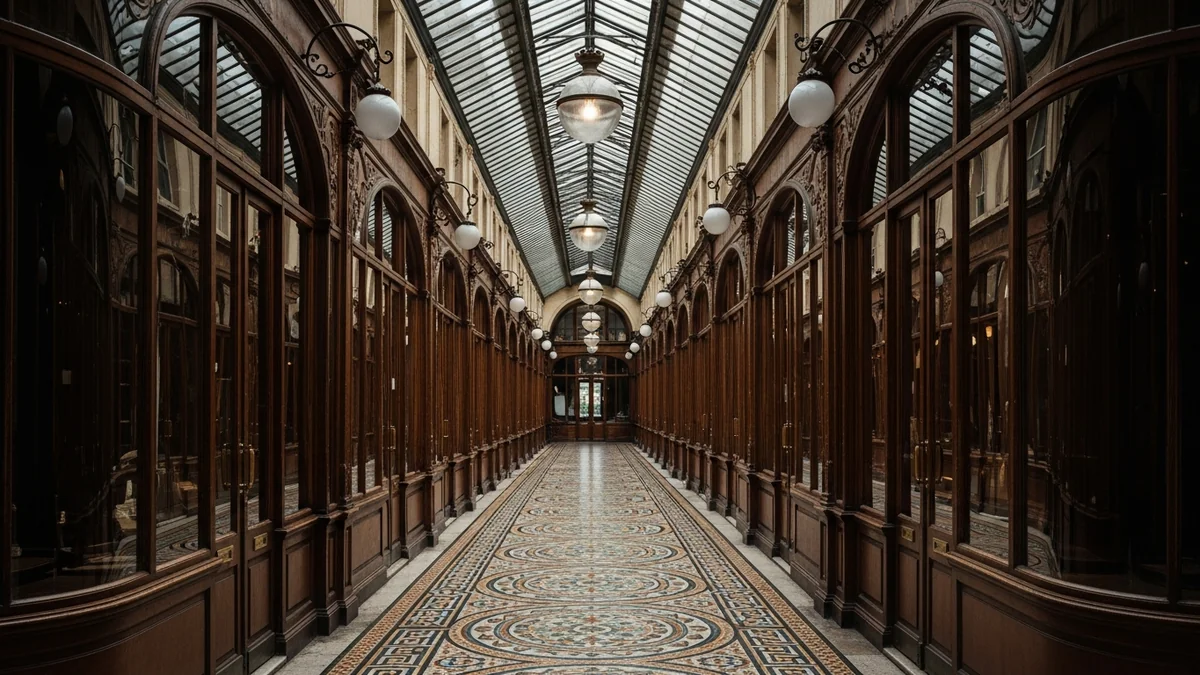
Viewpoints: what’s closed, what remains
A word of warning is in order, as almost all online guides are out of date on this point: the Montparnasse Tower observation deck has been closed to the public since 31 March 2026, for a renovation announced by its operator to last several years. The classic tip of ‘go up to Montparnasse to see the Eiffel Tower in the landscape’ no longer applies. Similarly, the viewing platform at the Panthéon is closed for works and the lift at the Arc de Triomphe is undergoing maintenance.
There are still some excellent options, including two that are completely free. The terrace at the Arab World Institute offers the best unobstructed view of the apse of Notre-Dame — the rear, with its flying buttresses —, far better than from the quays. The terrace at Galeries Lafayette, on the 8th floor (not the 7th, as is often stated), offers a 360° view stretching from the Eiffel Tower to the Sacré-Cœur. As for paid attractions, the Arc de Triomphe is well worth the effort: 284 steps – 240 on a spiral staircase, a museum gallery where you can catch your breath, then around forty more steps – leading to digital information panels detailing more than twenty monuments. The climb to the dome of the Sacré-Cœur, meanwhile, involves nearly 300 steps with no lift, and tickets are available on-site only; the basilica itself remains free to enter from 6.30 am to 10.30 pm.
Batobus or river cruise: which option on the Seine?
When it comes to the Seine, there are two options that shouldn’t be confused. The Batobus is a shuttle service: you can hop on and off freely at the nine stops with a pass. Guided cruises — Bateaux-Mouches at the Port de la Conférence, at the foot of the Pont de l’Alma; Vedettes du Pont-Neuf at the Square du Vert-Galant; and Bateaux Parisiens near the Eiffel Tower — last around an hour without any stops. Useful tip: on the Bateaux-Mouches, it’s on the return journey, in the narrow stretch of water between the Île de la Cité and the Left Bank, that you get a close-up view of Notre-Dame, not on the outward journey.
Where to take the children in Paris?
Finally, two sure-fire hits for families. The Ménagerie at the Jardin des Plantes, opened in 1794 with the surviving animals from the royal menagerie at Versailles, is one of the oldest zoos in the world: it is home to 150 species, nearly 40 per cent of which are endangered, housed in buildings that have all been listed as historic monuments since 1993. And the Jardin d’Acclimatation, on the edge of the Bois de Boulogne, was inaugurated on 6 October 1860 by Napoleon III and Empress Eugénie in the presence of Mérimée, Viollet-le-Duc and Offenbach. At the Cité des Sciences (closed on Mondays), the ‘Cité des Enfants’ area for 2–7-year-olds was due to reopen on 9 June 2026 following renovation: please check before you go.
| Activity | Where / when | Good to know |
|---|---|---|
| Swimming in the Seine | Bras Marie, Grenelle, Bercy · 4 July – 30 August 2026 | Free, no booking required · must be able to swim, minimum height 1.20 m, life jacket provided |
| Marché des Enfants Rouges | 39 Rue de Bretagne (3rd arrondissement) · closed on Mondays | Established in 1615, the oldest covered market in Paris · Listed as a historic monument since 1982 |
| Bastille Market | Boulevard Richard-Lenoir (11th arrondissement) | Thursdays and Sundays only · one of the largest open-air markets |
| Raspail Organic Market | Boulevard Raspail (6th arrondissement) | Sundays only, 7am–2.30pm · 100% organic |
| Saint-Ouen Flea Market | Porte de Clignancourt · Friday to Monday | ~2,000 stallholders across 7 ha · Friday 10.00–13.00 = bargain hunters’ morning |
| IMA Terrace | 1 Rue des Fossés-Saint-Bernard (5th arrondissement) | Free admission, Tuesday–Sunday 10am–6pm · the best unobstructed view of the apse of Notre-Dame |
| Galeries Lafayette Terrace | 40 Boulevard Haussmann (9th arrondissement), 8th floor | Free, no ticket required · 360° views from the Eiffel Tower to Sacré-Cœur |
| Batobus | 9 stops along the Seine | 24-hour / 48-hour pass · hop on and off as often as you like |
| Grape Harvest Festival | Montmartre (18th arrondissement) · 7–11 Oct 2026 | Free · five days, not just a weekend · 93rd edition |
| Heritage Days | Across the city · 19–20 Sept. 2026 | 43rd edition · theme: ‘Photographic Heritage’ |
Parks, canals and swimming in the Seine
Paris is greener than its reputation suggests, provided you count its woodlands. The Bois de Vincennes (995 ha, 12th arrondissement) is “Paris’s largest green space” according to the City, ahead of the Bois de Boulogne (846 ha, 16th arrondissement). Both are owned by the City, contain a total of around 300,000 trees and welcome some 20 million visitors a year. To put this into perspective: the Bois de Boulogne is 2.5 times the size of Central Park and 3.3 times that of Hyde Park; the Bois de Vincennes is larger than Richmond Park, London’s largest park.
An administrative curiosity: these woodlands only became part of Paris very late in the day. Owned by the City since their transfer by Napoleon III in 1852, they remained under the jurisdiction of neighbouring municipalities until the decrees of 1925 and 1929. Across its entire territory, the City now counts more than 500,000 trees — including 100,000 lining the streets — and its local bioclimatic urban development plan, approved on 20 November 2024, aims for 10 m² of green space per inhabitant.
The major gardens, and who owns them
One detail with practical implications is that not all of Paris’s gardens fall under the City Council’s jurisdiction. The Luxembourg Gardens (23 ha) are state-owned property managed by the Senate — their opening hours and regulations are therefore determined by the Senate, not by City Hall. The Tuileries Garden (25.5 ha), created by Catherine de’ Medici from 1564 onwards and listed as a Historic Monument in 1914, is managed by the Louvre Museum public institution.
The Parc des Buttes-Chaumont (25 ha) is the steepest park in the city; it was opened on 1 April 1867 during the Great Exhibition. It was not designed by Haussmann, who was merely the commissioning prefect, but created by the engineer Adolphe Alphand, in collaboration with Barillet-Deschamps and the architect Davioud for the Temple of the Sibyl. It is built on the site of a former gypsum quarry that was in operation until 1860; its name is thought to derive from ‘Chauve-Mont’, as the marl subsoil prevents anything from growing there.
The Parc de la Villette (55 ha, opened on 12 October 1987, designed by Bernard Tschumi) is the largest park in Paris excluding wooded areas — note, however, that the claim that it is the ‘capital’s largest green space’ is incorrect once Vincennes is taken into account. Finally, the Jardin des Plantes (23.5 ha), home to the National Museum of Natural History, is free to enter — only the galleries and the menagerie require an admission fee. The Museum will celebrate its 400th anniversary in 2026: the founding edict dates from 1626, it was established on its current site in 1635, and it opened to the public in 1640.
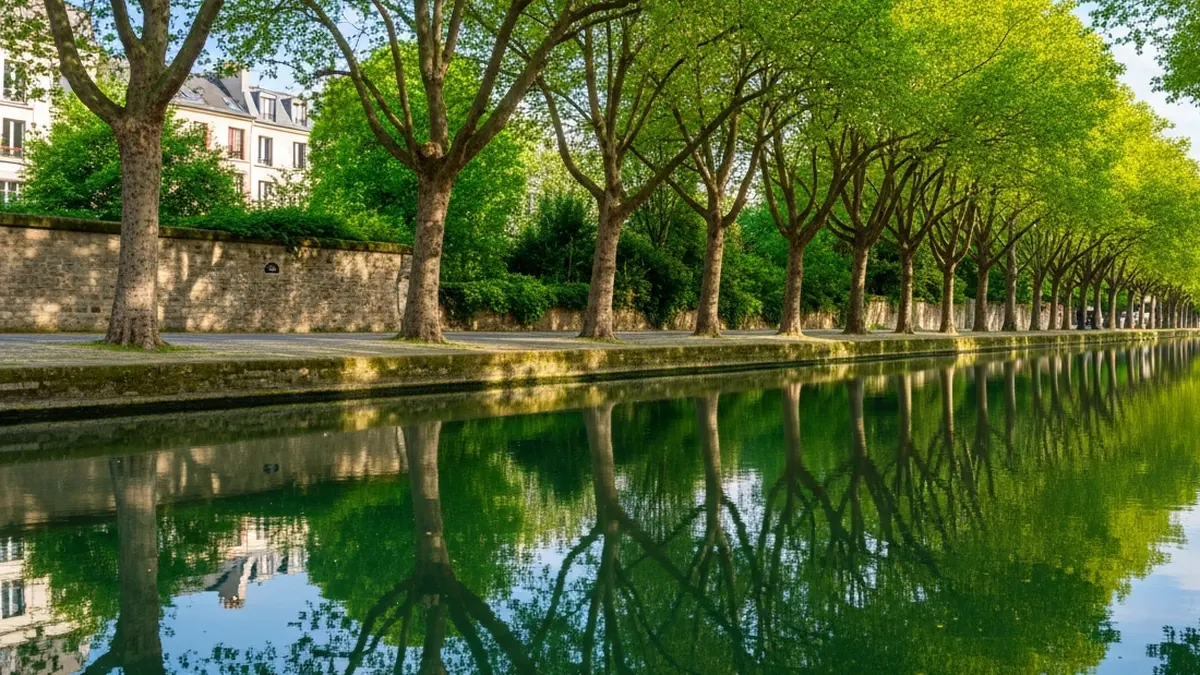
Paris’s canals: 130 km owned by the City
The canals form a 130-km network wholly owned by the City, a rare occurrence in France. The Canal Saint-Martin (4.55 km, opened in 1825, listed as a Historic Monument since 1993) overcomes a 25-metre difference in level via nine locks spread across five structures, and runs underground for 1,800 metres. The Bassin de la Villette, filled with water on 2 December 1808, is the largest artificial body of water in Paris; the lift bridge on Rue de Crimée (1885), which divides it in two, is the capital’s last remaining lift bridge.
Will it be possible to swim in the Seine in 2026?
Then there is the new development that is truly transforming the Parisian summer: swimming in the Seine. Contrary to what is often reported, it did not open with the 2024 Olympic Games — the Games only hosted the competitions. The three Parisian sites opened to the public for the first time on 5 July 2025: Bras Marie (Paris Centre), Bras de Grenelle (15th arrondissement) and Bercy (12th arrondissement). In 2026, the season runs from 4 July to 30 August; access is free and no booking is required, but you must be able to swim, be at least 1.20 m tall and wear the life jacket provided.
One fair caveat: the water has not ‘returned to its former purity’. Samples are taken daily — for Escherichia coli and enterococci, with real-time monitoring — but opening remains weather-dependent, and the Parisian sites were only able to open on around two-thirds of the days in July–August 2025. Moreover, the annual European ranking deemed most of the sites ‘unsatisfactory’ for 2025, as its methodology specifically took into account the periods of rain during which they were closed.
Around Paris: Versailles and the surrounding area
The Palace of Versailles is the obvious choice, and that is precisely why you need to plan ahead. It is 23 km from Notre-Dame by road, which is about 36 minutes without traffic — a theoretical journey time that no actual journey during the day can match. It is closed on Mondays, as is the Trianon estate, whilst the Park and Gardens are open every day. Please note: there is an admission charge for the Gardens on days when the Grandes Eaux Musicales and Jardins Musicaux events take place, and entry to the Park by car via the Queen’s Gate costs €12 per vehicle.
Is Versailles listed as a UNESCO World Heritage Site alongside Paris?
A common misconception needs to be cleared up: Versailles is not part of the Paris UNESCO listing. ‘The Palace and Park of Versailles’ is a separate and earlier site, listed in 1979, and is unrelated to ‘Paris, Banks of the Seine’, listed in 1991 covering 365 hectares. The latter does not, in fact, cover the riverside arrondissements but only the riverbanks and the buildings lining them — so to write that “Paris is a UNESCO World Heritage Site” is therefore inaccurate. Its boundaries were extended in 2024, from the Austerlitz Viaduct to the Bir-Hakeim Bridge and the Île aux Cygnes.
With 8.4 million visitors in 2025, a figure published by the organisation, Versailles is hot on the heels of the Louvre. If you’re looking for a quieter experience, the Parisian suburbs offer other options that can be visited as day trips, and a private driver allows you to visit two in succession without having to rely on RER connections — which is useful when travelling with luggage, with the family or on a tight schedule.
| Destination | Distance from Paris | Good to know |
|---|---|---|
| Palace of Versailles | 23 km (~36 mins without traffic) | Closed on Mondays · UNESCO World Heritage Site since 1979 · 8.4 million visitors (2025) |
| Vincennes Forest | In Paris (12th arrondissement) | 995 ha · four lakes · Paris’s largest green space |
| Bois de Boulogne | In Paris (16th arrondissement) | 846 ha · 2.5 times the size of Central Park |
| Roissy-CDG Airport | 23 km north-east | RER B, 25–30 mins from Gare du Nord · 67.4 million passengers (2023) |
| Orly Airport | 10 km to the south | Metro Line 14 from 24 June 2024 · 32.3 million passengers (2023) |
How to get from Bordeaux to Paris: train, road or chauffeur?
From Bordeaux, Paris is approximately 594 km by road, a direct journey of 5 hours 33 minutes, compared with 2 hours 4 minutes at the fastest by TGV and a 55-minute flight to Roissy. The road route follows the A10 motorway, known as ‘L’Aquitaine’: at 557 km in one continuous stretch, it is the longest motorway in France under a single number. It passes through Saintes, Niort, Poitiers, Tours, Blois and Orléans in turn. Tolls apply along most of the route — Cofiroute in the north, ASF in the south — but around 38.5 km remain toll-free, spread across three sections: the exit from Île-de-France, the crossing of the Loire at Tours and the approach to Bordeaux. A motorist travelling only one of these three sections therefore pays no toll, which is negligible on a journey of this length.
The train remains unbeatable in terms of pure journey time. The LGV Sud Europe Atlantique, which entered service on 2 July 2017, has reduced the Bordeaux–Paris journey time from 3 hours to 2 hours 4 minutes — a saving of 56 minutes. This is 302 km of new track travelled at 320 km/h; it is the first French high-speed line built under a private concession, and more than 170 million passengers have travelled on it since it opened. Please note, however, that 2 hours 4 minutes is the fastest journey time, without stops; the majority of services call at Angoulême, Poitiers or Saint-Pierre-des-Corps and take considerably longer.
There are no longer any flights to Orly
A fact that many are still unaware of: it is no longer possible to fly from Bordeaux to Paris-Orly. The decree of 22 May 2023, issued pursuant to the Climate and Resilience Act, closed three domestic routes — Orly–Bordeaux, Orly–Nantes and Orly–Lyon — where a direct rail alternative taking less than 2 hours 30 minutes exists. The only remaining air link is Bordeaux-Mérignac to Roissy-Charles-de-Gaulle, operated by Air France, with 16 daily flights announced, taking 55 minutes.
TGVs from Bordeaux arrive at Paris-Montparnasse, a station with 28 platforms served by metro lines 4, 6, 12 and 13, which handled more than 64 million passengers in 2023 according to SNCF open data. There are also direct TGVs to Roissy-CDG Airport station without passing through central Paris — a significant advantage if you’re connecting to a long-haul flight.
How much does a metro ticket cost in Paris?
The network is extensive: 16 metro lines (not 14 – let’s not count the 3bis and 7bis), 321 stations and 245.6 km, supplemented by 5 RER lines and 15 tram lines. There are two fare pitfalls, valid from 1 January 2026 and subject to annual change: the Metro-Train-RER ticket costs €2.55 regardless of distance — zones have been abolished for single-journey tickets — but it does not provide access to the airports, which require a ‘Paris Region <> Airports’ ticket costing €14. And the paper ticket, a Parisian icon since 1900, has not been sold since 1 November 2025.
That leaves the question of door-to-door travel. The train drops you off at Montparnasse, from where you still have to make your way to your destination with your luggage; flying means going to Mérignac, checking in, then taking the RER B. A private chauffeur service from Bordeaux to Paris meets a different need: leaving from your home at a time of your choosing, without any changes, with your luggage and, if necessary, several passengers, all for a single price. Prices start from 819 € one way for 1 to 3 passengers.
| Transport | Duration | Landmark |
|---|---|---|
| TGV (LGV SEA) | from 2 hours 4 minutes | Bordeaux Saint-Jean → Paris-Montparnasse · longer journey with stops |
| Plane | 55-minute flight | To Roissy-CDG only · Orly has been off-limits since 2023 |
| Car (A10) | 5h 33m · ~594 km | Tolls except for ~38.5 km · Poitiers, Tours, Orléans |
| Private chauffeur | 5 hours 33 minutes · door-to-door | From 819 € one way · 1 to 3 passengers · luggage included |
Frequently asked questions
What to do in Paris in three days?
Spend your first day on the Île de la Cité and the Left Bank: Notre-Dame (free), the Sainte-Chapelle with its 1,113 scenes across 15 stained-glass windows, the Latin Quarter, and the Arènes de Lutèce. Spend your second day visiting the major museums and the historic centre: the Louvre (closed on Tuesdays), the Tuileries, the Place de la Concorde, the Arc de Triomphe, then the Eiffel Tower. A third day exploring the neighbourhoods: Montmartre in the morning, the Marais in the afternoon, and the Canal Saint-Martin at the end of the day. Check the closing days before finalising your itinerary: they vary from one museum to another.
How far is it from Bordeaux to Paris?
Approximately 594 km by road, or a 5h33 direct journey via the A10 motorway. By train, the LGV Sud Europe Atlantique high-speed line connects Bordeaux Saint-Jean to Paris-Montparnasse in 2h04 at the fastest, though the journey takes longer once the TGV stops at Angoulême, Poitiers or Saint-Pierre-des-Corps. By plane, only the Bordeaux-Mérignac to Roissy-Charles-de-Gaulle route remains: the route to Orly was discontinued by decree on 22 May 2023.
How much does a journey from Bordeaux to Paris cost with a private chauffeur?
From 819 € one way, for 1 to 3 passengers, in the Eco category. The price is fixed and confirmed in writing before departure: it covers the 594 km, tolls and fuel, with no additional charge per kilometre. The service is door-to-door, departing from your address in Bordeaux or the Gironde region, at the time of your choosing. Details by category (Eco, Saloon, Van) and booking information can be found on the Bordeaux → Paris private transfer page.
What is the actual height of the Eiffel Tower?
330 metres, including the antennas, following the installation of a DAB+ antenna at the top on 15 March 2022. The figure of 324 metres, which is still widely cited, was correct up until that date. Its original height, measured in 1889, was 312 metres: the ‘300 metres’ refers to the name of the project specified by the 1886 competition, not to an actual measurement. Three levels are open to the public, at 57, 115 and 276 metres.
How many people live in Paris?
2,103,778 inhabitants according to the 2023 census, with a population density of nearly 20,000 per km². The city has been losing residents since 2011: its population peaked at 2,906,472 in 1921 and has since fallen by more than 800,000, representing a decline of 27.6 per cent over the course of a century. The natural population change remains positive; it is net migration that is driving the decline. Across the wider catchment area, however, the population stands at 13,320,752: the most populous in the European Union.
Can you really swim in the Seine?
Yes, at three sites in Paris and in summer only. Contrary to what is often reported, public swimming did not begin with the 2024 Olympic Games but on 5 July 2025. In 2026, the season runs from 4 July to 30 August at Bras Marie, Bras de Grenelle and Bercy, with free access and no booking required. You must be able to swim, be at least 1.20 m tall and wear the life jacket provided. Whether the sites are open each day depends on water quality: in 2025, they were only able to open on around two-thirds of the days.
Which Parisian museums are closed on Mondays, and which ones on Tuesdays?
It’s a classic pitfall: they don’t close on the same day. The Louvre closes on Tuesdays. The Musée d’Orsay and the Palace of Versailles close on Mondays. On the other hand, the Sainte-Chapelle, the Conciergerie, the Panthéon and the Arc de Triomphe have no regular weekly closing day, and both the Sacré-Cœur and Notre-Dame are open every day, free of charge. The Centre Pompidou, meanwhile, has been closed since 22 September 2025 for renovation, and will remain so until 2030.
Do you need to book in advance to visit Notre-Dame de Paris?
No. Entry to the cathedral is free and open to all every day during opening hours. Online booking is available and free of charge, but it is explicitly optional — simply recommended to minimise waiting times. Since reopening to the public on 8 December 2024, Notre-Dame has become France’s most visited monument, attracting around 11 million visitors in its first year – that’s nearly 35,000 a day. The towers, meanwhile, have been open to visitors separately since 20 September 2025.
Why do we say ‘Fluctuat nec mergitur’?
It is the motto of Paris, meaning ‘it is battered by the waves, but does not sink’ — not ‘it floats but does not sink’. Contrary to popular belief, it has no ancient origins and does not come from the Gallo-Roman sailors: it appeared on municipal tokens in the late 16th century, initially in the form ‘Fluctuat at nunquam mergitur’ in 1581. It only became official through a decree issued by Baron Haussmann on 24 November 1853.
Where does the name ‘Paris’ come from?
From the Gallic tribe of the Parisii, who settled in the region as early as the 3rd century BC. The French word derives from the Latin *Parisiis*, meaning ‘among the Parisii’. The name supplanted that of Lutetia in the 4th century. However, two things remain uncertain: the meaning of ‘Lutèce’ — the prevailing theory suggests it refers to mud or marshland, but this is only a theory — and the meaning of the ethnonym ‘Parisii’ itself, which linguists have not yet settled.
How many bridges and arrondissements are there in Paris?
There are 37 bridges spanning the Seine in Paris, along its approximately 13 kilometres of urban course, including footbridges and railway structures. The oldest surviving bridge is the Pont Neuf, built between 1578 and 1607. The city has 20 arrondissements, arranged in a spiral pattern following the law of 16 June 1859, which came into force on 1 January 1860. Since 2020, the first four have formed a single sector known as ‘Paris Centre’, but this does not mean that the arrondissements themselves have been abolished.
Is the Centre Pompidou open?
No. The Beaubourg building has been closed to the public since 22 September 2025 for major refurbishment: asbestos removal, restoration of the façades, and bringing the building up to fire safety and accessibility standards. The official website announces a reopening in 2030. Incidentally, the building was not designed by two architects but by three — Renzo Piano, Richard Rogers and Gianfranco Franchini, whose name is almost always overlooked.
What’s the best way to get around when visiting Paris?
On foot and by metro. Paris covers an area of 105 km² and its density – nearly 20,000 inhabitants per km² – makes distances seem short. The network comprises 16 metro lines — not 14; the 3bis and 7bis are often overlooked —, 321 stations, 5 RER lines and 15 tram lines, supplemented by 1,500 Vélib’ stations. A single ticket costs €2.55 as of 1 January 2026 (the fare is revised annually), regardless of distance, but it does not provide access to the airports, which require a specific ticket costing €14.
To find out more
- On the way to Paris, around 1 hour 45 minutes from Bordeaux: see the Angoulême Guide (city walls, comic book festival)
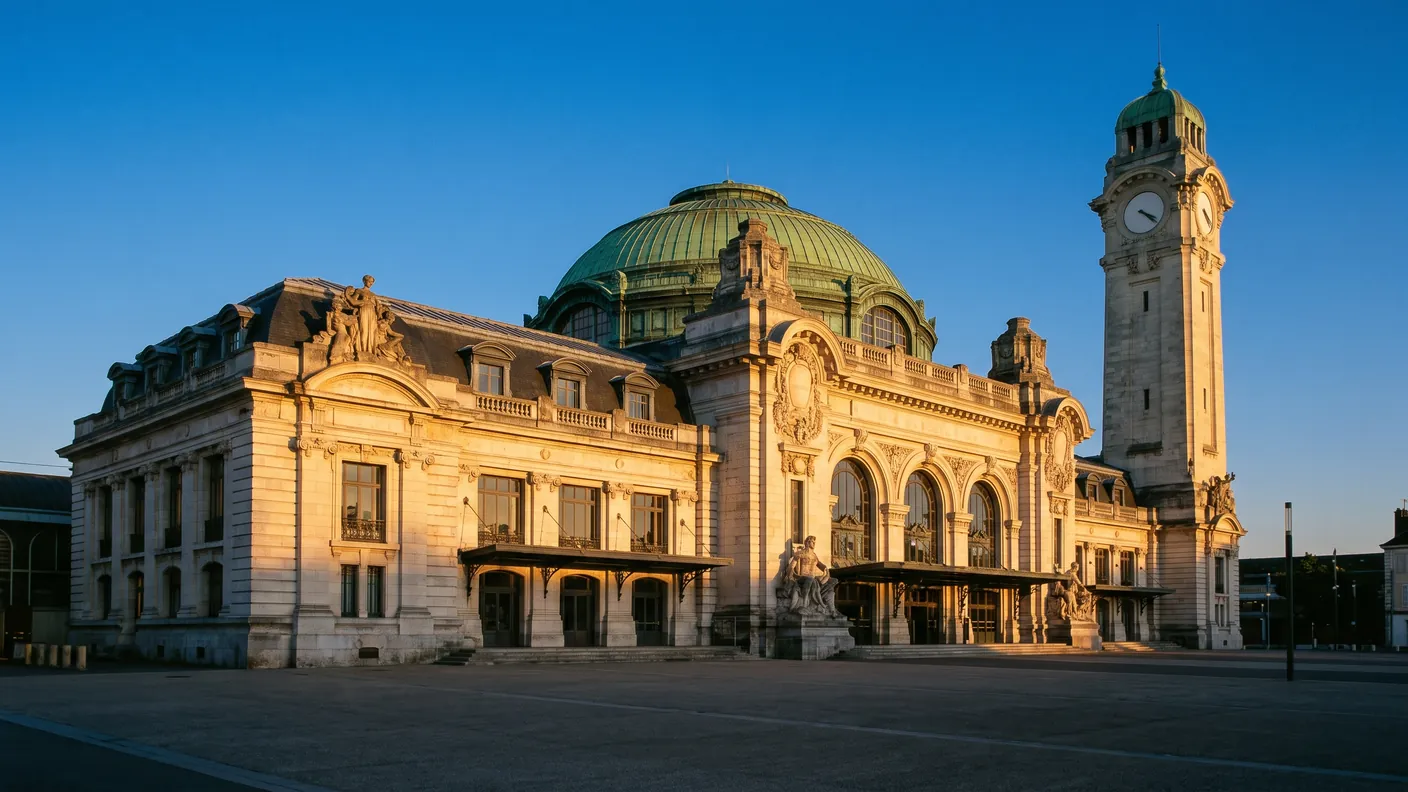
- The other major stop-off point in the Centre-West: see the Limoges Guide (porcelain, Gare des Bénédictins railway station)
- How long-distance journeys work: see long-distance private hire from Bordeaux
- Get a fixed price for Bordeaux → Paris: request a quote (written reply, fixed price)
- All our destinations from Bordeaux: see our destinations
Sources and references
- INSEE — Regional comparison tool, Paris municipality — 2023 population, population density, households, dwellings, standard of living
- Eiffel Tower — key figures (official website) — height 330 m, weight, rivets, storeys, paint
- City of Paris — history of the motto — 16th-century tokens, Haussmann decree of 24 November 1853
- Centre Pompidou — official website — closed since 22 September 2025, reopening announced for 2030
- Notre-Dame de Paris — practical information — free and open access, booking optional, opening hours
- City of Paris — swimming in the Seine — locations for 2025–2026, access conditions, water quality
- LISEA — the South Europe-Atlantic High-Speed Line at a glance — entered service 2 July 2017, 2 hours 4 minutes, 302 km, 320 km/h
- Louvre Museum — opening times and admission fees — closed on Tuesdays, Delacroix ticket included
- Île-de-France Mobilités — Metro-Train-RER ticket — fare €2.55 as of 1 January 2026, Paris Region <> Airports ticket at €14, end of paper ticket sales on 1 November 2025
- Groupe ADP — 2023 passenger figures — 67.4 million passengers at Roissy-CDG and 32.3 million at Orly in 2023
- SNCF Open Data — station passenger numbers — passengers at Paris-Montparnasse in 2023
- Palace of Versailles — press office — 8.4 million visitors welcomed in 2025
- Paris Montparnasse Observatory — closure announcement — closure to the public on 31 March 2026, multi-year renovation
- City of Paris — Haussmann, the man who transformed Paris — appointment on 22 June 1853, new thoroughfares, annexation of 1860
- Sainte-Chapelle — Centre des monuments nationaux — 1,113 biblical scenes across 15 stained-glass windows, combined ticket with the Conciergerie
Article updated on 8.
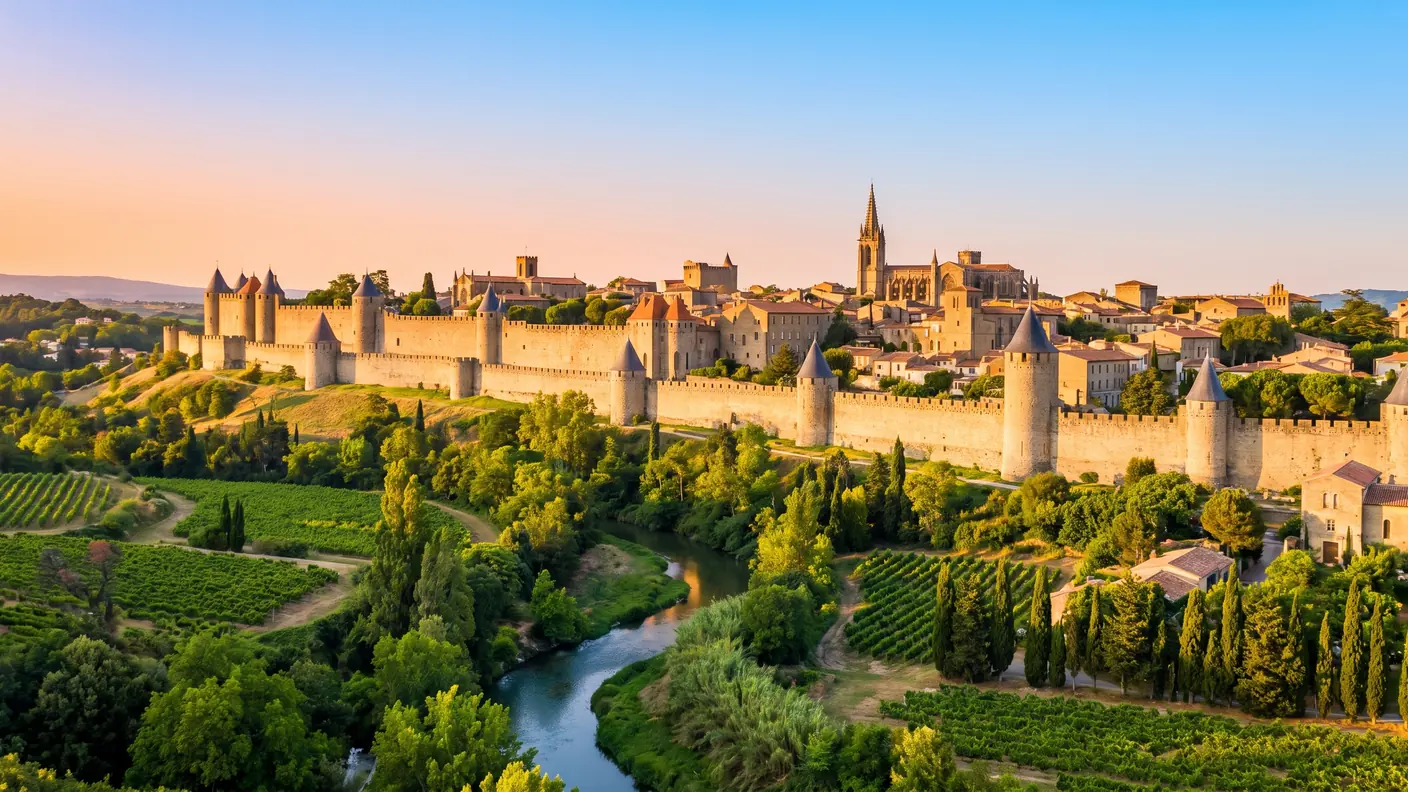
Heading for the capital
Direct journey from Bordeaux (~5h33) to Paris and the Île-de-France region: depart at a time of your choosing, door-to-door, luggage included. Saloon car or minivan, English-speaking driver, fixed price confirmed before departure.