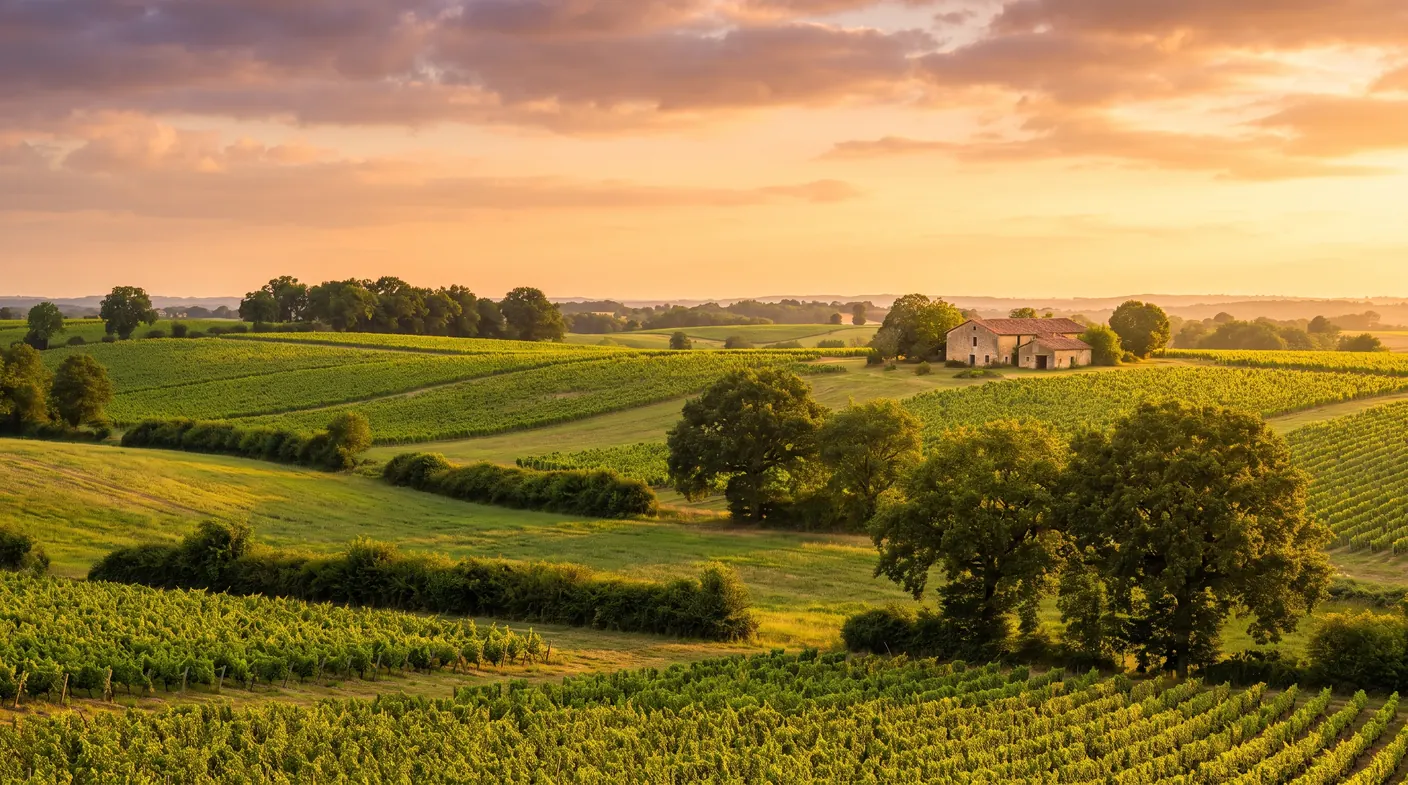
Bordeaux to Pompignac: Church and Vineyard Hills
A hillside village east of Bordeaux, on the edge of the Entre-deux-Mers region. A Romanesque church rebuilt after the fire of 1899, Bordeaux Supérieur vineyards, the Laurence Valley, and just a few minutes away, the Roger-Lapébie greenway and the bastide town of Créon—about 30 minutes from Bordeaux, barring major traffic disruptions.
Pompignac at a Glance
Pompignac is a small hillside village located about 15 kilometers east of Bordeaux, right on the edge of the Entre-deux-Mers region. Let’s get this out of the way right away: with a population of about 3,577, Pompignac isn’t a major tourist destination, but rather a quiet suburban town made up of vineyards, woods, and valleys. Its appeal lies in a few standout attractions—the Romanesque Church of Saint-Martin, rebuilt after the fire of 1899, the Bordeaux Supérieur wine-growing hillsides, and the valley of the Laurence stream—as well as everything else you can reach in just a few minutes: the bastide of Créon, the Roger-Lapébie greenway, the UNESCO-listed Abbey of La Sauve-Majeure, and Bordeaux, about 30 minutes away barring major traffic disruptions. This guide distinguishes between what has been verified and what is merely repeated, and makes one thing clear: the depth of a getaway to Pompignac comes first and foremost from the surrounding Entre-deux-Mers, this vast region of vineyards, bastides, and abbeys right nearby.
Distances are recalculated door-to-door from Bordeaux, and the displayed fare corresponds to a private, fixed-price transfer, provided in writing in advance, with no meter and no surprises, regardless of traffic conditions or stops along the way. The data is based on INSEE, Wikipedia entries, the Pompignac town hall website, and resources from the Entre-deux-Mers tourist office; visit schedules and rates, which are always subject to change, must be confirmed with each location. We’ve taken the opportunity to correct three persistent misconceptions: Pompignac is not part of Bordeaux Métropole, its church is not a protected historic monument, and the famous Roger-Lapébie greenway does not pass through the town. Details follow; let’s start with the essentials.
| Landmark | Details |
|---|---|
| Municipality | Pompignac (Gironde, Nouvelle-Aquitaine) |
| Location | is in Bordeaux, on the edge of the Entre-deux-Mers region, in the Bordeaux district |
| Intermunicipal Cooperation | Coteaux Bordelais Community of Municipalities (headquartered in Tresses, comprising 8 municipalities) |
| Population | approximately 3,577 residents (INSEE 2023) · the Pompignacais |
| Must-Sees | the Romanesque Church of Saint-Martin, the vineyard-covered hillsides, eastern Bordeaux |
| From Bordeaux | about 15 km · about 30 min · starting at 41 € |
Where is Pompignac located?
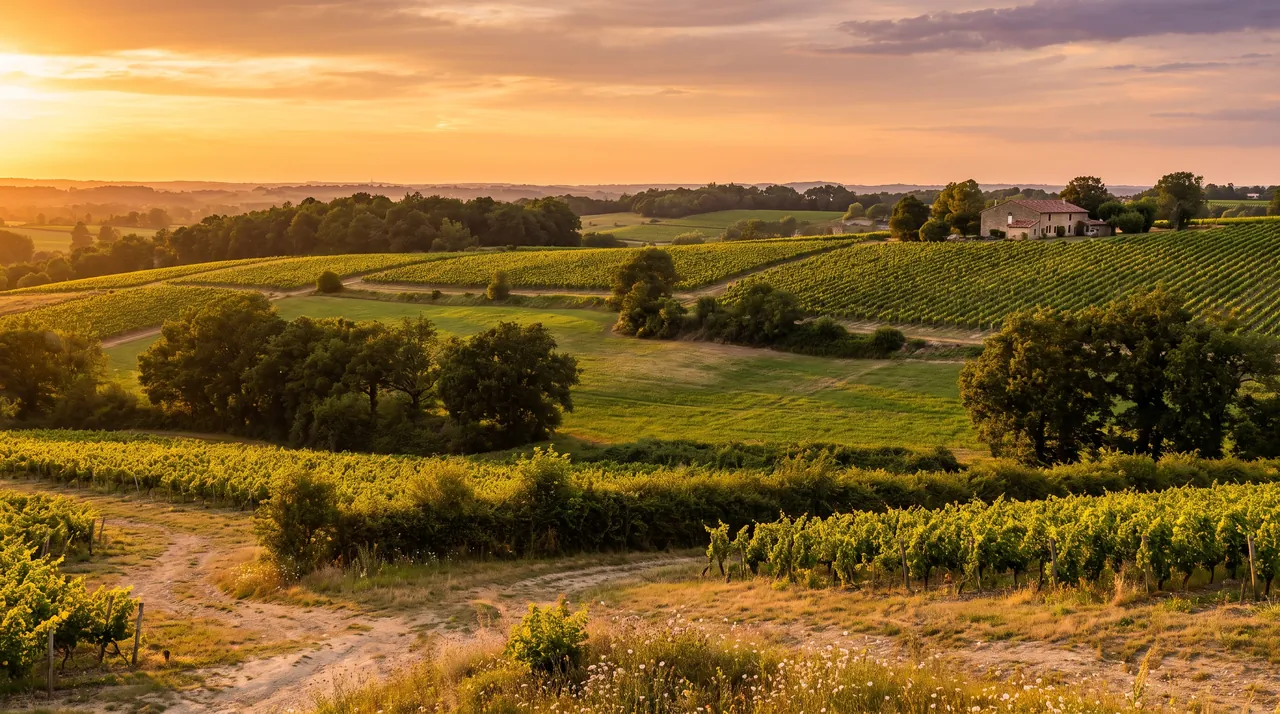
Pompignac is located east of Bordeaux, at the junction between the metropolitan area and the Entre-deux-Mers—that vast, rolling plateau nestled between the Garonne and the Dordogne rivers, which gave the region its name. Administratively, the municipality has the INSEE code 33330 and the ZIP code 33370; it covers an area of 11.62 km² within the Bordeaux arrondissement and the Créon canton. It is a hilly landscape, with elevations ranging from about 17 to 89 meters: gentle slopes planted with vineyards, oak groves, and a cool valley floor through which a modest stream, the Laurence, flows. This is the gateway to the Entre-deux-Mers region, where the Bordeaux countryside is just beginning.
One point deserves to be made clear, as it is often misunderstood: Pompignac does not belong to Bordeaux Métropole. The town is part of the Coteaux Bordelais community of municipalities, headquartered in Tresses, which comprises eight municipalities in this hilly area east of the city. It is sometimes mistakenly associated with the Bordeaux metropolitan area, with which it borders but of which it is not a part. Its immediate neighbors are Tresses, Fargues-Saint-Hilaire, Sallebœuf, Bonnetan, Yvrac, Montussan, and Beychac-et-Caillau—all villages in the same hilly countryside, nestled among vineyards, woods, and residential developments.
To properly understand where Pompignac is located, you need to keep in mind what the Entre-deux-Mers region is. The name refers to the large triangle of hills between two rivers—the Garonne to the southwest and the Dordogne to the north—which converge downstream near Bec d’Ambès. “Deux mers” (Two Seas) actually refers to two tidal rivers, hence the name. It is the largest wine-growing region in the Gironde, a land of vineyards, quiet villages, medieval bastides, and Romanesque abbeys, long devoted to mixed farming before focusing primarily on wine. Pompignac occupies the western edge of this region, the part that almost touches the metropolitan area: one foot in the city, one foot in the countryside.
How far is it from Bordeaux?
It's about 15 km and a 30-minute drive from downtown Bordeaux to Pompignac, depending on your starting point and traffic conditions.
| From Pompignac | Approx. distance | Landmark |
|---|---|---|
| Fargues-Saint-Hilaire | ~4 km | neighboring village, residential hillsides |
| Braids | ~4.5 km | Headquarters of the CC des Coteaux Bordelais |
| Bordeaux | ~15 km | downtown, Saint-Jean Station, and the airport beyond |
| Creon | ~16 km | Medieval Bastide and the Roger-Lapébie Greenway |
| La Sauve-Majeure | ~18 km | Romanesque abbey listed as a UNESCO World Heritage Site |
A village on the hillsides, not on the plains
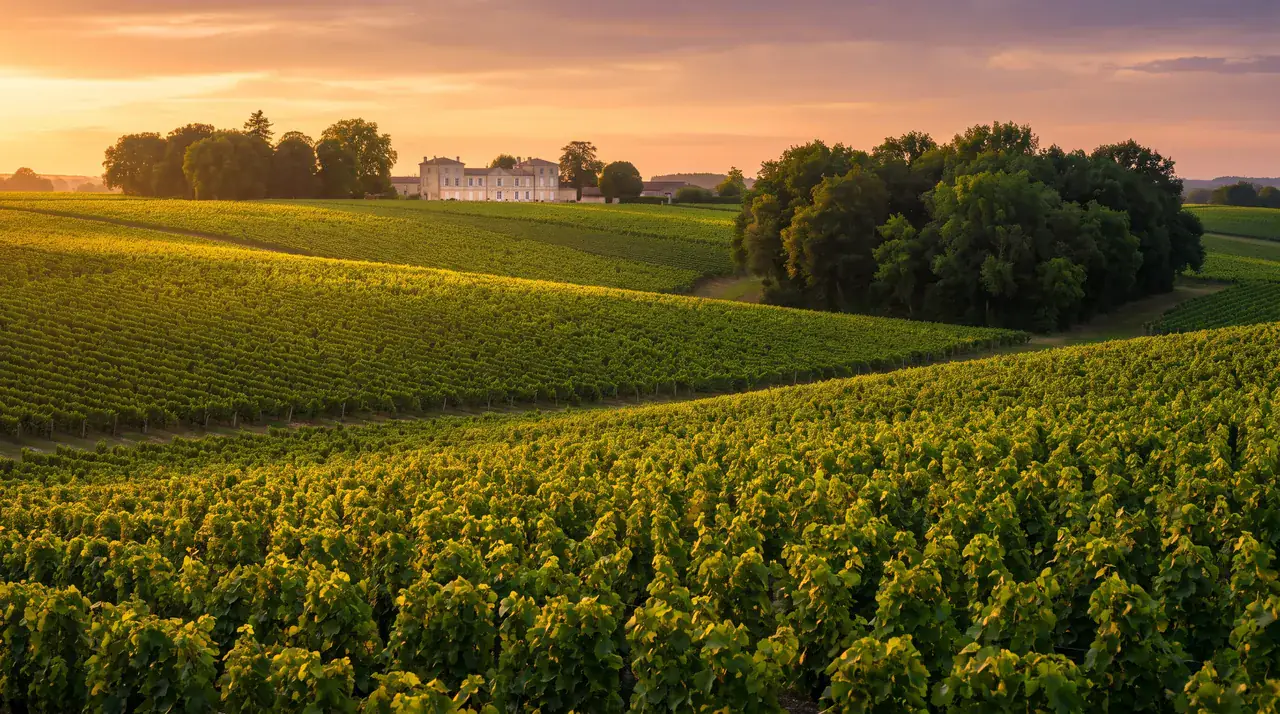
The terrain is what gives Pompignac its character. Ranging in elevation from 17 to 89 meters, the town is far from a flat plateau: it undulates with gentle slopes, separated by small valleys where water flows down toward the Garonne. The well-exposed hillsides are planted with vineyards; the cooler valleys are home to woodlands and the Laurence stream. This alternation of sun-drenched ridges and shaded valleys creates a rural landscape typical of eastern Bordeaux—both inhabited and tranquil. It is an unpretentious rural setting that comes into its own at the end of the day, when the light skims the rows of vines and lengthens the shadows of the oak trees.
This hilly region has, in fact, given its name to the intermunicipal community: the Coteaux Bordelais refers specifically to these hills east of the city, between the Garonne and the Dordogne, where villages have clung to the ridges and sun-drenched slopes. Pompignac is part of this chain, along with Tresses, Fargues-Saint-Hilaire, Sallebœuf, and Bonnetan—a string of towns that share the same landscape and the same winemaking history. Understanding this geography is the first step toward understanding why Pompignac is best explored as part of its broader region rather than in isolation: the hillsides do not stop at the municipal boundaries, and the appeal of a stroll lies in this continuum of vineyards, woods, and valleys that stretches toward the Entre-deux-Mers region.
How many people live in Pompignac?
According to the latest official data available (INSEE, 2023 population), Pompignac has approximately 3,577 residents, with a population density of about 308 residents per square kilometer. It is more than just a hamlet, but far less than a small town: a large suburban village, where recent housing developments alternate with vineyard plots, woods, and a few old farms. Higher estimates, around 3,900 residents, are sometimes cited; these anticipate growth that has yet to be confirmed, so we’ll stick to the census figure here. The residents are known as Pompignacais and Pompignacaises. This modest size is not a drawback—it’s a defining feature: it explains the town’s peaceful atmosphere and the fact that you’re more likely to discover it while passing through on a day trip to eastern Bordeaux than by spending an entire day there.
| Data | Value |
|---|---|
| Population | approximately 3,577 residents (INSEE 2023) |
| Density | about 308 people per square kilometer |
| Area | 11.62 km² |
| Demonym | Pompignacais, Pompignacaises |
| INSEE code · ZIP code | 33330 · 33370 |
| Canton · District | Creon · Bordeaux |
A rapidly growing suburban village
Pompignac is part of Bordeaux’s inner rural ring, which has seen significant population growth over the past generation. The population has grown by about 20% since 2017, driven by the arrival of households seeking a setting of hillsides and vineyards, located about 30 minutes from Bordeaux under normal traffic conditions. As in most of these towns, the vast majority of the working-age population commutes outside of Pompignac—most often to the Bordeaux metropolitan area—and returns in the evening to a village that has become primarily residential. This dynamic explains the town’s current character: new suburban neighborhoods have sprung up around an historic center, complete with the amenities—a school, community center, and local shops—of a town that is growing rapidly while remaining on a human scale.
This size has a practical implication for visitors: Pompignac is not a mass-tourism destination, nor does it claim to be one. There is no train station, no grand monuments, and no long list of museums. It is a village to pass through and admire, whose attractions lie in its heritage and scenery, and which is naturally complemented by the better-equipped neighboring towns—Tresses nearby, Créon a little further away. Recognizing this does not detract from its charm: it simply helps you plan your visit effectively, by thinking of your getaway in terms of the greater Bordeaux area and the Entre-deux-Mers region rather than just this one town. That is precisely the focus of this guide, which aims to showcase Pompignac and its surroundings.
Where does the name Pompignac come from?
The origin of the name “Pompignac” is likely, but not absolutely certain: it is best to state it in the conditional tense. The name is thought to derive from the Gallo-Roman “Pompenius,” the personal name of a landowner—perhaps a veteran of the Roman army rewarded with a plot of land—followed by the Latin possessive suffix -acum. Pompignac would therefore originally have been “the estate of Pompenius,” the Gallo-Roman villa established on these hillsides. This hypothesis is consistent with the traces of ancient occupation found in the town, which attest to a very real Gallo-Roman presence in the area.
What does the suffix -acum mean?
The suffix -acum is one of the most reliable indicators in the toponymy of southwestern France. Of Gallic origin and later Latinized, it was used to form, from a person’s name, the name of a rural estate: “the property of so-and-so.” In Aquitaine, it gave rise to a whole family of place names ending in -ac—Pompignac, as well as Cognac, Jonzac, Cadillac, and dozens of others. Each thus preserves, engraved in its name, the memory of an ancient landowner and his agricultural estate. For Pompignac, the interpretation “estate of Pompenius” thus directly links the village to the era when these hillsides were already being cultivated—likely with vineyards—under Roman administration. In the absence of conclusive evidence, this is considered the most plausible theory, not a certainty set in stone.
This interpretation places Pompignac within a vast toponymic family. The entire Gironde region and the Southwest are dotted with villages ending in -ac that originated from the same pattern: a Gallo-Roman male name followed by the suffix denoting an estate. This cluster of names tells, in its own way, the story of the network of villae that crisscrossed the hillsides of ancient Aquitaine, each at the heart of its own lands and vineyards. It is therefore no surprise to find this pattern in Pompignac: the land was suitable for cultivation, the Garonne River facilitated trade, and the vineyards were undoubtedly already a source of wealth there. The village’s name is thus the oldest record that has come down to us—a word that has endured for nearly two thousand years.
The Romanesque Church of Saint Martin
The most charming landmark in Pompignac is its church, dedicated to Saint Martin. The building has Romanesque foundations dating back to the 12th century and is believed to have been built on a site that was already occupied during the Gallo-Roman period, on a promontory overlooking the northern part of the village. Like many rural churches in the Entre-deux-Mers region, it has been renovated and expanded over the centuries, but it has long retained its medieval core. The most remarkable feature is its bell tower-porch, erected in the late 15th or early 16th century, inside which the original Romanesque portal was relocated—a move that, as we shall see, proved to be providential.
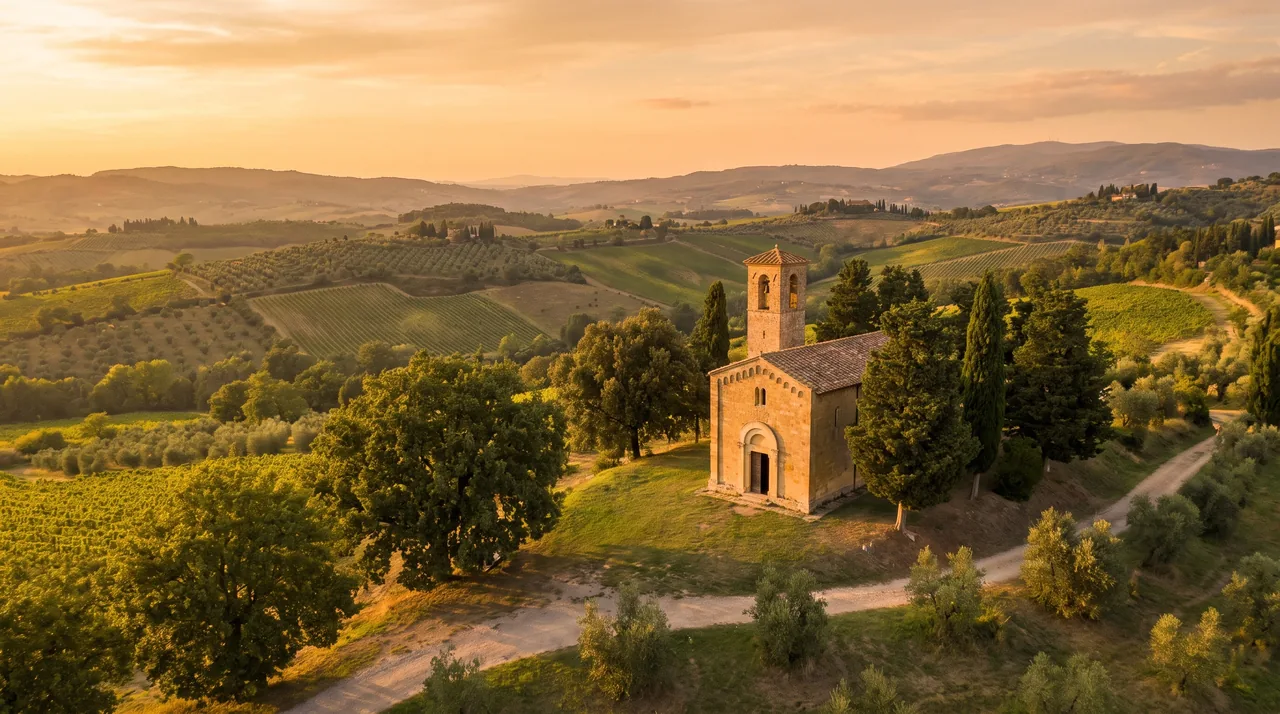
The current silhouette is dominated by this square bell tower, topped by a spire that rises to a height of about twenty meters. At its base, the porch houses the restored Romanesque portal, with its arches and small columns, the only monumental remnant of the original building still visible today. The rest of the church, which is lighter in color and more symmetrical, dates from a much more recent phase of reconstruction—not merely a renovation, but a true rebirth following a catastrophe that occurred on the very last day of the 19th century.
What remains of the Romanesque church?
Two things remain from the 12th-century Romanesque church: the foundations, upon which the building was rebuilt, and the Romanesque portal housed within the bell-tower porch. This portal, with its semicircular arch and carved decoration, is the most eloquent testament to the antiquity of this place of worship. The bell-tower porch itself, dating from the late Middle Ages, forms a second, late-Gothic layer superimposed on the Romanesque core. It is this layering of eras—12th-century foundations, a tower from the late 15th or early 16th century, and a nave rebuilt in the 20th century—that makes the building so fascinating, provided one knows how to interpret it in successive layers rather than as a single, unified whole.
The Fire of 1899 and the Reconstruction
The event that left its mark on the church occurred on December 31, 1899: a fire ravaged the interior of the sanctuary on the last day of the century. The fire destroyed most of the nave; only the bell tower and the Romanesque portal it housed were spared—which explains why they are now the oldest surviving parts of the church. Reconstruction began immediately, in 1901 and 1902, and the church was then fitted with stained-glass windows, created by the Bordeaux-based Dagrant workshop in 1902 — a renowned studio that supplied stained glass to many churches in southwestern France during that period. The building we see today is therefore, for the most part, a church from the very early 20th century, built upon much older ruins.
Is the church designated as a historic landmark?
No, and that distinction is important. The Saint-Martin Church in Pompignac is listed in the General Inventory of Cultural Heritage—a project to identify and document cultural heritage—but it does not enjoy protection as a Historic Monument. Therefore, it should not be referred to as “classified” or “listed as a Historic Monument”: these terms denote specific legal protections that do not apply here. The confusion often stems from a misleading namesake: there is another Saint-Martin Church, in Poussignac, in Lot-et-Garonne, which is indeed protected as a Historic Monument. Two villages with similar names, two Saint-Martin churches, but only one official heritage status—and it is not that of Pompignac. Clarifying this prevents many inaccuracies from being copied from one website to another.
The fact that it lacks a designation in no way diminishes the building’s significance; it simply needs to be viewed in its proper context. The Entre-deux-Mers region is a land of Romanesque art: the presence of major abbeys—foremost among them La Sauve-Majeure—spurred the establishment of a network of priories and village churches throughout the countryside, built in the 11th and 12th centuries. Many have been restored, remodeled, or sometimes rebuilt, but they often retain a Romanesque portal, apse, or capitals. Saint-Martin de Pompignac belongs to this unassuming family of rural sanctuaries: unpretentious in scale, yet rich in Romanesque remnants and a turbulent history, marked by the fire of 1899 (history and heritage on the municipality’s official website, accessed July 24, 2026). It is a monument best discovered in passing, by looking up at its bell-tower porch, rather than by comparing it to the region’s grand abbey churches.
Washing houses, mills, and hillsides
Aside from the church, Pompignac’s architectural heritage is modest, and let’s be honest: people don’t come here for a wealth of monuments, but for the atmosphere of a hillside village and a few unassuming reminders of rural life in days gone by. You can still spot an old washhouse—that covered basin where women used to wash clothes before running water was available—as well as several old water mills, once situated along the Laurence stream, of which, in most cases, only ruins remain; and the town hall-school, built in 1884, a fine example of public architecture from the Third Republic, when every municipality established its own secular school and town hall.
Also located in the town is the Château Beaulé La Guillaumette: a beautiful Gironde-style mansion that now serves as a venue for weddings and events. It’s important to note this to avoid any disappointment, as its name “château” can be misleading: it is not a historic site open to visitors, but a private estate used for events, not open to the public like a museum. You can catch a glimpse of it from the surrounding area, as an example of the stately homes that dot the hillsides of Bordeaux. As for the rest, Pompignac’s true heritage lies in its landscape: the vineyard-covered hillsides, the oak forests, and the quiet flow of the Laurence River, which together form the village’s backdrop.
Where can I see the old Pompignac?
The historic heart of the town is still evident around the church, perched on its promontory north of the village center, and along the paths connecting the old hamlets. It is there, rather than in the newer suburban neighborhoods, that one finds the light-colored stone, the old walls, and the layout of the rural roads of yesteryear. The town hall and school, built in 1884, serve as a link to the late 19th century, while the old washhouse offers a glimpse into daily life before running water. Nothing spectacular, but these details, taken together, tell the story of a village that grew slowly, centered around its church and vineyards, before experiencing the residential boom of recent decades. A short walk is all it takes to explore it, with your camera at the ready.
The Laurence Valley
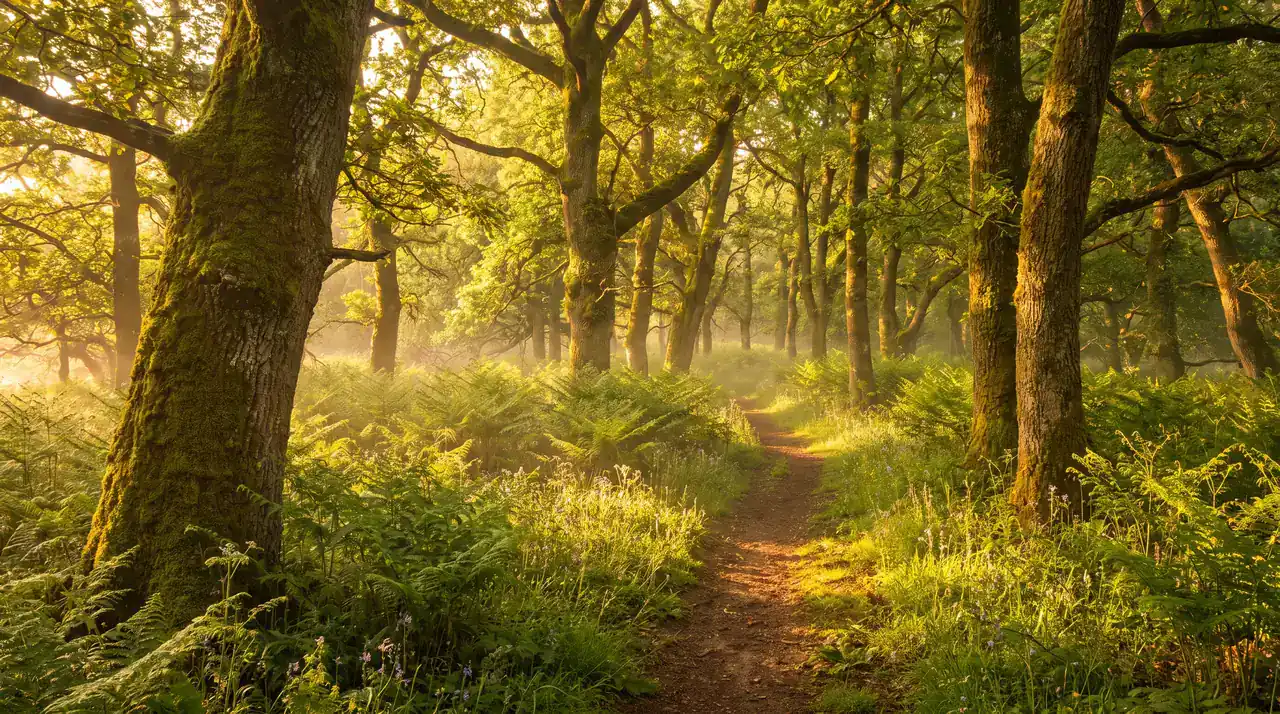
The main natural setting of Pompignac is the Laurence, a small stream that drains the hillsides and flows down toward the Garonne. Its valley, cooler and shadier than the vine-covered ridges, preserves the memory of the water mills of yesteryear: it was here that the flour mills once turned, of which only traces remain—old reservoirs, filled-in mill races, and stone walls overgrown with vegetation. Today, this valley offers above all a setting for walks, away from the housing developments: a ribbon of greenery where one walks in the shade of deciduous trees, along the water’s edge. It serves as a subtle counterpoint to the sun-drenched hillsides, and is one of the reasons why Pompignac, despite its proximity to the city, retains a truly rural character.
The Vineyards of Pompignac
Pompignac is a wine-growing town in the Entre-deux-Mers region, and its vineyards fall under the major generic appellations of the Bordeaux region. The reds, made primarily from Merlot and Cabernet, are produced under the AOC Bordeaux and Bordeaux Supérieur appellations; the dry, lively, and fruity whites fall under the Entre-deux-Mers appellation, renowned for this style of wine. This is the foundation of the entire Entre-deux-Mers wine region: approachable, easy-drinking wines, shaped by clay-limestone soils and well-exposed hillsides. Here, the vineyard is not merely a backdrop: it is an ancient and vibrant industry that shapes the landscape and sets the rhythm of the year.
What wines does Pompignac produce?
The Pompignac region thus offers both styles. The dry white wines of Entre-deux-Mers, crisp and fragrant, are perfect as an aperitif or with seafood; the reds from Bordeaux and Bordeaux Supérieur are ideal for everyday meals. It must be made clear to dispel a common misconception: Pompignac does not produce grand cru wines from the Right Bank, and no Saint-Émilion is produced here. Here we are in the realm of regional appellations—wines meant for enjoyment and sharing, which form the backbone of everyday life in the Gironde vineyards—an honest, unpretentious style that is best appreciated for what it is rather than confused with the prestigious neighboring terroirs of the Dordogne.
These appellations play a central role in the Bordeaux region. Entre-deux-Mers is one of the region’s major wine-growing areas for dry white wines, and its name has become part of the everyday vocabulary of wine enthusiasts; Bordeaux and Bordeaux Supérieur reds, meanwhile, are the most widespread appellations in the Gironde wine region—the ones found on the greatest number of dining tables. At Pompignac, as in neighboring towns, white and red wines are often produced side by side on the same estates, which make both types. This is a region of family-run vineyards, where welcoming visitors, wine tastings, and direct sales are becoming increasingly important—a friendly and unpretentious way to discover the Entre-deux-Mers, glass in hand.
Queyssard Castle
The estate identified within the municipality is Château Queyssard, headquarters of Vignobles Massé, located at 17 Avenue du Périgord in Pompignac. The estate produces the full range of local appellations: Bordeaux, Bordeaux Clairet, Bordeaux Rosé, Bordeaux Supérieur, and dry white Entre-deux-Mers (official Gironde Tourisme fact sheet, accessed July 24, 2026). This is a great starting point for anyone who wants to put a face and a winery to the wines of Pompignac, rather than just relying on the labels. Tastings and direct sales are generally by appointment: so it’s best to contact the estate in advance to arrange your visit, especially since smaller estates often adjust their hours based on the season and vineyard work. It’s the perfect opportunity to taste, right on the premises, what these hillsides in eastern Bordeaux truly produce.
From a Gallo-Roman villa to a residential village
The history of Pompignac begins long before the present-day village. The hillsides on which it stands were already inhabited during the Gallo-Roman period, as evidenced by archaeological finds in the town. The very name of the place, “the estate of Pompenius .” This marks the first link in a long chain of continuity: a hilly region developed during the Roman Empire—undoubtedly already planted with vineyards—which was later Christianized and organized around a parish in the Middle Ages, before becoming the town we know today.
What remains from the Gallo-Roman period?
The Gallo-Roman occupation of Pompignac is attested by several sites and finds, notably at the localities known as Le Castéra and La Romaningue, as well as near the church. These remains—traces of dwellings, artifacts, and foundations—confirm that the area was inhabited and used as far back as antiquity, and fully explain the etymology of the name. The place name is therefore not merely a linguistic hypothesis: it aligns with the archaeological evidence found on the ground. Nothing monumental is visible today—one should not expect a developed ancient site—but these discoveries place Pompignac within the long history of the development of the Bordeaux hillsides, where Roman settlements often preceded medieval villages.
From the Middle Ages to the 19th Century
In the Middle Ages, Pompignac was centered around its church—whose Romanesque foundations date back to the 12th century—on a promontory north of the village. At the end of the Middle Ages, a bell tower and porch were added—built in the late 15th or early 16th century—which became the dominant feature of the village’s skyline. The following centuries saw the village as a quiet rural community, sustained by viticulture and mixed farming. The 19th century left two clearly dated marks: the town hall and school, built in 1884 in the spirit of the nascent Third Republic, and the fire at the church on December 31, 1899, which necessitated the reconstruction of the sanctuary at the very beginning of the following century. These milestones fairly well summarize the trajectory of an ordinary hillside village, one without major events but not without history.
How did Pompignac become a residential area?
The major turning point came in the 20th century, particularly in the 1980s. The town then developed an esplanade featuring a community hall and a shopping arcade, and went on to build a new town center to accommodate the influx of new residents. From an agricultural village, Pompignac gradually transformed into a suburban residential town, capitalizing on its proximity to Bordeaux. This transformation, completed by the strong growth of recent years, has given the town two distinct faces: on one side, the historic center centered around the church and vineyards; on the other, the suburban neighborhoods and amenities of a dynamic town in the Bordeaux metropolitan area.
It is this dual identity that best defines Pompignac today. The village has not confined its history to a single historic center; it has grown, expanded, and welcomed new families, all while preserving the landmarks of its rural past—the rebuilt Romanesque church, the old washhouse, the town hall-school, and the vine-covered hillsides. Understanding this evolution helps you appreciate the village for what it is: you won’t find an intact medieval town here, but rather a vibrant village in eastern Bordeaux, whose charm lies in its hillside setting and ideal location, at the gateway to the Entre-deux-Mers region and about 30 minutes from Bordeaux, barring major traffic disruptions.
What is there to do in and around Pompignac?
Let's be honest: Pompignac is a suburban village, and you can see everything it has to offer pretty quickly. The appeal of a getaway here lies as much in the town itself as in everything that surrounds it within a radius of a few kilometers—hence the unapologetic “and around” in the title of this chapter. In town, you can visit the Romanesque Church of Saint-Martin and its bell tower porch, stroll through the hillsides and the Laurence Valley, stop by the Tuesday morning market, or head out to Château Queyssard for a wine tasting. Then it’s time to broaden your horizons, because that’s where the Entre-deux-Mers region truly shines: the medieval bastide of Créon, the Roger-Lapébie greenway bike path (Gironde Tourisme, accessed July 24, 2026), the UNESCO-listed Abbey of La Sauve-Majeure, and Bordeaux, about 30 minutes away barring major traffic disruptions. Here’s everything you need for a full day’s adventure starting from Pompignac.
- The weekly market—every Tuesday from 8 a.m. to 12 p.m. at Place de l'Entre-deux-Mers—is the perfect place to get a feel for village life and stock up on local products
- Saint-Martin Church—the building with Romanesque foundations, rebuilt after the fire of 1899, with its bell tower and restored Romanesque portal
- “The Pompignac Eight” — a marked cycling loop of about 38 km starting from the town, through the hills of eastern Bordeaux
- The Wine and Cheese Fair—September’s gourmet event, a great opportunity to sample local products
- Château Queyssard — tasting of local wines (Bordeaux, Bordeaux Supérieur, Entre-deux-Mers) by appointment
- The Roger-Lapébie Greenway—the main bike path in the Entre-deux-Mers region; please note that it does not pass through Pompignac: the closest places to join it are Créon (~16 km) or Latresne
- The town of Créon—a new town founded in 1316, with its arcaded square and Wednesday market, about 16 km away
- La Sauve-Majeure Abbey—a ruined Romanesque masterpiece listed as a UNESCO World Heritage Site, about 18 km away, and Bordeaux, about 15 km away, to round out the day
The Market and Events of the Year
The Tuesday morning market at Place de l'Entre-deux-Mers is the best time to soak up the atmosphere of Pompignac: between 8 a.m. and 12 p.m., the village comes alive around the stalls selling fresh, local produce. It’s also a chance for visitors to experience the vitality of a growing community. The highlight of the year is the Wine and Cheese Fair, held in September: it showcases local products and draws enthusiasts from the surrounding area. Cyclists, for their part, will find plenty to enjoy with “Le Huit de Pompignac,” a marked loop of about 38 kilometers that starts in the town and winds through the hills—a lovely way to explore eastern Bordeaux by bike, provided you know that the famous Roger-Lapébie greenway joins it further on, near Créon or Latresne.
Shining in the Entre-deux-Mers region
For a full day out, it’s best to use Pompignac as a base and explore the surrounding area. In the morning, visit the church and take a stroll through the hills, then head to the market if it’s Tuesday. At noon, enjoy a gourmet meal in the area or a picnic in the Laurence Valley. In the afternoon, head to the Entre-deux-Mers region: the bastide town of Créon and its market, the Roger-Lapébie greenway for cycling enthusiasts, and, above all, the Abbey of La Sauve-Majeure, less than half an hour away. You can also head back to Bordeaux—about 30 minutes away barring major traffic delays—to wrap up the day in the city. You can easily fit all of this into a single day starting from Pompignac, without ever having to drive very far between stops.
| Step | Where | Good to Know |
|---|---|---|
| Pompignac Market | Pompignac | Tuesday, 8 a.m.–12 p.m., Place de l'Entre-deux-Mers |
| "The Eight by Pompignac" | Departure Pompignac | a marked cycling loop of approximately 38 km |
| Queyssard Castle | Pompignac | Tasting by appointment |
| Roger-Lapébie Greenway | Access via Créon / Latresne | Entre-deux-Mers bike path (does not pass through Pompignac) |
| Créon's Country House | Creon (~16 km) | arcade-lined square, Wednesday market |
| La Sauve-Majeure Abbey | La Sauve (~18 km) | Romanesque abbey listed as a UNESCO World Heritage Site |
About Pompignac
The real appeal of Pompignac is its location. In just a few minutes by car, you can go from a hillside village to some of the most visited sites in the Entre-deux-Mers region, or reach Bordeaux and its major attractions. This unassuming central location makes Pompignac a peaceful base for exploring eastern Bordeaux and western Entre-deux-Mers—provided you’re willing to get around a bit—which we’re more than happy to do, since everything here is within easy reach. Here are some useful distances from the village.
| Destination | Distance from Pompignac | Interest |
|---|---|---|
| Fargues-Saint-Hilaire | ~4 km | neighboring village, residential hillsides |
| Braids | ~4.5 km | Headquarters of the CC des Coteaux Bordelais |
| Sadirac | ~12 km | Pottery Village, Pottery House |
| Bordeaux | ~15 km | city, Saint-Jean train station, airport beyond |
| Creon | ~16 km | Medieval bastide, Roger-Lapébie Greenway |
| La Sauve-Majeure | ~18 km | Romanesque abbey listed as a UNESCO World Heritage Site |
Neighbors You Should Get to Know
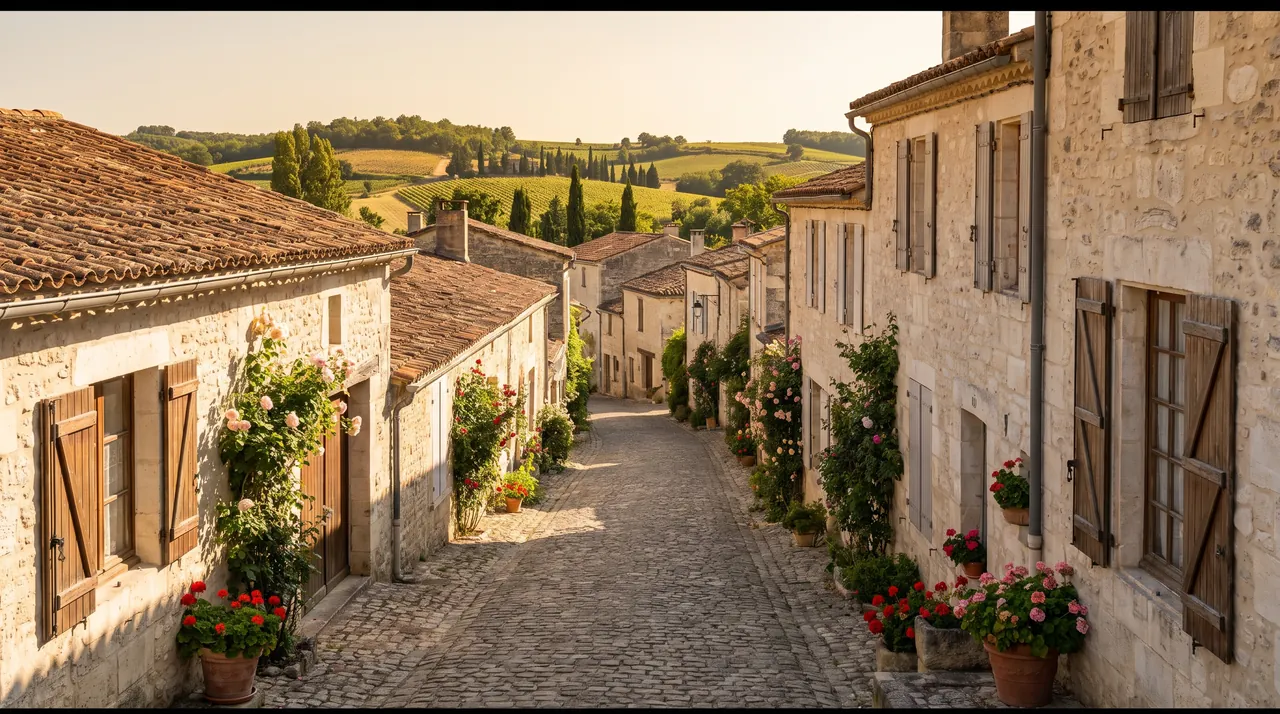
Nearby, Tresses (~4.5 km) is the seat of the Coteaux Bordelais community of municipalities, of which Pompignac is a part: a larger town, convenient for shopping and services. A little further away, Créon (~16 km) is the small “capital” of western Entre-deux-Mers: a bastide founded in 1316, with its arcaded square and Wednesday market, and, most notably, the junction of the Roger-Lapébie greenway—the former railroad line converted into a bike path. Sadirac (~12 km) carries on a long tradition of pottery, which you can explore at the Maison de la Poterie. Finally, the Abbey of La Sauve-Majeure (~18 km)—founded in 1079 and designated a UNESCO World Heritage Site in 1998 as part of the Way of St. James—remains the region’s most significant landmark. And Bordeaux, about 15 km away, conveniently completes the loop.
For more information, we’ve created detailed guides to these nearby towns: Lignan-de-Bordeaux, another village with a Romanesque church nestled in the nearby Pimpine Valley; Créon and its bastide, with its arcaded square and greenway; and the Abbey of La Sauve-Majeure, a Romanesque masterpiece listed as a UNESCO World Heritage Site. Together, these three destinations showcase the best of western Entre-deux-Mers around Pompignac and serve as a natural extension of a visit to the village.
How to get to Pompignac from Bordeaux
Getting to Pompignac from Bordeaux is easy: it’s about 15 kilometers, a 30-minute drive. Leave the city to the east, take the beltway to an exit on the east side, then follow the hillside roads through the first vineyards to the village. The route is direct and easy, outside of rush hour. There is no train station serving Pompignac; public transportation is limited and not well-suited for a visit that spans several towns, which makes choosing a flexible mode of transportation a priority. Strategically located at the gateway to the Entre-deux-Mers region, Pompignac serves as a natural entry point to the region from Bordeaux.
How much does the ride cost?
The price for a private transfer from Bordeaux to Pompignac starts at €41 during the day for a sedan (1 to 3 passengers), at a fixed rate confirmed in writing before departure. This amount is for door-to-door service, with no meter and no unexpected charges due to traffic. A surcharge applies at night, on weekends, and on holidays; for groups of more than 3 passengers, a van is provided. Since Pompignac is ideally located, many travelers use it as the starting point for a loop to Créon, La Sauve-Majeure, or neighboring villages, with waiting time and stops included in the quote.
| Route | Distance / Duration | Starting at |
|---|---|---|
| Bordeaux → Pompignac | ~15 km · ~30 min | starting at 41 € |
| Pompignac ↔ Tresses, Fargues-Saint-Hilaire | short trips in the neighborhood | based on a quote |
| Pompignac ↔ Créon, La Sauve-Majeure | Getaway to Entre-deux-Mers | based on a quote |
| Bordeaux-Mérignac Airport → Pompignac | longer trip | based on a quote |
| Entre-deux-Mers Loop (half-day tour) | several steps | based on a quote |
Why hire a private driver?
For a getaway that takes you from one spot to the next—the church at Pompignac, a wine tasting at Château Queyssard, the market in Créon, and La Sauve Abbey—a private transfer offers real benefits: no need to hunt for parking, the freedom to taste Entre-deux-Mers wines without having to drive, and a tailor-made itinerary. We’ll be waiting for you, drop you off right at the sites, and bring you back to Bordeaux at the time of your choosing. For a half-day or full-day trip to eastern Bordeaux and the Entre-deux-Mers region, this is the most flexible option—and by far the most relaxing.
Frequently Asked Questions
Where is Pompignac located?
Pompignac is a village in the Gironde department located east of Bordeaux, about 15 km from downtown, on the edge of the Entre-deux-Mers region. It is a hillside community, with elevations ranging from 17 to 89 meters, crossed by the Laurence Creek, located in the Bordeaux arrondissement and the Créon canton. It is bordered by Tresses, Fargues-Saint-Hilaire, Sallebœuf, Bonnetan, Yvrac, Montussan, and Beychac-et-Caillau. Although it is adjacent to the metropolitan area, it does not belong to Bordeaux Métropole but to the Coteaux Bordelais community of municipalities, whose headquarters are in Tresses.
How much does a trip from Bordeaux to Pompignac cost with a private chauffeur?
A private transfer from Bordeaux to Pompignac starts at €41 during the day for a sedan that can accommodate 1 to 3 passengers. The price is fixed, confirmed in writing before departure, and is door-to-door: no meter, no traffic-related surprises. A surcharge applies at night, on weekends, and on holidays; for groups of more than 3 passengers, a van is provided. Many travelers choose to include waiting time and stops in their quote so they can explore Créon, La Sauve-Majeure, or the neighboring villages of the Entre-deux-Mers region.
How far is Pompignac from Bordeaux?
It's about 15 km and a 30-minute drive from downtown Bordeaux to Pompignac, depending on your starting point and traffic conditions.
How many residents are there in Pompignac?
According to the INSEE census (2023 population), Pompignac has approximately 3,577 residents, with a population density of about 308 residents per square kilometer, spread over 11.62 km². Its residents are known as Pompignacais and Pompignacaises. It is a large, rapidly growing suburban village—its population has increased by about 20% since 2017—and is primarily residential: the majority of the working-age population commutes to work elsewhere, most often to Bordeaux. Higher estimates, around 3,900 residents, are sometimes cited, anticipating growth that has yet to be confirmed.
Is the Saint-Martin Church in Pompignac designated as a historic monument?
No. The Saint-Martin Church in Pompignac is listed in the General Inventory of Cultural Heritage, but it is not protected as a Historic Monument; therefore, it should not be referred to as “classified” or “listed as a Historic Monument.” The confusion often stems from a namesake: the Saint-Martin Church in Poussignac, in Lot-et-Garonne, which is indeed protected as a Historic Monument. In Pompignac, the building has 12th-century Romanesque foundations and a bell tower-porch dating from the late 15th or early 16th century, but its official status remains that of inclusion in the inventory, not protection.
What happened during the fire of 1899?
On December 31, 1899, a fire ravaged the interior of Saint-Martin Church in Pompignac on the last day of the century. The fire destroyed most of the nave; only the bell tower and the Romanesque portal it houses were spared, making them the oldest surviving parts of the church today. The church was rebuilt in 1901 and 1902, and it was during this time that it received its stained-glass windows, created by the Bordeaux-based Dagrant workshop in 1902. The current building is therefore, for the most part, a church from the very early 20th century built around older Romanesque remains.
What wines are produced at Pompignac?
Pompignac is a wine-growing town in the Entre-deux-Mers region. Its hillsides produce red wines under the AOC Bordeaux and Bordeaux Supérieur appellations, made primarily from Merlot and Cabernet, as well as dry white wines under the Entre-deux-Mers appellation. These are approachable regional wines, meant to be enjoyed and shared. Be aware of a common misconception: Pompignac does not produce any grands crus from the Right Bank, and no Saint-Émilion wines are produced here. The town’s most notable estate is Château Queyssard, headquarters of Vignobles Massé, where tastings are available by appointment.
Is Pompignac part of Bordeaux Métropole?
No. Although it borders the metropolitan area, the municipality of Pompignac is not part of Bordeaux Métropole. It is part of the Coteaux Bordelais community of municipalities, headquartered in Tresses, which comprises eight municipalities in this hilly region east of Bordeaux. It is sometimes mistakenly considered part of the Bordeaux metropolitan area. This distinction is important: it establishes Pompignac as a hillside village in its own right, on the edge of the Entre-deux-Mers region, rather than simply a suburban neighborhood of the neighboring metropolis.
Does the Roger-Lapébie Greenway pass through Pompignac?
No, and that’s a common mistake. The Roger-Lapébie Greenway, a major bike path built on a former railroad track, crosses the Entre-deux-Mers region but does not pass through Pompignac. The closest access points are in Créon, about 16 km away, or near Latresne. From Pompignac, you’ll need to head to one of these locations to join the greenway. However, the town offers its own marked cycling loop, “Le Huit de Pompignac,” which is about 38 km long and winds through the hills of eastern Bordeaux, starting from the village.
What does the name Pompignac mean?
The name “Pompignac” is thought to derive from the Gallo-Roman name “Pompenius”—the personal name of a landowner, perhaps a veteran of the Roman army—followed by the Latin possessive suffix -acum. Pompignac would therefore originally have been “the estate of Pompenius,” the Gallo-Roman villa situated on these hillsides. This suffix, -acum—which was very common in Aquitaine—gave rise to a whole family of place names ending in -ac derived from personal names. This hypothesis is consistent with the traces of Gallo-Roman occupation found in the town, but it remains a likely possibility rather than a certainty.
On what day is the Pompignac market held?
The Pompignac market takes place every Tuesday morning, from 8 a.m. to 12 p.m., at the Place de l'Entre-deux-Mers. It’s the best time to soak up the village atmosphere and stock up on fresh, local produce. In September, the town also hosts a Wine and Cheese Fair that showcases local specialties. In addition, the markets in neighboring towns are worth a visit, particularly the one in Créon, about 16 km away, which is held every Wednesday morning in the heart of the bastide, on the arcaded square.
What is there to do near Pompignac?
Around Pompignac, eastern Bordeaux and the Entre-deux-Mers region offer some wonderful stops: the bastide town of Créon, founded in 1316, and its Roger-Lapébie greenway (~16 km); the pottery village of Sadirac and its Maison de la Poterie (~12 km); and above all, the Abbey of La Sauve-Majeure (~18 km), a ruined Romanesque masterpiece listed as a UNESCO World Heritage Site. Tresses, the seat of the intermunicipal community, is ~4.5 km away, and Bordeaux, ~15 km away, conveniently completes the loop. This rich surrounding area is what makes a getaway from Pompignac—a peaceful base at the gateway to the wine region—so appealing.
Is it possible to visit a winery in Pompignac?
Yes. The estate identified in the town is Château Queyssard, headquarters of Vignobles Massé, located at 17 Avenue du Périgord. It produces the full range of local appellations: Bordeaux, Bordeaux Clairet and Rosé, Bordeaux Supérieur, and dry white Entre-deux-Mers. Tastings and direct sales are generally by appointment, so it’s best to contact the estate in advance, especially since small estates often adjust their hours depending on the season. This is the perfect opportunity to taste, right on the premises, what the Pompignac hillsides actually produce, rather than relying solely on the labels.
Further Reading
- Another Romanesque village on the hillsides: see the Lignan-de-Bordeaux Guide (listed Romanesque church and the Pimpine Valley)
- The neighboring bastide: see the Créon Guide (arcaded square, Wednesday market, and the Roger-Lapébie greenway)
- The nearby UNESCO-listed abbey: see the Guide to La Sauve-Majeure (Romanesque apse, bell tower, and carved capitals)
- Understanding our rates and vehicles: see the "Book a Driver" page (sedans and vans, fixed-price quote in writing)
- Plan your trip: Book a transfer from Bordeaux to Pompignac or explore all our destinations
Sources and References
- Pompignac — Wikipedia — Geography, Demographics, History
- Saint-Martin Church in Pompignac — Wikipedia — Romanesque, fire in 1899, rebuilt in 1901–02
- Pompignac Town Hall — History — Local History, Heritage
- CC des Coteaux Bordelais — intermunicipal association, 8 municipalities
- Château Queyssard / Vignobles Massé — the town's winery
- Roger-Lapébie Greenway — nearby excursion (Créon/Latresne access)
Article updated on July 18, 2026.
Our Latest Guides
 Entre-deux-Mers & Southern Gironde
Lignan-de-Bordeaux: The Romanesque Church and La Pimpine
Read the guide →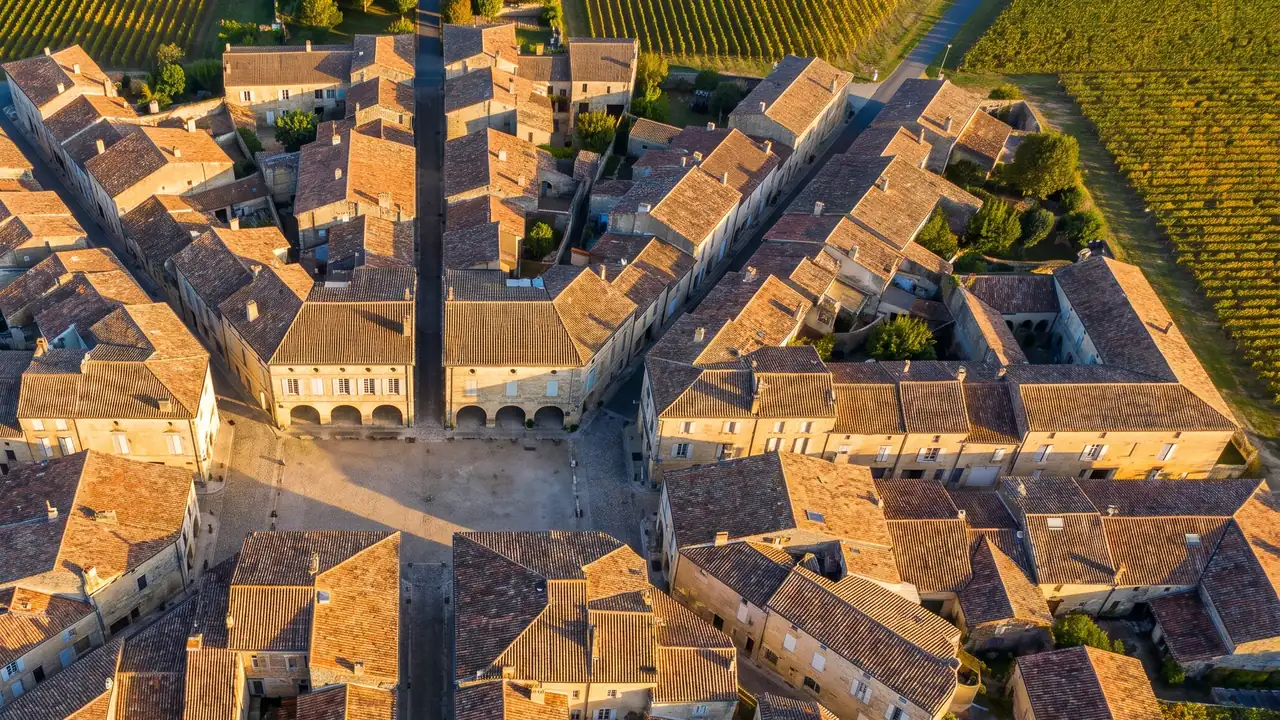 Entre-deux-Mers & Southern Gironde
Créon: The Country House and the Roger-Lapébie Greenway
Read the guide →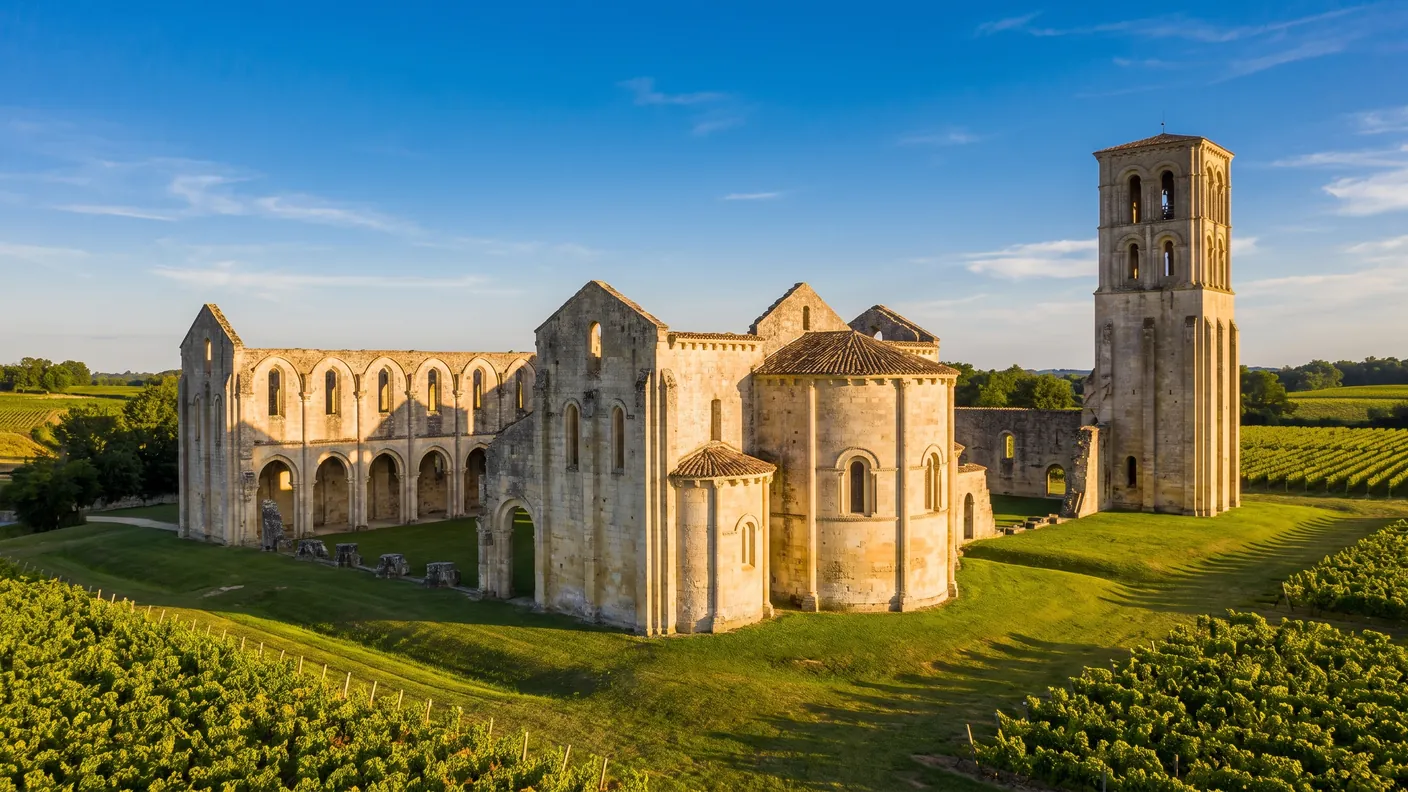 Entre-deux-Mers & Southern Gironde
La Sauve-Majeure: The Romanesque Abbey Designated a UNESCO World Heritage Site
Read the guide →Heading to the eastern part of Bordeaux
Direct transfer from Bordeaux (~30 min) to Pompignac and the Entre-deux-Mers hills. Fixed-price quote in writing, with no obligation.