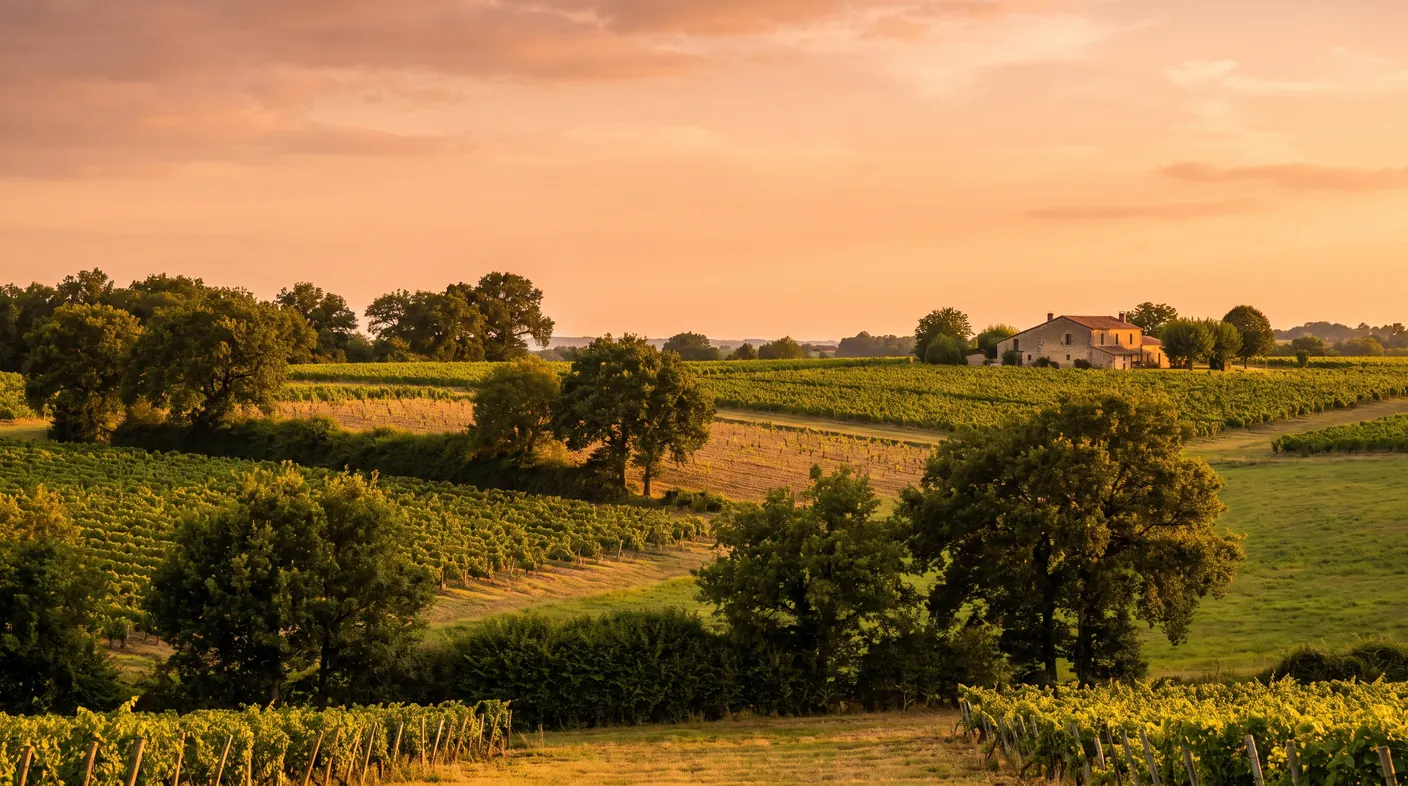
Bordeaux to Tizac-de-Curton: an Entre-deux-Mers village
A small village nestled in the hills of the Entre-deux-Mers region, east of Bordeaux, in the Curton area. A listed Romanesque church, the vineyards of Bordeaux and Entre-deux-Mers—including an estate owned by the owner of Cheval Blanc and Yquem—and, nearby, Daignac, Rauzan, Créon, and the UNESCO-listed Abbey of La Sauve-Majeure. About 46 minutes from Bordeaux.
Tizac-de-Curton at a Glance
Tizac-de-Curton is a tiny hillside village in the Entre-deux-Mers region, nestled on the wine-growing plateau that separates the Dordogne from the Garonne, about thirty kilometers east of Bordeaux. People almost never come here for the village itself, and you have to accept that: fewer than four hundred residents, a few stone hamlets, a Romanesque church, and vineyards stretching as far as the eye can see. Yet the place has a beautiful name and a rich history—that of the Curton region, from which it takes its suffix. This guide follows a simple rule: to distinguish fact from myth. It tells the story of the real Tizac—its listed Notre-Dame church, its appellation-designated hillsides, and Pierre Lurton’s estate—and sets the record straight on lingering misconceptions, starting with a château and a lake that aren’t actually here. As for everything else, we embrace our modest scale and extend our reach to Daignac, Rauzan, Créon, and La Sauve-Majeure.
Before going into detail, here are the key points you need to know to get your bearings in the town, understand what’s going on there, and plan a well-thought-out visit—because here, more than anywhere else, the town’s appeal lies as much in its local character and history as in what you can see in an hour.
| Landmark | Details |
|---|---|
| Department | Gironde (33) · Nouvelle-Aquitaine |
| Status | Wine-growing village, Libourne district, Libournais Community of Communes (La Cali) |
| Population | ~383 residents (INSEE 2023), the residents of Tizac |
| Area | 3.97 km² |
| Must-Sees | The Romanesque Church of Notre-Dame, the vineyards, the Entre-deux-Mers region |
| From Bordeaux | ~32 km · ~46 min · starting at €71 |
The village has no spectacular monuments, no museums, and no famous markets. Its true treasures lie elsewhere: in a church that has been preserved for a century, in the hillsides that are home to three Bordeaux wine appellations, and in an exceptionally rich surrounding area—the Abbey of La Sauve-Majeure, the bastide town of Créon, the Célestine Cave in Rauzan—all just a few minutes away. This is a guide of subtleties rather than superlatives, and that is precisely what gives the Entre-deux-Mers its understated charm.
Where is Tizac-de-Curton located?
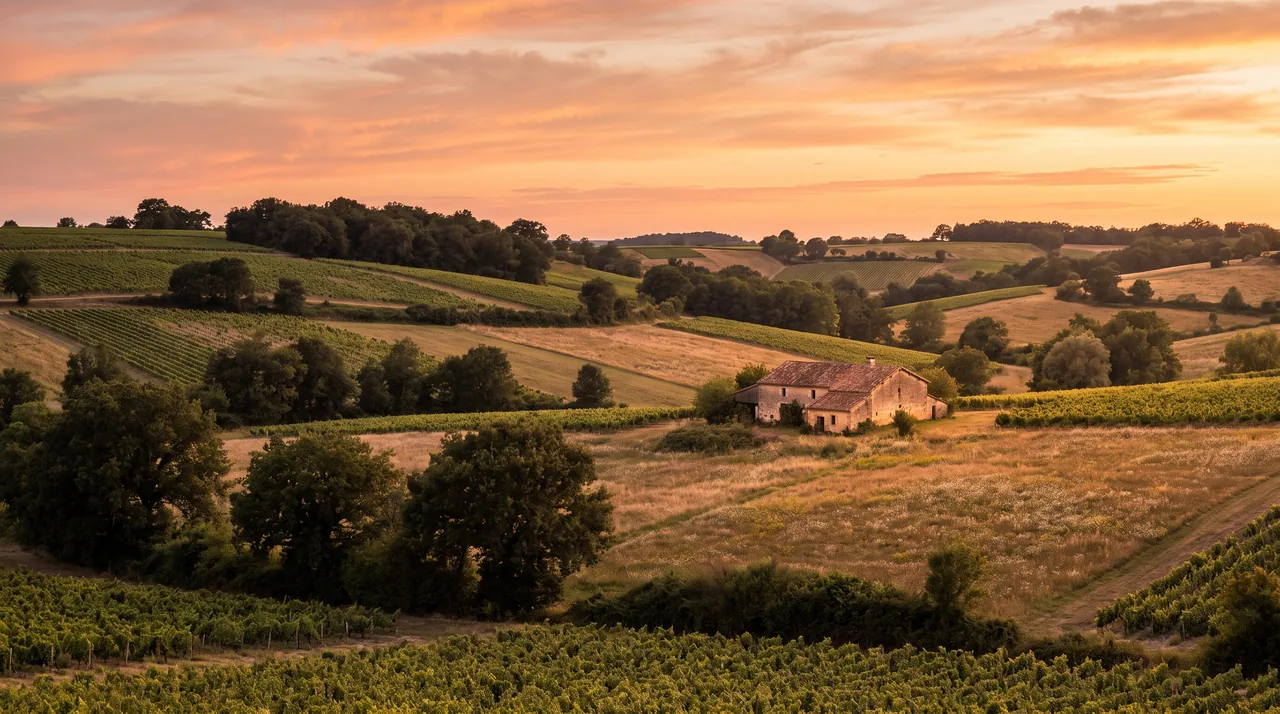
Tizac-de-Curton is a small town in the Gironde department covering just 3.97 km² (INSEE code 33531, ZIP code 33420), situated on the hillsides of the Entre-deux-Mers, a large wine-growing plateau between the Dordogne to the north and the Garonne to the south. The village is spread out across gentle slopes covered with vineyards, east of the Bordeaux metropolitan area, in a landscape of hedgerows and woods that remains distinctly rural.
Administratively, the municipality falls under the district of Libourne and the canton of Coteaux de Dordogne. It is sometimes still stated that it belongs to the “canton of Branne”; this information is outdated, as that canton was dissolved during the 2015 redistricting. In terms of intermunicipal cooperation, Tizac is part of the Libournais Urban Community (known as “La Cali”)—and not the Créonnais or Castillon-Pujols urban communities, with which it is sometimes confused. These are minor details, but they clearly place the town within the sphere of influence of Libourne rather than that of Bordeaux.
The Entre-deux-Mers deserves a mention, as it is what gives the area its character. The name, which is somewhat misleading, does not refer to any sea: it comes from the two “seas” that, for ancient sailors, were the estuaries of the Garonne and the Dordogne, both subject to tidal influences. Between them lies the Gironde’s largest appellation vineyard, a checkerboard of hillsides, valleys, and stone villages where vineyards, meadows, and woods alternate. Tizac is a faithful, miniature example of this landscape.
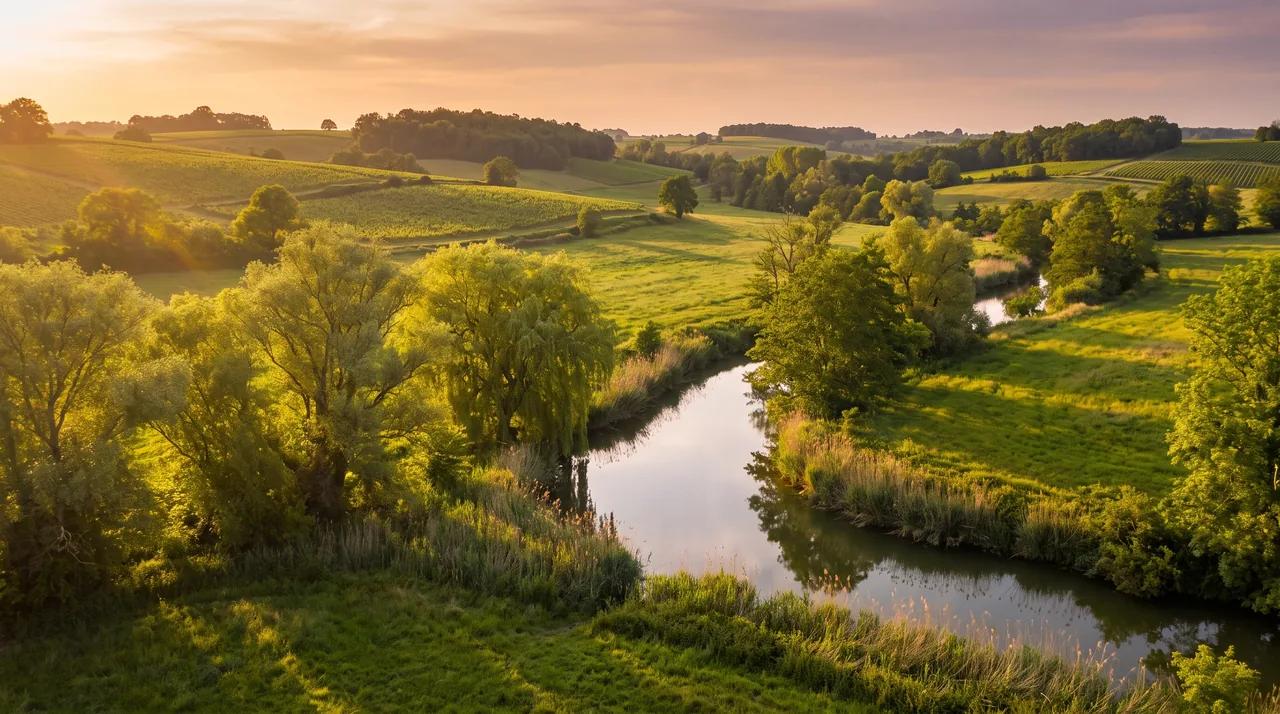
The Canaudonne Stream flows through the municipality—a modest watercourse that carves a cool little valley between the hillsides before joining the Dordogne river system. It is this interplay of slopes and valleys—hilltops planted with vineyards, and wetter, wooded valleys—that shapes the tranquil landscape of the region, which, while lacking spectacular heights, is never monotonous.
How far is it from Bordeaux?
It’s about 32 kilometers and a 46-minute drive from downtown Bordeaux, as the crow flies. Some guidebooks list shorter distances—around 30 kilometers as the crow flies—but these figures are meaningless for an actual trip: the actual route follows the ring road and then the roads of the Entre-deux-Mers region, heading toward Créon and then Branne. The village is close to all the region’s notable sites, making it a convenient base for exploring the area rather than a destination in its own right.
| From Tizac-de-Curton to | Driving distance | Duration |
|---|---|---|
| Bordeaux (downtown) | ~32 km | ~46 min |
| Creon | ~10 km | ~14 min |
| La Sauve-Majeure | ~9 km | ~13 min |
| Rauzan | ~15 km | ~20 min |
| Libourne | ~15 km | ~20 min |
The municipalities bordering Tizac-de-Curton
Tizac shares its borders with seven municipalities, all located in the same hilly region: Daignac, Espiet, Génissac, Grézillac, Moulon, Nérigean, and Saint-Quentin-de-Baron. The most important one to note is Daignac, its immediate neighbor, because it is on Daignac’s territory—and not on Tizac’s—that the famous Château de Curton stands, the very one that gave the village its second name. We’ll come back to this, as it’s one of the most persistent sources of confusion regarding the town. The other neighboring villages form a string of similar wine-growing towns, each with its own church, vineyards, and scattered hamlets.
How many people live in Tizac-de-Curton?
The municipality had 383 residents according to the 2023 census (INSEE), for a population density of approximately 96 residents per square kilometer. Other figures can be found online—366, 346, sometimes 500—copied from one news aggregator to another without a specific year: it’s best to stick with the most recent INSEE data, which is the authoritative source. In any case, this is a very modest figure: Tizac is a small rural village with a scattered settlement pattern, lacking a dense town center or large housing developments, where houses are dotted among the vineyard plots.
| Data | Value |
|---|---|
| Municipal Population (2023) | ~383 residents |
| Density | ~96 people per km² |
| Area | 3.97 km² |
| Demonym | People from Tizac / Women from Tizac |
| Status | Rural Municipality of Entre-deux-Mers |
The residents are affectionately known as Tizacais and Tizacaises. This population figure alone speaks to the character of the place: Tizac is not a mass-tourism destination, but an authentic village where people come to experience a direct connection with the land and the vineyards. The low population density also explains why the farms and vineyards are scattered across the hillsides, as well as the limited public transportation—which can be a challenge when planning a day of wine tastings hopping from one vineyard to another.
A village that retains its small-town charm
Unlike many towns in Bordeaux’s inner suburbs, which have been overtaken by suburban sprawl, Tizac-de-Curton has remained untouched by large-scale residential development. The town moves at the peaceful pace of a wine-growing region, with no rows of shops or commercial districts; its landmarks are the church, the town hall, and the unobtrusive signs of a few wineries. This intimate scale is a draw for visitors seeking tranquility: here you’ll find a preserved slice of the Entre-deux-Mers region, less than an hour from the city, where the landscape still clearly dominates the built environment. This also explains why the village isn’t featured on any major tourist circuit: it’s a place you have to earn, and one you discover while winding along a hillside road rather than by following a highway sign.
Where do the names Tizac and Curton come from?
The name of the town is read in two parts—“Tizac,” then “de-Curton”—and each part tells a different story. In the absence of a fully established philological source, we will present both hypotheses in the conditional tense, as prudence dictates: it is better to admit uncertainty than to invent a fanciful etymology.
What does the name “Tizac” mean?
"Tizac" is thought to derive from the Latin Titiacum, meaning "the estate of Titius." This follows a pattern that is extremely common in southwestern France: a Gallo-Roman personal name—in this case, Titius—followed by the suffix -acum, which denoted ownership or an estate. Hundreds of towns in Aquitaine were formed in this way, around an ancient agricultural estate from Late Antiquity, and their names were subsequently shortened over the centuries to take on the -ac forms we know today. If this hypothesis is correct, Tizac would thus preserve, in its very name, traces of a Roman farmstead that predates the medieval village.
What about the name “Curton”?
The suffix “de-Curton,” meanwhile, refers to the seigneury of Curton and the powerful family of the same name, which dominated the area during the Middle Ages. This is a crucial point—and a source of confusion: Curton Castle is not in Tizac, but in the neighboring town of Daignac. The village therefore did not inherit a monument, but rather a feudal affiliation: it was one of the parishes under that jurisdiction, and it has retained the name, much like a coat of arms one bears without owning the castle that goes with it. We will explore this point further in the section devoted to the Curton region, as it is one of the keys to understanding the town.
What is there to see at the Notre-Dame de Tizac-de-Curton Church?
The landmark of Tizac is its church, and we must first restore its true name: it is dedicated to Our Lady. It is sometimes referred to as “Saint-Martin” on hastily copied websites, but this is a mistake: the Mérimée database of the Ministry of Culture, which lists historic monuments, clearly names it the Church of Notre-Dame. It is an ancient building, dating from the 13th century, which serves as the focal point of the village, as in so many hillside towns in the Bordeaux region.
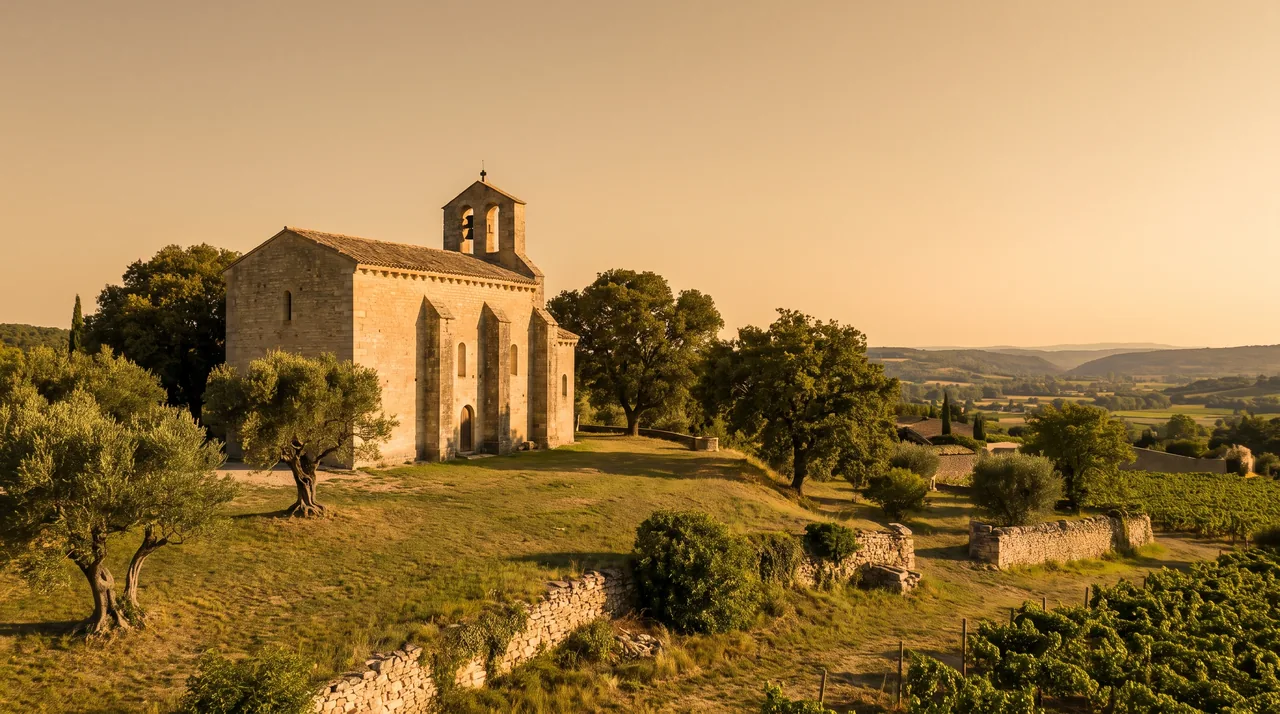
The church is Listed as a Historic Monument since December 21, 1925 (source: POP/Mérimée PA00083853, Ministry of Culture, accessed July 24, 2026). This designation dates back quite a long time, a sign that this small heritage site attracted attention very early on. Architecturally, the building displays the characteristics of the region’s Romanesque style: thick walls supported by buttresses, a stocky, understated design, and above all, a square apse with ribbed vaulting — the back of the church, on the east side, forming a space covered by intersecting stone ribs. Some carved lamp bases, these small protruding stones, which support the weight of the vaults, add an ornamental touch to an otherwise very austere structure. The building is owned by the municipality.
Notre-Dame, not Saint-Martin
This misunderstanding regarding the name warrants some attention, as it is widely circulated. Several tourist guides and general-interest databases attribute a “Saint-Martin Church” to Tizac—a name, it is true, that is extremely common in rural France. But the official entry from the Historic Monuments Service is unequivocal: it is indeed Notre-Dame. When a primary source and a secondary source contradict each other, the primary source takes precedence; in this case, the Mérimée database is definitive. This is the kind of detail this guide is committed to correcting, because knowing the correct name of a church means a better-prepared visit.
What is there to see around the church?
The village is modest, and should be approached as such: a few limestone houses with wooden shutters, canal-style tiled roofs, the church and its cemetery, and all around, vineyards climbing up the hillsides. It’s a quick stop—half an hour is enough to see it all—and it’s best combined with a wine tasting at a nearby winery or a visit to the major attractions in the area. Its charm lies in that of a genuine winegrowing village, without any artificial flair or crowds, where all you can really hear is the wind rustling through the rows of vines. Romanesque architecture is everywhere in the Entre-deux-Mers region: hopping from one bell tower to the next, you can put together a little tour of the hillside churches between visits to the wineries.
What wines does Tizac-de-Curton produce?
Tizac-de-Curton is first and foremost a wine-growing town, one of the 133 towns that make up the Entre-deux-Mers region. Its hillsides are home to three Bordeaux appellations: the AOC Bordeaux and AOC Bordeaux Supérieur for red wines, dominated by Merlot, and the AOC Entre-deux-Mers for dry white wines, blended from Sauvignon, Sémillon, and Muscadelle. This is a hallmark of the region: here, unlike the Médoc—which is devoted to red wines—a single commune can produce both age-worthy reds and fresh, lively whites, perfect for aperitifs and seafood.
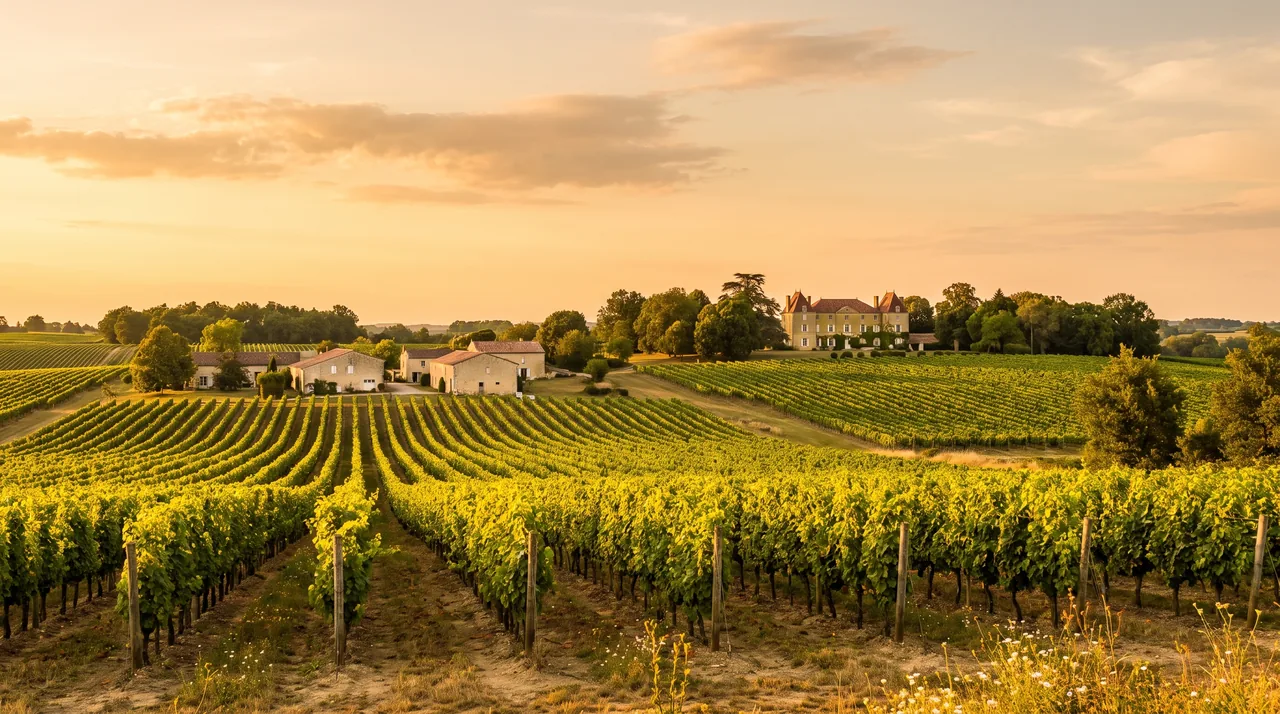
The town’s flagship estate is Château Marjosse, and its recent history gives it a special significance. It is owned by Pierre Lurton, one of the most prestigious names in the Bordeaux wine region: he manages both Château Cheval Blanc, a Saint-Émilion Premier Grand Cru Classé A, and Château d’Yquem, the legendary Sauternes estate. He has managed Marjosse since 1990 and became its owner in 2013. The estate, centered around an elegant Carthusian monastery dating from 1782, spans some fifty hectares. The fact that a winemaker of this stature has chosen to devote as much care to this regional appellation as he does to his classified growths speaks volumes about the unheralded potential of these Entre-deux-Mers terroirs.
Marjosse isn’t alone: the town is home to other estates, starting with Château Le Tros, operated by Vignobles Jabouin, which spans approximately 54 hectares of vineyards on the hillsides. Together, these estates form a vibrant wine-growing landscape, where large family-run wineries produce a full range of wines—reds for meals, dry whites, and occasionally rosés and sparkling wines—without the marketing fanfare of the most prestigious appellations. The soil plays a major role: well-drained clay-limestone hillsides that give Merlot its roundness and white grape varieties their freshness. It is characteristic of Entre-deux-Mers to produce, within a single appellation, this dual range of age-worthy reds and aperitif whites, whereas most of the great Bordeaux terroirs have specialized in a single color.
| Appellation / Winery | Type | Please note |
|---|---|---|
| AOC Bordeaux / Bordeaux Supérieur | Reds | Predominantly Merlot, grown on clay-limestone slopes |
| Entre-deux-Mers AOC | Dry whites | Sauvignon, Sémillon, Muscadelle |
| Marjosse Castle | Reds & Whites | Owned by Pierre Lurton, a Carthusian monastery founded in 1782, ~50 ha |
| Château Le Tros | Reds | Jabouin Vineyards, ~54 ha |
What wines does Tizac-de-Curton produce?
Mainly full-bodied reds from Bordeaux and Bordeaux Supérieur, dominated by Merlot, and dry whites from Entre-deux-Mers, which are lively and aromatic. These are wines for enjoyment and for meals, renowned for their excellent value: they offer a wonderful introduction to authentic Bordeaux wines, far from the prices of the classified growths. You can sample them at tastings on the hillside estates, usually by appointment, since properties of this size don’t always have a tasting room open all the time. The best way to enjoy them is to set aside half a day, visiting two or three wineries just a few minutes apart.
Who is Pierre Lurton?
Pierre Lurton is one of the leading figures in the contemporary Bordeaux wine industry. A member of the large Lurton family, which has deep roots in the wine region, he is unique in that he manages two of the world’s most famous estates: Cheval Blanc, in Saint-Émilion, and Yquem, in Sauternes. The fact that the man who oversees these two legends also owns a regional appellation estate—Tizac-de-Curton—makes him an unexpected ambassador for Entre-deux-Mers. It’s also a helpful reminder for wine lovers: a wine’s quality isn’t measured solely by its label, and wonderful surprises lie hidden on these unassuming hillsides.
A Little History
The history of Tizac is the unassuming story of a parish nestled in the hills of the Entre-deux-Mers region. It likely began very early on: the place name Titiacum suggests a Gallo-Roman origin, centered around an agricultural estate from late antiquity. As is often the case in the region, archaeological evidence is scarce, but the name itself preserves the memory of this ancient settlement, which predates the village we see today by a considerable margin.
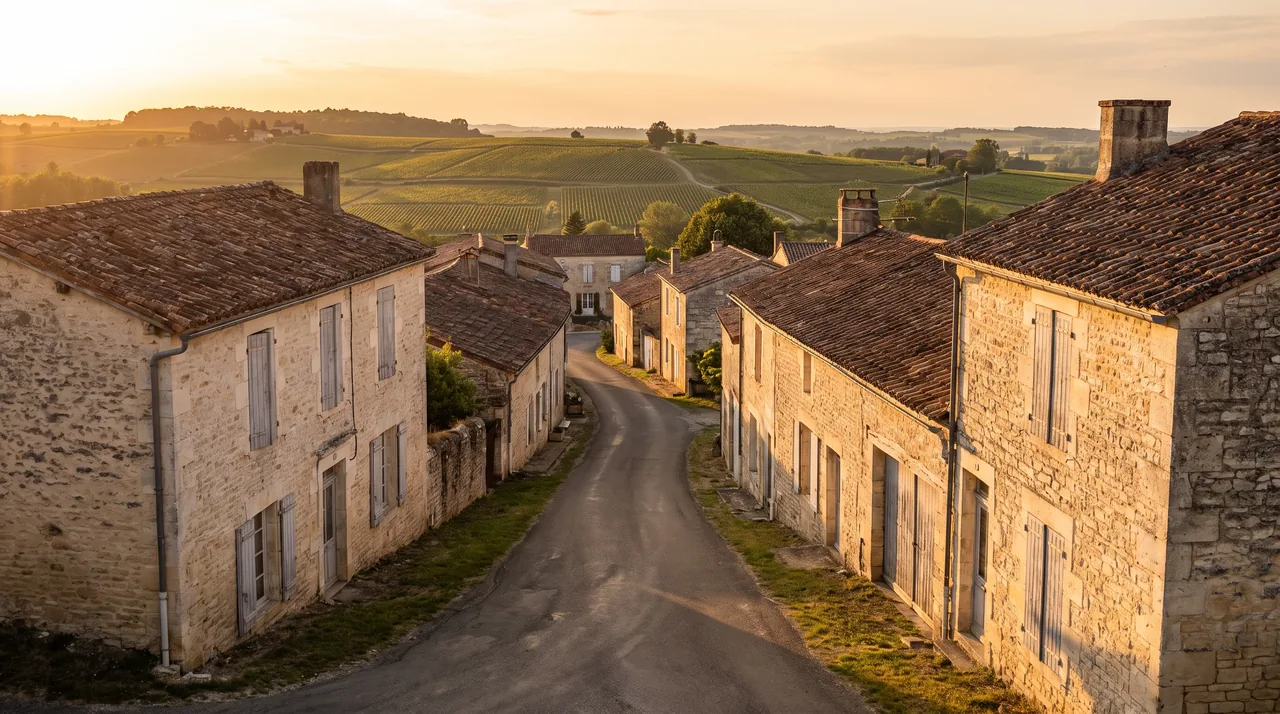
During the Middle Ages, the village came under the influence of a prominent family: it was in the 11th century that the first mention of the Curton family, whose castle stands in the neighboring town of Daignac. From that point on, Tizac came under the influence of this seigneury, from which it would eventually take its name. This illustrates just how much, in these rural areas, the fate of a village often depended on the castle that overlooked it—even when that castle was located, as in this case, on the other side of the parish boundary.
Tizac in English Guyenne
The most notable moment in this story occurs at the 14th century, during the Hundred Years' War, when Aquitaine—Guyenne—was under the control of the King of England. The sovereign Edward III then confided in Arnaut de Curton a mission dedicated to defending the region, with jurisdiction over several parishes. Tizac was, in fact, one of the four parishes under that authority. The village was thus, in its own modest way, a part of the great Franco-English conflict that shaped the entire history of the Bordeaux region—a region that was alternately English and French, and whose wines were already being shipped across the English Channel.
Otherwise, the history of Tizac is one of rural continuity: vineyards have shaped the landscape century after century, the Romanesque church has stood the test of time until its designation as a Historic Monument in 1925, and the village remains what it has always been—a small community of winegrowers deeply attached to its hillsides. As everywhere in the Bordeaux region, the vineyards here have faced their share of trials, from frost to market slumps, and the town shared the fate of the entire wine-growing region when phylloxera struck in the late 19th century, before rebuilding itself using resistant rootstocks. There were no famous battles here, no illustrious figures, and no industrial revolution: just the slow, enduring nature of a terroir, which is itself a form of nobility.
Where is Curton Castle located?
Here is the most important clarification in this guide. People naturally associate Tizac-de-Curton with the Château de Curton—and mistakenly conclude that this castle is located in the village. This is not the case: the Château de Curton is built in the neighboring town of Daignac. Tizac owes the castle only its name, inherited from its association with the seigneury; it does not own the castle itself. This distinction is essential for anyone planning a visit: you won’t see the castle “in Tizac,” but a few minutes’ drive away, in the neighboring town.
The castle itself is worth a visit. It is a medieval fortified castle, whose most impressive feature is a keep approximately 33 meters high. It has been listed as a Historic Monument since 1926 (source: POP/Mérimée PA00083535, Ministry of Culture, accessed July 24, 2026). Its massive stone structure, towering above the vineyards, is a reminder of a time when these hillsides were places to be defended as much as they were land to be cultivated.
Its history is intertwined with that of Tizac in the 14th century. It was from Curton that the family of the same name exercised its authority, and it was Arnaut de Curton who, under Edward III of England, was entrusted with the task of defending Guyenne, with jurisdiction over four parishes—including Tizac. The village and the castle are thus linked by feudal history, even though they belong to two separate municipalities: understanding this connection means understanding why Tizac still bears, even today, the name of a monument it does not house.
Be aware of a homonym: “Lake Curton”
Another misconception that must be cleared up—because it misleads many visitors—is the famous "Lake Curton", also known as Rainbow Lake and prized by carp anglers around the world, has nothing to do with Tizac-de-Curton. This body of water is located very far from here, near Louchats and d'Hostens, in southern Gironde, deep in the Landes Forest. The similarity in names is misleading: the “Curton” of the lake and the “Curton” of our village are two completely unrelated places. If you’re looking for the Entre-deux-Mers wine region, Tizac is definitely the place to go; if you’re looking for the fishing lake, you’ll need to head south, into an entirely different landscape.
A castle that gave the village its name
This is more common than one might think in the Bordeaux region: a seigneurial castle eventually lends its name to a whole cluster of neighboring parishes, which adopt it as a shared name. Tizac-de-Curton, Daignac, and a few surrounding towns thus share the legacy of the same seigneury. For the traveler, the lesson is simple: the beautiful keep at Curton can be visited from Tizac, but you must cross the municipal boundary to reach it—and be aware that, technically, you are then entering the territory of Daignac. There’s no reason not to consider the two villages as two sides of the same region.
What is there to do in and around Tizac-de-Curton?
In Tizac itself, the visit is brief, and you have to accept that: you admire the Romanesque Notre-Dame Church, stroll through the stone hamlets, pop into a winery for a tasting, and take the time to watch the hillsides unfold. It’s a place best savored at a leisurely pace rather than simply checked off a list. The bulk of the itinerary takes place “in and around” the area, within a radius of a few kilometers that encompasses some of the most beautiful sites in the Entre-deux-Mers region: the Château de Curton in Daignac, the UNESCO-listed Abbey of La Sauve-Majeure, the bastide town of Créon and its greenway, and the Célestine Cave in Rauzan with its underground river. It’s easy to put together a full day combining heritage, vineyards, and nature—with Tizac serving as a peaceful base right in the heart of it all.
- Visit the Romanesque Church of Notre-Dame—a 13th-century building designated a Historic Monument in 1925—with its square apse featuring a ribbed vault and carved capital stones
- Taste wines at the estates—Château Marjosse, owned by Pierre Lurton, and Château Le Tros—to discover Bordeaux reds and dry white wines from Entre-deux-Mers (usually by appointment)
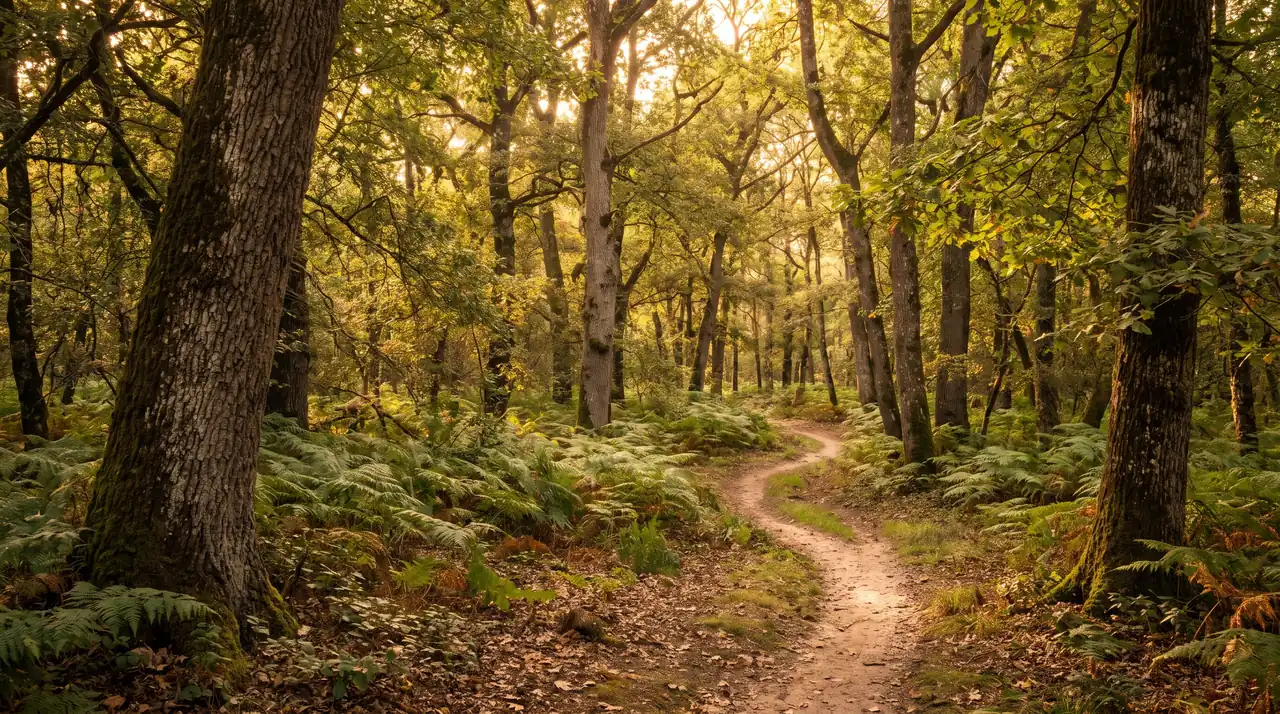
- Take a stroll through the vineyards—the hillsides, the Canaudonne valleys, and the oak groves offer lovely, peaceful walks along the trails
- See Curton Castle—a medieval fortified castle with a keep approximately 33 m tall, located in the neighboring town of Daignac and designated a Historic Monument (1926)
- Visit the Célestine Cave in Rauzan—about 15 km away, the only accessible underground river in the Gironde region; visitors must wear a helmet and boots, and reservations are required
- Discover the bastide town of Créon—a new town founded in 1316, with its arcaded square and the Roger-Lapébie greenway, built on a former railroad track
- Head to La Sauve-Majeure Abbey—the remarkable Romanesque ruins that have been a UNESCO World Heritage Site since 1998, just a few minutes away
A Typical Day in the Entre-deux-Mers Region
From Bordeaux, it takes about 45 minutes to reach Tizac. In the morning, you can visit the Abbey of La Sauve-Majeure and stroll through the bastide town of Créon before having lunch at a village bistro. The afternoon is perfect for a wine tasting at Château Marjosse or Château Le Tros, followed by a visit to the Château de Curton in Daignac, or the Grotte Célestine in Rauzan if you’ve made a reservation. With a driver, you can go from one winery to the next without counting your glasses or worrying about parking in the narrow village streets, and return home relaxed in the evening. That’s the great advantage of this compact region: everything is within easy reach, and the distances between sites are measured in minutes.
| Activity | Where | Good to Know |
|---|---|---|
| Notre-Dame Romanesque Church | Tizac-de-Curton Village | Listed as a Historic Monument since 1925 |
| Tastings | Château Marjosse, Château Le Tros | Dry reds and whites, usually by appointment |
| Curton Castle | Daignac (neighboring town) | Medieval keep, ~33 m tall, listed as a historic monument (1926) |
| Celestine Cave | Rauzan (~15 km) | Underground river, tours by reservation only |
| La Sauve-Majeure Abbey | ~9 km | Romanesque ruins designated as a UNESCO World Heritage Site (1998) |
About Tizac-de-Curton
Tizac’s true asset is its location: the village lies at the heart of the Entre-deux-Mers region, which is exceptionally rich in remarkable sites. Starting with its immediate neighbor, Daignac, where the Château de Curton and its tall keep stand. A little further on, La Sauve-Majeure boasts the ruins of its grand Romanesque abbey, one of the most beautiful medieval complexes in the Gironde; Créon features the arcades of its bastide and the lush greenery of its greenway; and Rauzan is home to both a medieval castle and a geological wonder of the first order. To the north, Libourne and its wine trade are only about twenty minutes away.
Rauzan and Its Underground River
About fifteen kilometers away, Rauzan is worth a stop for two reasons. The village preserves the ruins of a medieval castle, with its keep and ramparts, testaments to the area’s former feudal power. But its most unique attraction lies underground: the Grotte Célestine is the only developed underground river in the Gironde that visitors can explore. Equipped with a helmet, boots, and a flashlight, you’ll follow a guide along a stream carved into the rock, through galleries adorned with stalactites and stalagmites. Tours are by reservation only and limited to small groups, so it’s best to book in advance, especially during peak season.
When it comes to cultural heritage, La Sauve-Majeure is the must-see destination in the area. Its Benedictine abbey, founded in the 11th century, now stands as Romanesque ruins—featuring carved capitals, a choir open to the sky, and a massive tower—which have been listed as a UNESCO World Heritage Site since 1998 as part of the Routes of Santiago de Compostela (source: UNESCO World Heritage Center, accessed July 24, 2026). Just a few minutes away, Créon, founded in 1316, is a bastide town in the Entre-deux-Mers region: its central arcaded square and the Roger-Lapébie greenway make it an ideal starting point for a bike ride.
| Destination | Distance | Interest |
|---|---|---|
| Daignac | ~3 km | Curton Castle (keep, listed historic monument) |
| La Sauve-Majeure | ~9 km | Romanesque Abbey Listed as a UNESCO World Heritage Site |
| Creon | ~10 km | Bastide de 1316, Roger-Lapébie Greenway |
| Targon | ~9 km | Haut-Benauge, the heart of the Entre-deux-Mers region |
| Rauzan | ~15 km | Medieval Castle + Célestine Cave |
Combine visits around Tizac
Most of these sites can easily be visited in a single day, as the distances between them are short. You can also spread your exploration over a weekend, with an overnight stay at a vineyard estate or in Créon, to take the time to enjoy wine tastings and the views of the hillsides. To help you plan your itinerary, our neighboring guides provide details on each stop: Créon and its Roger-Lapébie greenway, Targon in the heart of the Haut-Benauge region, and the UNESCO-listed Abbey of La Sauve-Majeure. Tizac then becomes a modest yet precious stopover—a peaceful hub from which to explore the entire Entre-deux-Mers region.
How to get to Tizac-de-Curton from Bordeaux
The trip from Bordeaux is about 32 km and takes 46 minutes, following the bypass and then the roads through the Entre-deux-Mers region toward Créon and Branne. It’s a short distance, but the village and the wineries are scattered across the hillsides and are often poorly served by public transportation: there’s no train station in Tizac, and bus service is limited, which makes it difficult to spend a day tasting wines at different wineries. Here, door-to-door transportation remains the simplest way to enjoy the vineyards without any hassles.
How much does the ride cost?
A private transfer from Bordeaux to Tizac-de-Curton starts at €71 during the day, in a sedan for one to three people, at a fixed price provided in advance, with no meter and no surprise surcharges. A surcharge applies at night, on weekends, and on holidays; a van is available for groups of four or more passengers. Trips to nearby vineyards and villages—Daignac, Créon, La Sauve-Majeure, Rauzan—or to Bordeaux-Mérignac Airport are priced on a quote basis, depending on the desired route.
| Route | Distance / Duration | Rates |
|---|---|---|
| Bordeaux → Tizac-de-Curton | ~32 km · ~46 min | starting at €71 |
| Neighboring estates and villages | Variable | Based on a quote |
| Bordeaux-Mérignac Airport | Variable | Based on a quote |
Why hire a private driver?
Because a day in the Entre-deux-Mers region is, above all, about tastings and country roads. With a driver picking you up in Bordeaux, you can enjoy the wines without worrying about how many glasses you have, you don’t have to worry about finding parking in the narrow village streets, and you can move from one winery to another at your own pace throughout the day, in complete safety. The quote is fixed, confirmed in writing, and non-binding : You know the price before you go, and you can fully enjoy this beautiful hilly region, from Tizac to Rauzan, passing by the Abbey of La Sauve-Majeure.
Frequently Asked Questions
Where is Tizac-de-Curton located?
In Gironde, in the Entre-deux-Mers region, this wine-growing plateau lies between the Dordogne and the Garonne, east of Bordeaux. It is a small hillside town in the Libourne district (INSEE 33531, ZIP code 33420), part of the Coteaux de Dordogne canton and the Libournais Urban Community (La Cali). It is located about thirty kilometers from Bordeaux—a roughly 46-minute drive—not far from Créon, La Sauve-Majeure, and Rauzan.
How many residents are there in Tizac-de-Curton?
According to the 2023 census, the village had approximately 383 residents, with a population density of about 96 people per square kilometer and a total area of 3.97 km². Other figures can be found online (366, 346, or even 500), cited without a year: it’s best to use the most recent INSEE data. It is a small rural village with scattered settlements and no dense town center. Its residents are known as Tizacais and Tizacaises.
Is the church in Tizac-de-Curton designated as a historic monument?
It has been listed—but not classified—as a Historic Monument since December 21, 1925 (reference PA00083853). This is the Church of Notre-Dame, a 13th-century building with Romanesque features: thick walls, buttresses, a square apse with ribbed vaulting, and carved corbels. It is owned by the municipality. Please note: Some websites incorrectly refer to it as “Saint-Martin,” but the Ministry of Culture’s Mérimée database confirms the name Notre-Dame.
Is Curton Castle located in Tizac-de-Curton?
No, and this is a very common misconception. Curton Castle is located in the neighboring town of Daignac, not in Tizac-de-Curton. The village owes its name solely to the Lordship of Curton, to which it belonged in the Middle Ages, but it is not home to the castle. This medieval fortified castle, notable for its keep, which stands about 33 meters tall, has been designated a Historic Monument since 1926. It can be visited on an excursion from Tizac, just a few minutes’ drive away, within the territory of Daignac.
Is "Lac de Curton" (Rainbow Lake) located in Tizac-de-Curton?
No, absolutely not, and this is a classic pitfall caused by homonymy. The famous Lake Curton, also known as Rainbow Lake and renowned for carp fishing, is located far from Tizac, near Louchats and Hostens, in southern Gironde, deep in the Landes forest. It has absolutely no connection to Tizac-de-Curton, which is a wine-growing village in the Entre-deux-Mers region. Two places, two landscapes, just one name in common.
What is Château Marjosse?
This is Tizac-de-Curton’s flagship winery. It is owned by Pierre Lurton, who also manages Château Cheval Blanc in Saint-Émilion and Château d’Yquem in Sauternes. He has managed the estate since 1990 and has owned it since 2013. Centered around a Carthusian monastery dating from 1782, the estate spans about 50 hectares and produces reds and whites under Bordeaux appellations. It is a fine example of the understated potential of the Entre-deux-Mers terroirs.
What wines does Tizac-de-Curton produce?
Red wines from Bordeaux and Bordeaux Supérieur, dominated by Merlot, and dry white wines from Entre-deux-Mers, blended from Sauvignon, Sémillon, and Muscadelle. The town is one of the 133 municipalities in the Entre-deux-Mers region. These are wines meant for enjoyment and pairing with meals, renowned for their excellent value. They can be sampled at the wineries on the hillsides, such as Château Marjosse or Château Le Tros, usually by appointment.
Where does the name Tizac-de-Curton come from?
The name is read in two parts. “Tizac” is thought to derive from the Latin *Titiacum*, meaning “the estate of Titius”—a Gallo-Roman personal name followed by the suffix *-acum*, which denoted ownership—a pattern that is very common in the Southwest. “De-Curton” refers to the lordship and the Curton family, whose castle is located in Daignac. These etymologies should be taken with a grain of salt, as there are no definitively established sources, but they shed light on the village’s early history.
What is there to do in Tizac-de-Curton?
Once there, the visit is brief: you can admire the Romanesque Notre-Dame Church, stroll through the stone hamlets, and pop into a winery for a tasting. The main attractions are all within a small radius: the Château de Curton in Daignac, the Abbey of La Sauve-Majeure (UNESCO), the bastide town of Créon and its greenway, and the Célestine Cave in Rauzan. It’s easy to plan a day combining heritage, vineyards, and nature, with Tizac as your base.
What's there to see around Tizac-de-Curton?
There’s plenty to see within a short distance: Curton Castle in Daignac (~3 km), the Romanesque Abbey of La Sauve-Majeure, a UNESCO World Heritage Site (~9 km), the bastide town of Créon and its Roger-Lapébie greenway (~10 km), Targon and Haut-Benauge (~9 km), and Rauzan with its medieval castle and the Célestine Cave (~15 km). To the north, Libourne and its wine trade are about twenty minutes away. You can easily fit all of these into a single day in the Entre-deux-Mers region.
What is the Célestine Cave in Rauzan?
It is the only developed underground river in the Gironde that can be explored, located in Rauzan, about 15 km from Tizac-de-Curton. Equipped with a helmet, boots, and a flashlight, you’ll follow a guide along a waterway carved into the rock, through tunnels adorned with stalactites and stalagmites. Tours are by reservation only and conducted in small groups; it’s advisable to book in advance, especially during peak season. Rauzan also features the ruins of a medieval castle, which is worth visiting while you’re there.
How much does a trip from Bordeaux to Tizac-de-Curton cost?
A private transfer starts at €71 during the day, in a sedan for one to three people, covering a distance of approximately 32 km and a 46-minute drive. The price is fixed, provided in advance, and there is no meter. A surcharge applies at night, on weekends, and on holidays; a van is available for groups of more than four passengers. Trips to neighboring estates and villages, or to the Bordeaux-Mérignac Airport, are priced based on a quote depending on the route.
How can I get to Tizac-de-Curton without a car?
This is a drawback: the village has no train station, and public transportation service there is very limited. The estates and hamlets are scattered across the hillsides, making it difficult to get from one to another on foot. For a day of wine tastings in the Entre-deux-Mers region, a door-to-door shuttle from Bordeaux remains the most convenient option: you’re dropped off and picked up directly at the winery, without having to worry about driving or parking, and you can visit several wineries in a single day.
Does it take a whole day to visit the area?
You can explore the village of Tizac itself in just under half an hour. But once you add in one or two wine tastings, the Château de Curton in Daignac, the Abbey of La Sauve-Majeure, the bastide of Créon, and the Célestine Cave in Rauzan, you’ll need a full day. Since the distances are short, it’s easy to combine all these stops when starting from Bordeaux. You can even spread your exploration over a weekend to fully enjoy the vineyards and historic sites of the Entre-deux-Mers region.
Further Reading
- Book your transfer from Bordeaux to Tizac-de-Curton — fixed-price quote, no obligation
- All of our destinations in Gironde and beyond
- Créon: The Bastide and the Roger-Lapébie Greenway
- Targon: Haut-Benauge in the Heart of the Entre-deux-Mers Region
- La Sauve-Majeure: The Romanesque Abbey Designated a UNESCO World Heritage Site
Sources and References
- Tizac-de-Curton — Wikipedia — Geography, Demographics, Heritage
- Notre-Dame de Tizac-de-Curton Church — POP/Mérimée PA00083853 — designated a historic monument in 1925
- Curton Castle (Daignac) — POP/Mérimée PA00083535 — nearby fortified castle in Daignac
- Château Marjosse — Profile — Pierre Lurton's estate in Tizac
- AOC Entre-deux-Mers — appellation, 133 municipalities
- La Sauve-Majeure Abbey — UNESCO, the Routes of Santiago de Compostela in France — inscribed in 1998
- Libournais Tourist Office — Célestine Cave — Access, Facilities, and Reservations (accessed July 24, 2026)
Article updated on .
Our Latest Guides
 Entre-deux-Mers & Southern Gironde
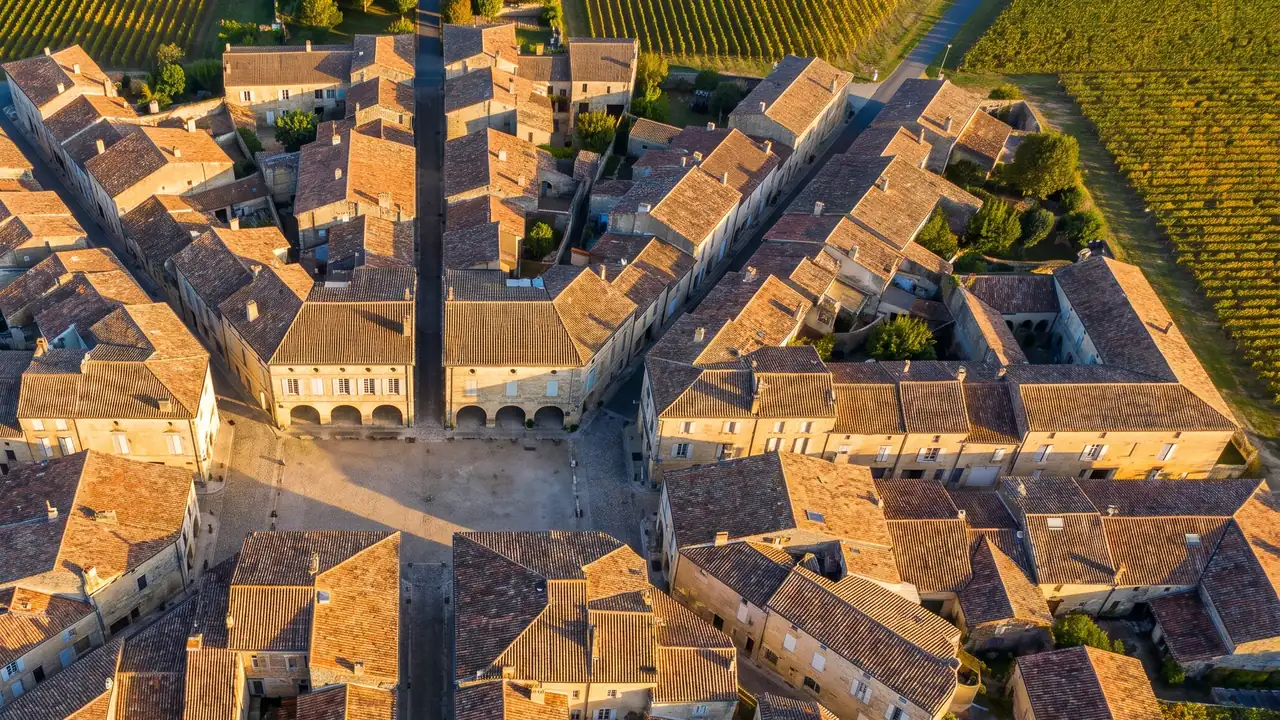
Créon: The Bastide and the Roger-Lapébie Greenway
Read the guide →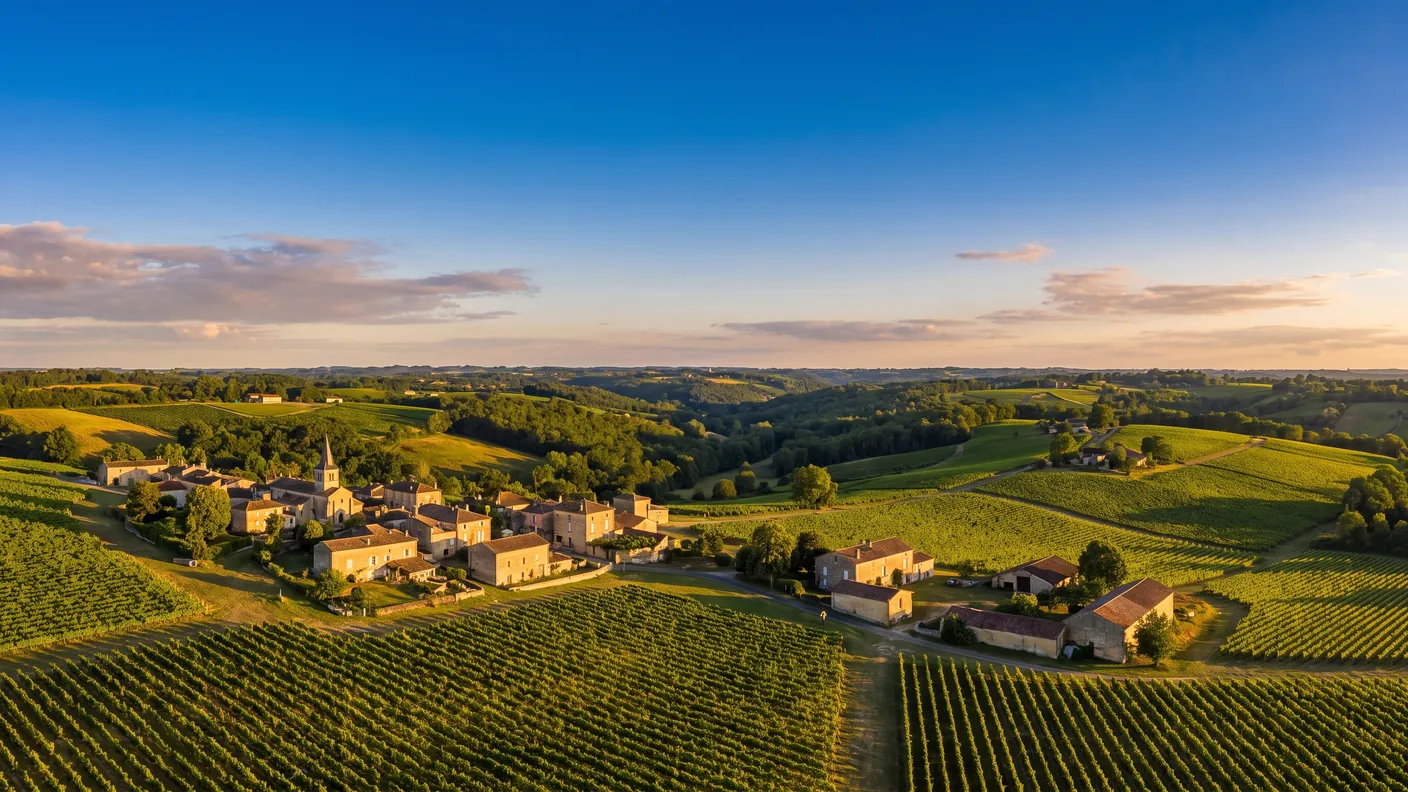 Entre-deux-Mers & Southern Gironde
Targon: Haut-Benauge in the Heart of the Entre-deux-Mers Region
Read the guide →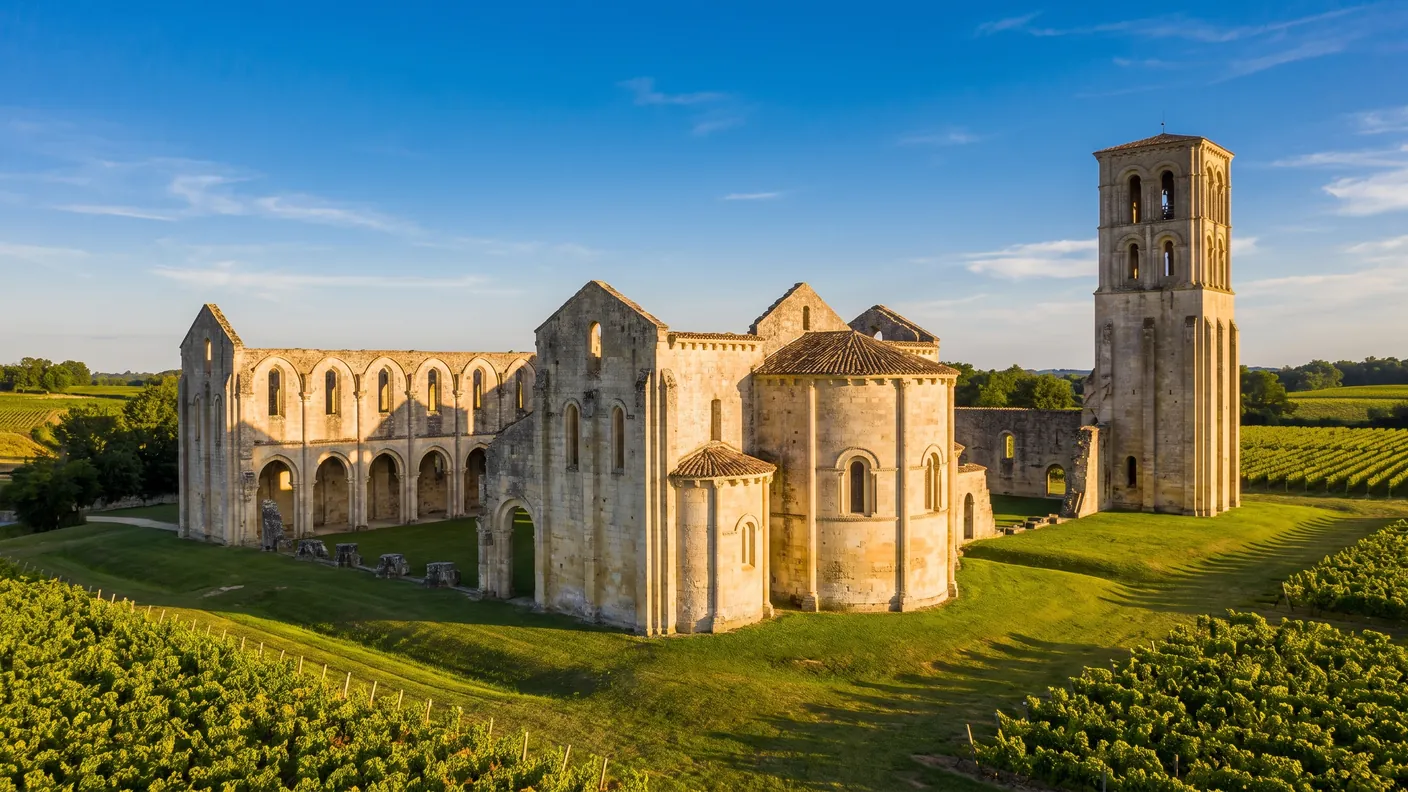 Entre-deux-Mers & Southern Gironde
La Sauve-Majeure: The Romanesque Abbey Designated a UNESCO World Heritage Site
Read the guide →Off to Entre-deux-Mers
Direct transfer from Bordeaux (~45 min) to Tizac-de-Curton and the Entre-deux-Mers hills. Fixed-price quote in writing, with no obligation.