Bordeaux to Trémolat with a private driver
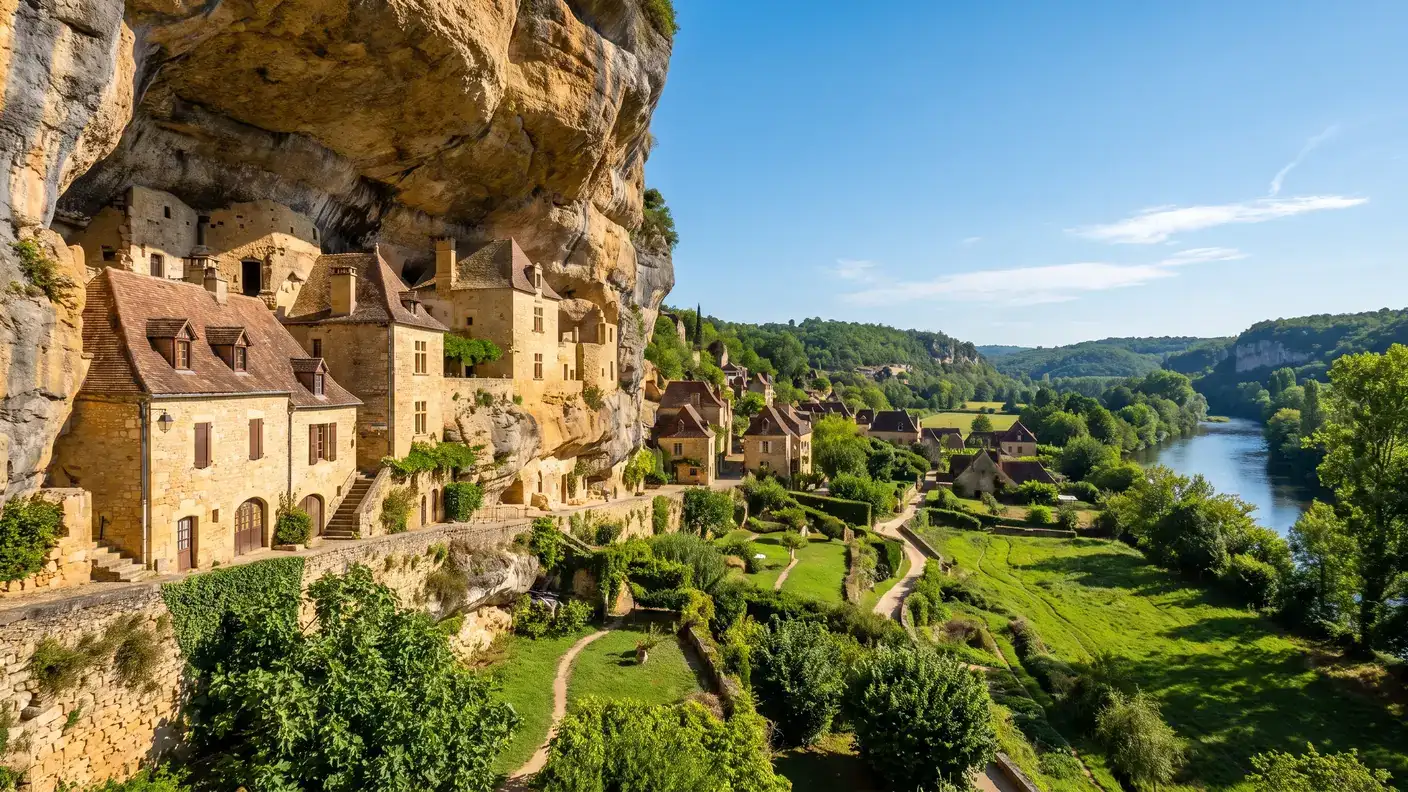
The village in the loop: a designated meander with a lookout point, a fortress church featuring defense chambers, the setting for Chabrol’s film The Butcher, and one of the oldest Relais & Châteaux properties in France. Learn all about it before you visit—it’s about 2 hours and 15 minutes from Bordeaux.
Trémolat at a Glance
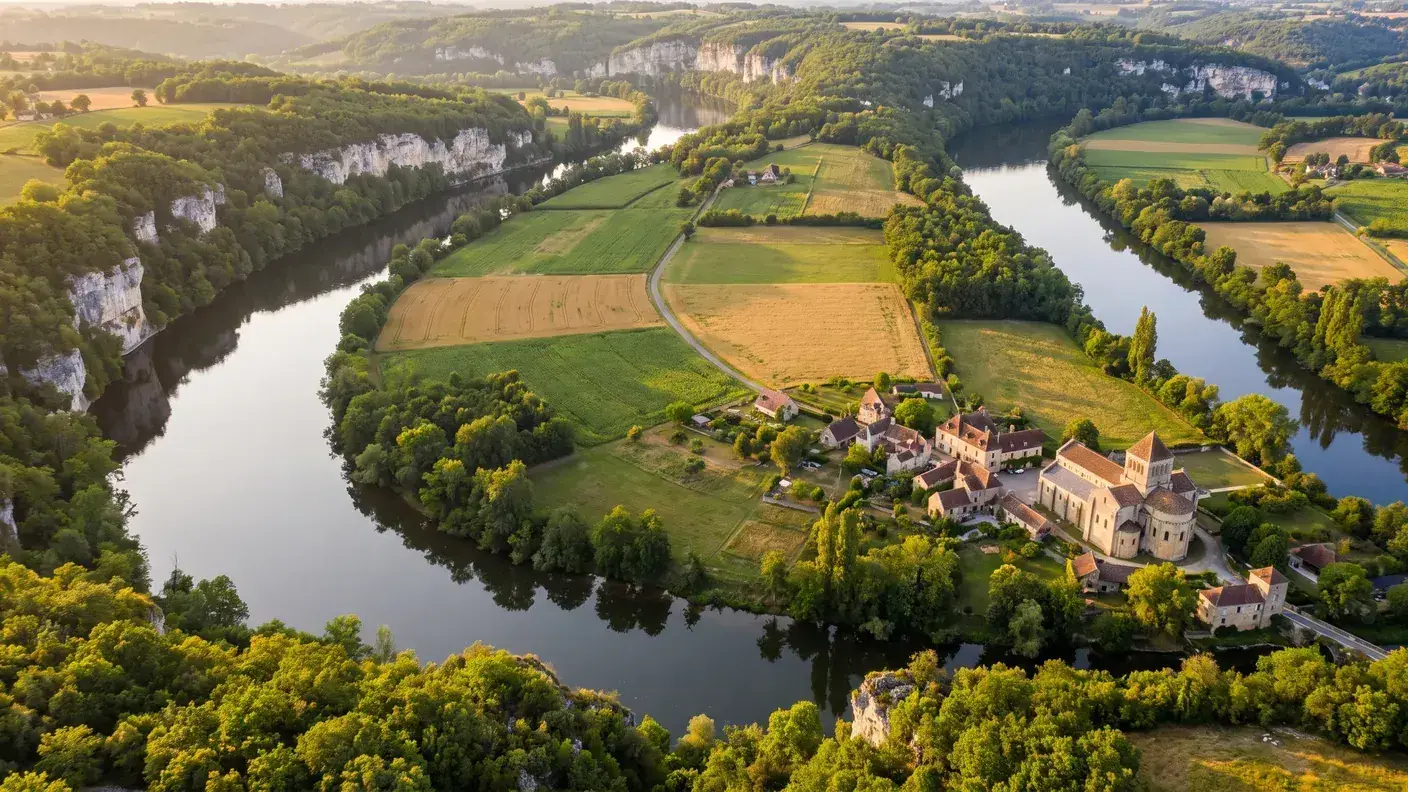
- Trémolat has a population of 624 (2023 data, INSEE, accessed in July 2026). The village is home to the “Cingle”: a double loop in the Dordogne River about ten kilometers long, a site that has been a protected area since 1985 (DREAL Nouvelle-Aquitaine, accessed in July 2026), featuring a panoramic lookout point.
- Its Saint-Nicolas Church was built between 1125 and 1160, then restored from 2000 to 2010, according to the heritage overview provided by the municipality of Trémolat (accessed in July 2026).
- The priory, affiliated with Saint-Cybard Abbey in Angoulême, is first mentioned in records dating back to 852 and attested in 982; legend has it that Charlemagne donated the shirt of the Infant Jesus to the treasury.
- Claude Chabrol filmed Le Boucher in the village in 1969—the villagers served as extras, and the current mayor appears in the film as a child.
- The Vieux Logis, a former priory held by the same family for five centuries, is a member Relais & Châteaux since 1955, featuring a Michelin-starred restaurant housed in a former tobacco drying barn.
- The Mauzac Dam reservoir transforms the Cingle into a calm body of water covering 250 hectares: water skiing for children ages 3 and up, stand-up paddleboarding, and supervised swimming.
- Direct TER trains may stop at the Trémolat station on the Bordeaux–Bergerac–Sarlat line, with service varying depending on the day and any construction work. Check the departure times from the Trémolat station and traffic information (SNCF TER Nouvelle-Aquitaine, accessed in July 2026) for both the outbound and return trips.
- From Bordeaux by car: ~151 km, about 2 hours and 15 minutes — starting at 260 € for a chauffeured transfer, door-to-door.
Before You Go: What Trémolat Really Is
7:00 p.m., at the Rocamadou lookout. Below your feet, the Dordogne River unfolds its nearly perfect double loop—two symmetrical meanders connected by a third, inverted one, a mosaic of fields that changes color with each season. In the local dialect, this promontory was called the “rock of love.” Below, a bell tower rises above the rooftops: it was here, on this square, that Claude Chabrol set up his camera in 1969. You head back down to the village for dinner—at the bistro across from the Boucher school.
Trémolat is a picturesque village: 624 residents nestled in a meander that the Dordogne River took two million years to carve out, a village with shutters that has captivated filmmakers, a church disproportionately large for its size, and one of the oldest Relais & Châteaux properties in France. It is also a village that empties and fills with the changing seasons—more than one in three homes is a second home, and half the residents are 60 or older.
This guide separates fact from legend: the etymology that divides scholars (trembles or tomb?), the Carolingian priory and its forged charter from Charlemagne, the fortified church and its defense chambers, the precise geology of the cingle, the filming of Le Boucher as recounted by its extras, and Henry Miller’s Vieux Logis. Includes all 2026 figures and actual driving distances.
Direct TER trains may stop at the Trémolat station on the Bordeaux–Bergerac–Sarlat line, with service varying depending on the day and any construction work. Check the TER Nouvelle-Aquitaine schedule and traffic information for both the outbound and return trips. To explore the surrounding area—including the Belvédère, Limeuil, and Sainte-Alvère—hiring a chauffeured transfer from Bordeaux remains the most comfortable option (~2 hours 15 minutes).
A Village in a Loop: Geography and Demographics
Trémolat is located on the right bank of the Dordogne River, at the exact junction of the Bergerac region and the Périgord Noir, covering an area of 14 km², with the river running along its border for about 10 kilometers. The bedrock consists of a Campanian (Upper Cretaceous) limestone plateau—an alternation of glauconitic marl and yellowish chalky-marly limestone, as described in the BRGM geological map. Since 2012, the entire municipality has been part of the UNESCO Dordogne Basin Biosphere Reserve.
| Data | Value |
|---|---|
| Status | Municipality in the Bergerac district, in the Central Périgord canton |
| Population | 624 residents (2023) — the residents of Trémolac |
| Area | 14.03 km² (population density: 44 people/km²) |
| Elevation | 41 m to 186 m |
| River | the Dordogne River, over ~10 km — Le Cingle (designated site since 1985) |
| Vacation Homes | 38.3% of housing units (2022) |
| Intermunicipal Cooperation | Community of Communes of the Bastides of Dordogne-Périgord (headquarters in Lalinde) |
| Distance from Bordeaux | ≈ 151 km (~2 hours 15 minutes via the A89 and Bergerac) |
From 1,055 residents to 624: the exodus, followed by second homes
The population trend provides a fast-forward view of rural Périgord. From a peak of 1,055 residents in 1876, the town’s population fell to 508 in 1975—losing half its population over a century of rural exodus. Since then, the population has fluctuated between 570 and 650, with a slight decline (-4.29% between 2017 and 2023). The current profile is clear: half of the residents are 60 or older, and summer visitors come mainly from the Netherlands, England, and Germany—retail, lodging, and restaurants account for one-third of the town’s businesses, compared to a departmental average of 28%.
The key sociological indicator remains the housing stock: Second homes account for 38.3% of housing (2022)—more than one in three properties is occupied for only part of the year. This figure, which has actually been declining (43.3% in 2011), reflects both the village’s heritage appeal and the challenges of living there year-round; yet the village still has a bakery, a grocery store, a café, a post office, and a school that shares educational resources with three neighboring villages.
The site has been inhabited for a long time: the Rochebécude rock shelter (excavated as early as 1893) and the Lestruque cave (discovered in 1929) have yielded Solutrean and Magdalenian artifacts, and a Gallo-Roman villa is recorded at the hamlet of Saint-Hilaire—exactly where the first parish church would be built. Local pantheon: Revolutionary General Pierre Morand du Puch (1739–1819), who was born and died in the village, and a Félibrée—the great Occitan festival of the Périgord—held here in 1983.
A Quaking Tree or a Tomb? The Name Trémolat and the Legend of Saint Cybard
An etymology that divides opinion
According to the local explanation, which is repeated by the guides, “Trémolat” comes from Occitan tremol: the aspen, a tree found along riverbanks — “a place planted with aspens.” But place-name scholars (Dauzat; Tanet & Hordé, Dictionary of Place Names in the Périgord) point out a troubling detail: the older spellings contain no "r". The earliest record, Tomolatum super fluvium Domoniam (769), then Temolatensis (late 10th century), Temoulat (13th)… point instead to the Latin tumulus: “the place of the tomb.” The “r” first appeared in the 17th century, in Blaeu’s atlas. A village named “Tombeau” that became the setting for one of France’s great crime films—what a coincidence.
Saint Cybard, a native of the region (according to tradition)
Which tomb? Tradition answers: the one commemorating Saint Cybard (Eparchius, c. 504–581), the most famous hermit of Merovingian Aquitaine. His birthplace is said to have been next to the Church of Saint Nicholas—but in all fairness, Gregory of Tours, a contemporary source, describes him as “a native of the city of Périgueux.” This is well documented: he lived as a recluse for 44 years in a cave beneath the ramparts of Angoulême (Gregory of Tours again), devoting gold and silver “to the redemption of captives ”—tradition credits him with ransoming 175 slaves at once in 558—he died on July 1, 581, and became the patron saint of the Diocese of Angoulême. His relics were burned by the Huguenots in 1568.
Whether true or embellished, the tradition has had very real effects: it explains why monks from Angoulême—specifically from Saint-Cybard Abbey—came to settle 200 km from home, in this bend of the Dordogne River. It also credits Cybard with founding the neighboring Abbey of Paunat, where his parents are said to be buried. His name has spread across the map of ancient Aquitaine: Saint-Cybard, Saint-Cibard, Saint-Ybard, Saint-Cybardeaux…
The Priory: Eleven Centuries of Archives, a Forgery Attributed to Charlemagne, and Turenne
852–982: The Founding Documents
The affiliation of Trémolat with Saint-Cybard Abbey in Angoulême is documented as early as September 6, 852, by a charter from Charles the Bald confirming the abbey’s holdings. A delightful detail for archivists: the cartulary also includes a “charter from Charlemagne” dated 769… which is actually a medieval reworking of the charter of 852—a pious forgery of the kind monasteries sometimes produced. The legend goes further: Charlemagne is said to have rebuilt the priory and enriched its treasury with “the shirt of the Infant Jesus”. Chains still visible in the church once held the reliquary said to contain it.
The formal certification is dated 982: Grimoard de Mussidan, Bishop of Angoulême, donated the monastery and its church… to his lay brother Aymeric—according to the chronicle of Adémar de Chabannes. The restored monastery comprised twelve monks according to Gourgues' dictionary. As early as the 12th century, the settlement was known as a provostship, headed by a provost whose name is recorded from 1123 until the Revolution — a rare continuity in historical records. There is no manor house in Trémolat: it was this priory that shaped village life for centuries.
Wars and Refuges: Turenne in the Village, November 17–21, 1587
The provost’s residence “was attacked many times during the English Wars, and later during the Wars of Religion, which destroyed several domes” (Jean Secret). The best-documented episode is a military one: according to the chronicles of Jean Tarde, the Protestant troops of the Viscount of Turenne occupied Trémolat from November 17 to 21, 1587. A “terrier” from 1470, studied by historians, documents the reconstruction of the village following the Hundred Years’ War.
What Remains — and the Turning Point of 1801
Adjacent to the church, the Saint-Nicolas Islet preserves the old cloister: the chapter house, the garden, and a well built on a branch of the Rèze River—the gallery, however, is said to have been destroyed during the Hundred Years’ War. During the Revolution, the provostship ceased to exist along with the mother abbey of Angoulême, which was sold as national property. In 1801, the monastic church became a parish church and was dedicated to Saint Nicholas. The former parish church of Saint-Hilaire is no longer in use; Trémolat has two 12th-century churches. It still stands in the middle of its cemetery, on the site of a Gallo-Roman villa: a Romanesque porch beneath a bell tower, with contemporary stained-glass windows by Paul Becker; it was listed as a historic monument in 2010. Two churches, two congregations: the monks at Saint-Nicolas, and the villagers—for baptisms, weddings, and funerals—at Saint-Hilaire, for seven centuries.
Saint-Nicolas: The Fortress That Fired Inward
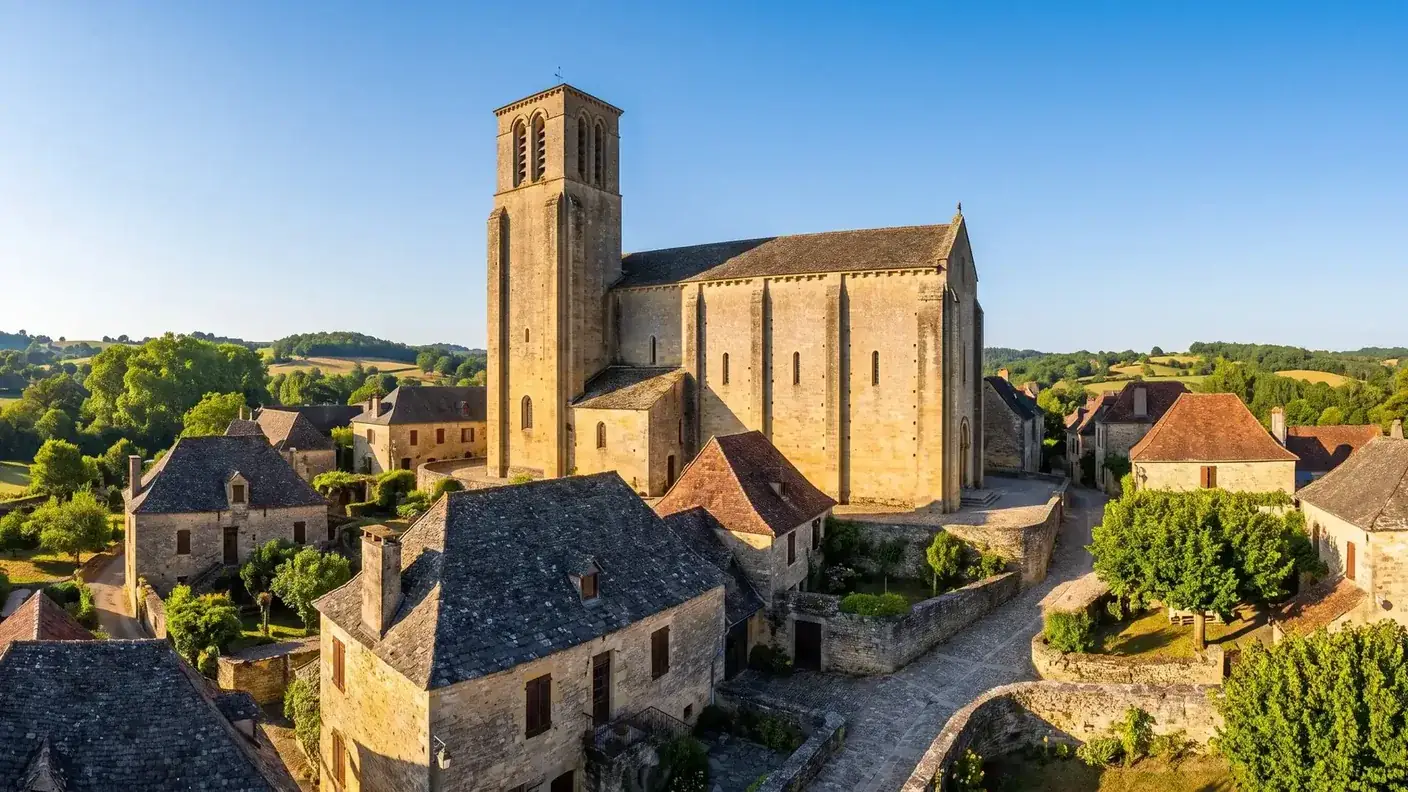
Seen from the square, the Church of Saint-Nicolas looks less like a church than a keep perched atop a nave. The figures confirm this impression: 46 meters long, with a nave only 6.50 m wide. The narrow width may be explained by the fact that the Romanesque nave is said to have retained the width of the earlier Carolingian church, two piers of which are believed to still stand at the corners of the transept. The bell-tower porch is 25.70 m high, the domes rise to 11.30 m and the crossing reaches 17 m at the apex.
Seven Centuries of Construction
The building was constructed in stages: the timber-framed nave of the mid-11th century, followed a century later by three domes in the pure Perigord Romanesque style; transept, choir, and bell tower with porch built before the end of the 12th century; classical portal and pediment added in the 18th by the commendatory prior Guillaume d'Alesme. The architectural style is prestigious: that of the domed churches of the Périgord, studied as early as 1851 by Félix de Verneilh—who had already devoted an entire chapter to “Paunat and Trémolac,” the two sister churches located just an 8-minute drive apart.
Defensive chambers—and arrowslits facing the nave
The defensive feature lies elsewhere: above the vaults, the entire upper surface forms a vast vaulted chamber—“which can accommodate not only the monks, but also the entire village population” (Jean Secret, Périgord Roman). The bell tower is a veritable keep with stacked defensive chambers. And here’s the chilling detail: arrowslits cut into the domes allowed defenders to fire into the church itself at an enemy who had already entered the nave. The building was designed to remain defensible even after being overrun.
Ruined, lowered, saved
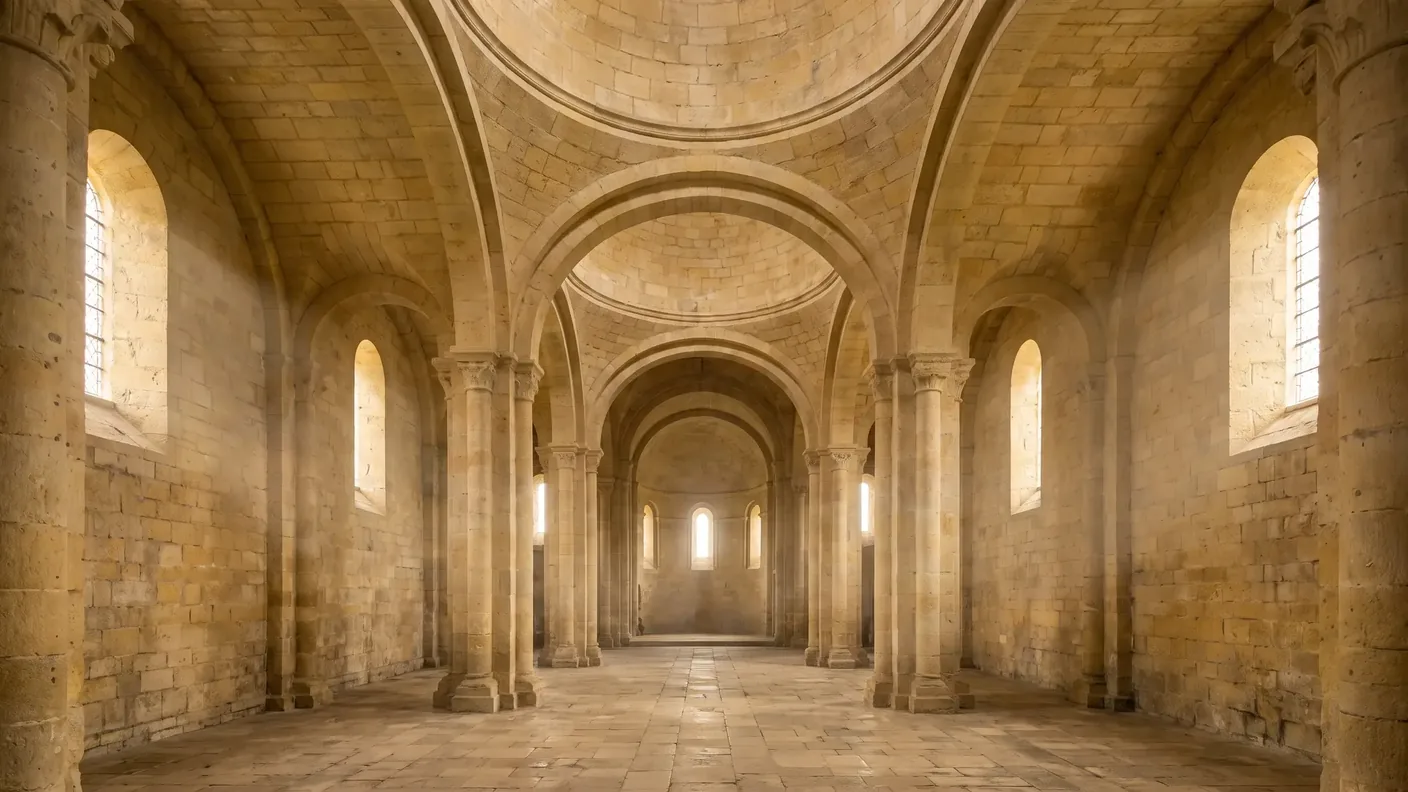
The church has come a long way. The canonical visit on October 12 1688 describes a nave with vaults that are “half-collapsed and on the verge of ruin, with no roof, floor, or windows”—a consequence of the wars; the previous year, there had even been talk of removing the nave. In 1820, the residents raised funds for a new roof through a subscription, but it was necessary to lower the domes, rebuilt with brick: today’s walls are lower than they were in the Middle Ages. Following the restoration campaigns of 1920, 1938, and 2000–2010, the most recent surprise came in 1979: the removal of the choir’s woodwork revealed medieval murals (late 13th–early 14th century, restored in 2007) — The Sharing of St. Martin’s Cloak, The Kiss of Judas. Inside, there are also gilded wooden altars from the early 18th century (one of which was designated a historic object in 1976) and the confessional donated by the provost of Alesme. Free admission; compare with the two other “Fortresses of God” in the Périgord, Saint-Amand-de-Coly and Paunat.
The Cingle: Anatomy of a Meander—and Its Body of Water
“Cingle” is said to come from the Latin cingulum, meaning “belt”—the Périgord term for the tight meanders formed by the Dordogne and Vézère rivers. The one at Trémolat is actually a double loop: two nearly symmetrical curves, each about 4 km long, connected by a third, inverted curve, with the entire stretch extending about ten kilometers between Le Buisson and Lalinde.
Two million years of work
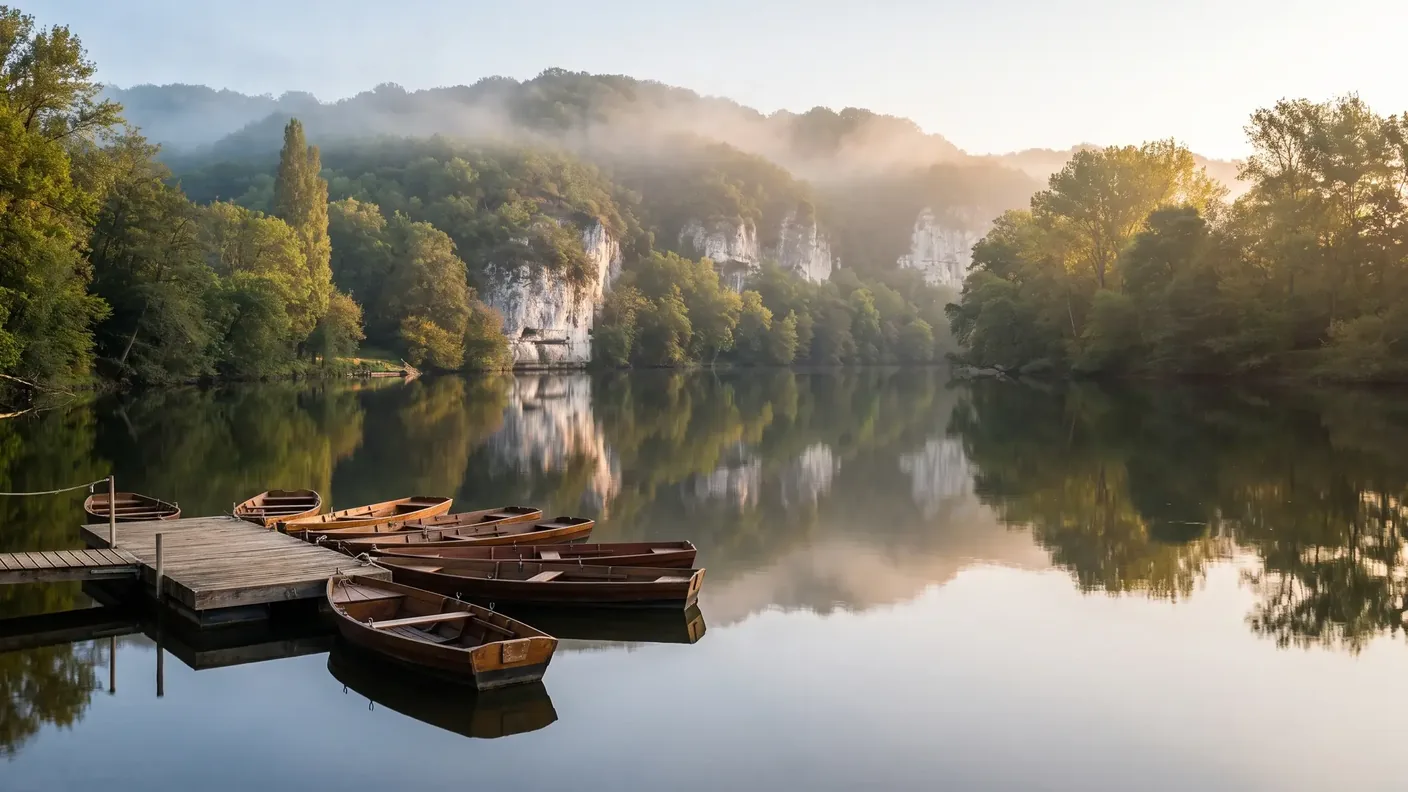
The process is that of a confined meander: the Aquitaine Platform was uplifted during the collision of the African and European plates (~60 million years ago), the river system formed during the Quaternary (~2 million years ago), and then the river incised its course—eroding the Campanian limestone on the concave bank and depositing its alluvium on the convex bank. Hence the classic asymmetry: inside the bend, a flat, fertile agricultural plain; on the outside, a nearly vertical limestone cliff rising 70 meters above the water (with walls up to 100 meters high), facing due south and thus home to Mediterranean-type flora and two protected species of horseshoe bats.
The Rocamadou Lookout
The signature viewpoint is the Rocamadou lookout (the spelling “Racamadou” is common in guidebooks—the local dialect referred to it as the “rock of love”), 2.6 km from the town along the D31 coastal road. Orientation map, 180° panoramic view of the double loop. Please visit only the viewpoints accessible via the marked trail on site, respect any closures, and stay behind the safety barriers. Check current access conditions with the Trémolat town hall before your visit. The site has long been protected: listed since 1965 and designated a protected site since 1985.
Water skiing for children ages 3 and up: the Cingle Basin
One final paradox: this river hardly flows here anymore. The Mauzac Dam, downstream, forms a tranquil 250-hectare reservoir—and Trémolat has turned it into a “premier destination for water sports in the Périgord”: an international-level water sports center with a water ski school (water skiing for kids as young as 3, wakeboarding, adaptive sports), stand-up paddleboarding, pedal boats, supervised swimming in the summer, a swimming pool, and tennis. The only sailing club in the Dordogne is in Mauzac, 4 km downstream. Those seeking peace and quiet will prefer the GR 6 hiking trail, which passes through the village and runs alongside the Lalinde Canal.
1969: When Chabrol Turned Trémolat into a Film Set
Claude Chabrol was looking for a village in the Sarladais region “with red shutters”—but he couldn’t find one. It was his production manager, Patrick Delauneux, who introduced him to Trémolat; the filmmaker, a notorious foodie, made up his mind… while having lunch at Le Vieux Logis. His verdict: “ This part of the Dordogne is magnificent, and it has been explored very, very rarely.” The Butcher was filmed from September through October 1969, starring Stéphane Audran (Hélène, the schoolteacher) and Jean Yanne (Popaul, the butcher) — released in theaters on February 27, 1970.
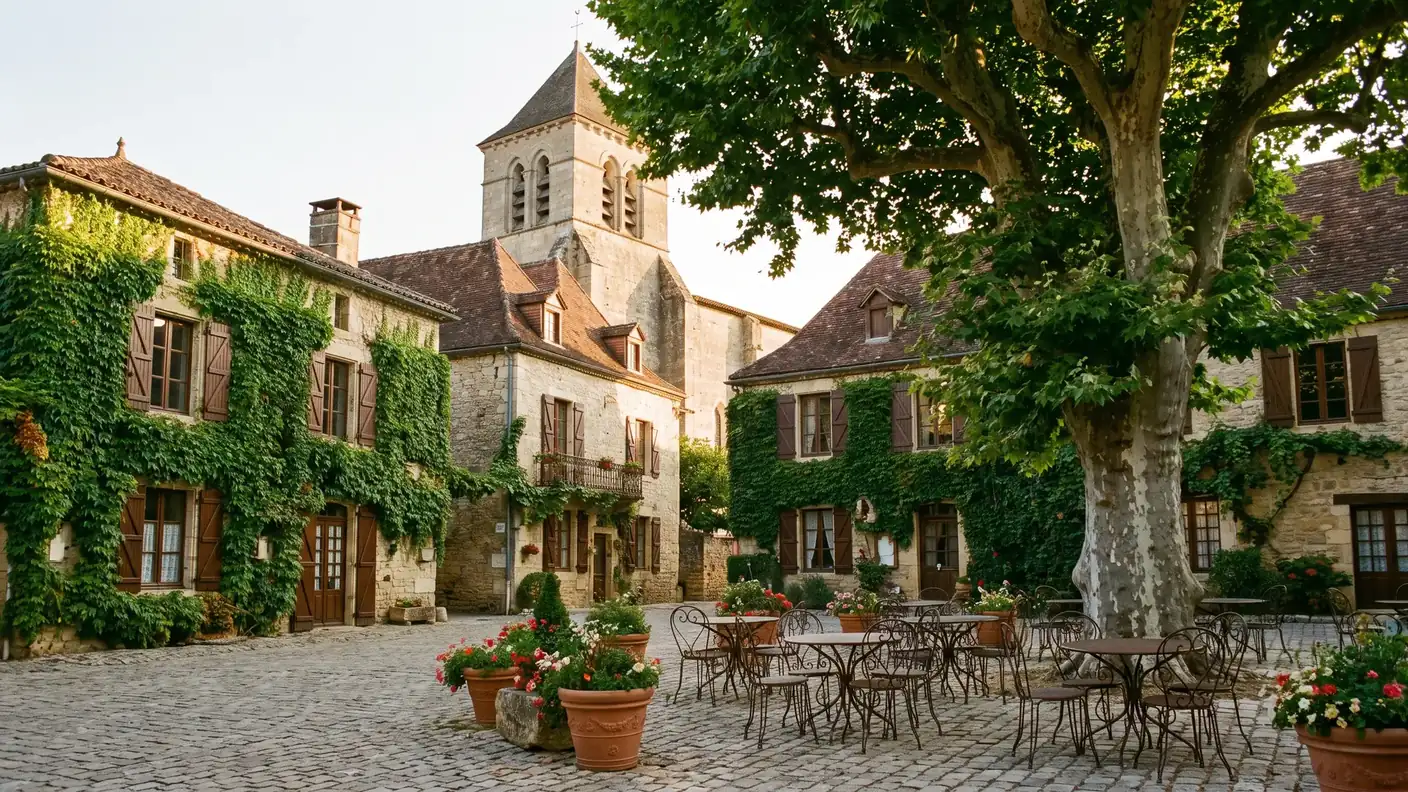
The filming has remained etched in the collective memory, and for good reason: The villagers played themselves — a baker, farmers, schoolchildren —, and the current mayor, Éric Chassagne, appears in it as a child. The city council chamber was transformed into a set (the council held its meeting on the set, and a wedding was scheduled there for the following Saturday). With no rain for the funeral scene, the fire brigade hosed down the square. Hélène's dictation for the schoolchildren? An excerpt from The Thirty-Year-Old Woman by Balzac. And the cameraman's name was Claude Zidi, the future director of Les Ripoux. The cave scenes, meanwhile, were filmed in the Cougnac Caves (Lot), plus one at the Proumeyssac Chasm.
The film—which drew 1,148,554 admissions and was called a “masterpiece” by Henry Chapier in Combat, and was re-released in theaters in 2001 — earned Stéphane Audran the Best Actress Award at the 1970 San Sebastián Film Festival and brought Trémolat lasting fame. The village celebrates this legacy with a lighthearted touch: an open-air Chabrol Festival was launched in June 2021, attended by the filmmaker’s children—where Thomas Chabrol recounted that as a child, in this very square, he had ordered a Coke… and received a Cacolac instead. A vintage report on the filming (October 1969) can be viewed on ina.fr.
Le Vieux Logis: Five Centuries of History, One Star in the Tobacco Drying Shed
In the heart of the town, the Vieux Logis is a village institution—and part of French hotel history. A former 16th- and 17th-century priory later used as a mixed farm and tobacco holding, the house remained in the Giraudel family for about five centuries. They converted it into a hotel in 1952, and it has belonged to Relais & Châteaux since 1955, one year after the network was founded, making it one of the label's historic properties.
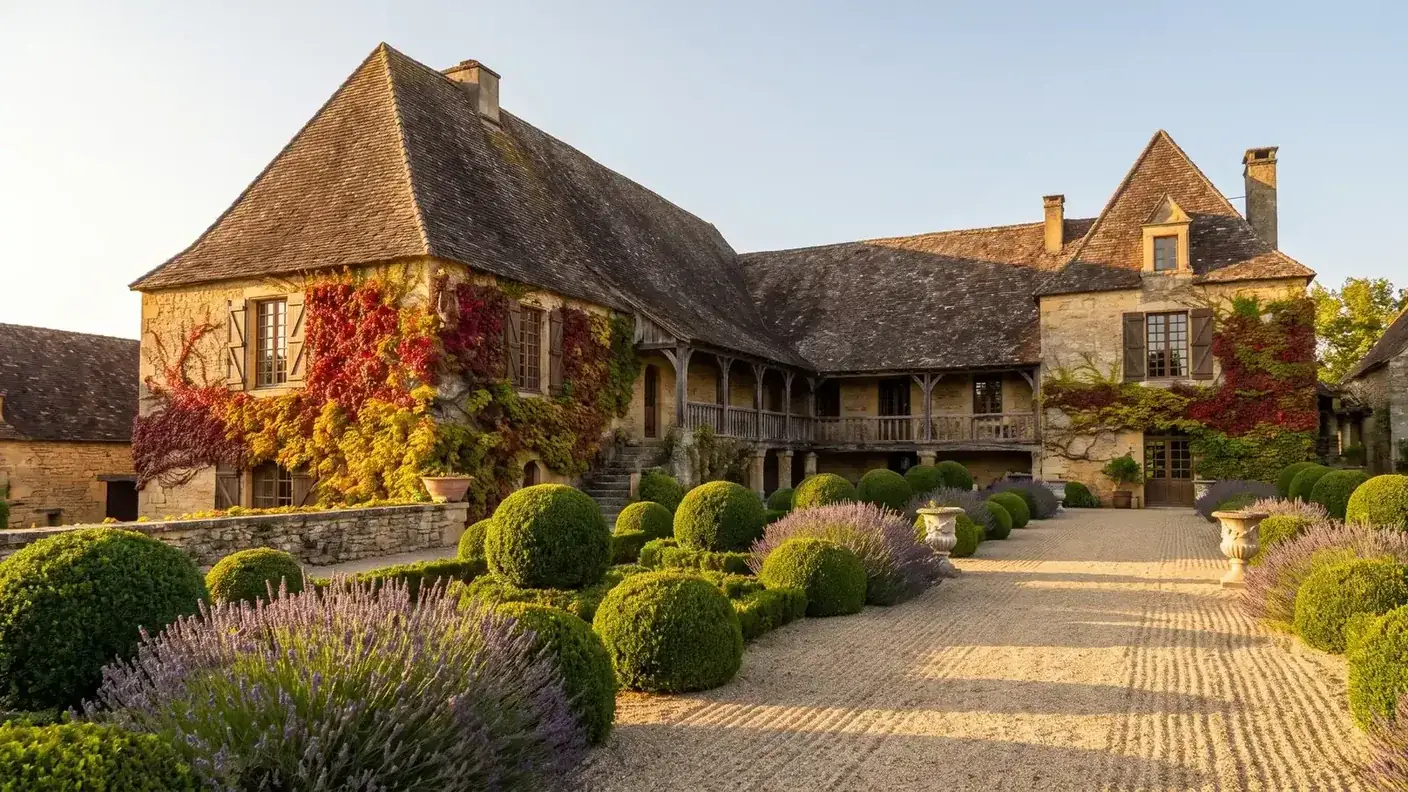
The restaurant, awarded one Michelin star, occupies the former tobacco drying shed; chef Vincent Arnould, a 2007 Meilleur Ouvrier de France, has led the kitchen since 2000. On the square, the more informal annex is Le Bistrot de la Place (formerly “Bistrot d'en Face”), across from the school seen in The Butcher—the same house, but more affordable. The gardens, with their century-old linden trees, have seen their share of high-society figures: according to critic Gilles Pudlowski, Henry Miller arrived by kayak intending to stay one night, but remained for over a month before writing that this corner of the Périgord was “the closest thing to paradise”; Pierre Bellemare was a regular there, and Chabrol put his crew up there in 1969.
The local icon, Bernard Giraudel—“I’m a dealer in happiness,” he used to say—passed away in January 2019 at the age of 93. With no family successor, the estate was passed on to four longtime employees and then completely renovated (2019–2022): 25 rooms, a heated pool, and gardens. A contemporary nod: the “Bruno, Chief of Police” sightseeing tours—based on the world of Martin Walker, who lives in nearby Le Bugue—often include dinner at Le Vieux Logis.
Around Trémolat: Limeuil, Paunat, the canal, and truffles
Trémolat spans two Périgord regions: the Black Périgord upstream and the Purple Périgord downstream. Road distances verified.
Paunat (5.6 km / 8 min)
The Monastic Twin Sister: The Abbey Church Saint-Martial, heir to “one of the oldest abbeys in the Périgord” (sacked by the Normans in 849 and again in 860), which was also fortified—a vast defensive chamber runs along the top of the choir’s vaults. The dome of its bell-tower porch, transitioning from a square to a circle, is unique in the Périgord. The two 46-meter churches have been compared to one another since 1851; in the summer, the festival Music in G holds its concerts there. According to tradition, Saint Cybard founded the abbey—and so the circle is complete.
Limeuil (6.8 km / 10 min)
One of the Most Beautiful Villages of France, perched high above the confluence of the Dordogne and Vézère rivers and its two right-angled bridges: panoramic gardens at the top, and the Church of Saint-Martin (1194), built as penance for the murder of Thomas Becket. The Cingle de Limeuil, a twin of the one in Trémolat, has also been a listed site since 1985.
Mauzac, the Lalinde Dam and Canal (10–12 km)
Downstream, the Mauzac Dam (built 1838–1843, generating power since 1924—13.2 MW today) feeds the Lalinde Canal: 15 km long and featuring 9 locks, it was dug to bypass the three rapids—the “malpas” of the Grand Thoret, the Gratusse, and the Gratussou—which once terrorized the bargemen. Legend has it that a coulobre—a dragon that devoured boatmen and was slain by Saint Front (“ever since, the rocks have been tinged with red”)—lived there; Louis-Philippe, for his part, was choked by the cost: “But the Lalinde Canal—are we really paving it with hundred-sous coins?!” Since 2020, a 140-meter fish passage (22 basins) allows fish ranging from 15-centimeter roach to 2-meter catfish to pass through. The GR 6 trail runs alongside the canal; the V91 valley bike route passes through Mauzac—crossing the Dordogne… by ferry.
Lalinde (12 km / 16 min)
The first English bastide in the Périgord (according to the tourist office), founded in 1267 for Henry III Plantagenet—and entrusted to a knight from Dorset named… Jean de La Lynde, a purely coincidental name similarity. Every spring, the Périgord Trail runs a race there called “La Trace du Cingle.”
Sainte-Alvère (11.8 km / 16 min)
Winter is the perfect time for this must-see outing: the certified truffle market in Sainte-Alvère—founded in 1987 and a pioneer of France’s first electronic truffle market—is held every Monday at 10 a.m., from late November through late February. Each Tuber melanosporum is washed, brushed, and inspected by quality inspectors starting at 8 a.m.; recent prices have hovered around 750-850 € per kilogram, and the sale is often wrapped up within thirty minutes.
And further on
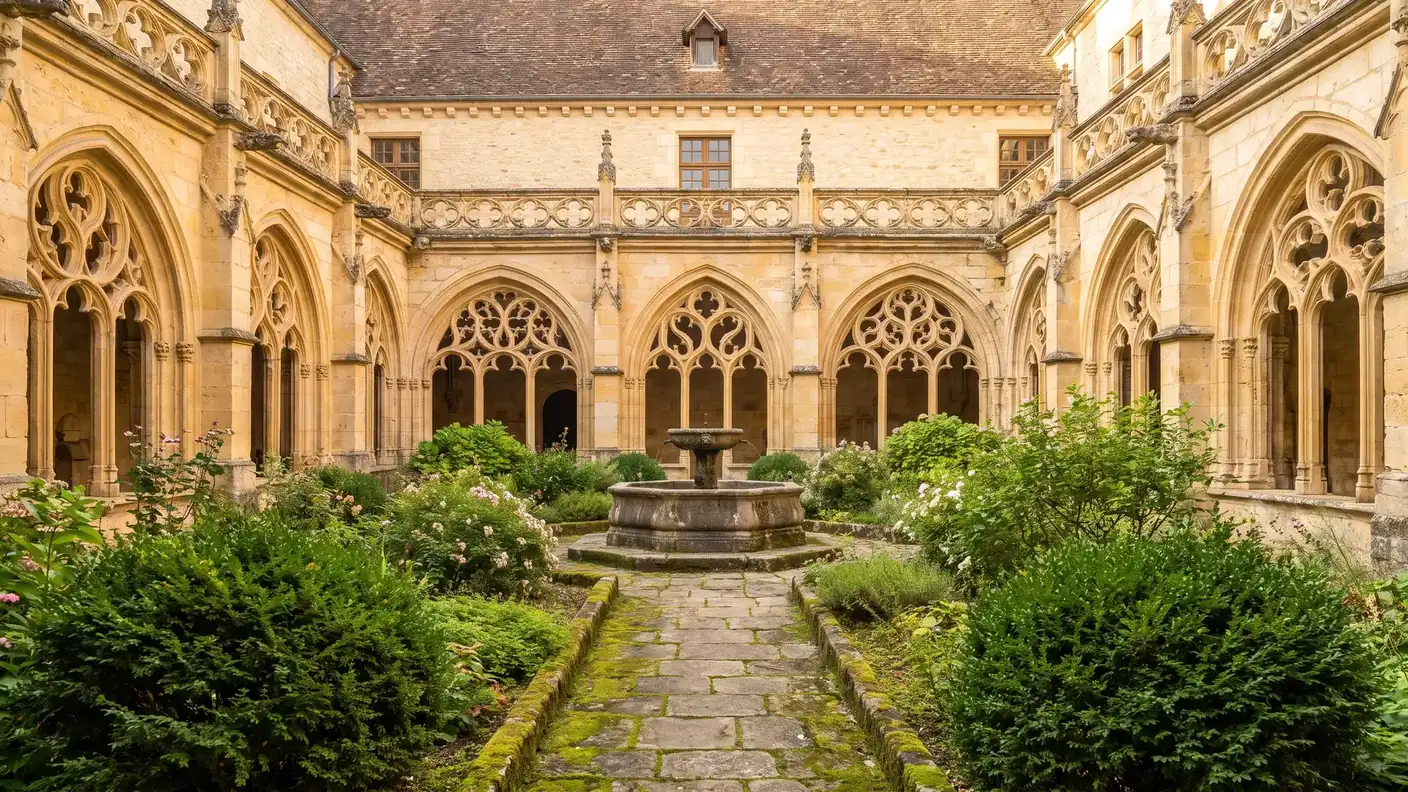
Cadouin Abbey and its Flamboyant Gothic cloister (UNESCO, 16.3 km), Le Bugue and its family-friendly parks (14.4 km), Les Eyzies and its decorated caves (25.4 km), Sarlat (46.9 km), and Lascaux IV (49.8 km).
| Field Trip | Road | The Argument |
|---|---|---|
| Rocamadou Lookout | 2.6 km · 5 min | The view of the double loop |
| Paunat | 5.6 km · 8 min | The Fortified Twin Abbey Church |
| Limeuil | 6.8 km · 10 min | Most Beautiful Village, confluence |
| Mauzac (dam, canal) | 9.9 km · 15 min | Lalinde Canal, V91, sailing |
| Sainte-Alvère | 11.8 km · 16 min | Truffle Market (Mondays, winter) |
| Lalinde | 12 km · 16 min | English bastide founded in 1267 |
| Le Bugue | 14.4 km · 19 min | Proumeyssac, Bournat, aquarium |
| Cadouin | 16.3 km · 25 min | Flamboyant Cloister (UNESCO) |
| Les Eyzies | 25.4 km · 33 min | Capital of Prehistory |
When to visit: water in the summer, truffles in the winter
| Period | Crowd | For | Against |
|---|---|---|---|
| April–June | Light | A soft green meadow, a church, and a lookout point in a peaceful setting | The water is still cool |
| July–August | Busy | Water sports center, gourmet markets (July 14, August 11), European visitors | Historic Homes and Vacation Rentals: Book Early |
| September–October | Light | Golden Light on the Vineyard: The Bergerac Harvest | Water Sports Center at the End of the Season |
| November–February | Very light | Truffles in Sainte-Alvère (Mondays), a charming village | Short days, restaurants running at a slower pace |
Upcoming events: Tuesday morning market All year round (9 a.m.–12:30 p.m., central square), evening gourmet markets on July 14 (with fireworks) and on August 11, the unusual Station Festival (yard sale, fishing contest) and, in good years, the Chabrol Festival outdoors. In winter, people come for Truffle Monday in Sainte-Alvère and to enjoy a fortified church all to themselves.
Coming from Bordeaux: the valley via Bergerac—or the direct TER train
Trémolat is about 151 km from Bordeaux: Take the A89 to Mussidan, then the D709 toward Bergerac, and follow the right bank of the Dordogne Valley—about 2 hours and 15 minutes. Forget the optimistic “1h30” estimate given by some guidebooks. And here’s a little-known fact worth mentioning: the village has a train station served by direct TER trains from Bordeaux.
| Travel option | Duration | Estimated cost | Details |
|---|---|---|---|
| Car | ~2 hours and 15 minutes | 30-40 € (gas + tolls) | A89, take the Mussidan exit, then head toward Bergerac and the valley |
| Private Chauffeur | ~2 hours and 15 minutes | Starting at 260 € · one-way | Door-to-door, with stops along the way |
| Train (TER) | Varies depending on the day and the work being done | ~20-25 € | Direct TER trains may stop at the Trémolat station on the Bordeaux–Bergerac–Sarlat line, with service varying depending on the day and any track work. Check the TER Nouvelle-Aquitaine timetable and traffic information for both the outbound and return trips. |
| Airplane | — | — | Bergerac Airport, 32.4 km away (~40 min) |
The Direct TER: A Real Option, Real Limitations
The TER 33 Bordeaux-Bergerac-Sarlat line serves the Trémolat stop (opened in 1879—it was already generating 15,399 francs in revenue in 1881— 5,524 passengers in 2023, a fourfold increase in ridership since 2020). The line itself has come a long way: threatened with closure, it was saved by a renovation in 2011, followed by 84 M€ in improvements in 2019. Direct TER trains may stop at the Trémolat station on the Bordeaux–Bergerac–Sarlat line, with service varying depending on the day and any construction work. Check the Nouvelle-Aquitaine TER schedule and traffic information for both the outbound and return trips.
With a chauffeur: explore the valley at your own pace
The direct trip from Bordeaux to Trémolat in a sedan costs 343 € one way (1–3 passengers, fixed price confirmed in writing). The route via Bergerac allows for stops at your convenience—Saint-Émilion, a Monbazillac vineyard, Limeuil—and once there, the driver will take you to the lookout point, Paunat, and Sainte-Alvère without any time constraints. Request a quote: written response within 30 minutes, 8-passenger van available, English-speaking driver.
Practical Information: Staying in the Loop
How much time should I set aside?
A half-day mainly: church, square Butcher, lookout. A day including Paunat and Limeuil. For a getaway, Trémolat is the perfect “slow” base camp: spend 2 to 4 days enjoying the lake, biking along the V91, and visiting markets—with Le Bugue and Les Eyzies less than 35 minutes away for prehistoric excursions.
Sleeping, eating
The highlight: Le Vieux Logis (Relais & Châteaux, 25 rooms, Michelin-starred restaurant). For everyday needs: Le Bistrot de la Place, the bakery, the grocery store, and the village café. Nearby, bed-and-breakfasts in the Cingle farmhouses and campgrounds along the Dordogne River. Reservations are a must in the summer—Dutch, British, and German guests have their regular spots.
| Profile | Daily budget (excluding transportation) | The Program |
|---|---|---|
| Small budget | ≈ 45-65 € | Campground, Tuesday market, church + lookout point + GR 6 |
| Comfort | ≈ 120-170 € | Bed and Breakfast, Bistrot de la Place, Water Sports Center, Limeuil |
| Premium | Quote based on the itinerary | Vieux Logis, Michelin-starred dinner, truffle tour, or a chauffeur-driven tour of the valley |
Good to Know
- Viewpoint: Visit only the viewpoints accessible via the marked trail on site; respect any closures and stay behind the safety barriers. Check current access conditions with the Trémolat town hall before your visit.
- Water sports center: Check the water conditions before promising water skiing—the water level in the Mauzac Reservoir is sometimes lowered due to construction work (as was the case in 2024).
- Tuesday morning: market day—the square is closed to traffic, so arrive early.
- St. Nicholas Church: Free admission; the defense chambers are not open to the public, but the paintings in the choir, which were restored in 2007, are worth a look.
- Trains: Direct TER trains may stop at the Trémolat station on the Bordeaux–Bergerac–Sarlat line, though service may vary depending on the day and any track work. Check the TER Nouvelle-Aquitaine timetable and traffic information for both the outbound and return trips.
Frequently Asked Questions
Where does the name "Trémolat" come from?
Two schools of thought: local tradition sees it as the aspen (Occitan tremol) of the riverbanks; toponymists, relying on the older forms without an “r” (Tomolatum, 769), favor Latin burial mound — “the site of the tomb,” possibly a reference to the cult of Saint Cybard. The “r” did not appear until the 17th century.
Where was Chabrol's *Le Boucher* filmed?
In Trémolat itself, from September to October 1969 (released in February 1970): the village school, the town square, and the council chamber converted into an apartment. The villagers served as extras—the current mayor appears in the film as a child. Only the cave scenes were shot elsewhere (Cougnac, in the Lot department, and one in Proumeyssac).
Why is the church in Trémolat fortified?
Because it served as a refuge: above the vaults, vaulted chambers could serve as a refuge for the population, and the bell tower is a 25.70-meter-tall keep. A unique feature: loopholes cut into the domes allowed defenders to fire into the nave at an enemy that had already entered. Turenne occupied the village from November 17 to 21, 1587.
What exactly is the Trémolat cingle?
A steep-sided meander of the Dordogne River—actually a double loop about ten kilometers long—carved into Campanian limestone over the past ~2 million years. Concave bank: cliffs 70 to 100 meters high. Convex bank: the agricultural plain. Site inscribed in 1965, designated a protected site in 1985.
How do I get to the Cingle lookout?
Please visit only the viewpoints accessible via the marked trail on site, respect any closures, and stay behind the safety barriers. Check with the Trémolat town hall for current access information before your visit.
What is the Vieux Logis?
The village's historic site: a former priory from the 16th–17th centuries that remained in the Giraudel family for five centuries. It has been a hotel since 1952 and a Relais & Châteaux member since 1955. Its restaurant, led by chef Vincent Arnould (MOF 2007), holds one Michelin star and occupies a former tobacco drying shed. Henry Miller, who had come for just one night, is said to have stayed there for a month.
Can you get to Trémolat by train from Bordeaux?
Direct TER trains may stop at the Trémolat station on the Bordeaux–Bergerac–Sarlat line, with service varying depending on the day and any track work. Check the TER Nouvelle-Aquitaine timetable and traffic information for both the outbound and return trips.
On which days is the Trémolat market held?
Tuesday mornings (9:00 a.m.–12:30 p.m.), central square, year-round: ducks, strawberries, wine, and crafts. In the summer, there are also evening gourmet markets—on July 14 (with fireworks) and August 11. For truffles, head to Sainte-Alvère on Monday mornings, from late November through late February.
Who was Saint Cybard?
A 6th-century hermit (~504–581) whom tradition identifies as a son of Trémolat—though Gregory of Tours refers to him as “a native of Périgueux.” Having lived in seclusion for 44 years in a cave beneath the ramparts of Angoulême, he devoted his resources to ransoming captives (reportedly 175 slaves at once in 558). It was his abbey in Angoulême that founded the priory of Trémolat.
Is the water sports center suitable for children?
Yes—that's its specialty: on the calm, 250-hectare body of water formed by the Mauzac Reservoir, the water-ski school welcomes children from age 3 for baby-skiing. It also offers wakeboarding and adaptive water sports, along with stand-up paddleboarding, pedal boats, and supervised swimming in summer, plus a pool and tennis courts at the resort.
How much does a chauffeur service cost from Bordeaux to Trémolat?
Starting at 343 € one-way in a sedan (1–3 passengers), approximately 2 hours and 15 minutes door-to-door, fixed price confirmed in writing before booking. 8-passenger van available, with flexible stops along the way (Saint-Émilion, Monbazillac, Limeuil); day trips to the Dordogne Valley available upon request.
When is the best time to visit Trémolat?
May–June and September for the light on the Cingle and the tranquility. Summer for the water sports center and the gourmet markets. Winter has its own secret gem: the Sainte-Alvère truffle market every Monday (late November–late February), just 16 minutes from the village.
What's there to see in the immediate vicinity?
A very dense 17-km radius: Paunat and its fortified abbey church (8 min), Limeuil, the “Most Beautiful Village” at the confluence (10 min), the Lalinde Canal and its dam (15 min), the bastide town of Lalinde (16 min), the truffles of Sainte-Alvère (16 min)—and then Le Bugue, Cadouin, and Les Eyzies, all within 35 minutes.
Further Reading
- The nearby market town and its parks: see the Guide to Le Bugue (Proumeyssac, Bournat, market dating from 1319)
- The Capital of Prehistory: See the Guide to Les Eyzies (Font-de-Gaume, Cro-Magnon)
- The other fortified church in the Périgord: see the Saint-Amand-de-Coly Guide
- The capital of the Périgord Noir: see the Sarlat Guide
- Plan your trip: Book a chauffeured transfer from Bordeaux to Trémolat or explore all our destinations
Sources and References
- Wikipedia — Trémolat — geography, demographics, Cingle, history
- Wikipedia — St. Nicholas Church — dates, dimensions, priory, 1587
- Wikipedia — *The Butcher* (Chabrol) — 1969 production, technical details
- Trémolat City Hall — Îlot Saint-Nicolas, Events, Heritage
- Le Vieux Logis — The History of the House, a Michelin-Starred Restaurant
- Pays de Bergerac Tourist Office — village, film shoots, markets
- Atlas of the Dordogne's Landscapes — the Cingle, a 70-meter-high limestone cliff
- Dordogne Department — Trémolat Water Sports Center
- Wikipedia — Lalinde Canal — Malpas, Coulobre, 9 locks
- Sainte-Alvère Truffle Market — How It Works, Season
- TER Nouvelle-Aquitaine — Bordeaux–Sarlat and traffic information — service and disruptions (accessed July 23, 2026)
- INSEE — Complete dataset Trémolat — Population, Housing, Age Groups
Article updated in July 2026.
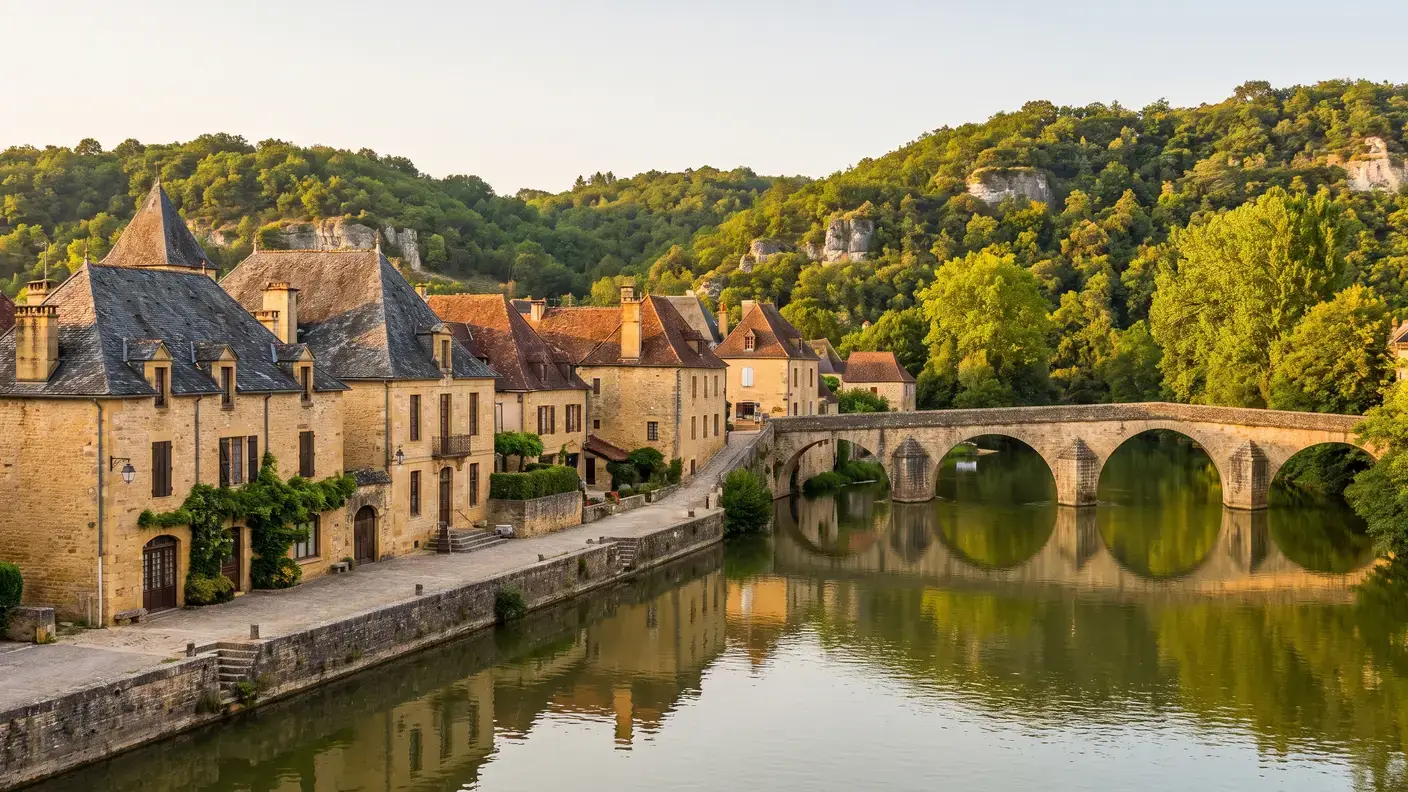
On the way to the Cingle
Direct trip from Bordeaux (~2 hours 15 minutes) via Bergerac and the valley, with stops along the way at your convenience—Saint-Émilion, Monbazillac, Limeuil. Written fixed-price quote within 30 minutes; sedan or 8-passenger van; English-speaking driver.