Bertric-Burée, two villages in one
The Ribérac area’s quietly eccentric village: born from the merger of two parishes in 1824, crowned by a Byzantine-style bell tower, home to the oldest tree in the Dordogne, and proud of both its snail festival and its Dungeons & Dragons street. Everything you need to know before you visit, just 1 hour and 46 minutes from Bordeaux.
Bertric-Burée at a Glance
- Bertric-Burée (population 445; residents are known as Bertricois) is a village in the Ribérac area of northwestern Dordogne, created in 1824 through the merger of two separate municipalities, Bertric and Burée.
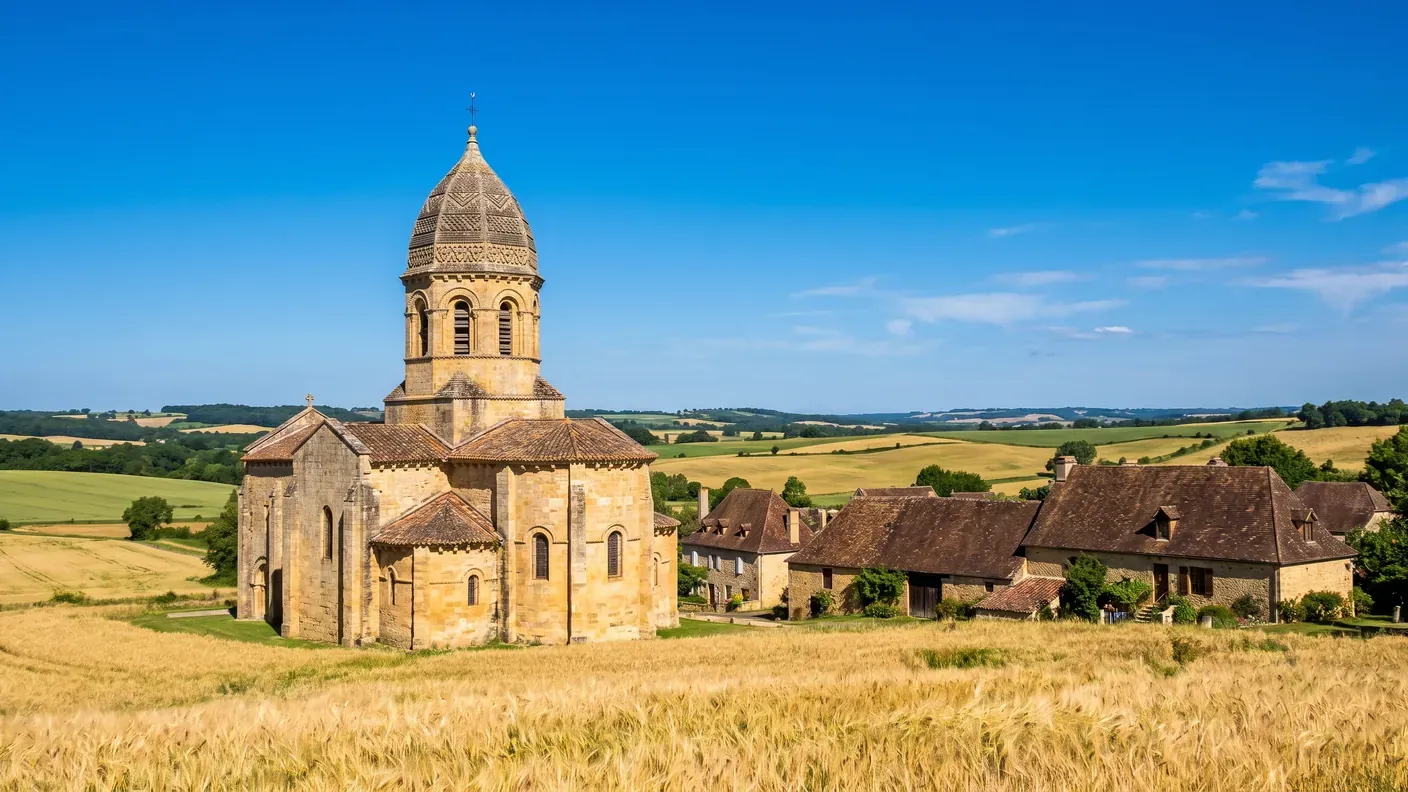
- Its Church of Saints Peter and Paul (13th century) has an unusual feature: an octagonal Byzantine-style bell tower, added in the late 19th century and visible across the plain.
- The village is home to a thousand-year-old yew — 9 meters in circumference and dated by core sampling to approximately 980 years old: the oldest tree in the Dordogne, designated a “Remarkable Tree of France”.
- Since 2022, it has had a “Gary Gygax Alley”, named after the creator of Dungeons & Dragons, the first street in France to honour the “first dungeon master”.
- Its early-May Snail Festival brings residents, volunteers and visitors together around long communal tables.
- No grand castle or barony: Bertric-Burée represents rural Périgord at its most authentic, and that is precisely what makes it so endearing.
- Nearby are the Romanesque domed churches of the Ribérac area (Cherval, Grand-Brassac), Ribérac and its large market, and Aubeterre-sur-Dronne.
- By car from Bordeaux: 121 km, approximately 1 hour 46 minutes — from 218 € with a door-to-door chauffeur service. There is no railway station or bus service in the village.
Before You Go: What Bertric-Burée Really Is
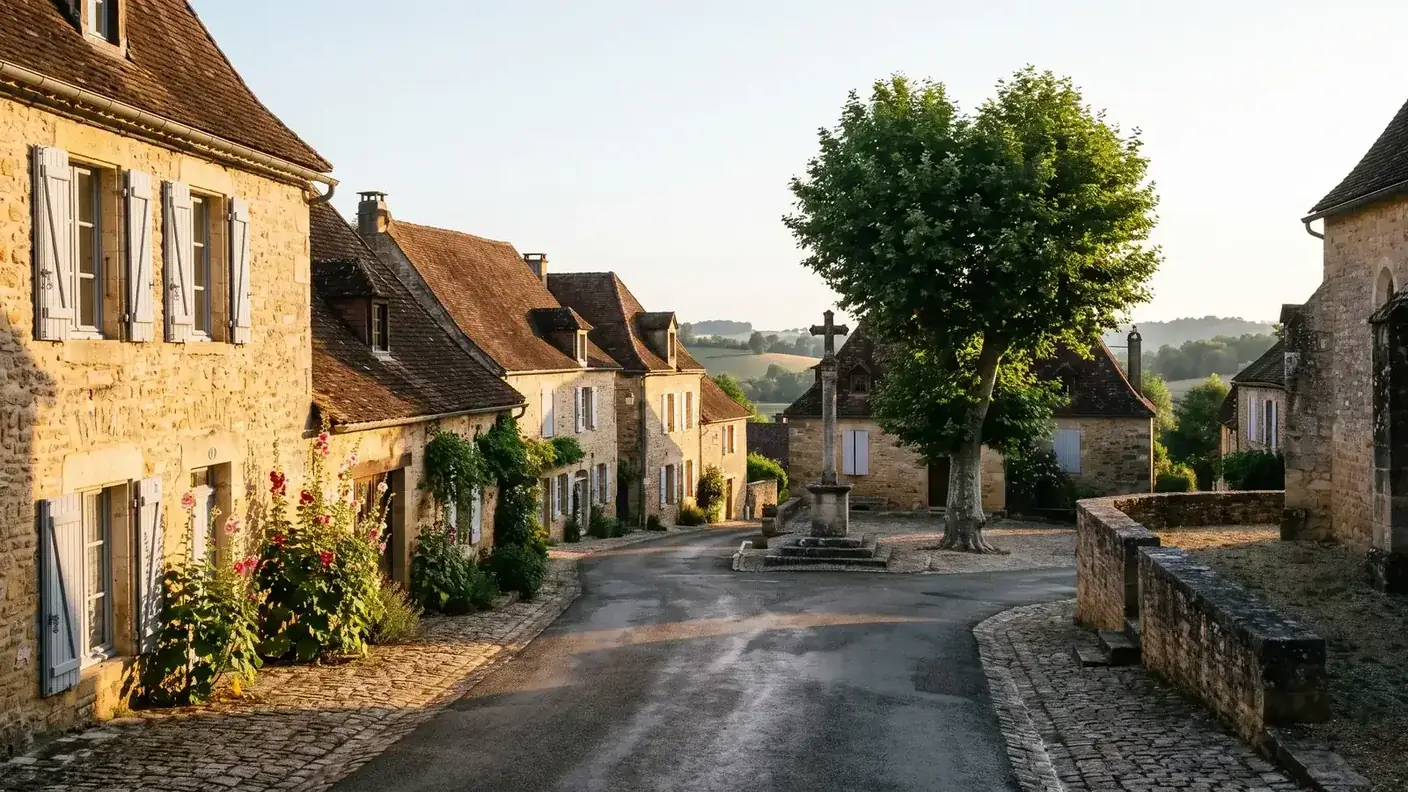
Rue des Escargots, one morning in May. The street name is no joke—there’s even a statue of a snail near City Hall, and snails carved into the facades. At the end of the street, an octagonal bell tower topped with a Byzantine dome rises above the wheat fields, looking out of place in the middle of the plain. A little further on, in the private garden of a house, a gnarled yew tree nine meters tall has witnessed eight centuries pass. And if you’re looking for “Gary Gygax Alley,” yes, that’s the one named after the creator of Dungeons & Dragons. Welcome to the most discreetly eccentric village in the Ribérac region.
Bertric-Burée has no castle, no baron, and no cathedral. What this village of 445 residents tells is a more subtle story: the story of two neighboring parishes, Bertric and Burée, which eventually merged into a single entity in 1824—one surviving and flourishing, the other fading away until it was confined to the walls of a manor house. A few unlikely treasures revolve around this story of merger: an Eastern-style bell tower, the oldest tree in the department, an internationally renowned snail festival, and a role-playing street.
This guide distinguishes between verified information and copied information—it’s a tricky subject. Here and there, you’ll read that the village has a listed dolmen (false: the The Peyrelevade dolmen is in Paussac, not here), remarkable painted paneling (it is at Saint-Paul-Lizonne, the neighboring town), or that its snail festival dates back to 1987 (unverifiable). We’ll stick to the facts: the 1824 merger, the Byzantine bell tower, the thousand-year-old yew tree, and the true gems of the surrounding area—starting with the domed churches.
In practical terms, the Ribérac area is a rail desert. Bertric-Burée has never had a railway station, the Ribérac line has been closed since 1940, and no regional buses stop in the village. The nearest operating TER station is Mussidan (14 km), but you still have to arrange the final few kilometres. To travel from Bordeaux and explore the surrounding area, a chauffeured transfer from Bordeaux is the simplest solution (1 hr 46 min).
445 residents on a grain-growing plateau
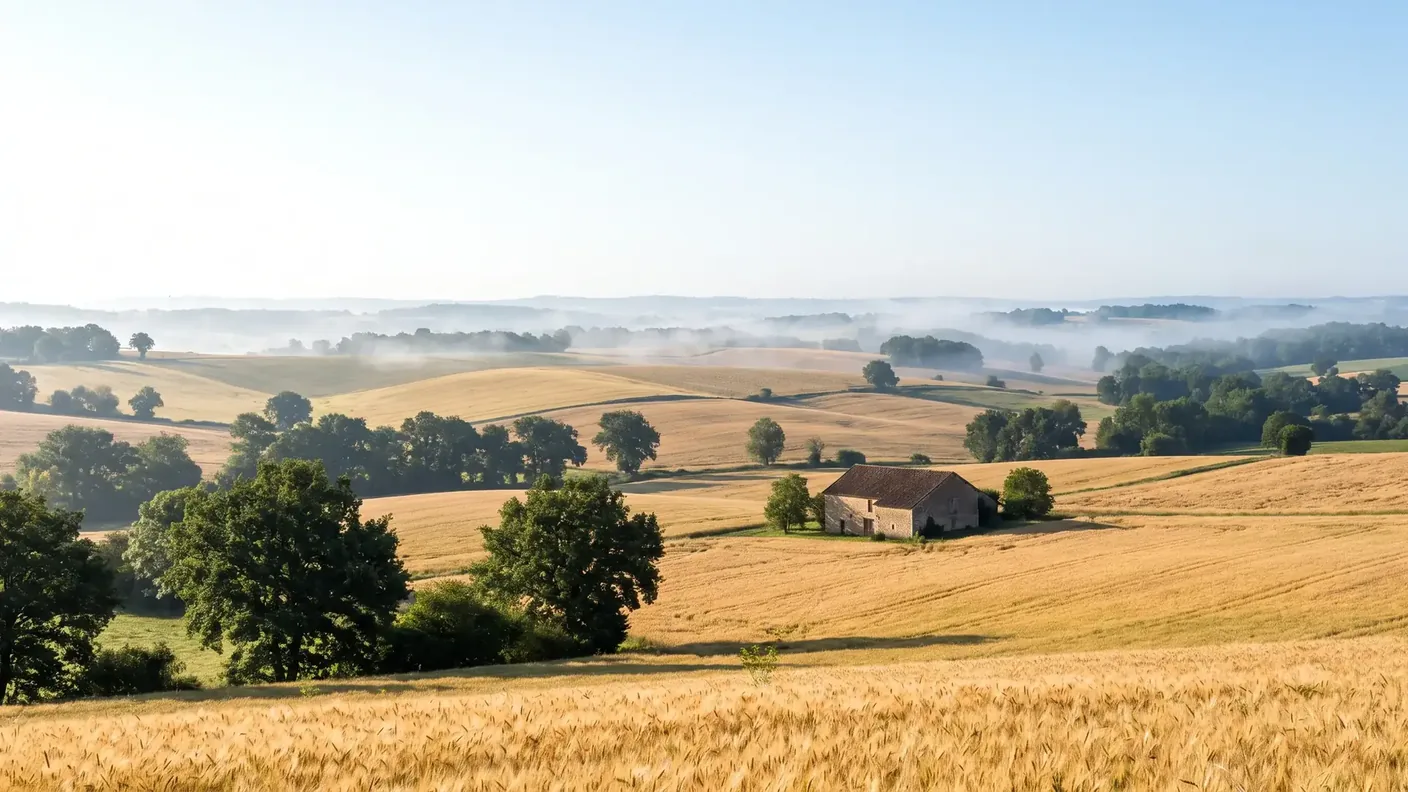
Bertric-Burée covers an area of 16.73 km² in the northwestern quarter of the Dordogne, on a Cretaceous limestone plateau — this "third geological tier" that shapes the Ribérac region. It is a landscape of field crops (cereals), gentle and open, with very little forest cover, crisscrossed by small, lush valleys. A nuance that has its own charm: the Ribérac region is geologically located in the White Périgord (limestone), but now associated, in terms of tourism, with the Green Périgord. White on the bottom, green on top. The RD 106 runs through the town, and the D708 (the former National Route 708, the Nontron–Marmande highway) runs along its edge; to the northwest flows the Sauvanie, born in Cherval, which flows into the Lizonne.
| Data | Value |
|---|---|
| Status | Municipality in the Ribérac region, Ribérac canton (formerly the Verteillac canton) |
| Population | 445 residents (2023) — The People of Bertrico |
| Area | 16.73 km² (population density ~27 people/km²) |
| Elevation | 68 m to 181 m |
| Origin | 1824 merger of the municipalities of Bertric and Burée |
| Rivers | La Sauvanie (northwest) + Le Boulon, Le Bournet, Le Troirieux |
| Neighbors | Ribérac (7 km south) · Verteillac (5 km north) |
| Distance from Bordeaux | 121 km (1 hr 46 min via the A89, take the Montpon exit, then head toward Ribérac) |
The population figures offer a reassuring contrast to the depopulation of the Ribérac region. Starting from the valley of 308 residents in 1975, the population grew over a period of forty years, reaching a peak of 451 in 2016 — nearly +45% —, before stabilizing at around 435–445 since then. Nothing spectacular, but a rare feat of resilience: nearby, Verteillac has lost nearly 19% of its residents, and Cherval just as many. The proximity to the Ribérac and Verteillac employment markets, combined with a well-preserved rural lifestyle, has made Bertric-Burée one of the few towns in the area to hold its ground. The village has also secured a flower on the 2025 list of "Flower-Filled Towns and Villages."
1824: A Village Born from Two Parishes
The hyphen in the name is not merely decorative: it is a scar left by history. Until 1824, Bertric and Burée were two separate municipalities, each with its own village, church, and territory. The most tangible evidence is found on maps: on the Cassini map (surveyed between 1756 and 1789), two distinct place names appear side by side— "Bertricq" and "Buree". Two locations, two communities, identified by the king’s surveyors even before the creation of modern municipalities in 1789.
Both parishes were part of the Diocese of Périgueux, but they were not quite equal: Burée was served as a suburb of Bertric. The church in Bertric was dedicated to Saints Peter and Paul; the one in Burée was dedicated to Saint Leonard (and later, according to the parish registers, to Our Lady). It was in 1824, during the Restoration, the administrative merger was formalized: the two small municipalities, too small to continue on their own, were merged into a single one— Bertric-Burée. The Occitan name faithfully preserves the memory of this union: Bertric and Burèia, literally “Bertric and Burée,” two names placed side by side rather than combined.
What stands out is the durability of this union: two centuries without a separation. Some nearby municipalities did split apart. La Chapelle-Grésignac, annexed to Cherval in 1827, regained its independence as early as 1841. Bertric-Burée, however, held together and quietly celebrated the bicentenary of its merger in 2024. Today, the hamlet of Burée has all but disappeared from the inhabited landscape: all that remains, 800 meters south of the village, is a château, the last vestige of what was once a parish in its own right.
Bertric and Burée: Two Names, Two Mysteries
Exploring the etymology of Bertric-Burée means accepting a degree of uncertainty. For Bertric, the evidence is somewhat firmer: place-name scholars generally see it as an old Germanic personal name, built on the root berht (“bright”, “illustrious”), also found in the name Bertrand (berht + hramn, “raven”). In the Early Middle Ages, Bertric may therefore have been the name of a Frankish landowner whose estate adopted his name. This is a common pattern in Périgord, a region shaped by Germanic settlement in the 5th–6th centuries. The theory is credible, but no source documents it specifically for this Bertric, so it remains a plausible hypothesis rather than an established fact.
For Burée, the picture is completely unclear. No reliable source on place names offers a definitive answer: Wiktionary itself states that the etymology is “missing or incomplete.” A few possibilities have been suggested—a connection to Occitan abadiá (“abbey”), the idea of a “fountain” or a “hill”—but none of them really hold up (the “abbey” family of words normally yields Labadie or Abadie, not Burée). It’s best to say it plainly: The origin of Burée is unknown. This is the fate of thousands of small rural place names, never significant enough to be recorded in dated charters. One thing is certain: both names existed long before their marriage in 1824, and their combination is a living testament to this two-part story.
The Church of Saints Peter and Paul: An Eastern-Style Bell Tower Amid the Wheat Fields
The church in Bertric is a modest 13th-century building, with the dignified simplicity of a rural Périgord church. A late-19th-century redesign added an unexpected flourish: an octagonal Byzantine-style bell tower topped with a dome, rising above the wheat fields. Visible from far across the plain, it never fails to surprise. Oriental-inspired architecture was fashionable in late-19th-century France, as the Sacré-Cœur and Saint-Front in Périgueux show, but it rarely reached such a small farming village. This unusual crown is Bertric-Burée’s defining landmark.
One delightful present-day detail is that the church now serves as an Anglican place of worship, supported by the Chaplaincy of Aquitaine for the large British community in the Ribérac area: a French village, a Byzantine-style bell tower and services in English. It stands, naturally, on Rue des Escargots, with a large car park nearby. For historical accuracy, the church is neither classified nor listed as a historic monument; it appears only in the general inventory of cultural heritage. The celebrated painted timber panelling sometimes attributed to it is not here either: that 17th-century, hull-shaped ceiling by Arnaud Paradol is in Saint-Paul-Lizonne, 6 kilometers away. The two churches share the same patron saint and are easily confused.
Burée Castle: All That Remains of a Parish
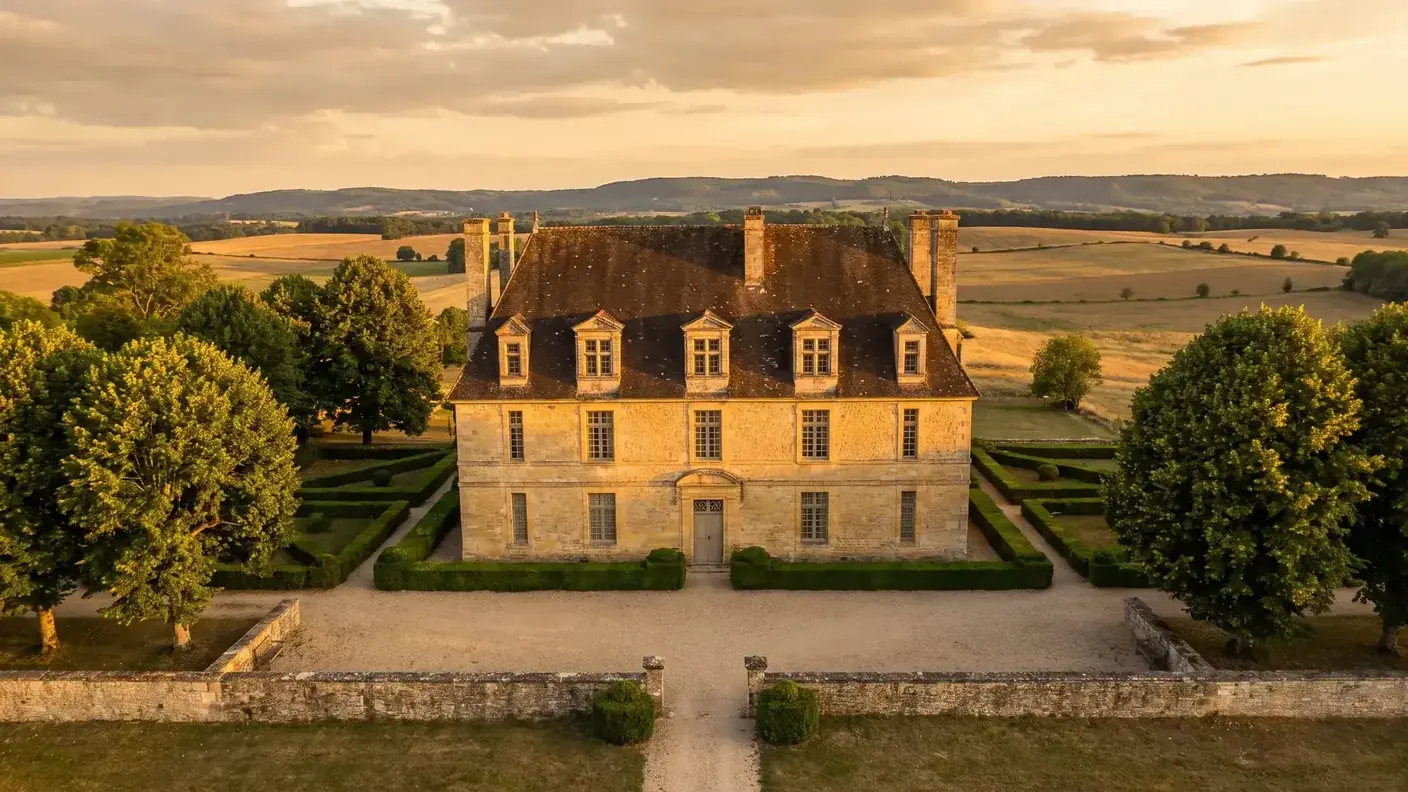
Burée Castle stands 800 meters south of the village, just under a kilometer by road, and is almost all that remains of the former municipality of the same name. It is not a fortress but a 17th- and 18th-century manor house, a noble residence rather than a military stronghold. The site has deeper roots: a noble holding is documented there as early as the 13th century; the estate still held high justice over Burée in 1760 and passed through the Tessières-Miremont, La Filolie and Buade families. The Revolution led to the removal of its defensive features, including arrow slits, battlements and machicolations, but a semicircular tower still recalls its military past. It is private property and not open to the public; you can admire it from the road.
As for theBurée Church, it simply vanished. Dedicated to Saint Leonard, this medieval church still appeared on the maps of Cassini and Belleyme—likely near the manor—but then disappeared by the end of the 18th century, a few decades before the merger. This is a striking microcosm of the village’s entire history: when a community loses its church, it loses the heart around which its life revolved—baptisms, weddings, the patron saint’s feast day. By losing its sanctuary before With its independence, Burée had already begun to fade into the background. By 1824, there was little left to demolish in Bertric. One contrast sums it all up: on one side, a church embellished with an Oriental-style bell tower; on the other, a church wiped off the map.
The Millennium Yew: The Oldest Tree in the Dordogne
If there were to be a single witness capable of linking Bertric-Burée to a past that predates its own formation, it would be this tree. The village is home to a if (Taxus baccata) considered to be the oldest tree in the entire Dordogne department — and one of the oldest in France. The numbers are staggering: 9.70 meters in circumference (measured at 1.30 m above the ground in 2020), over 13 meters tall, and, most importantly, an estimated age—based on a core sample taken in 2002—of about 980 years. That’s why it’s nicknamed the “millennial yew”: when William the Conqueror was conquering England, it was already a young sapling.
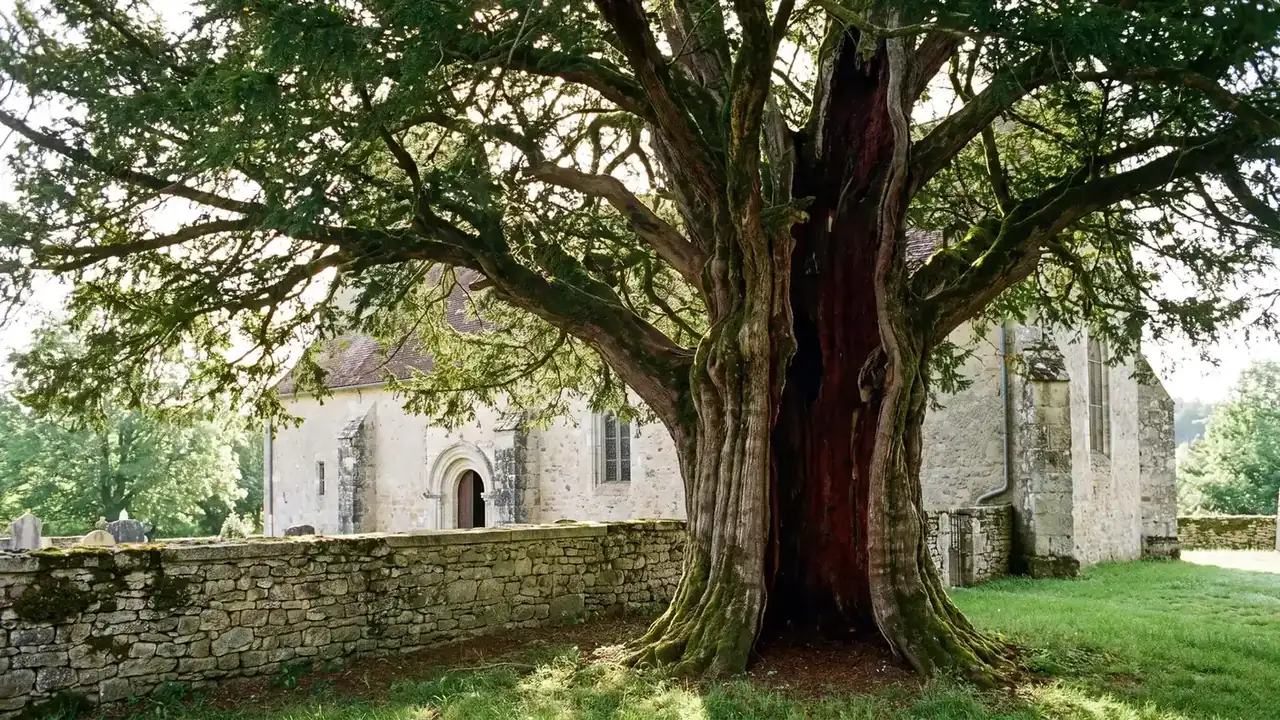
The tree has been certified "Remarkable Tree of France" in January 2002 by the A.R.B.R.E.S. association, and then recognized in 2010 by the national “Mathusalem” initiative. There are only four trees designated as "remarkable" throughout the Dordogne — and the yew tree at Bertric-Burée is the only one in the Ribérac region. Another interesting fact: unlike almost all yew trees of this age, which are usually planted near a church or cemetery, this one grows in the a house's private garden of the village—even though nearby excavations have uncovered the remains of an ancient cemetery there. Since it is on private property, it is not open to the public; one can only catch a glimpse of it over the walls. A living testament to a thousand years of history, it has witnessed Bertric and Burée exist separately, merge, and endure.
The Snail, the Belgians, and the Keep: Life in a Clever Village
A village without a castle or a prominent landmark chooses other symbols. Bertric-Burée’s is a mollusk: the snail — the “petit-gris” snail, as it’s known in the Charente and Saintonge dialects. Here, we’ve embraced it wholeheartedly: a snail statue It stands near City Hall; snails adorn the facades, and City Hall itself is located there Escargots Street. Every spring, the Cagouilles Patron Saint's Day (Dates for the next edition to be confirmed with the Périgord Inattendu tourist office) brings together many volunteers and visitors around large tables.
The “à la bertricoise” recipe—petit-gris stuffed with a sausage mixture flavored with garlic and parsley, cooked overnight so they can be served fresh in the morning, about thirty per plate—attracts loyal customers from Gironde, Charente, and also from From Brittany to Belgium and all the way to New Caledonia. A fine example of how a tiny village can make a name for itself far beyond its borders with just a plate of snails. (Fun fact: the snails themselves aren’t collected locally but are shipped in from Haute-Vienne.)
But the true hallmark of Bertricoise eccentricity lies elsewhere. On July 9, 2022, the village inaugurated a "Gary Gygax Alley" — named after the American co-creator of Dungeons & Dragons, the father of modern role-playing games, the “first dungeon master” in history. It is said that this is the France's first route named after him, and a role-playing weekend is held there. A Byzantine bell tower, a thousand-year-old yew tree, a snail festival, and a “Dungeons & Dragons” street: few villages with a population of 445 can boast such a collection of unlikely attractions. There are no shops or restaurants in the village itself—services are available in Ribérac (7 km away)—but it has a character you won’t find anywhere else.
A Village Without a Barony: The True Face of the Périgord
Let's be clear: Bertric-Burée was never a center of feudal power. Medieval Périgord included four baronies prestigious towns—Beynac, Biron, Bourdeilles, and Mareuil—with their fortresses, garrisons, and judicial rights. One privilege set them apart: upon the solemn entry of a new bishop into Périgueux, it was required that four barons to carry the bishop's throne — a ceremony that regularly devolved into a scuffle over precedence, with everyone vying to walk in front. Bertric-Burée, on the other hand, is nothing like that: no fortified castle, no baron, no disputed fief. Its only “castle” is the Burée manor, the residence of a local dignitary.
It's not a shortcoming; it's a counterpoint. For while Bertric-Burée is a village mentioned in feudal chronicles, there are a thousand others just like it: modest rural communities, centered on agriculture, small parishes, and a quiet way of life, which have shaped the region without ever featuring in the grand narratives of sieges and battles. This is the face the most common from the Périgord, and the most honest. Bertric-Burée doesn’t pretend to have a castle it doesn’t have: it tends to its snails, watches over its yew tree, and indulges in the luxury of a “Dungeons & Dragons” street. In its own way, this village has understood that one can be memorable without ever having been powerful.
Cherval, Grand-Brassac: The Domed Churches of the Ribérac Region
The area’s true cultural treasure isn’t in Bertric-Burée itself, but all around it: the Ribérac region is the "Land of Romanesque churches with domes", some thirty 12th-century buildings in which the dome, by transferring the load to very thick walls, made it possible to create actual defense chambers. At Cherval (11 km — the village where the Sauvanie River begins), the church Saint Martin aligns four domes Romanesque features and a 13th-century defense chamber built by the soldier-monks of the Order of Saint John of Jerusalem: designated a historic monument in 1913 and restored from 2019 to 2021, it is one of the most beautiful in the area.
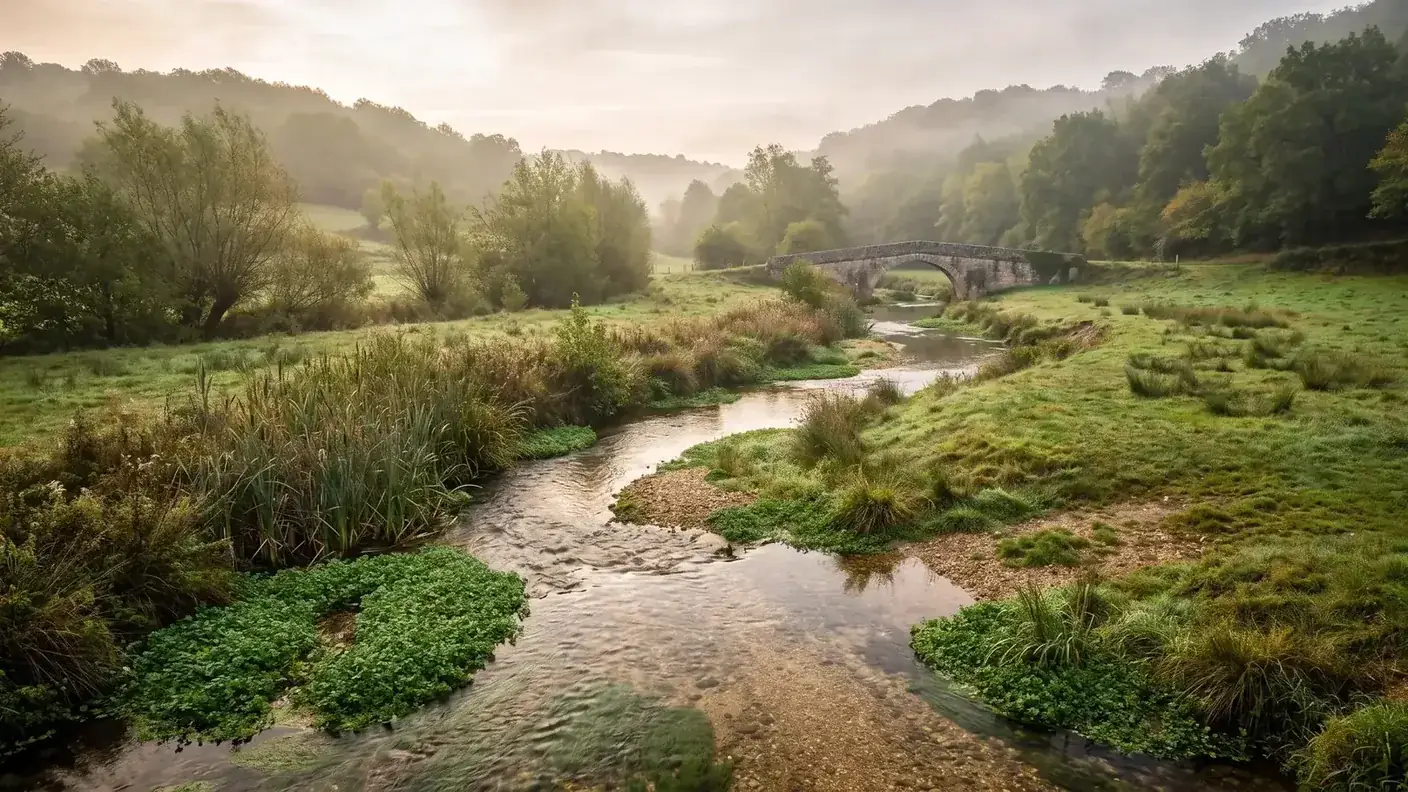
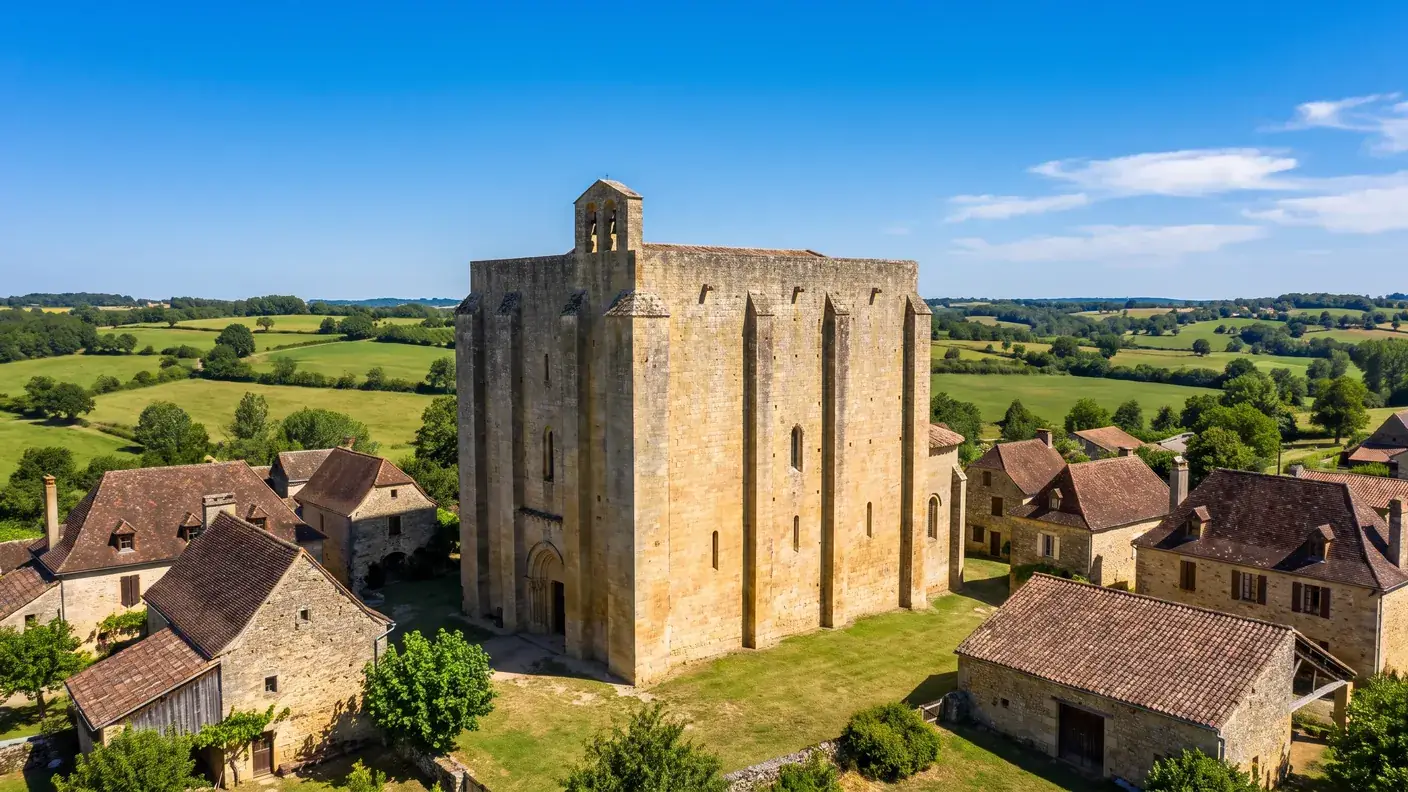
To Grand-Brassac (to the southeast), the church Saint Peter and Saint Paul takes this logic to its ultimate conclusion: a fortress-church with a row of domes, bristling since the 13th century with battlements, defensive galleries, and arrowslits, and designated a historic monument since 1885. These two—Cherval and Grand-Brassac—are must-see stops to visit before or after Bertric-Burée. You can make a Dome Loop through the bocage, from one fortified bell tower to the next, in a part of the Périgord unknown to the masses.
Around Bertric-Burée: markets, megaliths, and a monolithic village
Bertric-Burée is a convenient starting point for exploring the Ribérac region and the outskirts of Charente. All of the following locations are less than 25 minutes away, unless otherwise noted.
| Website | Directions from Bertric-Burée | The Essentials |
|---|---|---|
| Verteillac | 5 km · 6 min | former county seat, Saturday market, three castles |
| Ribérac | 7 km · 8 min | the market capital (Friday), the Dronne River, the troubadour Arnaut Daniel |
| Cherval | 11 km · 11 min | Saint-Martin Church, with four domes, a listed historic site (1913) |
| Mareuil-en-Périgord | 20 km · 20 min | castle of one of the four baronies of Périgord |
| Aubeterre-sur-Dronne | 20 km · 24 min | "Most Beautiful Villages of France," monolithic church (Charente) |
| Paussac-et-Saint-Vivien | 22 km · 31 min | the Peyrelevade dolmen and the Peyre d'Ermale (megaliths) |
| Bourdeilles | 24 km · 34 min | "Two castles in one" (fortress + Renaissance) on the Dronne River |
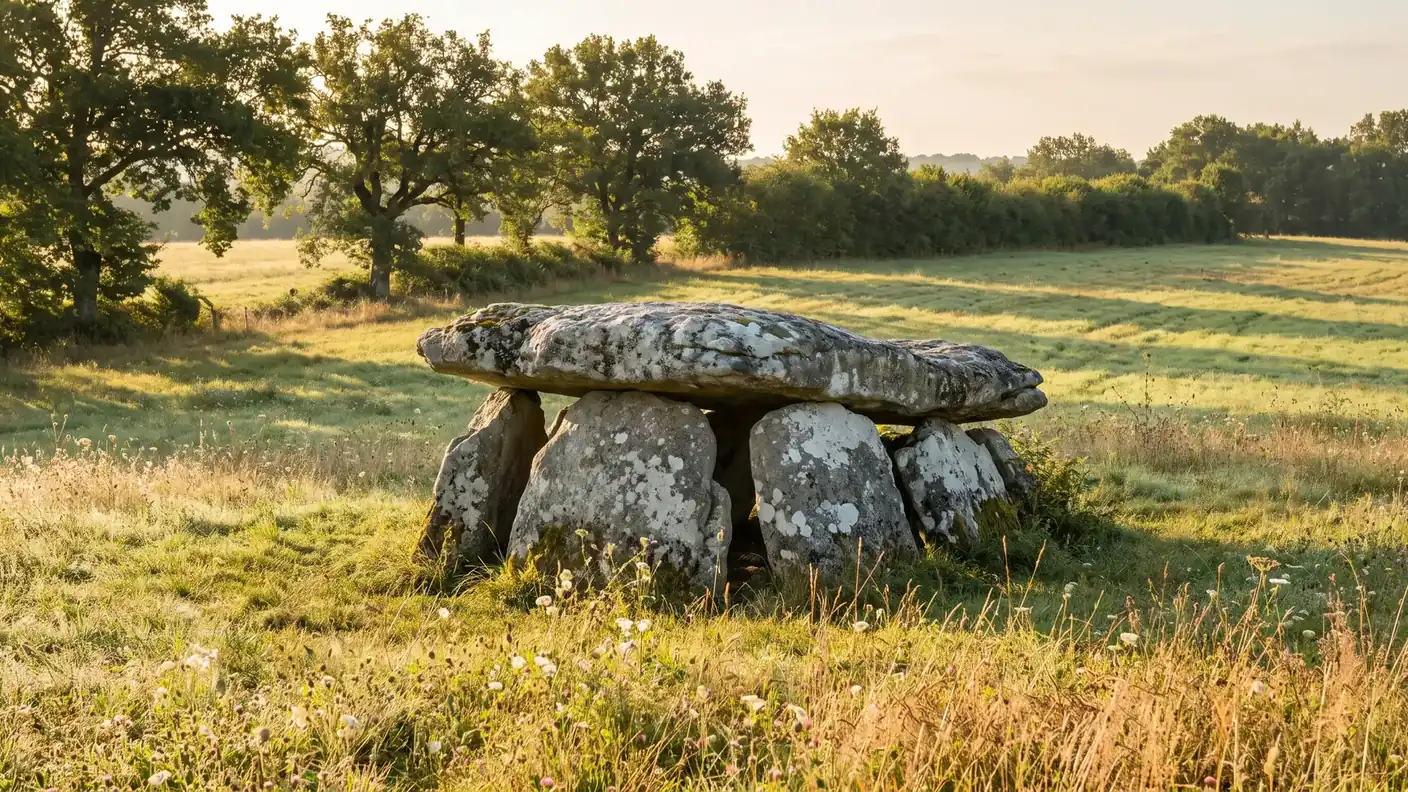
Two of our favorites are definitely worth a visit. Ribérac (7 km), the capital of the Ribérac region, is home to one of the largest Friday morning markets in the Périgord Vert (150 exhibitors, plus markets featuring foie gras and truffles in the winter)—and it’s the homeland of the troubadour Arnaut Daniel, whom Dante hailed as “the finest craftsman of the mother tongue.” And Aubeterre-sur-Dronne (20 km, in Charente), listed among the Most Beautiful Villages of France, is home to theSaint John Monolithic Church — the largest underground church in Europe, with a 20-meter-high nave carved into the cliff. As for nature, the Nizonne Valley, designated as a Natura 2000 site (3,400 hectares, partly within the Périgord-Limousin Natural Park), features wet meadows and riparian forests for those who enjoy peace and quiet and birdwatching.
Bordeaux → Bertric-Burée: 121 km, about 1 hour 46 minutes
The route follows the highway to the outskirts of the Ribérac region: the Bordeaux bypass, then A89 "the Trans-European" to the exit at Montpon-Ménestérol, and finally the D708 which runs due north along the Double River toward Ribérac, all the way to Bertric-Burée. Allow 121 km and about 1 hour 46 minutes door-to-door.
| Option | Duration | Good to Know |
|---|---|---|
| Executive car service | 1 hour 46 minutes | door-to-door, starting at 218 € — optional stops (Ribérac, Aubeterre, etc.) |
| Personal car | 1 hour 46 minutes | A89 (toll road), Montpon exit, then take the D708 toward Ribérac |
| TER + road | ≈ 2 hours 30 minutes+ | Bordeaux → Mussidan (~1 hour 20 minutes), then 14 km to the town center (to be arranged) |
| Direct public transportation | — | non-existent in the village—no train station, no bus stop |
The Ribérac area is a blind spot for rail transport. Bertric-Burée has never had a railway station, and Ribérac station has been closed to passengers since 1940. The nearest operating TER station is Mussidan (14 km, on the Bordeaux–Périgueux line, served by the shuttle launched in 2022), but there is no public transport from there to the village. For a place like this, a chauffeur service from Bordeaux (1 hr 46 min, starting at €218) is the only true door-to-door option. Suggested itinerary: take the D708 through Ribérac and combine the village, its Friday market and the domed churches in one day.
Our Tips for Success at Bertric-Burée
- Come in early May for the Snail Festival (Dates for the next event to be confirmed with the Périgord Inattendu tourist office): This is the only time of year when you can enjoy snails “à la bertricoise”—the rest of the year, there are no restaurants in the village.
- Look for the Byzantine bell tower Rue des Escargots: The snail statue near City Hall and the snails carved into the building facades complete the scene.
- Look for the thousand-year-old yew tree: It stands on private property (it is not open to the public), but its silhouette rises above the walls—the oldest tree in the Dordogne.
- Take a photo of Gary Gygax Alley: the first street in France named after the creator of Dungeons & Dragons—a unique feature that few villages can claim.
- Take the Dome Loop: Cherval (4 domes, a listed site) and Grand-Brassac (a fortified church) are the true Romanesque gems of the area.
- Preferably on a Friday: The Ribérac market (150 vendors) is one of the most beautiful in the Périgord Vert—on Saturdays, the Verteillac market takes over.
- Head on to Aubeterre (24 min): The underground monolithic church—the largest in Europe—is worth the trip to Charente all on its own.
- Do not rely on the train: there is no station and no bus service in the village. The chauffeured transfer from Bordeaux (1 hr 46 min, starting at €218) is the only true door-to-door option.
Bertric-Burée will never appear on a postcard of the Périgord—and that’s just fine. This village of 445 residents has no castle, no baron, no crowds; it has something better, in its own quiet way: the story of two parishes merged into one, an Eastern-style bell tower lost among the wheat fields, the oldest tree in the department, a snail festival that draws visitors from Belgium, and a role-playing street. This is the everyday Périgord—the one made up of the thousands of towns that have shaped the region without ever making it into the history books—and it’s the most endearing, because it doesn’t try to be anything it isn’t. All around, the domed churches of Ribérac and Aubeterre round out a getaway in a green Périgord that no one is watching over. It’s all just two hours from Bordeaux.
Frequently Asked Questions
How much does a private chauffeur service from Bordeaux to Bertric-Burée cost?
The chauffeured Bordeaux → Bertric-Burée journey starts at 249 € one way (1 to 3 passengers, sedan), door-to-door. The price is fixed and confirmed in advance — no meter and no surprise surcharges. A van seating up to 8 passengers is available for families and small groups. Request a quote: written response within 30 minutes.
How long does the trip from Bordeaux to Bertric-Burée take?
Count about 1 hour and 46 minutes for 121 km: Take the Bordeaux bypass, the A89 to the Montpon-Ménestérol exit, then the D708 heading toward Ribérac and the Ribérac region. Since the village is 7 km from Ribérac, it’s easy to visit both in a single day.
Why does Bertric-Burée have a compound surname?
Because the town was founded in 1824 the merger of two formerly independent villages, Bertric and Burée, which appear separately on Cassini's map (as "Bertricq" and "Buree"). The compound name preserves the memory of this dual origin—just as the Occitan name does Bertric and Burèia, “Bertric and Burée.” The merger has remained intact for two centuries.
What is the Snail Festival?
This is the patron saint's day in Bertric-Burée, centered around the “cagouille”—the “petit-gris” snail in the Charente dialect—and held in early May. The dates for the next edition are to be confirmed with the “Périgord inattendu” tourist office. This festival brings together volunteers, locals, and visitors around large tables to enjoy a local dish made with stuffed “petits-gris.”
What is the notable tree in Bertric-Burée?
A if (Taxus baccata) considered to be the oldest tree in the Dordogne: 9.70 meters in circumference, over 13 meters tall, and an estimated age of about 980 years through core sampling—hence its nickname, the “millennial yew.” Designated a “Remarkable Tree of France” in 2002, it is one of only four trees in the department to have received this distinction. It grows on private property and is not open to the public, but you can catch a glimpse of it over the walls.
Why is the church's bell tower Byzantine in style?
The Church of Saints Peter and Paul, originally dating from the 13th century, was remodeled in the late 19th century, a time when the Byzantine style (as seen in the Sacré-Cœur or Saint-Front in Périgueux) was very much in vogue. It was then fitted with a octagonal bell tower with a Byzantine-style dome — surprising for such a small farming village, and visible from afar across the plain. The church is now an Anglican place of worship; it is neither classified nor listed as a historic monument.
Is it true that there's a street called Dungeons & Dragons?
Yes: On July 9, 2022, Bertric-Burée inaugurated a "Gary Gygax Alley", named after the American co-creator of Dungeons & Dragons, who is considered the “first dungeon master.” It is presented as the France's first route named after him, and a role-playing weekend is being held there. Yet another curiosity in this decidedly eccentric village.
What remains of the former municipality of Burée?
There's almost nothing left to see. Its medieval Saint-Léonard Church has disappeared at the end of the 18th century. All that remains, 800 meters south of the village, is the Burée Castle — a 17th- and 18th-century manor house, a former noble stronghold (which held high court over Burée in 1760), now privately owned and not open to the public. It is the last remaining vestige of what was once a parish in its own right.
Is there a dolmen in Bertric-Burée?
No—that's a common misunderstanding. The Peyrelevade Dolmen and the “Peyre d’Ermale,” which is sometimes associated with Bertric-Burée, are actually located in Paussac-et-Saint-Vivien, about 22 km to the east, where they have been designated historic monuments since 1960. These are beautiful Neolithic megaliths from the Périgord Vert region, but they are not located within the boundaries of Bertric-Burée.
What is there to see around Bertric-Burée?
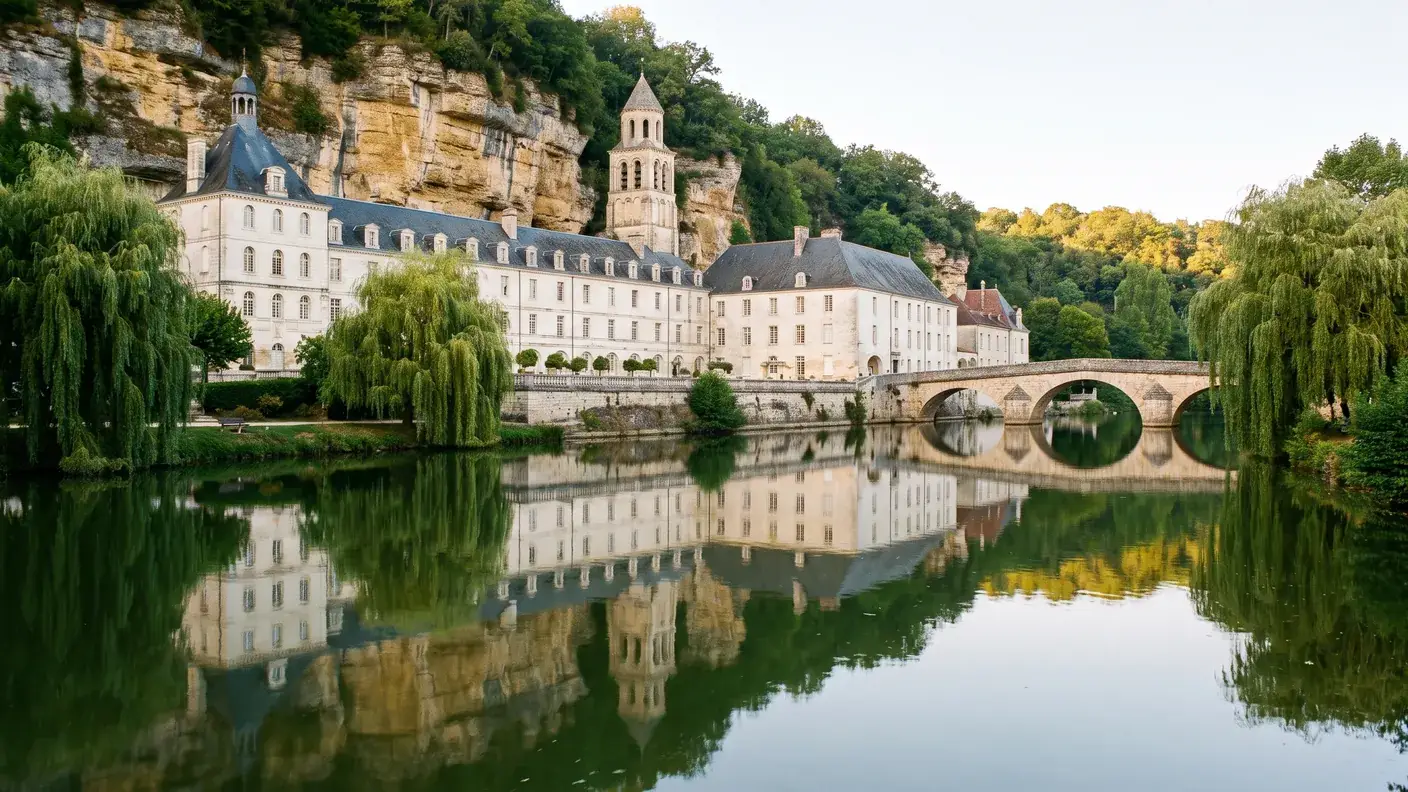
The Best of the Ribérac Region. The Romanesque churches with domes: Cherval (Saint-Martin, four domes, listed in 1913, 11 km away) and Grand-Brassac (fortified church). Ribérac (7 km) and its large Friday market. Verteillac (5 km) and its Saturday market. Aubeterre-sur-Dronne (24 min, Charente) and its monolithic church. And, further on, the baronies of Mareuil and Bourdeilles, or Brantôme, the “Venice of the Périgord.”
Is Bertric-Burée connected to the baronies of Périgord?
No. Unlike the four major historic baronies (Beynac, Biron, Bourdeilles, and Mareuil), Bertric-Burée was never a seigneurial center: it had no fortified castle, no baron, and no strategic fief. Its only castle-like structure is the Burée manor house, the residence of a local notable from the 17th and 18th centuries. The village represents the most typical rural Périgord—that of the thousands of towns that shaped the region far removed from the grand feudal narratives.
How can you get to Bertric-Burée without a car?
It is very difficult: the village has never had a railway station, and no regional trains stop there. The nearest operating TER station is Mussidan (14 km, Bordeaux–Périgueux line), leaving the final few kilometers without public transport. The Bordeaux → Bertric-Burée chauffeur service (1 hr 46 min, starting at €218) is essentially the only direct, door-to-door option.
How many people live in Bertric-Burée?
445 residents according to the 2023 census, the residents of Bertrico. After hitting a low of 308 residents in 1975, the population grew for forty years, peaking at 451 in 2016, before stabilizing at around 435–445 — a rare resilience in the Ribérac region, where most villages continue to lose population.
Further Reading
- The nearby church-tower, 10 minutes away: see the Guide to Celles (Ribéracois, priory, fortified church)
- The Venice of the Périgord: see the Guide to Brantôme (cave abbey, Dronne)
- The birthplace of the Barony of Mareuil: see the Guide to Vieux-Mareuil (Mareuil Castle, domed church)
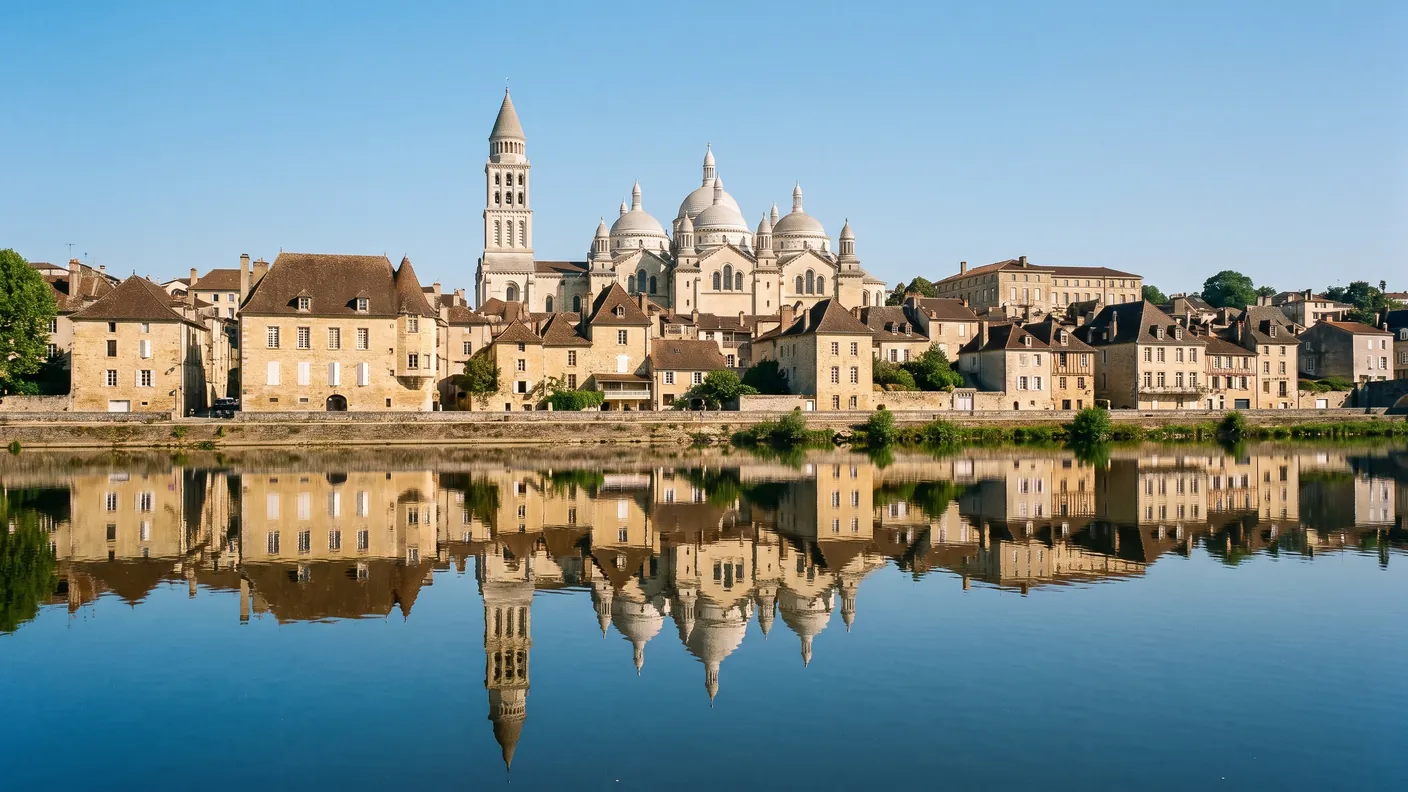
- The 2,000-Year-Old Prefecture: see the Guide to Périgueux (Vesunna, Saint-Front)
- Plan Your Trip: Book a private driver from Bordeaux to Bertric-Burée or explore all our destinations
Sources and References
- Wikipedia — Bertric-Burée — geography, merger in 1824, church, yew tree, Château de Burée
- Mérimée Database (General Inventory) — Bertric-Burée — joint presentation, merger, unprotected status
- Mérimée Database — Former Saint-Léonard Church in Burée — medieval, disappeared in the late 18th century, terms
- Tree-dwelling tadpoles — the thousand-year-old yew tree — core sample from 2002 (~980 years), 9.70 m, private property
- A.R.B.R.E.S. — Notable Trees of France — January 2002 label, 4 trees in the Dordogne
- Wikipedia — Cherval — Saint-Martin Church with four domes, listed as a historic monument in 1913, source: Sauvanie
- Wikipedia — Grand-Brassac — a domed fortress church, designated a historic monument in 1885
- Wikipedia — Ribérac — Friday market, Arnaut Daniel, station closed
- Wikipedia — Aubeterre-sur-Dronne — Most Beautiful Villages, monolithic church
- OT Unexpected Périgord (Ribérac region) — Snail Festival, calendar, markets
- INSEE — Complete Bertric-Burée Report — populations, density, demographic series
Article published and updated on .