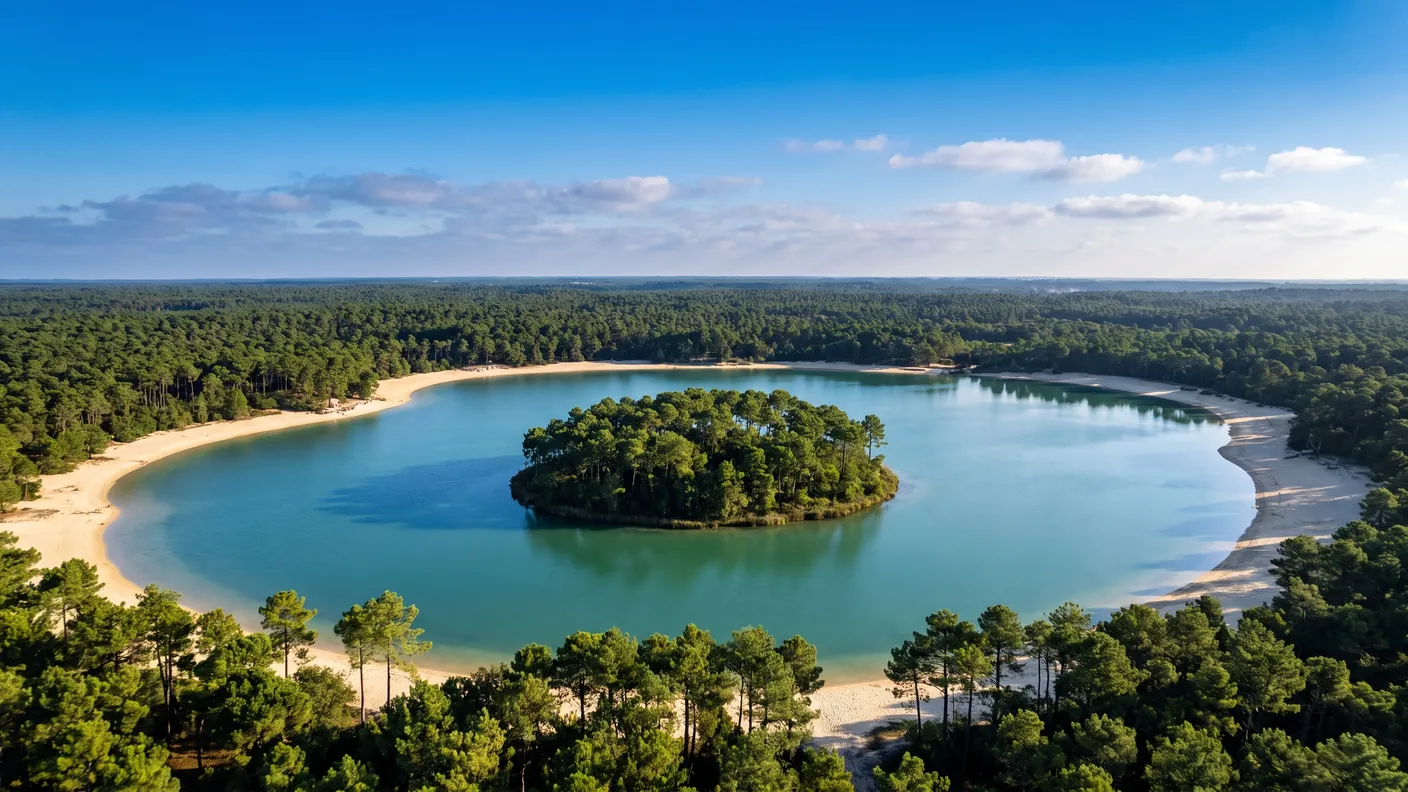
Bordeaux to Vieux-Boucau with a private driver
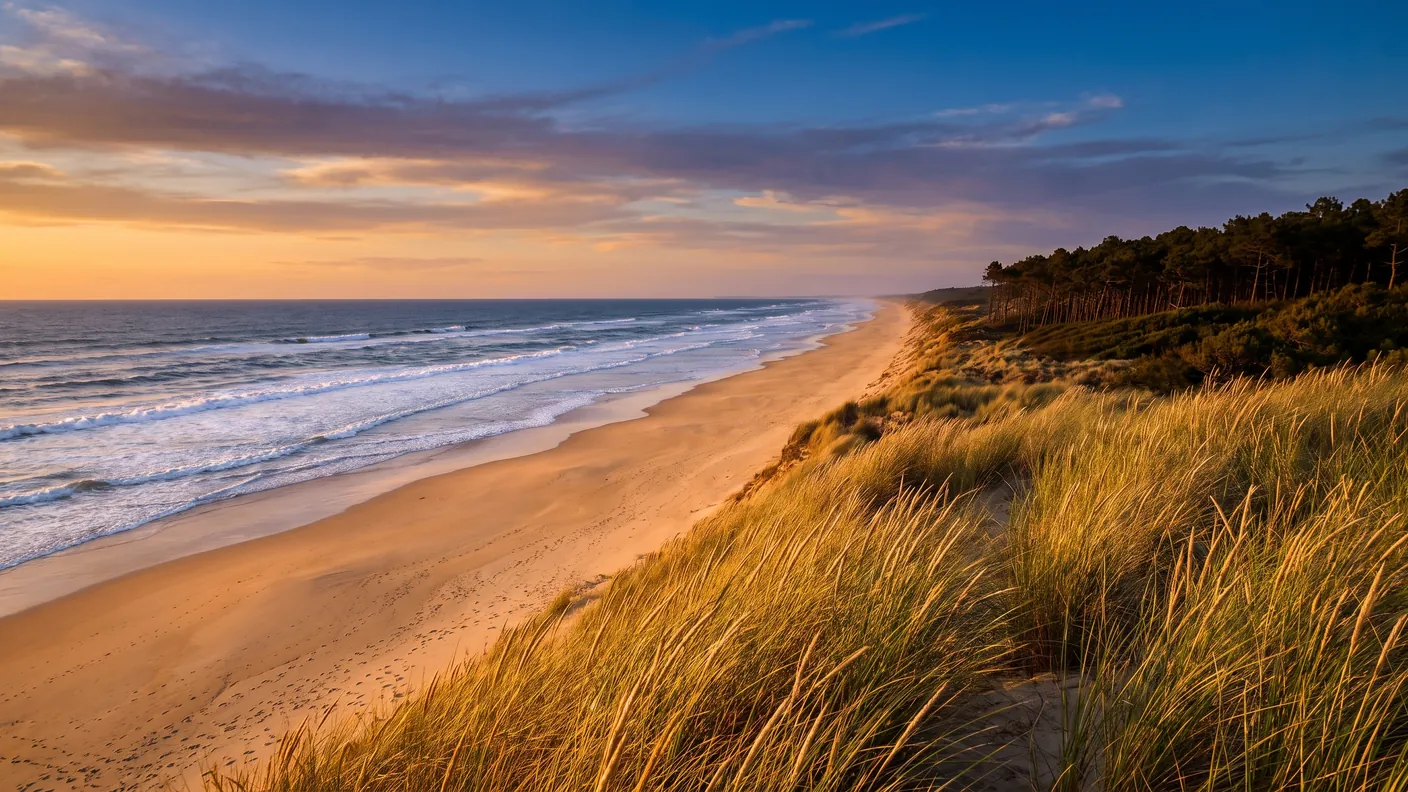
A vanished river, a 52-hectare saltwater lake, and a mecca for the Course Landaise: Vieux-Boucau-les-Bains, the former Port d'Albret, with its untamed island and its beach—which is patrolled from Easter through All Saints' Day—all less than two hours from Bordeaux.
Vieux-Boucau at a Glance
Vieux-Boucau-les-Bains is a resort town on the southern coast of the Landes region, about 154 km from Bordeaux, with a unique history: the Adour River once flowed into the sea here—at the former Port d’Albret—until it was diverted toward Bayonne in late October 1578. Its Gascon name says it all: Lo Bocau Vielh, “the old estuary.” Four centuries after the river was diverted, the resort has brought water back to the village: a 52-hectare saltwater lake, dug between 1975 and 1980, which ebbs and flows with the tides and features a wild island in the middle. Add to that the Joseph-Laudouat arena, a mecca for the Landes-style bull race, and an ocean beach patrolled from Easter through All Saints’ Day. This guide distinguishes fact from fiction—the lake was not created in 1966, and the island has no footbridge—and concludes with the easiest way to get there: a private door-to-door transfer.
Here are the key details to know before you go. Distances are calculated door-to-door from Bordeaux; the fare shown is for a chauffeur service booked at a fixed price in advance, with no unexpected meter charges. The data has been verified using sources such as Wikipedia, INSEE, the Vieux-Boucau city hall, the Landes Atlantique Sud tourist office, and APPA reports; event times and dates are subject to change and should be confirmed on site.
| Landmark | Details |
|---|---|
| Village | Vieux-Boucau-les-Bains (Landes), 1,685 Boucalais (2023) |
| Location | the southern coast of the Landes, between Messanges and Soustons |
| History | Former Port of Albret: The Adour River flowed into it until 1578 |
| Must-See | the saltwater lake and its island, the amphitheater, the ocean beach, the walk around the lake |
| Distance from Bordeaux | about 154 km · about 1 hour and 50 minutes by car (A63) |
Where is Vieux-Boucau located?
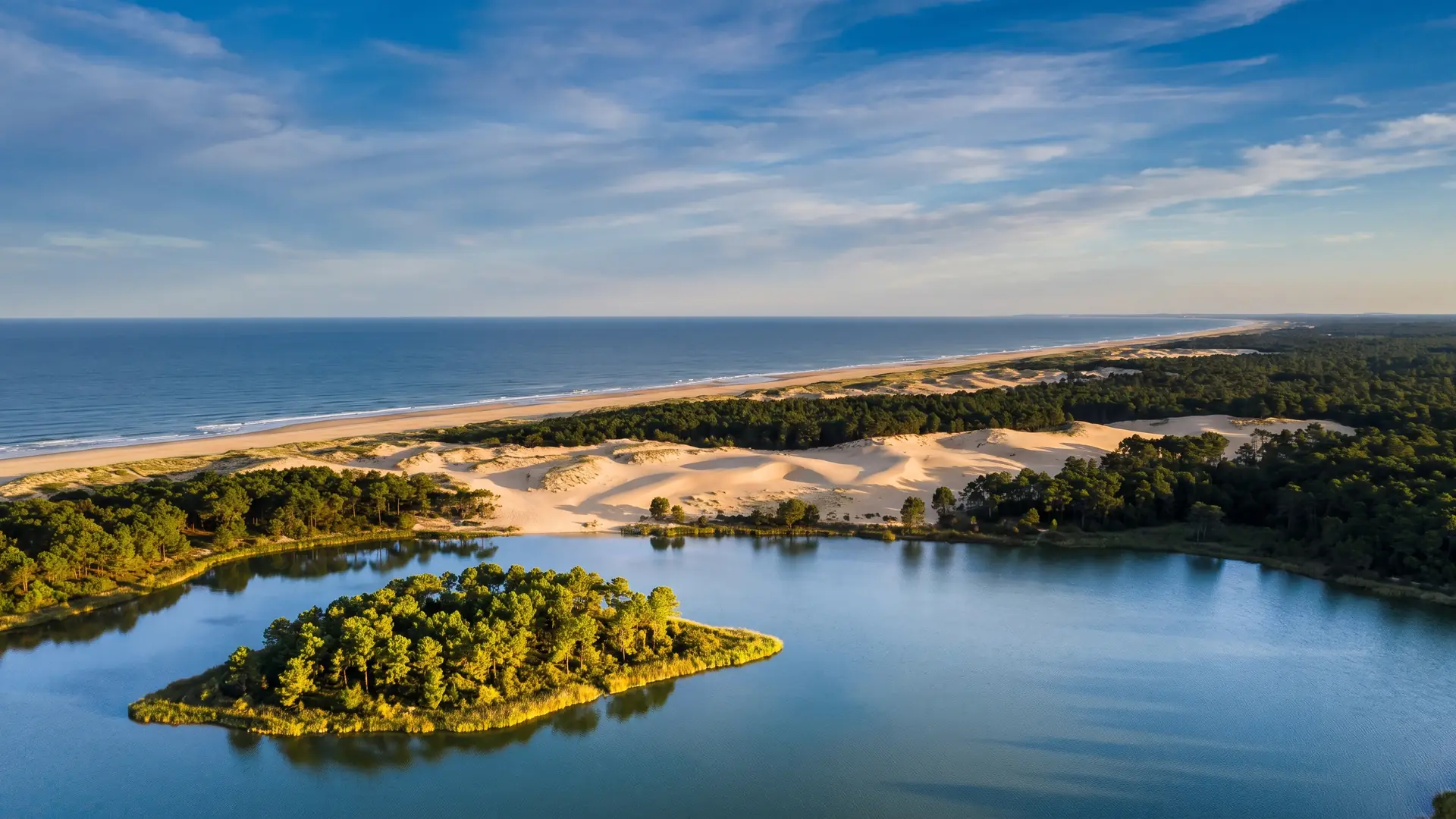
Vieux-Boucau-les-Bains is located on the southern coast of the Landes region, between Messanges to the north and Soustons to the south, about 40 kilometers north of Bayonne. The village has a population of 1,685 (known as Boucalais, up 4.1% since 2017)—and up to 25.000 people in the summer, fifteen times that number: few French towns undergo such a dramatic transformation between January and August. It is part of the Dax arrondissement, the Marensin-Sud canton, and the Maremne-Adour-Côte-Sud (MACS) community of municipalities. Its name encapsulates its history: “boucau” means “mouth” in Gascon, and Lo Bocau Vielh—the old mouth—reminds us that the Adour River once flowed into the sea here before being diverted to Bayonne in 1578. Today, the resort is situated between two bodies of water: the ocean, with its large beach that is supervised from Easter through All Saints’ Day, and the calm, family-friendly Port d’Albret lagoon, which it shares with Soustons. Less than two hours from Bordeaux, it is one of the most well-rounded resorts on the south coast.
Between Marensin and Maremne, in the heart of the southern coast
Vieux-Boucau’s location makes it an excellent base camp. To the north lie Moliets (8.9 km) and the wild mouth of the Courant d’Huchet; Messanges, right next door, extends the beaches. To the south lie Soustons (8.7 km) and its 380-hectare lake, a protected site since 1968; then Hossegor (17 km) and Capbreton, home to the “historic” marine lake and the only port in the Landes region. Inland, Dax and its thermal baths are 37 km away. The Vélodyssée (EuroVelo 1) crosses the village along a continuous greenway—the Léon → Capbreton stage (33.3 km) runs along the lakefront. Trains stop at Saint-Vincent-de-Tyrosse (TER, ~20 km) or Dax (TGV, ~37 km): there’s always a final stretch by road, which explains why many visitors choose the direct private transfer from Bordeaux—a 1-hour-50-minute door-to-door trip via the A63, with no need to change vehicles.
Port d'Albret, the port that the Adour River created and destroyed
Vieux-Boucau was a major river port: the Adour River had flowed into it since the early 14th century, bringing great wealth to Port d'Albret—until the river was diverted to Bayonne by Louis de Foix in late October 1578. The village still bears the mark of mourning in its name. Here is the verified story.
The Adour River appears in the early 14th century
Originally, there wasn't even a village there: the site was just a neighborhood of Messanges, named Le Plecq. According to historiographical tradition, it is a storm, in the early 14th century, which diverts the mouth of the Adour to this point—the river, a notorious wanderer, had already meandered between Capbreton and the coast for centuries. Around the new mouth, a port is emerging that takes the name of the House of Albret: Port of Albret. Its golden age was driven by the trade in cork and the wine, carried by the sea pinasses. Boucalais maritime history would continue to be celebrated for a long time to come: in 1627, the residents of Boucalais outfitted their pinasses to support Louis XIII during the siege of La Rochelle—a military feat that earned the hamlet recognition as a village. And the last local fishing pinasse, the Boucalaise III, will not be disarmed until… 1975, four centuries after the river dried up.
Late October 1578: The river flows toward Bayonne
The finish line for Port d'Albret is 30 km to the south. Bayonne, deprived of its river, obtained from Charles IX as early as 1562 the right to reclaim it; the contract was signed in 1572, and the work—a dike and a canal approximately 1,800 meters across the sands — are led by the engineer Louis de Foix. Late October 1578, a violent storm and a flood of the Nive forced the Adour into the gap: the river “burst through” at Bayonne, at Boucau-Neuf, and would never leave that area again. Port d’Albret, deprived of its mouth, silted up and fell into decline; it would henceforth be known only as "The Old Boucau". The irony of the story: Louis de Foix would later build the Cordouan Lighthouse At the entrance to the Gironde—the route from Bordeaux to Vieux-Boucau connects its two construction sites. And the landscape bears the scar: the Soustons River Today, it flows into the ocean at the exact spot where the now-vanished river once emptied into the sea.
We must appreciate just how exceptional this story is: few French villages owe their existence to a river that no longer flows through them. For about two and a half centuries—a mere blip in a river’s history—the Adour turned this stretch of dunes into an international port, through which cork from the Marensin region and wines from the highlands passed; then the gateway closed, and the village spent four centuries living off coastal fishing, resin, and, finally, sea bathing—hence the “les-Bains” appended to its name with the rise of the seaside resort. The current lakeside trail, with its nine interpretive panels, tells this very story: it is the most historic walk along the southern coast and the best introduction to the village. Here, you’ll understand why the residents of Boucalais speak of their lake as a form of redemption from history—the water returned to the village that had lost it.
The marine lake, the ocean sheltered from the waves
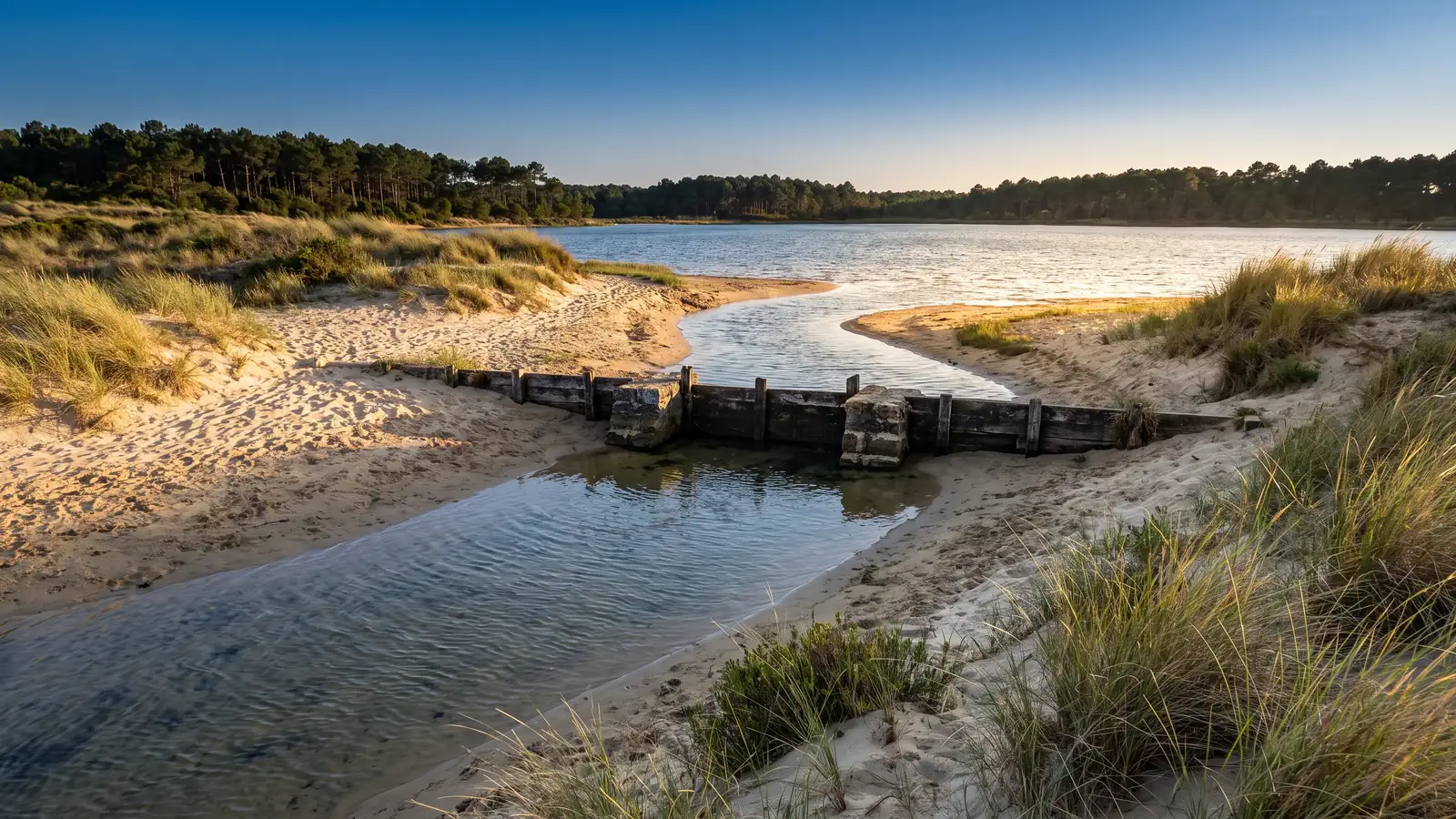
The Port d'Albret marine lake is a saltwater body covering approximately 52 hectares, excavated from 1975 to 1980 under the auspices of MIACA, fed by the ocean with the ebb and flow of the tides via a canal with locks—straddling Vieux-Boucau and Soustons. Tourisme Landes, description of the lake accessed on July 24, 2026. Four centuries after the Adour River was diverted, the resort has reinvented its body of water. Here is the verified history of this rebirth.
A Dutch dredger in the spring of 1975
The lake is a MIACA child — Émile Biasini’s interministerial task force for the development of the Aquitaine coast, which sought to establish new resorts along the coast. Contrary to a widely circulated date, it was not created in 1966: in spring 1975, a Dutch dredger arrives by sea to dig the canal and the basin; in May 1976, the water supply and drainage system is operational, and the lake is already following the rhythm of the tides; construction is nearing completion in 1980. The slogan at the time set the tone: “ The Atlantic and the Pacific: The Ocean Sheltered from the Waves ". The result: about 52 hectares (1.1 km by 1 km) of seawater calm, extended by a lock-equipped canal—shared between Vieux-Boucau (north bank) and Soustons (south bank)—around which the modern resort of Port d'Albret has been built. For families, this is the deciding factor: saltwater and a beach, without the swell or the rip currents.
The way the lake works is worth noting, as it is unique along the Landes coast, along with its “big brother” in Hossegor: with each rising tide, water from the Atlantic rushes in through the lock canal and refreshes the basin; at low tide, the system partially empties—the lake “breathes” twice a day, ensuring clean, temperate saltwater that is warmer than the ocean in summer. The gently sloping, light-colored sandy shores make it a giant natural swimming pool; the pine trees lining the shores provide shade in the afternoon. It is this combination—the living water of the sea and the safety of an enclosed body of water—that the MIACA slogan summed up so well, and which explains why the Port d’Albret resort has become one of the most family-friendly on the Aquitaine coast.
Around the Lake and the Wild Island
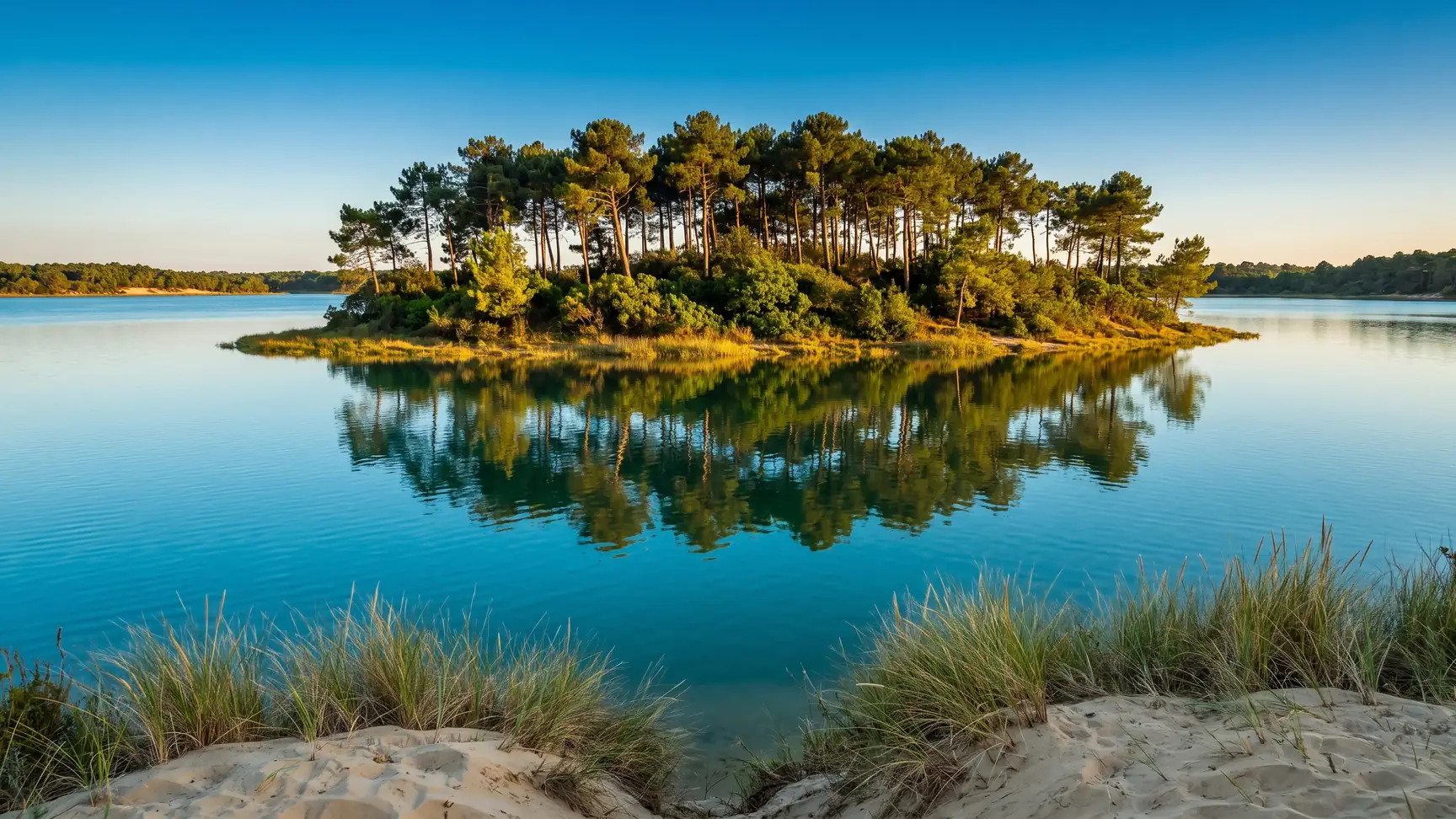
Two experiences sum up the lake. The walk around the lake, first: a 4.2 km loop, marked by 9 panels that tell the story of the vanished Adour River and the creation of the lake—the most informative walk along the south coast; strollers are welcome. Theisland, next: situated in the center of the lake, more than 500 meters long, it is wild and uninhabited — and, contrary to what is sometimes claimed, There is no footbridge leading there: it is accessible only by swimming, paddle boating, canoeing, or stand-up paddleboarding. Its northern half is designated as a nesting sanctuary—approximately 67 species of birds are listed there—while a nature trail runs through its southern section. The lake beach, which is patrolled in July and August, rounds out the family-friendly offerings; pedal boat and paddleboard rental companies take care of the rest. It’s the perfect “anti-ocean”: same saltiness, zero waves.
The Joseph-Laudouat Arena, a mecca for the Course Landaise
Built in 1964, the Joseph-Laudouat Arena has a capacity of about 3,000 and hosts Landes-style bullfights from mid-June to mid-September. It’s a bloodless spectacle worth experiencing in the summer. Here are the verified facts.
Spreaders and Jumpers, Tuesdays and Thursdays in the Summer
The Course Landaise is the quintessential traditional sport of Gascony: facing the Landes cow (not a bull), the “écarteurs” dodge the charge with a feint, and the “sauteurs” leap over it in mid-air—somersaults, backflips, feet together in the beret. No animals are killed: the cows, athletes raised in ganaderias, return year after year, and the seasoned ones know the ropes better than some beginners. At the Joseph-Laudouat Arena—built in 1964, with approximately 3,000 seats—the season runs from mid-June to mid-September: about twenty races, concerts, and shows, with events on Tuesdays and Thursdays at 9:30 p.m. in July and August (approximate prices: 14,50 € for adults, 6,50 € for children ages 7–12, free for children under 7). In August, the Semaine de la Course Landaise caps off the season with the championship for cows without ropes—the pinnacle of the sport, which attracts the best ganaderias from Gascony and fills the stands to the very last seat.
The ocean, Sablères, the lake beach: plenty of choices
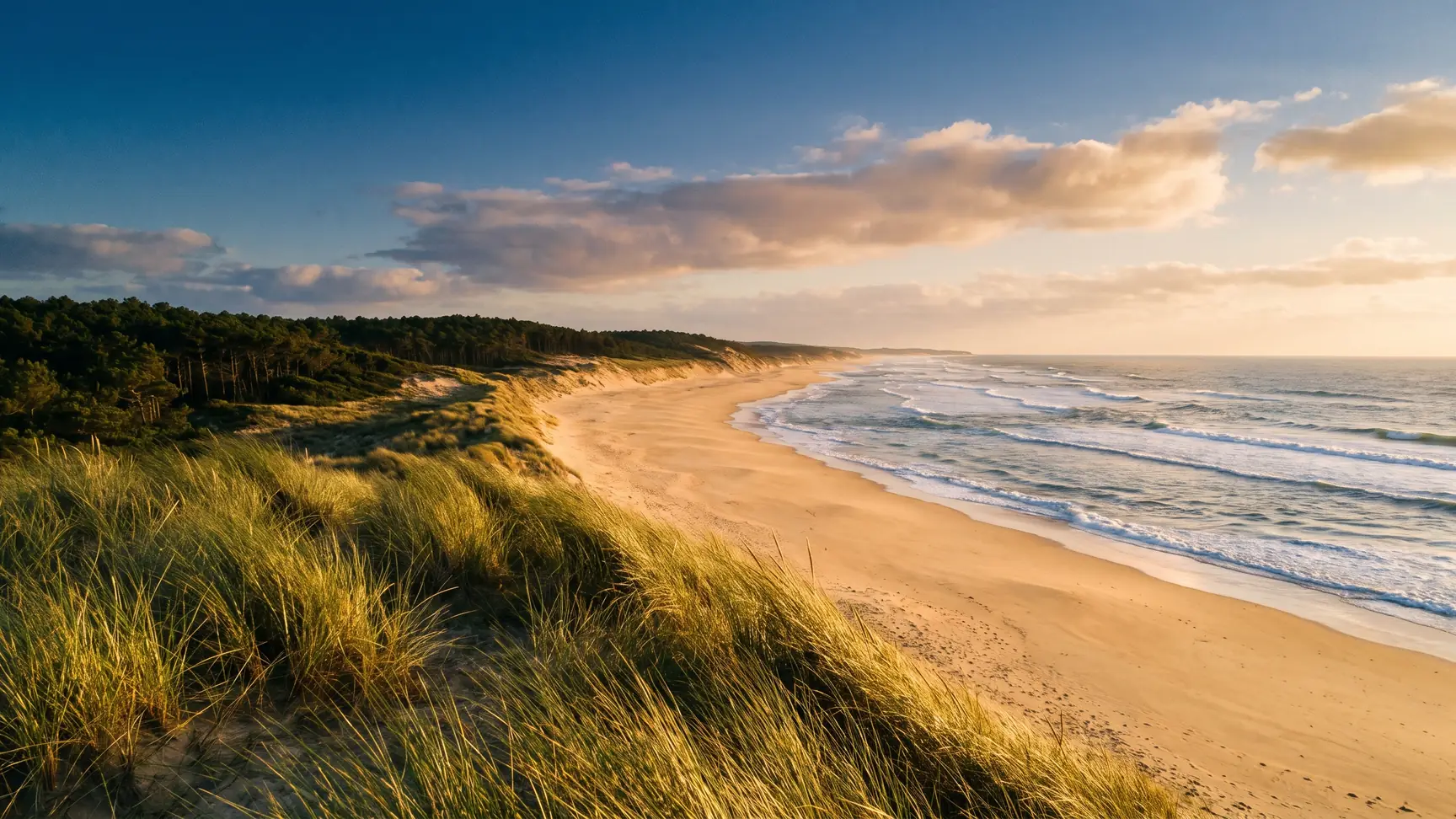
Vieux-Boucau takes care of its beachgoers like few other resorts do: the ocean beach is patrolled from Easter through All Saints’ Day—a rare length of time—(2026 municipal calendar, accessed July 24, 2026), the central beach from April through October, Les Sablères from mid-June to late August, and the lake beach in July and August, with approximately 25 municipal lifeguards. From the Atlantic surf to the calm waters of the lake, there’s something for everyone. Here are the verified details.
From ocean swells to the calm waters of the lake
The facilities are tailored to meet individual needs. On the ocean side, the central beach—located at the village’s entrance—offers a concentration of services and is patrolled from April through October—one of the longest lifeguard seasons on the Aquitaine coast, staffed by approximately 25 municipal lifeguards; Sablères Beach, a wilder stretch toward Messanges, takes over from mid-June through late August (11 a.m.–7 p.m.). On days with rough seas, surf and bodyboard schools gather there; Rip currents, as everywhere along this coast, mean you must stay within the supervised area. And when the ocean gets too rough, the lake beach offers perfectly calm saltwater, supervised in July and August—the ideal family retreat, with pedal boats and paddleboards just a towel’s throw away. This dual ocean-lake offering, a legacy of the MIACA development, is exactly what sets Vieux-Boucau apart from its neighbors: you can choose your water based on your mood that day, without having to get back in the car.
Surfing and Gentle Water Sports
When it comes to surfing, Vieux-Boucau has something for everyone. The ocean offers consistent sandbars that are less crowded than those in Hossegor: local surf schools find ideal learning conditions here—a steady swell that’s rarely intimidating—and the beaches, which are patrolled very early in the season, allow you to start as early as spring break. The lagoon, on the other hand, is the realm of gentle water sports: paddleboarding on the calm, flat water, canoeing toward the island, and family pedal boats—the sailing school and rental shops along the lagoon’s shore have everything you need in the summer. This combination makes the resort an excellent place to improve your skills: you learn the basics on the calm waters of the lake in the morning, then tackle the ocean’s white caps in the afternoon. Experienced surfers, meanwhile, will keep an eye out for the Sablères sandbars or head to the Gravière d’Hossegor, just twenty minutes away—the south coast’s wide range, from family-friendly chop to world-class barrels.
Saint-Clément and a village that has grown fifteenfold
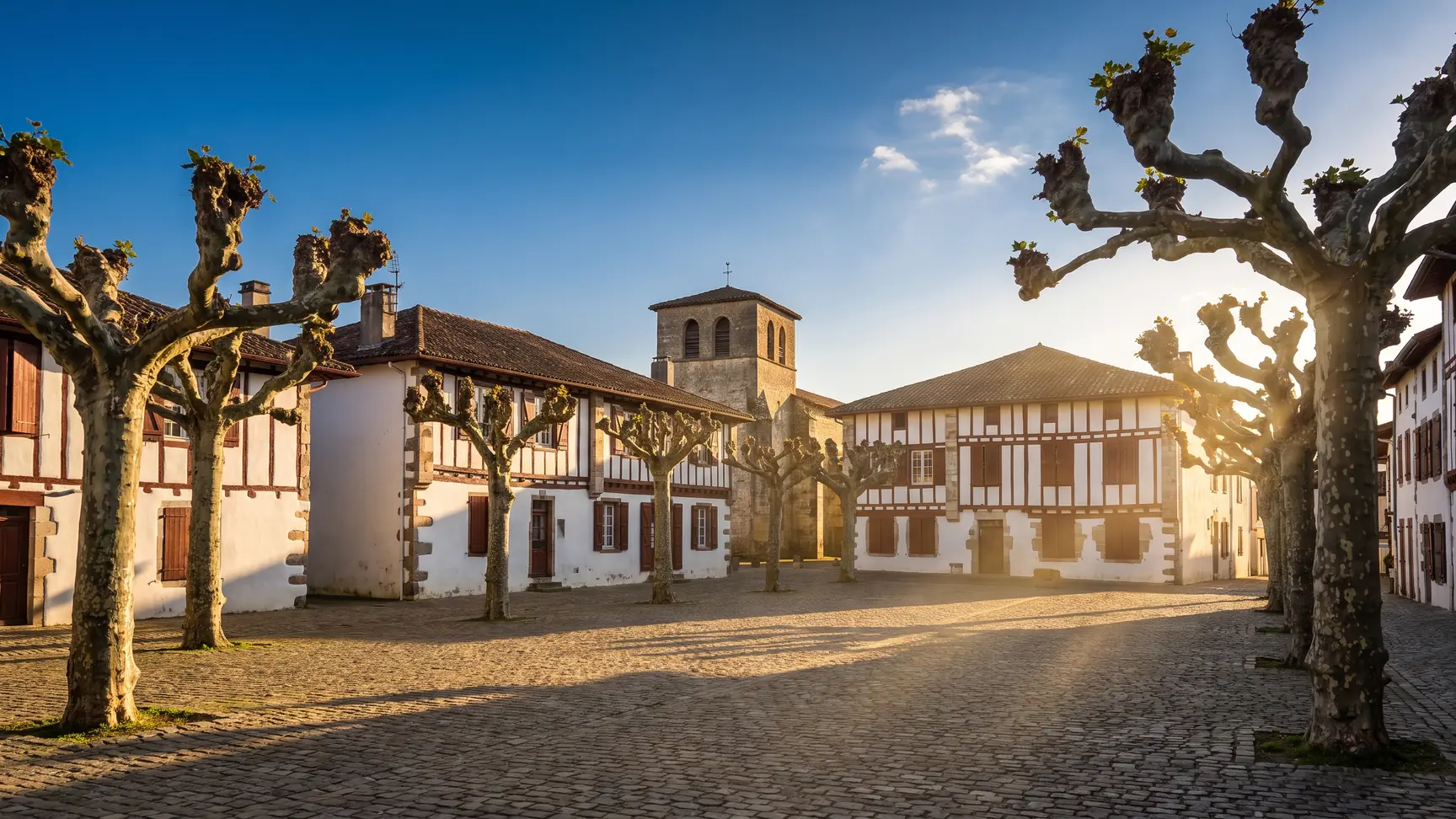
The heart of Vieux-Boucau retains the feel of a Gascon village: a square shaded by plane trees, the Church of Saint-Clément—built in 1632 and restored in the 19the century — and streets whose population swells from 1,685 in the winter to 25.000 in the summer. There are no protected historic monuments here—and this has been verified—but there is an authentic way of life. Here’s what the sources say.
Saint-Clément Church: Four Centuries of Renovations
The Church of Saint-Clément encapsulates the village’s history: built in 1632—at a time when Port d’Albret, already deprived of its river, was reinventing itself as a town of fishermen and resin harvesters— it was restored in 1858, given a bell tower rebuilt in 1864–1865, and then expanded with a south aisle in 1957. A note from a reliable guide: it is neither classified nor listed as a Historic Monument—it appears in the General Inventory (entry IA40001325), which is a documentary record, not a designation of protection; moreover, the municipality has no historic monuments. This in no way detracts from the charm of the building or the square surrounding it, shaded by plane trees, where the market is in full swing during the summer. It is here, between the market break and the late-morning terrace, that the village is most true to itself—Gascon, family-oriented, and unpretentious.
1,685 residents in the winter, 25.000 in the summer
The dramatic demographic shift in Boucalais—where the population increases fifteenfold every summer—tells the story of the entire Landes coast, but nowhere is the contrast as stark as in this village, which has remained compact. In winter, Vieux-Boucau moves at the leisurely pace of a true village: school, food shops, Tuesday and Saturday markets, and waves for local surfers. In the summer, the resort kicks into high gear: a market every day except Sunday, about a hundred vendors, evening markets two nights a week, Landes-style bull runs, and activities at the lake. The town owes this flexibility to the urban planning of the 1970s and 1980s, which concentrated accommodations around the lake (the Port d’Albret resort, shared with Soustons) while preserving the village center. The result: even on August 15, the heart of Vieux-Boucau remains a village where people get around on foot and by bike—and in the off-season, a truly peaceful place, facing deserted beaches that, thanks to lifeguard coverage from Easter through All Saints’ Day, are accessible very early and very late.
1966, the island, the arena: what we often read
Several claims are circulating about Vieux-Boucau that warrant correction, backed by sources—which is the whole point of a reliable guide. The lake’s date, the phantom footbridge, the arena’s name: here’s what’s true and what’s false.
The lake wasn't created in 1966, and the island doesn't have a footbridge
The date 1966 appears on several tourism websites regarding the creation of the marine lake: it is impossible — MIACA, which led the project, has only existed since 1967. The sourced timeline: a Dutch dredger arrived by sea in spring 1975, operational tidal system in May 1976, work completed in 1980. Its area is not “60 or 70 hectares” but about 52 hectares — the original plan called for 70, which is why there was confusion. The island, however, has no bridge: it can only be reached by water (swimming, pedal boat, canoe, paddleboard), and access to its northern half is prohibited to protect nesting areas. As for the charming name “Green Island” that you see here and there, no official source—town hall, tourist office, or departmental council—uses it: we simply refer to it as “the island in the marine lake.”
The arena is called Joseph-Laudouat, and the Adour River first appeared in the 14th century
Other clarifications. The arenas in Vieux-Boucau are called Joseph-Laudouat — the name “La Considère,” which is sometimes repeated, is not supported by any sources here. The Saint-Clément Church is neither classified nor listed: the note currently circulating (“listed in 2001”) actually refers to a church with the same name… in Côte-d’Or—the classic pitfall of misread databases. On the Adour: the river did not “always” flow here before 1578—it did not reach this point until early 14th century (the exact dates vary depending on the tradition), amounting to approximately two and a half centuries of presence; and since the exact date of the breakthrough in 1578 varies depending on the source (October 25 or 28), we write “late October 1578.” Finally, the addition of “ Les-Bains "The mention of the village's name is not dated in any official source: we simply attribute it to the rise in popularity of sea bathing. These are the kinds of nuances that distinguish a verified guide from a copied text."
What is there to do in Vieux-Boucau?
At Vieux-Boucau, you can walk around the marine lake (4.2 km), visit the island by pedal boat or stand-up paddleboard, swim on the ocean side or the lake side, get caught up in the excitement of the Landes-style bullfighting at the Joseph-Laudouat arena on Tuesdays and Thursdays during the summer, and stroll through the market—open every day except Sunday during the season. The resort combines calm waters with ocean swells, Gascon tradition with seaside entertainment—all on the scale of a pedestrian-friendly village. Here, in concrete terms, are the actual, verified activities, along with their days, locations, and dates for 2026.
- The Lake Trail — a 4.2-km loop with 9 interpretive signs about the vanished Adour River; strollers and bicycles welcome
- The island in the lake—accessible only by swimming, pedal boat, canoe, or stand-up paddleboard; nature trail in the south, northern half reserved for birds (~67 species)
- Landes Bullfights — Joseph-Laudouat Arena, mid-June through mid-September, Tuesdays and Thursdays at 9:30 p.m. in July and August (14,50 €/6,50 €, free for children under 7)
- The Beaches — Océane Beach is patrolled from Easter through All Saints' Day; Sablères Beach from mid-June through late August; and the lake beach in July and August
- The Market — Town Hall Square, 8 a.m.–1 p.m.: daily except Sundays from June 15 to September 26, 2026 (~100 vendors); Tuesdays and Saturdays during the off-season
- Night markets — Mondays starting at 7 p.m. at the beach (July 6 – August 24, 2026) and Wednesdays around the lake, featuring arts and crafts (July 1 – August 26, 2026)
- The Sea Festival — June 27, 2026: Mass, mussels and fries, a pinassot boat ride, the Saint John’s Fire
- The Vélodyssée — the Léon → Capbreton leg (33.3 km of greenway) runs along the lakefront
Markets and Events 2026
The Arena Market, Town Hall Square (8 a.m.–1 p.m.), is the most generous on the south coast: every day except Sunday June 15 through September 26, 2026, featuring about 100 exhibitors (Municipal Ordinances 2026, accessed July 24, 2026) — and a winter edition on Tuesdays and Saturdays (~20 vendors). In the summer, it doubles in size in the evenings: Monday Night Market at the beach, on Rue des Goélands (July 6 – August 24), and Wednesday Arts and Crafts Market around the lake (1er July – August 26), the big clearance sale closing the market on the first Sunday in September. Two festivals mark the season: the Sea Festival June 27, 2026 — Mass, mussels and fries, a pinassot boat ride, and the Saint-Jean bonfire — and the Assembly celebrations September 3–6, 2026, when the waiters' race and where we compete in the beret toss — Gascony, as mentioned in the text. Add the Landes bullfights two nights a week, and the summer schedule fills up on its own.
| Activity | Where / When | Good to Know |
|---|---|---|
| Around the Lake | 4.2-km loop, lakeside | 9 panels tell the story of the Adour River that is no more |
| Island in the Lake | Access by water only | pedal boats, canoes, stand-up paddleboards, or swimming; protected northern area |
| Landes Bullfights | Joseph-Laudouat Arena · Tue. & Thu. 9:30 p.m. (summer) | 14,50 € for adults · 6,50 € for children · Free for children under 7 |
| Market | Town Hall Plaza · Every day except Sunday (Summer 2026) | Tuesdays and Saturdays during the off-season |
| Nocturnes | Mondays at the beach · Wednesdays at the lake (July–August 2026) | Artistic Crafts by the Lake |
| Beaches | Océane Easter → All Saints' Day · July–August | ~25 municipal first responders |
What to see nearby: Soustons, Moliets, Hossegor
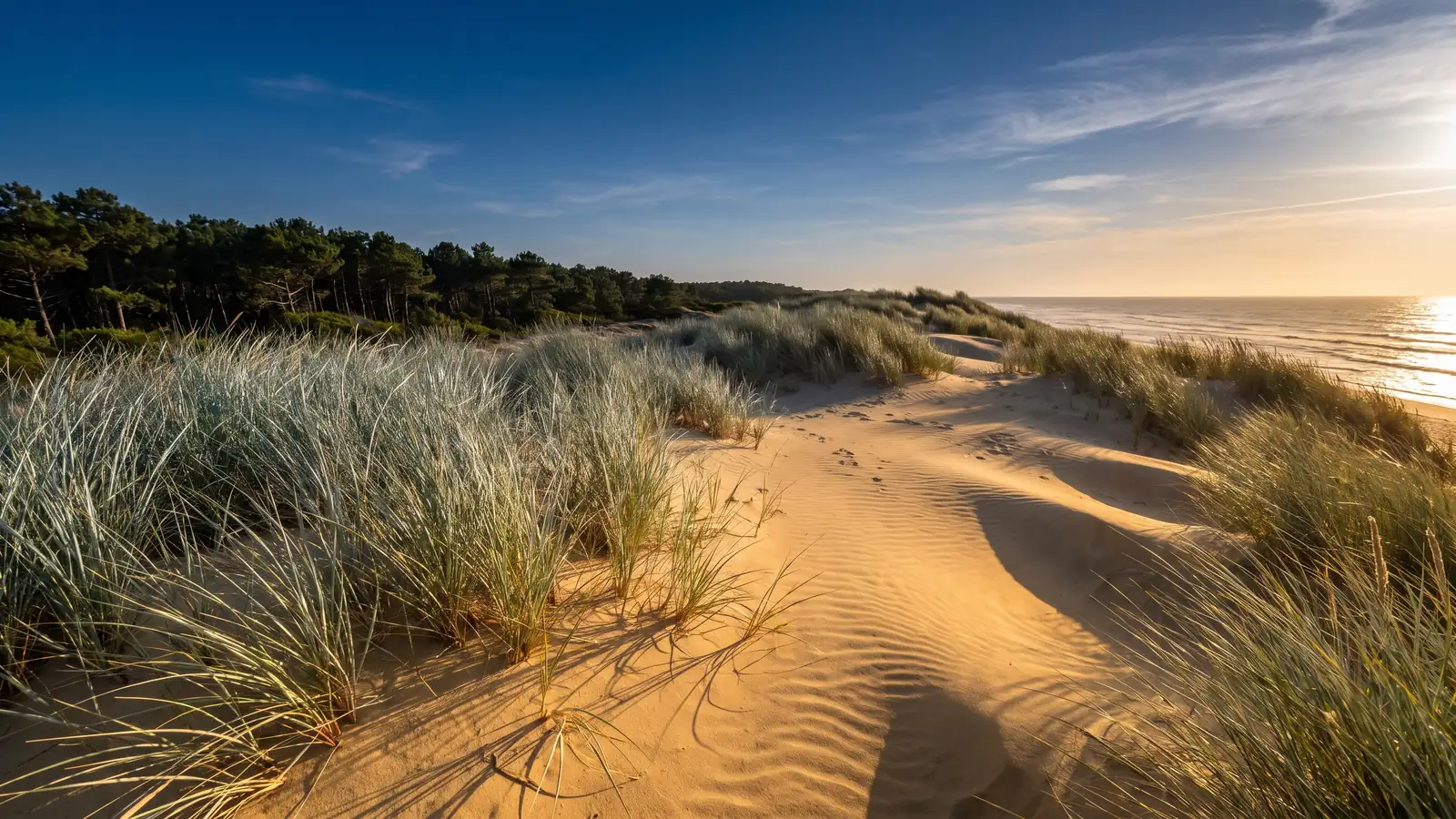
Vieux-Boucau is a great base for exploring: Soustons and its protected lake are 8.7 km away, Moliets and the Courant d'Huchet are 8.9 km away, Hossegor is 17 km away, and Dax and its thermal baths are 37 km away. The Vélodyssée connects all these destinations through the pine forests. Here are the verified distances.
The Soustons Pond and the Huchet Stream
Two freshwater wonders frame the resort. To the south, the Soustons Pond (8.7 km) spans 380 hectares of reed beds and riparian forests—a site that has been protected since 1968, with its shores protected by decree since 1979 and included in the Natura 2000 network of wetlands behind the Marensin dunes: explore the pond on foot or by bike, and enjoy fishing and boat rides. To the north, the Courant d’Huchet (15 minutes away) offers the opposite experience: a jungle-like river protected by a 618-hectare national nature reserve (established in 1981), which you can travel down in a galupe with the boatmen—and whose mouth, on Moliets Beach, is the only one in the Bay of Biscay that has not been stabilized; our Moliets-Plage guide provides details on making reservations. Further south, Hossegor (with its marine lake and Basque-Landes-style villas—see our guide to Hossegor) and Capbreton (with its pier and fish market—see our guide to Capbreton) make for the perfect day trip.
| Destination | Distance / time from Vieux-Boucau | Must-See |
|---|---|---|
| Soustons | 8.7 km · 12 min | the 380-hectare pond, a designated protected site (1968) |
| Moliets-Plage | 8.9 km · 11 min | mouth of the Huchet River, golf, Galupes |
| Hossegor | 17 km · 18 min | Marin Lake, Basque-Landes Villas, La Gravière |
| Capbreton | ~19 km · 20 min | L'Estacade, the only port in the Landes region, sales at the dock |
| Saint-Vincent-de-Tyrosse | 20.3 km · 25 min | Bordeaux–Hendaye TER Station |
| Dax | 36.8 km · 39 min | Hot Spring, Thermal Baths, Amphitheater |
When should you visit Vieux-Boucau?
The ocean beach is patrolled from Easter through All Saints' Day—one of the longest seasons on the coast—Landaise bull runs liven up Tuesdays and Thursdays in July and August, and the daily market runs from June 15 to September 26: the heart of the Boucalaise year runs from April to October. Here is the verified calendar to help you choose your time to visit.
| Season | What's in Store for You |
|---|---|
| Spring (Easter–June) | Ocean beach already patrolled, peaceful walk around the lake, Sea Festival on June 27, 2026 |
| Summer (July–August) | Daily market (~100 vendors), evening markets on Monday and Wednesday, Landes-style bullfights on Tuesday and Thursday at 9:30 p.m., supervised lake beach |
| September | Assembly Festival (Sept. 3–6, 2026: waiters’ competition, beret toss), street market, the ocean still calm |
| Winter | Authentic village, market on Tuesdays and Saturdays, deserted beaches, waves for experienced surfers |
Seasonal Tip
To experience Vieux-Boucau at its best, aim for the peak of the season. Late June combines the Sea Festival, a lifeguard-patrolled beach, and a village that’s still laid-back; early September adds the Assembly Festivities—waiter races, beret tosses, and bodegas—in golden light, with the ocean at its perfect temperature. July and August remain the peak family season: a market every morning, a supervised lake, pedal boats, and bullfighting in the arena two evenings a week—but this is also when the village nears its peak of 25.000 visitors, with parking to match. Finally, in winter, the resort gives the village back to the locals: deserted beaches as far as the eye can see, a walk around the lake in the mist, and a scaled-back market—a real charm for those seeking peace and quiet. In every season, lifeguard supervision from Easter through All Saints’ Day makes the main beach one of the most “accessible” on the Aquitaine coast—a selling point few resorts can match.
How much does the trip cost, and how do I get there?
A private transfer from Bordeaux to Vieux-Boucau costs 349 € in a sedan (1–3 passengers), a fixed price provided in advance, for approximately 154 km and a 1-hour, 50-minute drive via the A63. If you don’t have a car, the TER stops at Saint-Vincent-de-Tyrosse (20 km) and the TGV at Dax (37 km)—there’s always a final leg by road. Here’s an honest comparison of the options.
By car from Bordeaux
The route is crystal clear: the Bordeaux bypass, the A63 due south through the Landes Forest, then along the Marensin departmental roads toward the coast — about 154 km, or 1 hour 50 minutes to 1 hour 55 minutes excluding peak summer periods; on Saturdays in July and August, traveling through the resorts can add an extra quarter of an hour. In chauffeur service, the trip is door-to-door—from your home, Mérignac Airport, or Saint-Jean Train Station to the vacation rental, the lake, or the arena—with luggage, bikes, and paddleboards already loaded, so you don’t have to worry about finding a parking spot when you arrive: a real issue in Port d’Albret in August. The price is set and announced before the race: 349 € for a sedan; a 7-seat van is available upon request for families. And for a day trip—to Hossegor, the Huchet Current, or Bayonne—the driver will take you from one stop to the next as you wish, while you enjoy the scenery.
Without a car: Tyrosse or Dax, then by road
Vieux-Boucau does not have no train station. The Bordeaux–Dax–Hendaye TER stops closest to Saint-Vincent-de-Tyrosse (20.3 km, ~25-minute drive), and the nearest TGV station is Dax (36.8 km, ~39 minutes); in both cases, you’ll need to finish the trip by car—public transportation options to the coast are still limited and seasonal. For travelers with a lot of gear—family, paddleboards, bikes—the smoothest option is still the end-to-end private transfer From Bordeaux, or take the TGV to Dax and then hire a driver for the last third of the trip. Once there, the car becomes unnecessary: the village is pedestrian-friendly, the lake and the ocean are within walking distance, the Vélodyssée bike path connects neighboring resorts, and you can shop at the markets with a basket in hand. That’s the whole philosophy of the resort: you plan your way there, and you experience your stay on foot.
| Option | Duration | What You Need to Know |
|---|---|---|
| Private Chauffeur (Door-to-Door) | ~1 hr 50 min | 264 € (1–3 passengers), fixed price, 7-passenger van available upon request |
| Personal car | ~1 hr 50 min | Take the A63 to Marensin; parking is difficult in August |
| TER Bordeaux → St-Vincent-de-Tyrosse + drive | ~1 hr 20 min + 25 min | 20 km remaining without convenient public transportation |
| TGV from Bordeaux to Dax + drive | ~1 hr + 39 min | 37 km remaining; limited taxis and shuttles |
Frequently Asked Questions
Where is Vieux-Boucau located?
Vieux-Boucau-les-Bains is a resort village on the southern coast of the Landes region, between Messanges and Soustons, about 40 kilometers north of Bayonne. It has a population of 1,685 (2023)—up to 25.000 in the summer—and is part of the Maremne-Adour-Côte-Sud community of municipalities. From Bordeaux, it is about 154 km and a 1-hour-50-minute drive via the A63. Its Gascon name, Lo Bocau Vielh (“the old estuary”), recalls that the Adour River once flowed into the sea here before it was diverted toward Bayonne in 1578.
What is Port d'Albret?
This is the historical name of Vieux-Boucau—and that of the modern station shared with Soustons. The Adour River, diverted by a storm in the early 14th century, once flowed into the sea here: a port for the cork and wine trade, named after the House of Albret, flourished around its mouth. In late October 1578, work led by Louis de Foix redirected the river to Bayonne: the port silted up and became known as “Le Vieux Boucau.” The current marine lake (1975–1980) has revived the name.
Is the marine lake in Vieux-Boucau natural?
No—and it’s a feat of engineering. The saltwater lake at Port d’Albret (~52 hectares, straddling Vieux-Boucau and Soustons) was excavated under the auspices of MIACA: a Dutch dredger arrived by sea in the spring of 1975, a canal with locks became operational in May 1976, and construction was completed in 1980. Seawater is replenished there with the tides, hence its nickname at the time: “the ocean sheltered from the waves.” The date “1966” cited on some websites is impossible—the MIACA did not yet exist.
How do I get to the island in the saltwater lake?
Accessible only by water: by swimming, pedal boat, canoe, or stand-up paddleboard—contrary to what is sometimes reported, there is no footbridge leading to the island. The island, more than 500 meters long, is wild and uninhabited; access to its northern half is restricted to protect nesting areas (approximately 67 bird species have been recorded), while a nature trail runs through its southern half. Pedal boat and stand-up paddleboard rental companies along the lakeshore make it possible to make an impromptu trip across the lake in the summer, with a lifeguard-monitored beach nearby.
How much does a trip from Bordeaux to Vieux-Boucau cost with a
chauffeur service?
A private transfer from Bordeaux to Vieux-Boucau costs 349 € in a sedan (1–3 passengers), with a fixed price provided before the ride—no meter and no surprise surcharges. The trip covers approximately 154 km in 1 hour and 50 minutes via the A63, door-to-door: from your home, Mérignac Airport, or Saint-Jean Train Station to your accommodation, the lake, or the arena. A 7-passenger van is available upon request for families and groups, including paddleboards and bicycles.
What is there to do in Vieux-Boucau?
Take a walk around the saltwater lake (a 4.2-km loop with 9 interpretive signs), visit the island by pedal boat or stand-up paddleboard, swim on the ocean side (supervised from Easter through All Saints’ Day) or on the lake side (July–August), experience the excitement of Landes-style bullfighting at the Joseph-Laudouat Arena (Tuesdays and Thursdays at 9:30 p.m. in the summer), stroll through the daily market (except Sundays, from June 15 to September 26, 2026), enjoy the late-night market hours on Mondays and Wednesdays, and cycle along the Vélodyssée toward Moliets or Capbreton.
What is the Course Landaise?
A traditional Gascon sport: facing a Landes cow (not a bull), the “écarteurs” dodge the charge with feints, and the “sauteurs” leap over it in mid-air—no animals are killed, and the cows return year after year. Vieux-Boucau is a major hub for this sport: the Joseph-Laudouat arena (1964, ~3,000 seats) hosts races from mid-June to mid-September and the Landais Race Week in August.
On what day is the Vieux-Boucau market held?
During the 2026 season (June 15–September 26), the Arènes Market is held every day except Sunday at Place de la Mairie, from 8 a.m. to 1 p.m., with about 100 vendors. During the off-season, it takes place on Tuesdays and Saturdays (~20 vendors). In the summer, two evening markets are added: on Mondays starting at 7:00 p.m. at the beach (July 6–August 24, 2026) and on Wednesdays around the lake, dedicated to arts and crafts (July 1–August 26, 2026), plus the big flea market on the first Sunday in September.
Which beach should you choose at Vieux-Boucau?
Depending on your mood: the large ocean beach for big waves—patrolled from Easter through All Saints’ Day, with a rare range of wave heights, by about 25 municipal lifeguards (central beach from April through October, Sablères from mid-June to late August)—or the marine lake beach for perfectly calm saltwater, patrolled in July and August, ideal for young children. On days with heavy swells, the lake is the resort’s trump card: same saltiness, zero waves, and pedal boats and paddleboards just a towel’s length away.
What is the closest train station to Vieux-Boucau?
Vieux-Boucau does not have a train station. The Bordeaux–Dax–Hendaye TER stops at Saint-Vincent-de-Tyrosse (20.3 km, ~25 minutes by car), and the nearest TGV station is Dax (36.8 km, ~39 minutes). In both cases, there is a stretch of road without convenient public transportation—most visitors without a car choose a direct private transfer from Bordeaux (154 km, ~1 hr 50 min, 349 € in a sedan) or the TGV to Dax followed by a chauffeured transfer.
When is the best time to visit Vieux-Boucau?
From April through October for supervised ocean swimming (from Easter through All Saints' Day—one of the longest seasons on the coast), in July and August for the daily market, evening events and Landes-style bullfights on Tuesdays and Thursdays, late June for the Sea Festival (June 27, 2026), early September for the National Assembly Festival (September 3–6, 2026) and its waiters’ race. The off-peak periods offer the best balance: a bustling village, swimmable ocean, and golden light on the lake.
Does Vieux-Boucau have any historic monuments?
No—and this has been verified in the Mérimée database: the municipality has no listed or registered historic monuments. The Church of Saint-Clément (1632, restored in 1858, bell tower from 1864–1865) appears only in the General Inventory, a documentary record with no protective status; the note circulating that it was “listed in 2001” refers to a church of the same name in Côte-d’Or. Boucalais’s heritage lies elsewhere: in the village’s name, the memory of Port d’Albret, the walk around the lake and its nine informational signs, and the living tradition of the Course Landaise.
Further Reading
- The nearby wild river: see the Moliets-Plage Guide (mouth of the Courant d'Huchet and golf course, 9 km away)
- The Surfing Capital: See the Hossegor Guide (marine lake, Basque-Landes-style villas, 17 km away)
- The only port in the Landes region: see the Capbreton Guide (the pier, the "gouf," and the market at the dock, 19 km away)
- The spa town: see the Dax Guide (Fontaine Chaude, the arena, and the peloid spa, 37 km away)
- Book your trip: book online or browse all our destinations
Sources and References
- Wikipedia — Vieux-Boucau-les-Bains — Population: 1,685 (2023); Lo Bocau Vielh = the old mouth; the Soustons stream flows into the river at the exact location of the Adour’s former mouth
- Vieux-Boucau Town Hall — history of Le Plecq and Port d'Albret; pinasse boats from 1627; 4.2-km lake loop with 9 information panels; beach patrol; ×15 in the summer
- Wikipedia — Adour — meandering of the river; breach led by Louis de Foix; the Adour was diverted to Bayonne in late October 1578; Charles IX 1562, contract 1572, canal ~1,800 m
- APPA — History of Port d'Albret — Timeline of the marine lake: Dutch dredger in the spring of 1975, tidal operations in May 1976, completion in 1980, under the MIACA; Boucalaise III decommissioned in 1975
- OT Landes Atlantique Sud — marine lake ~52 ha; Joseph-Laudouat Arena; markets in 2026 (daily June 15–September 26, evening markets on Mondays at the beach and Wednesdays at the lake); Vélodyssée
- Landes Tourism — an island in the lake accessible only by water; the northern half is a protected nature reserve (~67 bird species); Landes-style bullfights Mon./Thu. at 9:30 p.m., ticket prices; Sea Festival on June 27, 2026
- POP Mérimée — Saint-Clément Church — church built in 1632 (restored in 1858, bell tower built in 1864–65) listed in the General Inventory — no historic monuments classified or listed in the municipality
Article updated in July 2026.
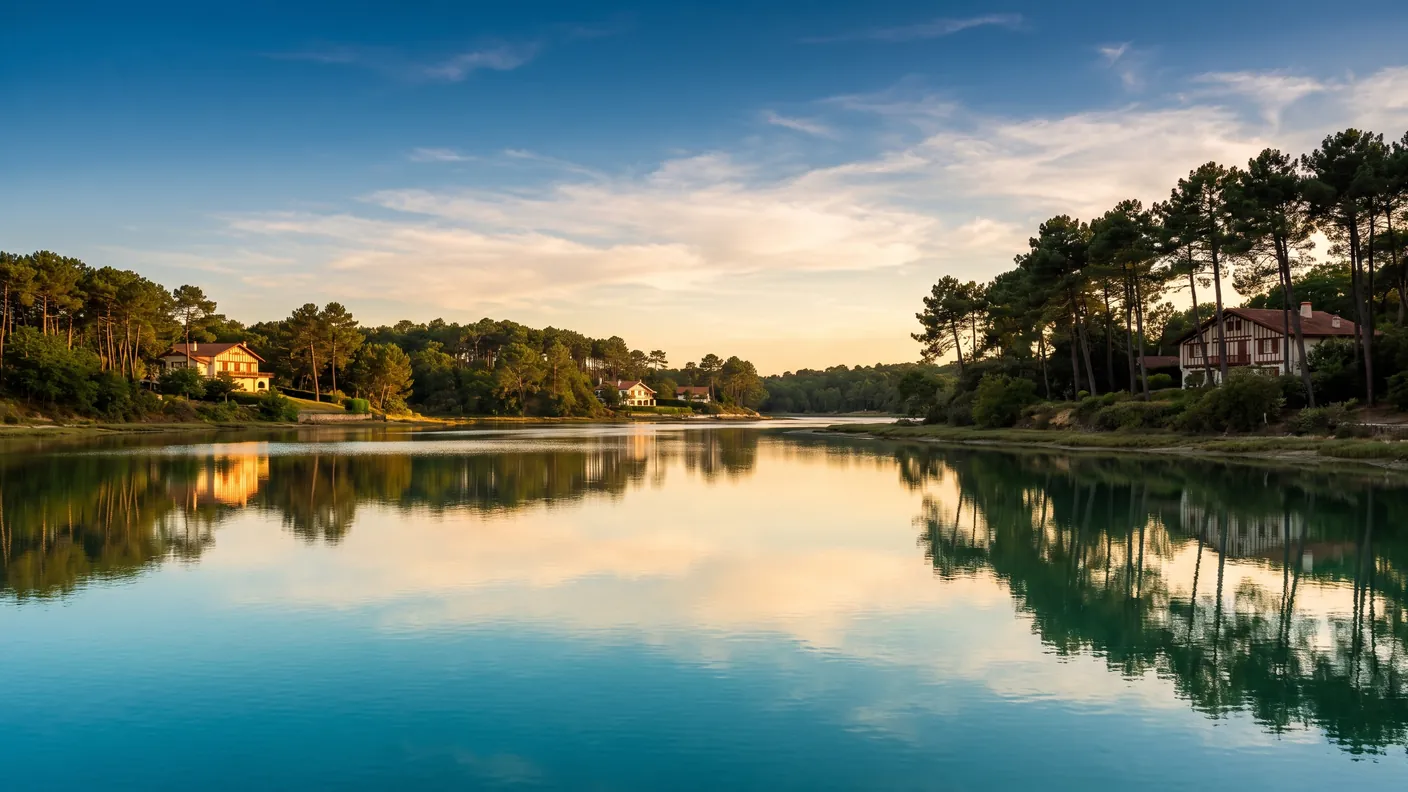
On the way to the old Port of Albret
Direct transfer from Bordeaux (~1 hr 50 min via the A63) to Vieux-Boucau, with its marine lake and ocean beach—from your home, from your home, the airport, or the train station to the residence, the lake, or the arena, including luggage and paddleboards, followed by an optional visit to Hossegor or the Courant d’Huchet.