Bordeaux to Capbreton: harbour, Gouf and timber pier
An underwater canyon 300 meters from the beach, an imperial pier, and the only port in the Landes region: Capbreton, with its wharf market dating back to Colbert, its wooden and stone lighthouse, and its eight beaches—1 hour and 58 minutes from Bordeaux via the standard route.
Capbreton at a Glance
Capbreton is the only port in the Landes department, located about 167 km south of Bordeaux—a town of 9,184 residents nestled on the edge of a unique geological phenomenon: the gouf, an underwater canyon that begins 300 meters from the shore and plunges to a depth of 3,500 to 4,000 meters. Its oak breakwater, commissioned by Napoleon III in 1858, its fish market without an auctioneer—a privilege inherited from Colbert—and its history as the “city of a hundred captains” make it the most distinctive stop on the southern coast. This guide distinguishes fact from myth: the Adour River did not leave Capbreton “in 1578” but as early as 1390; the current estacade does not date from 1858; and Santocha is the birthplace of Capbreton surfing—not French surfing. We’ll wrap up with the easiest way to get there: a private door-to-door transfer.
Here are the key details to know before you go. Distances are calculated door-to-door from Bordeaux; the fare listed is for a private driver reservation at a fixed price provided in advance, with no unexpected meter charges. The information has been verified using Wikipedia, the Mérimée database, INSEE, the city hall, the Port of Capbreton, and the MACS community of municipalities; event times and dates are subject to change and should be confirmed on site.
| Landmark | Details |
|---|---|
| City | Capbreton (Landes), 9,184 residents (2023) |
| Location | the southern coast of the Landes region, across from Hossegor, 23 km from Bayonne |
| Singularities | The only port in the Landes · Le Gouf (underwater canyon) · L'Estacade |
| Must-See | the breakwater and its lighthouse, the market at the pier, the Santocha, Saint-Nicolas Church |
| Distance from Bordeaux | 167 km · 1 hr 58 min without traffic (A63) |
Where is Capbreton located?
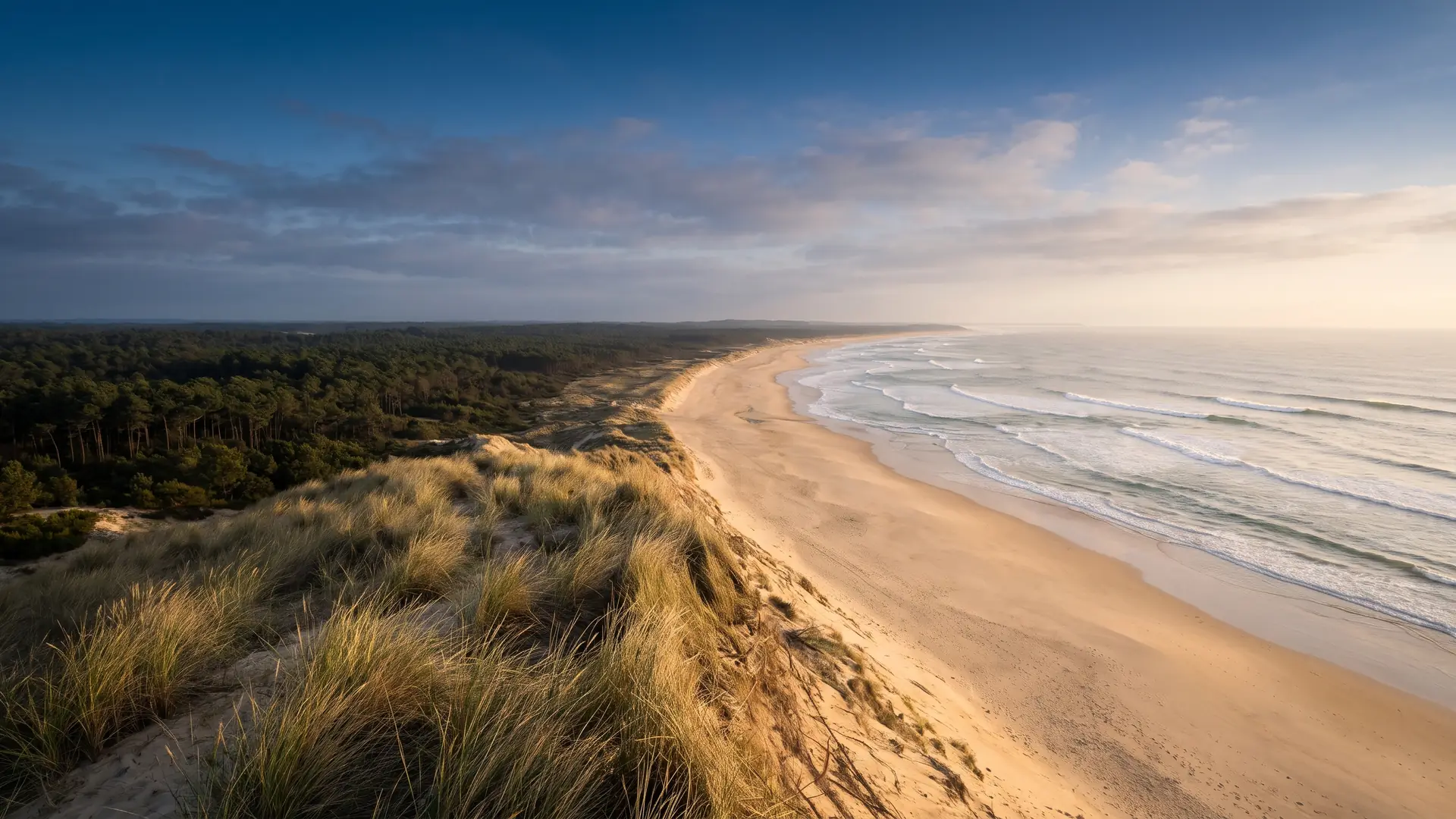
Capbreton is located on the southern coast of the Landes region, across from Soorts-Hossegor—the two towns are separated only by the Boudigau Canal—23 km north of Bayonne and about 167 km from Bordeaux. With 9,184 residents Source: INSEE, municipality 40065 (the Capbreton native, +4.7% since 2017), it is the most populous city in this string of seaside towns in southern Landes. It is part of the Dax district, the Pays Tyrossais canton, and the community of municipalities Maremne, Adour, South Coast (MACS)—which, incidentally, manages its port and pier. Its geography is a textbook example: the city revolves around its port, the only one in the department, carved out at the confluence of the Boudigau and Le Bourret, and facing an invisible abyss—the gouf, this underwater canyon that begins practically at the end of the breakwater. Located 1 hour and 58 minutes from Bordeaux according to the buoy reference, Capbreton features a fishermen’s wharf, a historic pier, and eight sandy beaches.
Across from Hossegor, at the gateway to the Basque Country
The sister city, Hossegor, is less than 5 km away—you can get from one to the other by crossing the Boudigau, and both spots share the same pine-lined setting and the same waves: the famous spot at the North, on the Hossegor side, owes its rough-weather waves to the Capbreton Gulf; see our Hossegor Guide . To the south, Labenne (6 km) is home to the nearest TER station and the Orx Marsh Nature Reserve; followed by Bayonne (23 km, ~21 minutes) and the entire Basque Country—Biarritz is half an hour away. To the north, Vieux-Boucau, Moliets, and the Huchet Channel round out the coastline. Capbreton is thus an ideal base for exploring the region: you stay right on the edge of a bustling harbor, and from there you can venture out to the waves, the marshes, the bullrings, and the Basque restaurants. Since the town no longer has a train station, the private transfer Door-to-door travel from Bordeaux is the easiest option—1 hour and 58 minutes without traffic via the A63, including luggage and surfboards.
The Gouf, an underwater canyon at the end of the beach
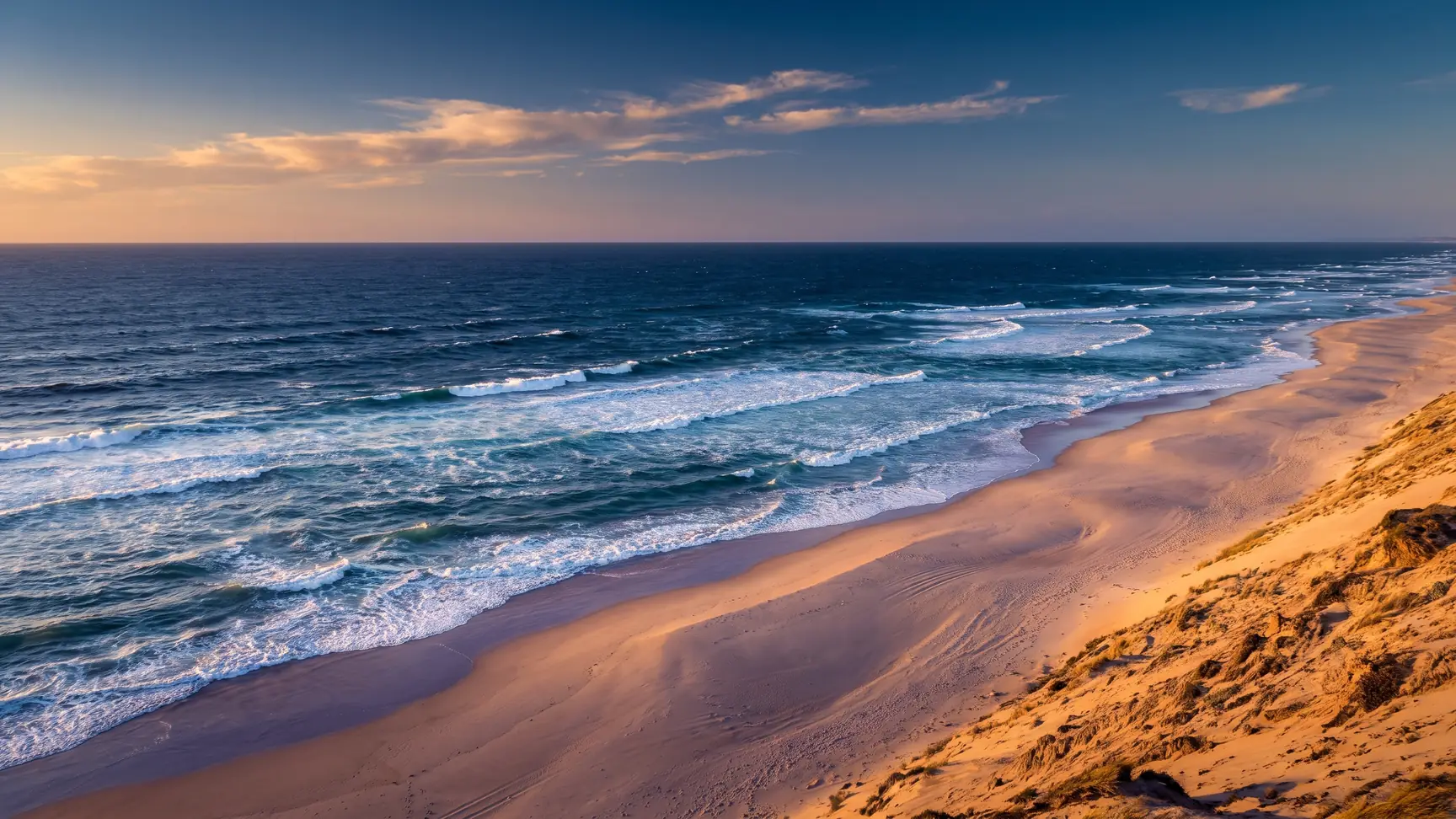
The Capbreton Canyon is an underwater canyon approximately 300 km long, the head of which begins 300 meters from the shore.[4] It then extends to the abyssal plain off the coast of the Bay of Biscay. This deep channel near the coast contributes to the unique character of the harbor and the local waves.
300 meters from the shore, at a depth of 50 meters
The figures, verified by the town hall and Ifremer, are staggering: 300 meters from the beach, where the sandbars end, the seabed already drops to 50 meters; at 1,500 meters, it reaches 100 meters; the canyon then winds for about 300 km beneath the Bay of Biscay, emerging at a depth of 3,500 to 4,000 meters into the abyssal plain—it is one of the very few underwater canyons in the world to begin so close to a beach. The word “gouf” is attested as early as 1491, in a report written under Charles VIII, and the canyon was first mapped in 1815; but it wasn’t until the eight Ifremer expeditions (1993–2004, aboard the Thalia and Suroît) that the first complete 3D maps became available, as late as 2007. As early as 1875, Marquis Léopold de Folin was already surveying unknown abyssal fauna there—including an invertebrate never observed elsewhere, named Bathysiphon capbretonensis.
What the Abyss Changes on the Surface
The gouf is not just a curiosity on a nautical chart: it dominates the coast. In rough weather, the sea above the canyon remains a gentle swell, without breaking — sailors found a sheltered anchorage, a shelter literally carved out of the ocean, which kept the channel navigable after the Adour River dried up. It channels the swell toward the nearby sandbars: it is this shelter that creates “ the North ", the legendary big-wave spot in Hossegor. It brings you closer to the shore of the deep-sea species — tuna, cephalopods, sunfish, and diving cetaceans that can be observed during two-hour boat trips (four species of dolphins and pilot whales regularly frequent the area). After all, it’s so unstable, due to constant landslides, it is impossible to lay any undersea cables there. At the MOP, the Maison de l'Oralité et du Patrimoine, housed in a 16th-century residence. Here, you can virtually “dive” into the abyss with 3D glasses—the best way to see it without getting wet.
The only port in the Landes region and its sales at the dock
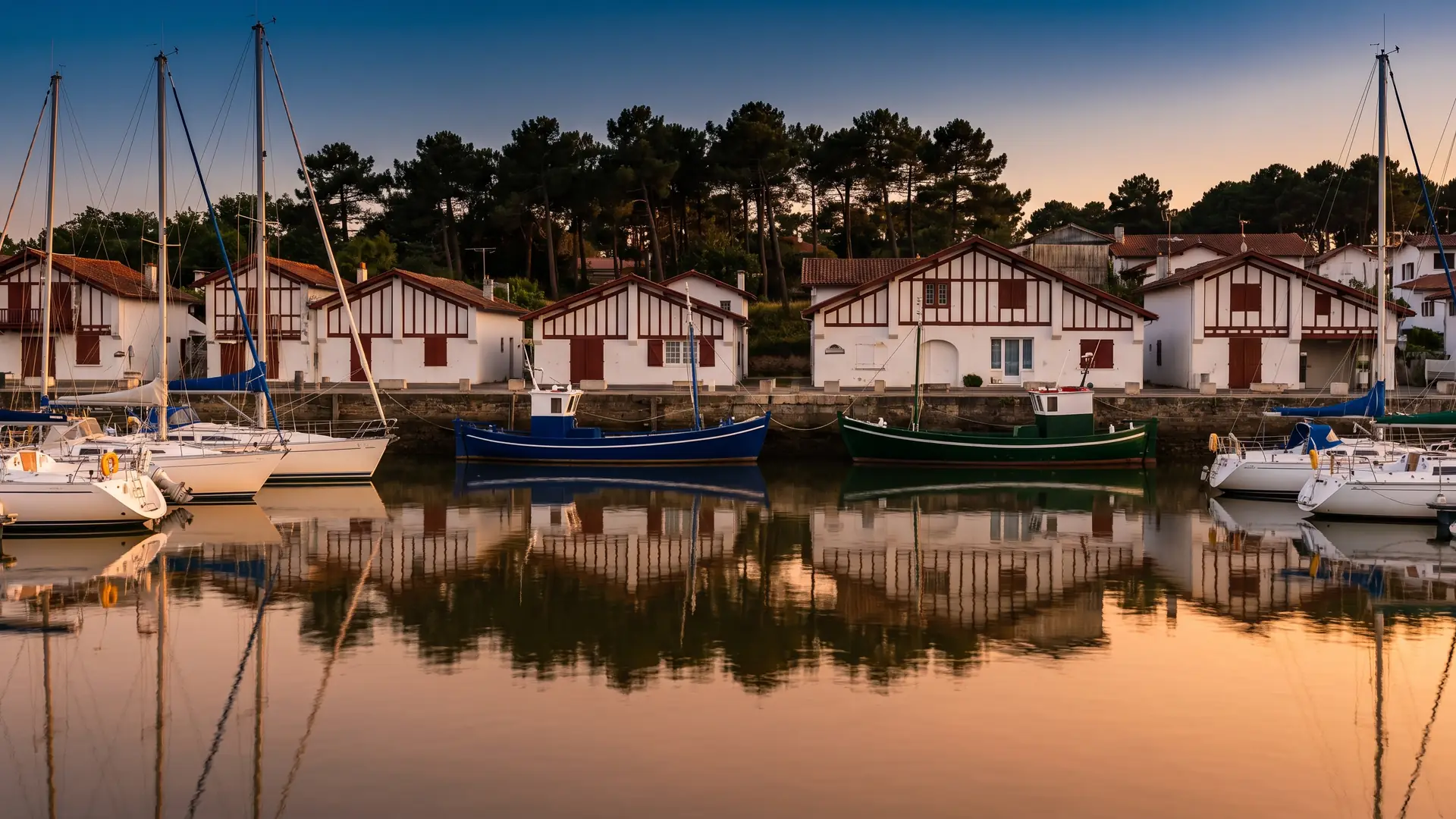
Capbreton is the only marina with direct access to the ocean in the Landes department: it has approximately 950 berths and 19 small-scale fishing vessels.[5] Fishermen sell their catch directly at the dock, without going through an auction. The harbor remains the vibrant heart of the town all year round.
950 moorings, five docks, 19 fishing boats
Between Arcachon and Anglet, there is only one port opening along the coast: here. The port of Capbreton features about 950 rings (boats up to more than 20 meters) divided into five pools — Bonamour, Bourret, Corsaires, Pêcherie, and Pompidou —, managed by the MACS intermunicipal community. The fishing is still active there: 19 small-scale operations, gillnet fishermen, trap fishermen, and longline fishermen all work the waters of the gouf, whose abundance of deep-sea species makes for an unusual array of goods on the docks. The port owes its existence to the confluence of the Boudigau — a 24.5-km coastal river connected to Lake Hossegor — and the Bourret, with its navigable channel leading to the Gouf itself: without the canyon that breaks the swell and limits silting, Capbreton’s maritime history would have ended with the departure of the Adour. One figure sums up the town’s maritime DNA: nearly one ring for every ten residents — a ratio that no other town on the Aquitaine coast comes close to, and which is evident in the urban landscape, where the masts rise above the rooftops.
Direct sales at the dock: a privilege granted by Colbert
The scene plays out every morning at the Harbor Master’s Office pier (Quai Georges-Pompidou): fishermen unload and sell their catch directly, each at his own table, at a price he sets himself. There is no fish auction in Capbreton—and that is precisely what makes it unique: this exemption dates back to a decree issued by Colbert, a minister under Louis XIV, and makes the Capbreton pier the only direct-sales market on the Atlantic coast between Arcachon and Saint-Jean-de-Luz. Hake from the Gouf, sole, cuttlefish, and langoustines, depending on the catch: fish caught at night are sold that very morning (in practice, every day from 9 a.m. to 12 p.m. and 3 p.m. to 6 p.m., depending on the catch). For visitors, it’s at once a market, a spectacle, and a hands-on lesson—one of the last places on the coast where “buying fish straight from the boat” is taken literally. The Ecomuseum of Fishing and the Sea, located at the Maison du Port, rounds out the visit with its aquariums stocked by the fishermen themselves.
The causeway, commissioned by Napoleon III
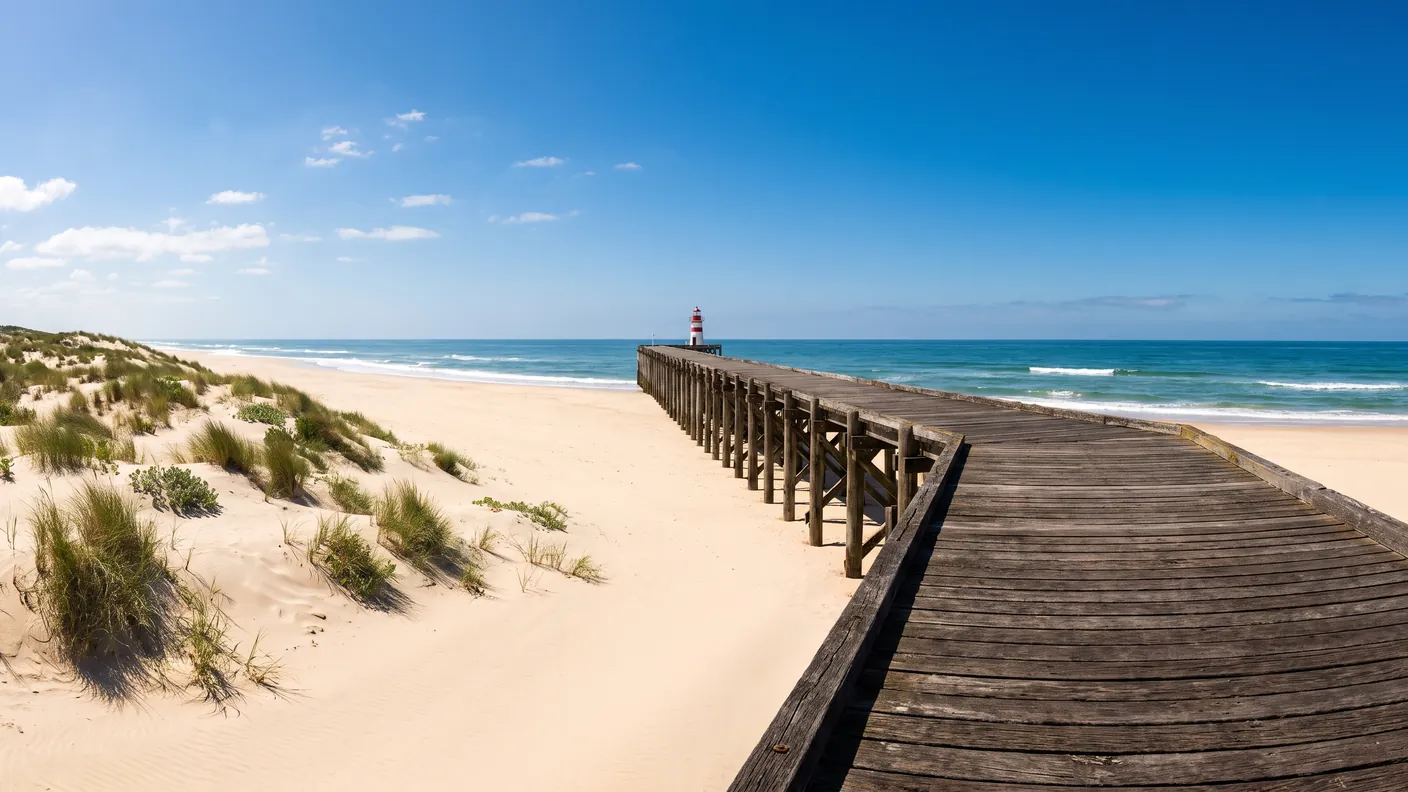
The Estacade is Capbreton’s landmark: a nearly 190-meter-long oak pier topped by a lighthouse, the construction of which was authorized under Napoleon III in 1858.[6] The current structure has undergone several restorations and reconstructions.
1858: The Imperial Revival
In the mid-19th century, Capbreton is now but a shadow of the “city of a hundred captains”: the Adour River has long since dried up, and the channel is silting up. In September 1858, Napoleon III visited the Landes coast and decided to build a breakwater to protect the harbor entrance, based on the engineers' plans Descombes and Pairier. The original structure extended about 400 meters into the ocean (and was later extended by 50 meters)—a bold wooden structure facing the Atlantic that gave the port’s activity a lasting boost. The emperor is thus, along with Colbert, the second statesman to have shaped the Capbreton we know today: without the breakwater, there would be no stable channel; without the channel, there would be no port; without the port, there would be no maritime town. A stroll along the oak planks, right at the water’s edge, is now the quintessential Capbreton ritual—facing the open sea, the “gouf” begins just a few hundred meters out.
Demolished in 1943, rebuilt in 1947
The current breakwater is a survivor. Damaged by storms and war, it has been rebuilt and restored several times. Today, MACS features a promenade stretching nearly 190 meters out over the ocean. Simply referring to it as “the 1858 pier” therefore obscures the turbulent history of the current structure.
The City of a Hundred Captains
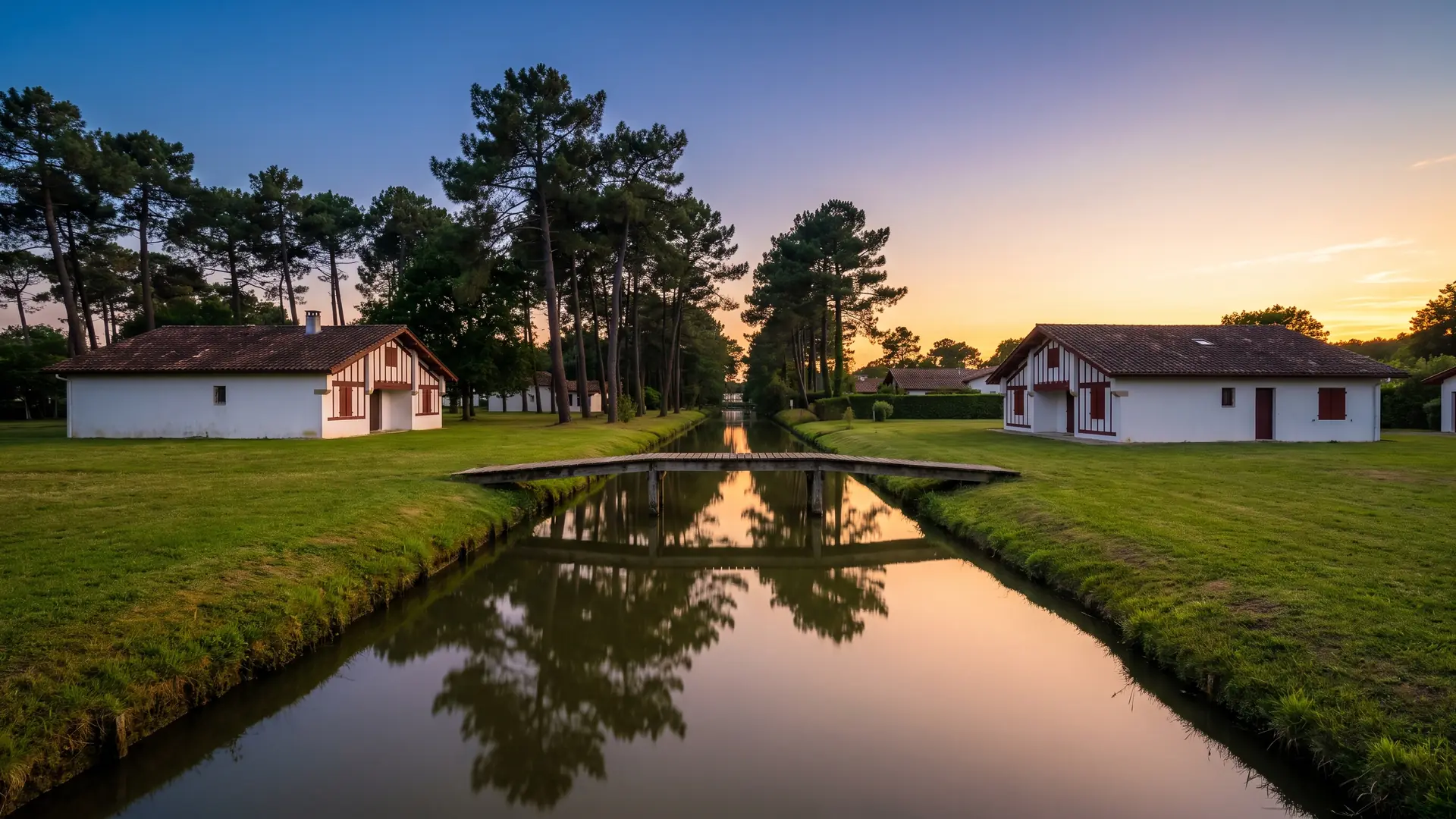
In the 15th and 16th centuries, Capbreton was a major port for whaling and deep-sea fishing: its sailors were among the first Europeans to reach the Newfoundland banks, and the 1575 inventory lists 46 vessels, including 14 long-distance ships and 19 galleons. Then the Adour River dried up, and the “city of a hundred captains” fell into decline for three centuries. Here is the verified history.
Whale and Cod Fishermen of Newfoundland
Capbreton's heyday occurred during the late Middle Ages and the Renaissance. At that time, the town was a major center of whaling — documented until the early 16th century—and deep-sea fishing: in 1512, the ship Nicolas d'Esteben de Larue set sail for Newfoundland, placing the residents of Capbreton among the first Europeans to fish for cod, from which they brought back dried cod. The1575 inventory gives a sense of the magnitude of this power: 46 ships, including 14 long-haul vessels and 19 galleons, for a town with a population of 2,000 to 3,000 that also sells local “sand wines.” The nickname “ City of a Hundred Captains ", a well-known phrase from the 16th century is not a literal count—we present it as the symbol that it is, grounded in the hard facts of the inventory. Another remnant of that era is the Maison du Rey, a rare 15th-century house of the medieval port.
The Wandering Adour and the Final Blow of 1578
Capbreton's fate was shaped by the course of a river vagabond. According to historical accounts, the Adour River flowed into the sea here at the beginning of our era; a flood is said to have diverted its course toward Vieux-Boucau around 910, before returning to Capbreton in 1164 — and then the departure finalized in 1390, toward Port-d'Albret. Contrary to what you read everywhere, 1578 is therefore not the date the river left Capbreton: It had been nearly two centuries since he left. The October 25, 1578, the engineer Louis de Foix designated the mouth of the Adour River at Bayonne (the “Boucau Neuf”), dashing any hope of a return—the final blow. In an ironic twist of fate, that same Louis de Foix went on to build the Cordouan Lighthouse, at the entrance to the Gironde: the Bordeaux-Capbreton route connects its two shipyards. With no river of its own, the city survived thanks to the gouf, which kept the channel open—until Napoleon III revived it.
Saint-Nicolas, the Maison du Rey, and the MOP
Capbreton has two historic monuments, both of which are listed: the Church of Saint-Nicolas (2000), whose 33-meter bell tower served as a landmark for sailors, and the Maison du Rey (1978), a rare 15th-century house of the medieval port. Nearby, a 16th-century house preserves the city's oral history. Here are the verified heritage designations.
St. Nicholas Church and Its Bell Tower
Rebuilt in the mid-19th century, theSt. Nicholas Church has retained from the previous building a 15th-century Gothic doorway and a polychrome Pietà from the same period. It is registered listed as a Historic Monument since October 16, 2000 (Mérimée entry PA40000032) — listed, not “classified”; this distinction is verified in the official database. Its most distinctive maritime feature is its 33-meter bell tower: it served as abitter — a navigational landmark — and an observation post for sailors, watching over the channel like an early version of a lighthouse. A few blocks away, the Maison du Rey, 15th-century house whose façades and roofs have been listed since the May 22, 1978 (PA00083934) is the oldest remnant of the medieval port; according to local tradition,Henry IV stayed there in 1583 — The Mérimée entry does not confirm this, so we are reporting it as a tradition. These are the only two historic monuments of the municipality.
The MOP and the Fishing Ecomuseum
Capbreton's heritage can also be explored indoors. The MOP — Maison de l'Oralité et du Patrimoine — is housed in a beautiful mansion on the restored 16th-century residence: here, visitors can explore the city’s oral history and “descend” into the gouf through an immersive experience 3D glasses, the only way to explore an underwater canyon without scuba gear. At the Maison du Port, theFishing and Maritime Ecomuseum — that’s its real name — features a row of aquariums stocked by fishermen from the pier and tells the story of today’s net fishermen, trap fishermen, and line fishermen (open daily from 10 a.m. to 7 p.m. in July and August). The two complementary tours—one focusing on history and the other on the living—follow one after the other on foot along the harbor, including the direct-sales stalls and the pier: a full afternoon of maritime discoveries, sheltered from the whims of the ocean weather. A chauffeur service will drop you off at the harbor and pick you up at the pier, so you don’t have to worry about parking.
1578, the estacade, the Santocha: what we often read
Several claims are circulating about Capbreton that deserve to be corrected, with supporting sources—which is the whole point of a reliable guide. The river, the pier, the surfing, the fish market: here’s what’s true and what’s false.
The Adour River did not flood in 1578
The most significant correction concerns the Adour River. It is widely reported that “the Adour flowed into the sea at Capbreton until 1578”—but this is incorrect. According to historical tradition, the river left Capbreton for good in 1390, flowing instead to Port-d’Albret (Vieux-Boucau); what Louis de Foix did in October 1578 was to establish the mouth of the river at Bayonne—nearly two centuries later. Other clarifications: the Saint-Nicolas Church is listed on the Register of Historic Monuments (2000), not “classified”; the port has approximately 950 mooring rings according to its official website—“1,000” is a journalistic rounding; and there is no fish auction in Capbreton; this is precisely what makes its direct sales at the dock unique. As for the “Capbreton train station,” it no longer exists: the nearest TER train stops at Labenne (5.7 km), and the TGV passes through Dax or Bayonne.
The breakwater isn't 170 years old, and Santocha didn't invent surfing
Two persistent myths deserve some clarification. The breakwater was indeed built during the reign of Napoleon III, but the current structure has undergone several restorations and offers a promenade nearly 190 meters long. As for Santocha, it is the birthplace of surfing in Capbreton, not of French surfing. Savane Beach was officially renamed Santocha Beach in 2018.
What is there to do in Capbreton?
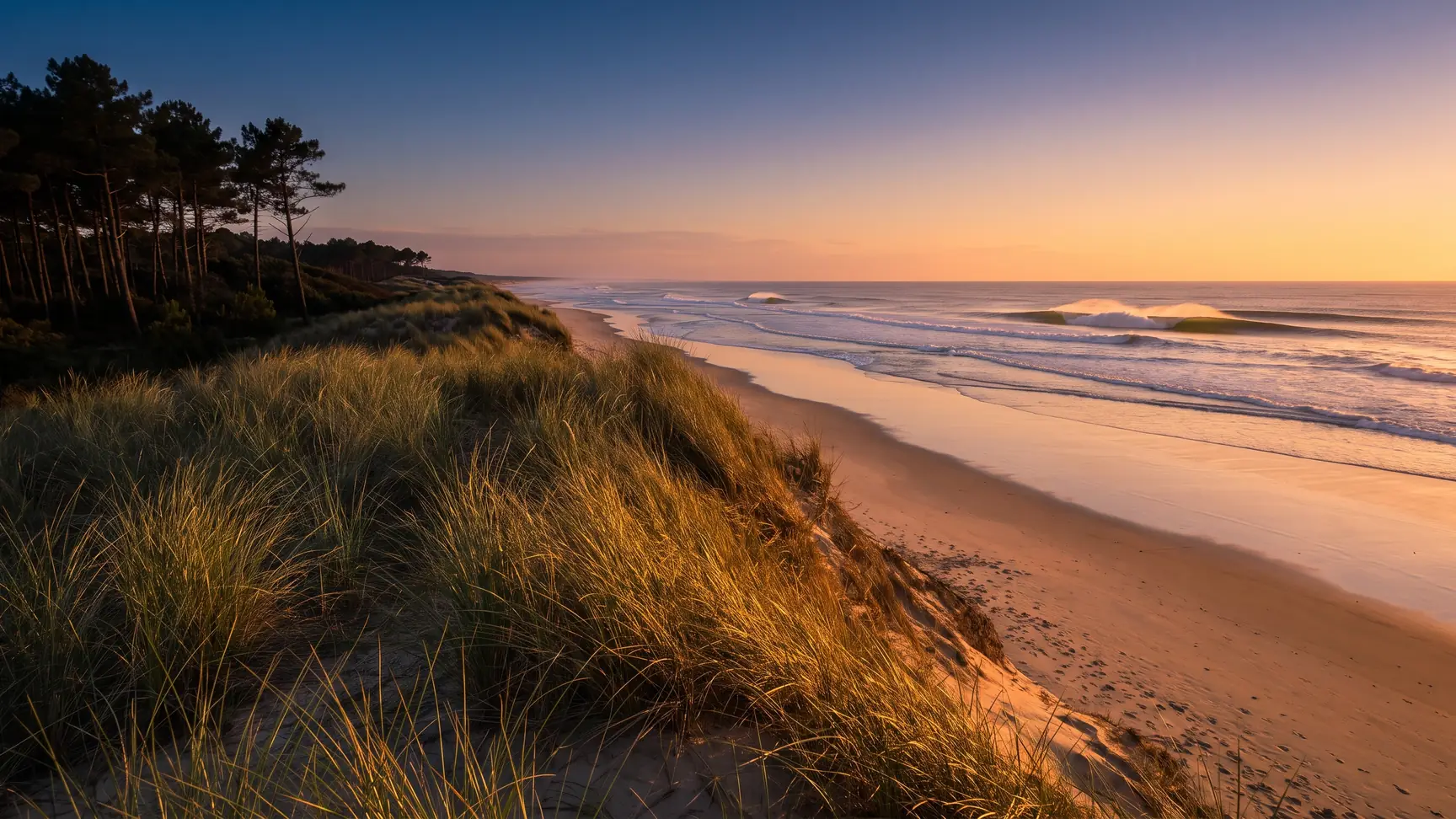
In Capbreton, you can walk along the boardwalk to the lighthouse, buy fresh fish right at the Capitainerie pier, go surfing at Santocha, choose from among eight sandy beaches, go dolphin-watching over the Gouf, and visit the market halls on Tuesdays and Saturdays. The city combines a bustling port with a seaside resort: a daily fish market depending on the catch, an eco-museum, the Vélodyssée bike path winding through the pine trees, and the Sea Festival in mid-June—whose 80th edition took place in 2026. Here, specifically, are the actual, verified activities, along with their dates and locations.
- The boardwalk—the iconic promenade above the waves, leading to the 1948 lighthouse; magnificent at sunset
- Direct sales at the pier—at the Harbor Master’s Office pier, in the morning depending on the catch (9 a.m.–12 p.m., sometimes 3 p.m.–6 p.m.): fish from the Gouf, straight from the boat to your table
- Market halls and markets — Allées Marines, Tuesdays and Saturdays, 8 a.m.–2 p.m. year-round (+ Thursdays and Sundays from June through September); late-night hours on Mondays, Wednesdays, and Fridays starting at 7 p.m. during the summer
- Beaches — 8 natural beaches, 7 of which are patrolled in the summer, from Santocha (formerly Savane) to La Piste
- Surfing at Santocha—the city’s historic spot, a club founded in 1975, and schools for all skill levels
- Whale-watching — approximately 2-hour boat trips over the Gouf; four species regularly sighted, including dolphins and pilot whales
- The Fishing Ecomuseum and the MOP — the harbor's aquariums and a virtual 3D descent into the gouf
- The Vélodyssée — ~12 km of coastal bike path running through the city, from Labenne to Hossegor via the port
Beaches: Eight Sandy Sisters
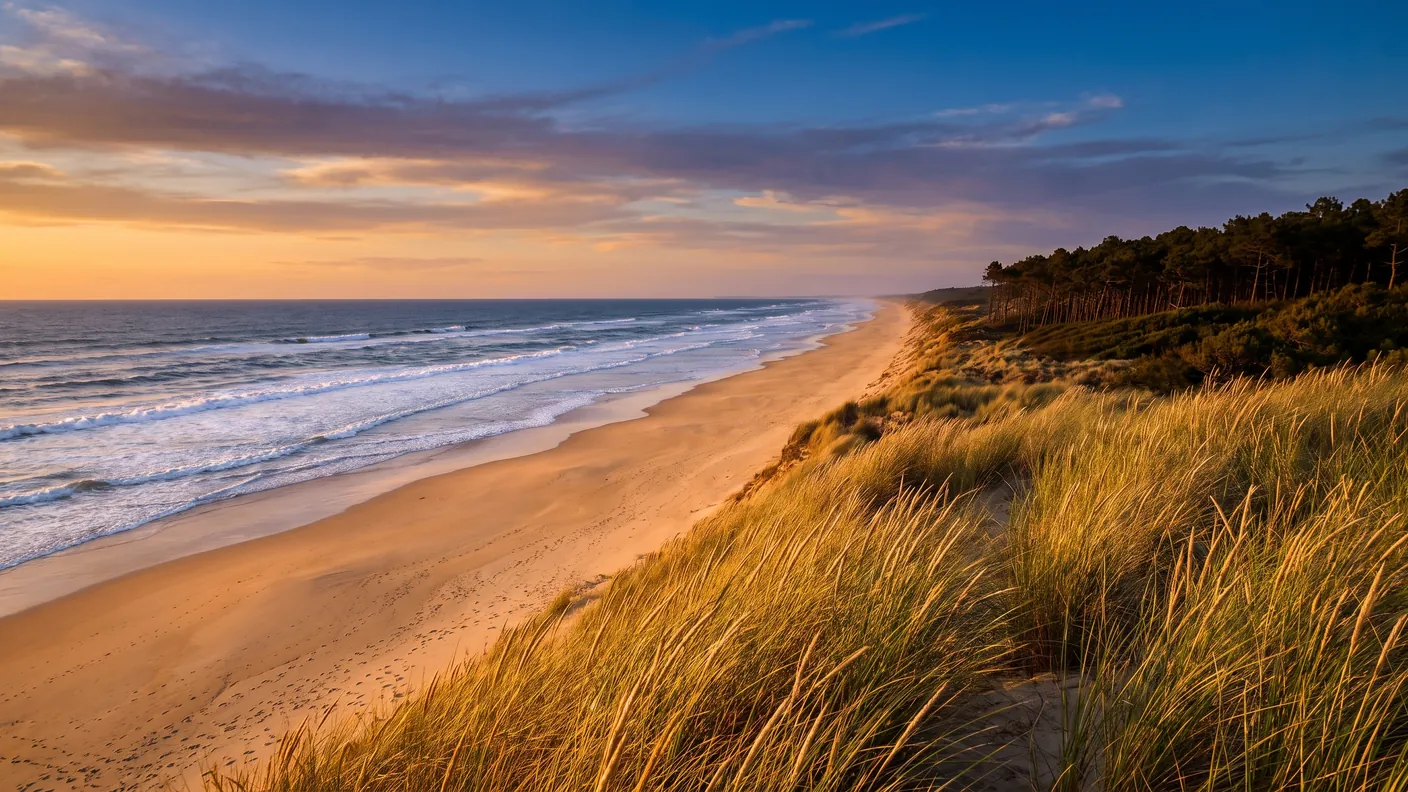
Capbreton fields eight natural beaches of sand, including Seven under supervision during the summer — one of the best supervision ratios on the coast. The most famous is the Santocha, formerly known as Savane and renamed in 2018: consistent swells, the atmosphere of a historic club (400 members and counting), and surf and bodyboard schools. The Track, to the south, attracts surfers and strollers to the area around the sand-covered bunkers; the central beaches, which are more family-friendly, run along the boardwalk and the pier. Everywhere, the sand slopes steeply down to this uniquely wide stretch of water: the baïnes are everyone's responsibility, and swimming is permitted only in supervised areas. In winter, the spring tides offer a raw spectacle—the swell from the Gouf, spray on the breakwater—that alone makes the trip worthwhile: Capbreton is one of the few resorts in the Landes region that can truly be visited year-round, including its port and market halls.
Markets, the Sea Festival, and boat trips
The market halls The Marine avenues set the pace of the city: Tuesdays and Saturdays from 8 a.m. to 2 p.m. year-round, extended to Thursdays and Sundays from June through September, with night markets Mondays, Wednesdays, and Fridays starting at 7 p.m. in the summer, and gourmet markets on Wednesday evenings. The Sea Festival, every year at the mid-June on the Esplanade de la Liberté, honors those who lost their lives at sea and the fleet—with a Mass, a blessing, and free activities; the 2026 event marked the 80th edition. Out at sea, the whale-watching trips (about two hours) cruise over the deep to encounter blue-and-white dolphins, bottlenose dolphins, common dolphins, and long-finned pilot whales—a short pelagic excursion just a stone’s throw from the pier. And for those who want to stretch their legs: the Vélodyssée runs through the city along a ~12-km trail; the Capbreton → Bayonne leg (29 km) heads due south through the pine trees.
| Activity | Where / When | Good to Know |
|---|---|---|
| Jetty & Lighthouse | harbor entrance, open access | nearly 190 m of oak; a structure that has been restored several times |
| Direct Sales | Quai de la Capitainerie, in the morning depending on the day's catch | without an auction — a privilege inherited from Colbert |
| Market Halls & Markets | Allées Marines · Tues. & Sat. 8 a.m.–2 p.m. (extended hours in summer) | Evening hours: Mon., Wed., Fri. at 7 p.m. during the summer |
| Beaches | 8 beaches, 7 of which are patrolled in the summer | Santocha = formerly Savane, renamed in 2018 |
| Cetaceans in the Gouf | trips lasting about 2 hours from the port | 4 common species, dolphins, and pilot whales |
| Ecomuseum & MOP | Maison du Port · 16th-century house | a goofball in 3D glasses at the MOP |
What to see nearby: Hossegor, Labenne, Bayonne
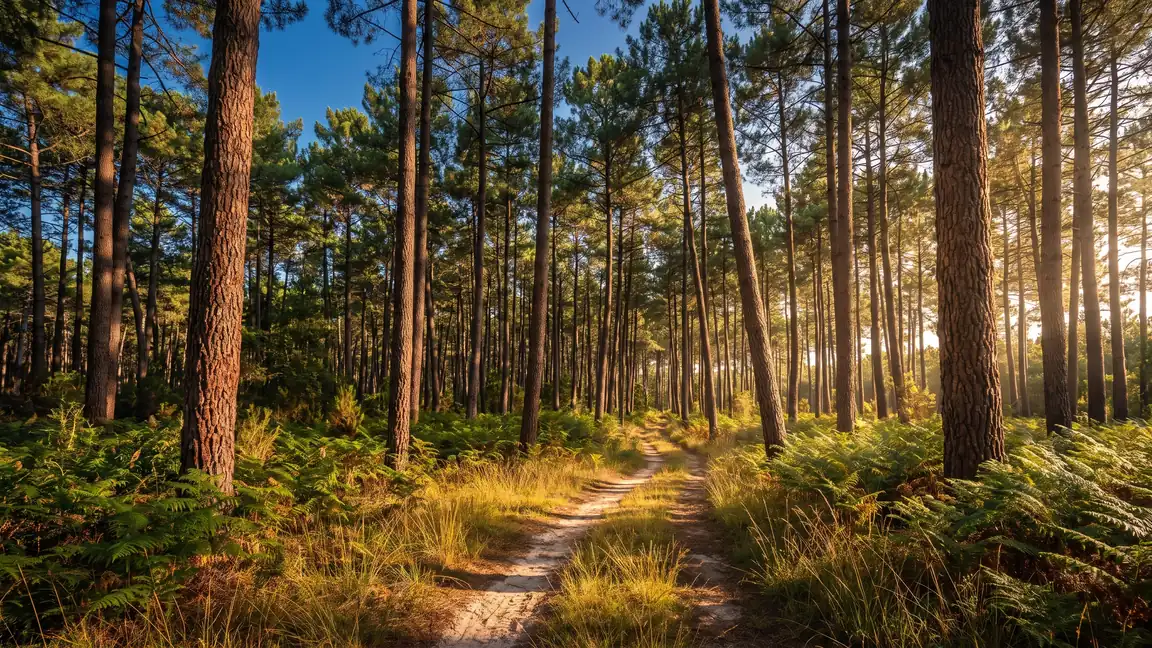
Capbreton is near Hossegor (5 km), lies just before Labenne (6 km) and its train station, and marks the entrance to the Basque Country: Bayonne is 23 km away, about 20 minutes away. To the north, Vieux-Boucau, Moliets, and the Huchet Channel round out the coastline. Here are the verified distances.
From Hossegor to the Basque Country
Hossegor, the chic twin town, is 4.9 km away—an eight-minute drive, just enough time to go from the fishermen’s pier to the marine lake and the Basque-Landes villas; the two towns share their waves, with the Nord beach in front of one and the Gravière beach behind the other. Labenne (5.7 km) offers the nearest TER train station, its large beach perfect for beginners learning to surf, and the Marais d’Orx nature reserve, which is free and open at all hours—see our guide to Labenne . To the north, Vieux-Boucau (17 km) and its Port d’Albret marine lake, followed by Moliets and the mouth of the Courant d’Huchet, line the Côte d’Argent. And to the south lies the Basque Country: Bayonne and its market halls are 23 km (~21 minutes) away, Biarritz is half an hour away, and Spain is less than an hour away. From Capbreton, an executive car service can take you to these destinations on demand—the perfect one-day itinerary: the waterfront in the morning, the Orx Marshes at noon, and Bayonne in the evening.
| Destination | Distance / Time from Capbreton | Must-See |
|---|---|---|
| Hossegor | 4.9 km · 8 min | Marine Lake, Basque-Landes Villas, La Gravière |
| Labenne | 5.7 km · 8 min | TER train station, beach, Orx Marsh Nature Reserve |
| Vieux-Boucau | ~17 km · 20 min | Port d'Albret Lagoon, Course Landaise |
| Moliets-Plage | ~32 km · 35 min | mouth of the Huchet River, gulf |
| Bayonne | 22.8 km · 21 min | market halls, chocolate, Vauban ramparts |
| Dax | ~35 km · 35 min | Hot Spring, Thermal Baths, Amphitheater |
When is the best time to visit Capbreton?
Capbreton is bustling all year round: the fish market at the pier and the market halls are always open, seven beaches are patrolled in the summer, the Sea Festival brings the town to life in mid-June, and winter offers its high tides along the breakwater. Each season has its own charm—here’s the updated calendar to help you choose the one that’s right for you.
| Season | What's in Store for You |
|---|---|
| Spring (April–June) | Sea Festival in mid-June (80th edition in 2026), a bustling waterfront, beaches coming to life |
| Summer (July–August) | 7 supervised beaches, markets 4 days a week plus evening markets, whale-watching trips to the Gouf, eco-museum open daily |
| Fall (Sept.–Oct.) | Seasonal swell at Santocha, sales at the dock, golden lights on the pier |
| Winter | spectacular spring tides, the port in action, market halls on Tuesdays and Saturdays, MOP, and the eco-museum on dry land |
There are two events worth marking on your calendar. The Sea Festival, first of all: Every year in mid-June, the Esplanade de la Liberté hosts the blessing of the fleet, a Mass for those lost at sea, and free events organized by the port and the city—an authentic maritime festival, free of contrived folklore, which celebrated its 80th edition in 2026. Next come the summer markets: from June through September, the market halls operate four mornings a week (Tuesdays, Thursdays, Saturdays, and Sundays), along with evening hours three nights a week—the rhythm of a true market town, not a seasonal resort. Add in the daily fish market sales, and you’ve got the most tempting schedule on the south coast.
Seasonal Tip
The best time to capture the spirit of Capbreton isn’t in the height of summer: it’s in June or September, when you can enjoy the fish market on the pier without the crowds, the ocean is still safe for swimming, and you can stroll along the boardwalk in the low-angled sunlight. Surfers will want to visit in the fall, the prime season for Santocha; families will prefer July and August with their seven lifeguard-patrolled beaches; and photographers will aim for the high tides of winter, when the sea spray sweeps over the lighthouse. A handy tip for everyone: the market halls are always open on Tuesdays and Saturdays, and fish from the Gouf is sold at the pier year-round—Capbreton is a port first and a resort second, and that’s exactly what makes it so special. Anyone who wants to do it all—the market, the beach, and Bayonne in the evening—is better off getting a ride: the distances are short, but summer parking isn’t.
How much does the trip cost, and how do I get there?
A private transfer from Bordeaux to Capbreton costs €379 in a sedan (1–3 passengers), a fixed price quoted in advance, for a 167-km trip taking 1 hour and 58 minutes without traffic via the A63. If you don’t have a car, the TER stops at Labenne (5.7 km) and the TGV at Dax or Bayonne—there’s always a final leg by road. Here’s an honest comparison of the options.
By car from Bordeaux
The route is straightforward: the Bordeaux bypass, the A63 heading due south through the Landes Forest, then the exits toward the coast in the Tyrosse area—167 km, or 1 hour and 58 minutes without traffic. With a private chauffeur, the trip is door-to-door—from your home, Mérignac Airport, or Saint-Jean Train Station to the port, villa, or residence—with surfboards, bikes, and luggage already loaded, and no need to look for parking upon arrival. The price is fixed and quoted before the trip: €379 in a sedan; an 8-passenger van is available upon request for families and groups.
Without a car: Labenne, Dax, or Bayonne
Capbreton hasn't no more train stations. The train stops as close as possible to Labenne (the Bordeaux-Hendaye TER line, with a station 5.7 km away—an eight-minute drive), and the TGV serves Dax and Bayonne, from where the XL'R bus (Line 7) or a local taxi completes the journey. These combinations work, but require a load break with luggage—not very convenient if you're carrying surfboards or traveling with a family. The smoothest solution is still the end-to-end private transfer from Bordeaux or, if that’s not possible, the TER to Labenne, followed by a ride for the last kilometer. Once there, everything is within walking or biking distance: the harbor, the market halls, the pier, and the beaches are all within a twenty-minute walk, and the Vélodyssée bike path connects the neighboring resorts through the pine forests.
| Option | Duration | What You Need to Know |
|---|---|---|
| Chauffeured transfer (Door-to-Door) | 1 hour 58 minutes, excluding traffic | €285 (1–3 people), fixed price, 8-seat van available upon request |
| Personal car | 1 hour 58 minutes, excluding traffic | Take the A63, then follow the road uphill; parking is difficult in the summer |
| TER Bordeaux → Labenne + drive | ~1 hr 30 min + 8 min | Nearest train station, 5.7 km from Capbreton |
| TGV → Dax or Bayonne + bus/road | ~1 hour + 30–40 minutes | XL'R bus, Line 7, from Bayonne |
Frequently Asked Questions
Where is Capbreton located?
Capbreton is a port town on the southern coast of the Landes region, across from Soorts-Hossegor—from which it is separated only by the Boudigau Canal—23 km north of Bayonne. With a population of 9,184 (2023) Source: INSEE, municipality 40065, it is part of the Maremne Adour Côte-Sud community of municipalities. From Bordeaux, the standard route covers 167 km in 1 hour and 58 minutes (excluding traffic) via the A63. It is the only marina with direct ocean access in the Landes department—and the home of the “gouf,” the underwater canyon.
What is the Gouf de Capbreton?
It is an underwater canyon approximately 300 km long, whose head begins 300 meters from the shore: at 1,500 m from the shore, the seafloor is already 100 m deep, and the canyon then plunges to a depth of 3,500 to 4,000 m into the abyssal plain. First documented in writing as early as 1491 and mapped as early as 1815, it breaks the swell in rough weather (a former shelter anchorage), brings deep-sea species closer to shore, creates the “La Nord” wave off Hossegor, and remains so unstable that no undersea cable can be laid there.
Why is Capbreton the only port in the Landes region?
Because the Landes coastline—straight and sandy—offers no natural shelter—except here: the gouf breaks the swell and limits the silting up of the channel, which has kept it navigable since the Adour River was diverted (1390). The modern harbor, dug at the confluence of the Boudigau and Bourret rivers and revitalized by Napoleon III’s breakwater, now features approximately 950 berths across five basins and 19 small-scale fishing vessels—nearly one berth for every ten residents.
How much does a trip from Bordeaux to Capbreton cost with a professional chauffeur?
A private transfer from Bordeaux to Capbreton costs €379 in a sedan (1 to 3 passengers), with a fixed price provided before the trip—no meter and no surprise surcharges. The trip covers 167 km in 1 hour and 58 minutes (excluding traffic) via the A63, door-to-door: from your home, Mérignac Airport, or Saint-Jean Train Station to the port, the beach, or your accommodation. An 8-passenger van is available upon request for families and groups, with room for surfboards and luggage.
What is there to do in Capbreton?
Walk along the boardwalk to the lighthouse, buy fresh fish directly from the vendors at the Capitainerie pier (in the morning, depending on the catch), visit the Allées Marines market (Tuesdays and Saturdays year-round), go surfing at Santocha, choose from 8 beaches—7 of which are lifeguarded in the summer—head out to watch dolphins above the Gouf, visit the Fishing Ecomuseum and the MOP (the Gouf in 3D glasses), and bike along the Vélodyssée. In mid-June, the Fête de la Mer brings the Esplanade de la Liberté to life.
What is direct sales at the dock?
This is the port’s most delightful feature: there is no fish auction in Capbreton. The 19 small-scale fishing boats sell their catch directly at the Capitainerie pier, each at its own table, at a price set by the fisherman—an exemption stemming from a decree by Colbert, unique on the Atlantic coast between Arcachon and Saint-Jean-de-Luz. Hake from the Gouf, sole, cuttlefish, or langoustine, depending on the catch, are landed at night and sold that very morning—practically every day from 9 a.m. to noon.
Does the floodgate really date back to 1858?
Not exactly. Napoleon III ordered its construction in 1858, and the original structure extended about 400 meters out into the ocean. The current pier has been damaged, rebuilt, and restored several times; MACS now features a promenade stretching nearly 190 meters out over the ocean.
Where can you surf in Capbreton?
The historic spot is Santocha—formerly known as Savane Beach, officially renamed in 2018 in honor of the Santocha Surf Club, founded on October 20, 1975, and one of the oldest clubs on the Landes coast (over 400 members, with a surf and bodyboard school). La Piste, further south, rounds out the selection. A useful note: Santocha is the birthplace of surfing in Capbreton, but the birthplace of French surfing remains Biarritz (1957). Surf schools and rental shops operate on the supervised beaches during the summer.
On what day is the Capbreton market held?
The Allées Marines market is held year-round on Tuesdays and Saturdays from 8 a.m. to 2 p.m., and is also held on Thursdays and Sundays from June through September. In the summer, there are also night markets on Mondays, Wednesdays, and Fridays starting at 7 p.m., and gourmet markets on Wednesday evenings. Not to mention the city’s most unique market: fishermen selling their catch directly at the Quai de la Capitainerie in the morning, depending on the day’s catch, all year round.
Did the Adour River really flow through Capbreton?
Yes, but the timeline goes back further than is often reported. According to historical tradition, the river flowed into the sea at Capbreton at the beginning of the Common Era, was diverted toward Vieux-Boucau around 910, returned in 1164, and then permanently shifted course in 1390 toward Port-d’Albret. In October 1578, the engineer Louis de Foix—the future builder of the Cordouan lighthouse—fixed the mouth of the river at Bayonne, dashing any hope of its return. To write that “the Adour left Capbreton in 1578” is therefore inaccurate by two centuries.
What is the closest train station to Capbreton?
Capbreton no longer has a train station. The nearest station is in Labenne, 5.7 km away, on the Bordeaux–Hendaye TER line; TGV trains serve Dax and Bayonne, from which a final leg by road is still required. The direct private transfer from Bordeaux covers 167 km in 1 hour and 58 minutes (excluding traffic), at a cost of €379 for a sedan, door-to-door.
When is the best time to visit Capbreton?
All year round, this is what makes it a true port: sales at the docks and in the market halls (Tuesdays and Saturdays) never stop. Summer offers seven lifeguard-patrolled beaches, night markets, and whale-watching trips; June and September offer the best balance of crowds and light—with the Sea Festival in mid-June; in the fall, the Santocha’s signature swell; in the winter, the spectacular spring tides along the breakwater. Photographers will want to capture the sunset at the lighthouse, when the lantern lights up above the waves.
Further Reading
- The Chic Twin: See the Hossegor Guide (marine lake, Basque-Landes villas, and La Gravière, 5 km away)
- The train station and the marsh: see the Labenne Guide (beach, Orx Marsh, and TER train station, 6 km away)
- The Old Port of Albret: see the Guide to Vieux-Boucau (lagoon and Course Landaise, 17 km away)
- A camping trip near Labenne: planning your trip to Camping Village Sylvamar from Bordeaux and exploring the southern coast of the Landes
- The Wild River: See the Moliets-Plage Guide (Courant d'Huchet and golf course, 35 min away)
- Book your trip: book online or browse all our destinations
Sources and References
- INSEE — Capbreton (40065) — Official Population and Demographic Trends
- Wikipedia — Capbreton — Population: 9,184 (2023); the only marina in the Landes region with direct access to the ocean; 8 beaches; Saint-Nicolas Church
- Wikipedia — Gouf de Capbreton — a canyon ~300 km long, with its head ~300 m from the shore; term first attested in 1491, mapped in 1815; simple swell, deep-water species, “la Nord”
- City of Capbreton — the wonders of the Gouf— a canyon about 300 km long, whose head begins 300 m from the beaches
- Port of Capbreton (official) —approximately 950 berths; 19 small-scale fishing vessels; direct sales at the Harbor Master’s Office pier
- MACS Community of Municipalities — L’Estacade — an oak pier maintained by MACS, a promenade nearly 190 m long, built during the reign of Napoleon III
- POP Mérimée — Saint-Nicolas Church — listed as a historic monument on October 16, 2000; Maison du Rey listed on May 22, 1978 (PA00083934) — the only two historic monuments in the municipality
- Wikipedia — Adour — Chronology of the meandering river: Capbreton, Vieux-Boucau (910), return to its original course in 1164, final departure in 1390; course fixed at Bayonne by Louis de Foix on October 25, 1578
- Santocha Surf Club —a club founded on October 20, 1975; Savane Beach, renamed “Santocha Beach” in 2018; the birthplace of surfing in Capbreton
Article updated in July 2026.
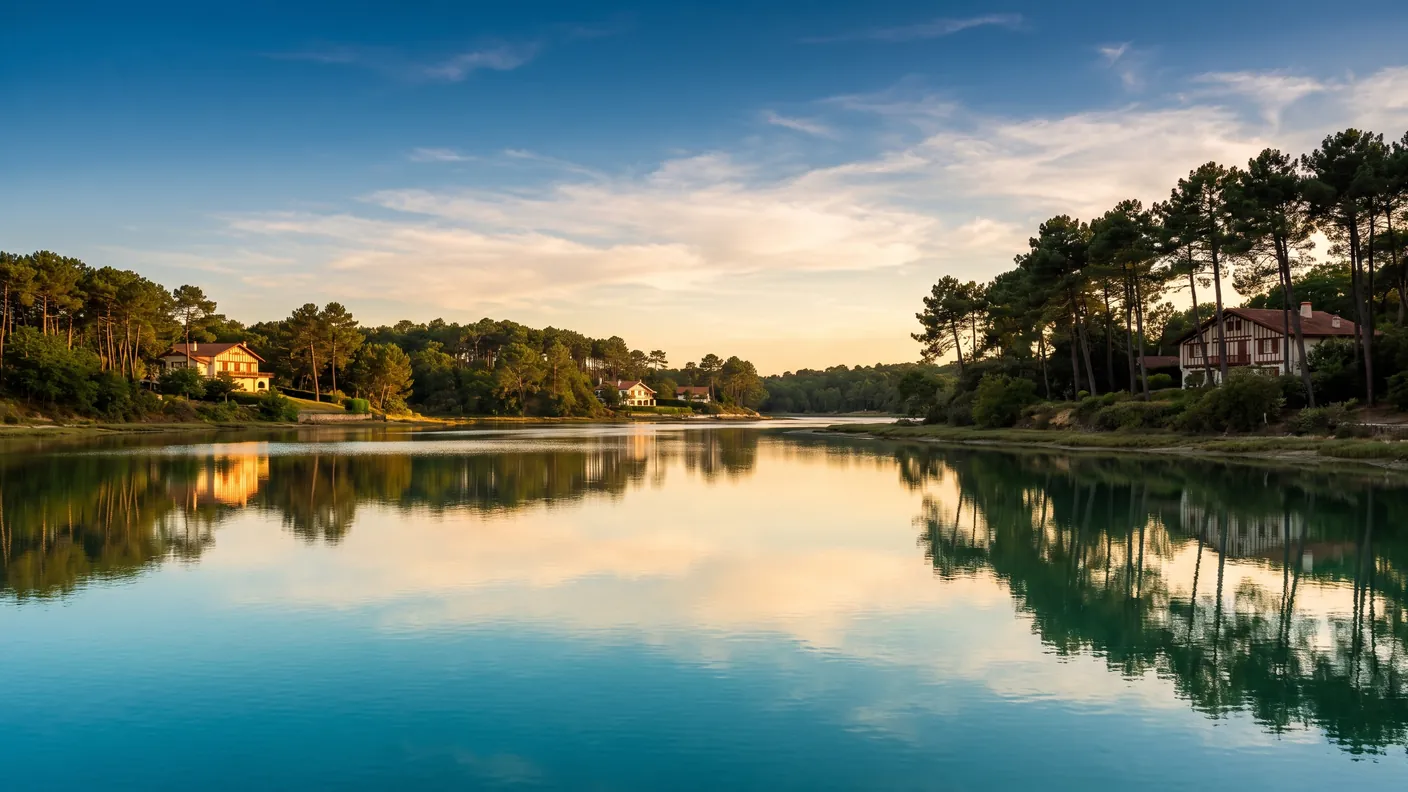
Off to the City of a Hundred Captains
Direct transfer from Bordeaux (167 km · 1 hr 58 min without traffic via the A63) to Capbreton, its port, and its pier—from your home, the airport, or the train station to the pier, the beach, or your accommodations, including surfboards and luggage, with optional stops in Hossegor or Bayonne.