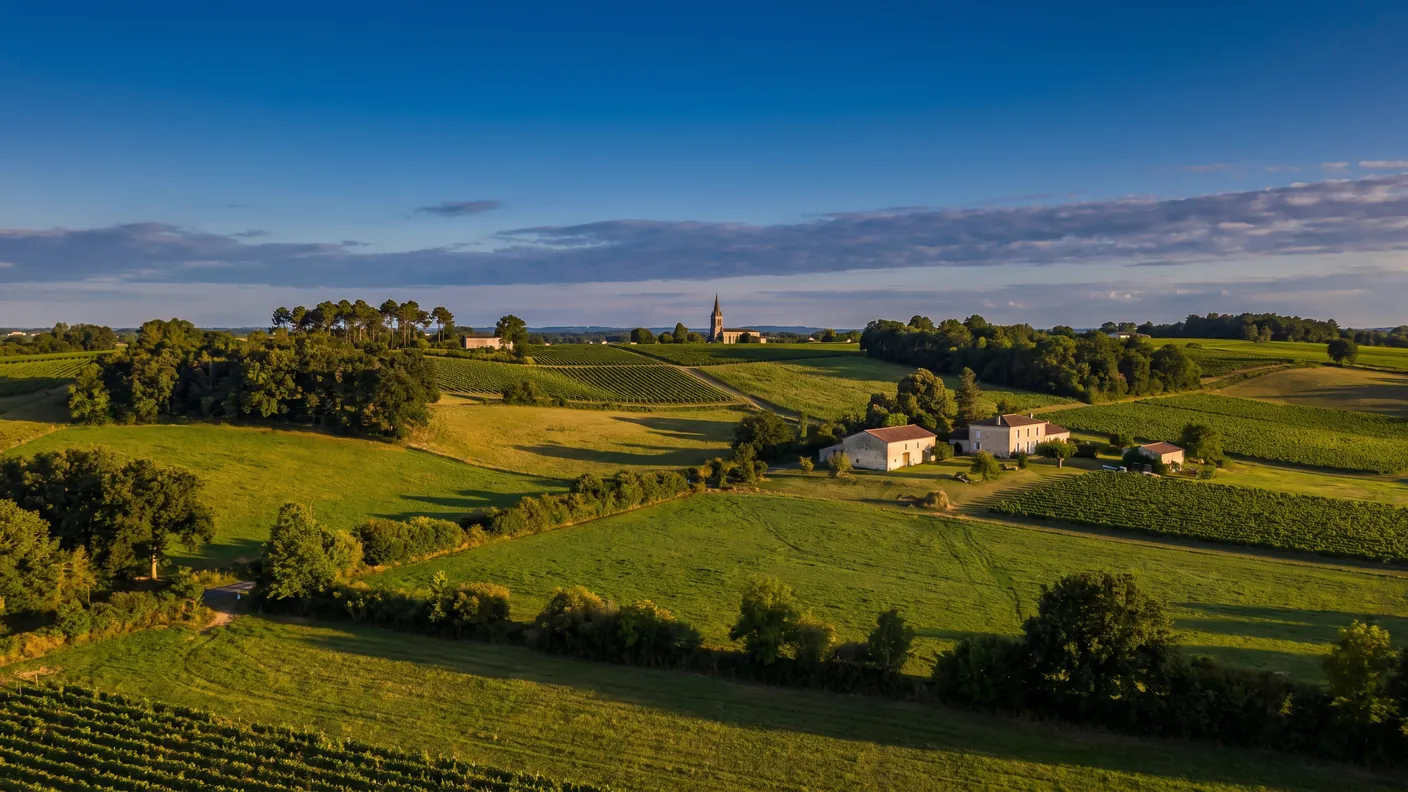
Discover Les Églisottes-et-Chalaures, gateway to the Double Forest
A village in northern Libournais, on the edge of the Double Forest, with a remarkable industrial history: Les Églisottes-et-Chalaures, the Baudou factory and its boots, its TER train station, the Dronne and the Chalaure rivers, and your private door-to-door transfer from Bordeaux, without having to rent a car.
Les Églisottes-et-Chalaures at a Glance
Les Églisottes-et-Chalaures is a town in the northern part of the Libournais region, about 70 km and 1 hour and 5 minutes from Bordeaux. It has a population of 2,205.[INSEE 2023] Its identity is shaped by the Double Forest, the former Baudou factory, and a TER train station on the Bordeaux–Angoulême line. Private transfers start at €133, a fixed price confirmed before departure.
Verified Benchmarks
Les Églisottes-et-Chalaures is a town in the northern part of the Libournais region, in the Gironde department, on the edge of the Double Forest, about 70 km northeast of Bordeaux. With 2,205 residents, it is a substantial rural village with a distinctive industrial past. The Baudou factory became known for its rubber boots, while the Paris–Bordeaux railway gave the community its own station. This guide separates fact from fiction: the factory did not close in 2024; before making boots, it manufactured bicycle tires, not car tires; the town has no listed monuments; and this is not a renowned wine village, but a predominantly forested area. We also explain the simplest way to travel here from Bordeaux with a door-to-door chauffeur service.
Here are the key details to know before you go. Distances are calculated door-to-door from Bordeaux; the fare listed is for a chauffeur service booking at a fixed price provided in advance, with no unexpected meter charges regardless of traffic or stops. The data has been verified using information from INSEE, the city hall website, the General Inventory, and the Mérimée database; schedules and services, which may vary, should be confirmed on site.
| Landmark | Details |
|---|---|
| Municipality | Les Églisottes-et-Chalaures (Gironde, Libourne District) |
| Location | Northern Libournais, on the edge of the Double Forest, near Coutras |
| Residents | 2,205 Églisotais residents (2023)[INSEE 2023] · 17.16 km² |
| Good to Know | Resulting from the merger of Chalaures and Les Églizottes during the Revolution[Town Hall 2026] · Baudou factory · TER train station |
| Distance from Bordeaux | about 70 km · about 1 hour and 5 minutes by car |
Where is Les Églisottes-et-Chalaures located?
Les Églisottes-et-Chalaures is located in the northern part of the Libournais region, near Coutras and on the edge of the Double Forest. Woods, fields, the Dronne River, and the Chalaure Stream make up a landscape that is more wooded than wine-growing. The current municipality was formed through the merger of the former parishes of Églizottes and Chalaures during the French Revolution. [Town Hall 2026]
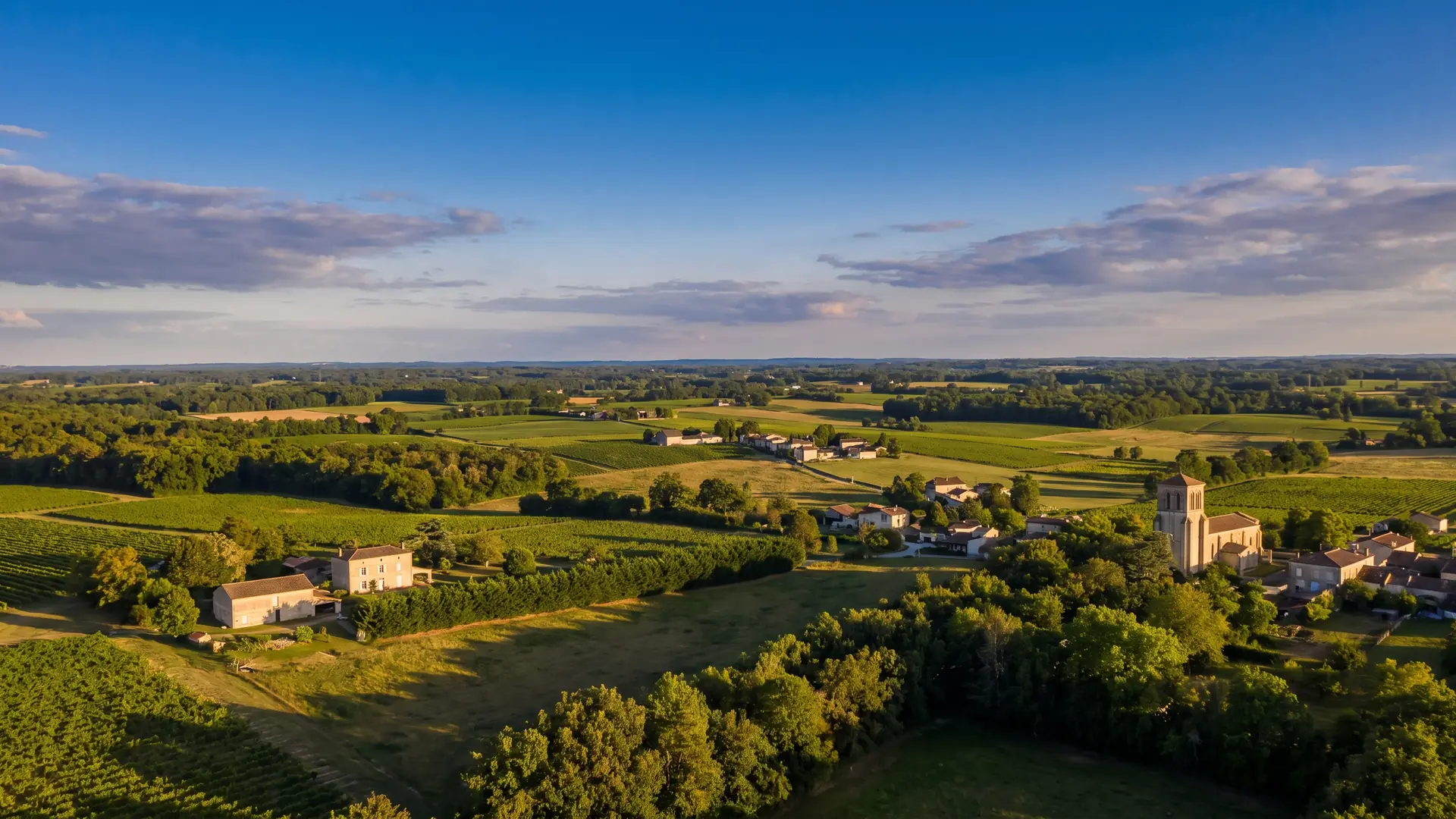
Les Églisottes-et-Chalaures is located in the northern part of the Libournais region, in eastern Gironde, on the edge of the Double Forest, about ten kilometers from Coutras. It is a land of woods, fields, and small rivers: the Double Forest, a mosaic of oak and pine groves; farmland and meadows; and the Dronne and Chalaure streams. This is a far cry from the typical image of the Bordeaux vineyards: the landscape, more than a third of which is forested, already hints at the nearby Périgord Vert. The town is crossed by the D674 (the former Angoulême–Libourne highway) and by the main Paris–Bordeaux railway line, which serves the town with a train station. Part of the Libourne district, the Nord-Libournais canton, and the Libournais Urban Community, it lies within the sphere of influence of Coutras, its neighbor and a major rail hub.
On the border between the Gironde and the Double Forest
The town is situated in a border region: it borders the Dordogne department and lies not far from Charente-Maritime, in a rural area where administrative boundaries are blurred. Above all, it marks the entrance to the Double Forest (or Double Landais), this vast expanse of oak groves, English oak, Pyrenean oak, and maritime pines (planted during the Second Empire to reclaim the land), dotted with ponds and streams, which stretches toward the Périgord. One-third of the municipal territory (34%) is forested, under a mild oceanic climate. [SDES 2026]This forested character, more typical of the Périgord than of Bordeaux, defines the very essence of the place: here, there are no hillsides of grand cru vineyards, but rather woodlands, agricultural clearings, and unobtrusive waterways. A landscape of deep countryside, just under an hour from Bordeaux.
A double name, born of two villages
The name, which is a bit confusing, tells two stories. The current municipality was formed during the Revolution through the merger of two former parishes: Chalaures and Les Églizottes (the old spelling, with a “z”). [Town Hall 2026]“Églisottes” is said to refer to several small churches and chapels that no longer exist; “Chalaures” comes from the first parish, located on the old road from Bordeaux to Angoulême. Be sure to write the name in full and in the plural, Les Églisottes-et-Chalaures, and not “Chalaure” in the singular, which refers to the stream. This dual origin explains the scattered layout of the settlement and the existence of several hamlets. It is a crossroads town, formed at the intersection of roads and, later, the railroad, whose history has been shaped as much by the fields as by the factories.
St. Peter's Church and the Castles
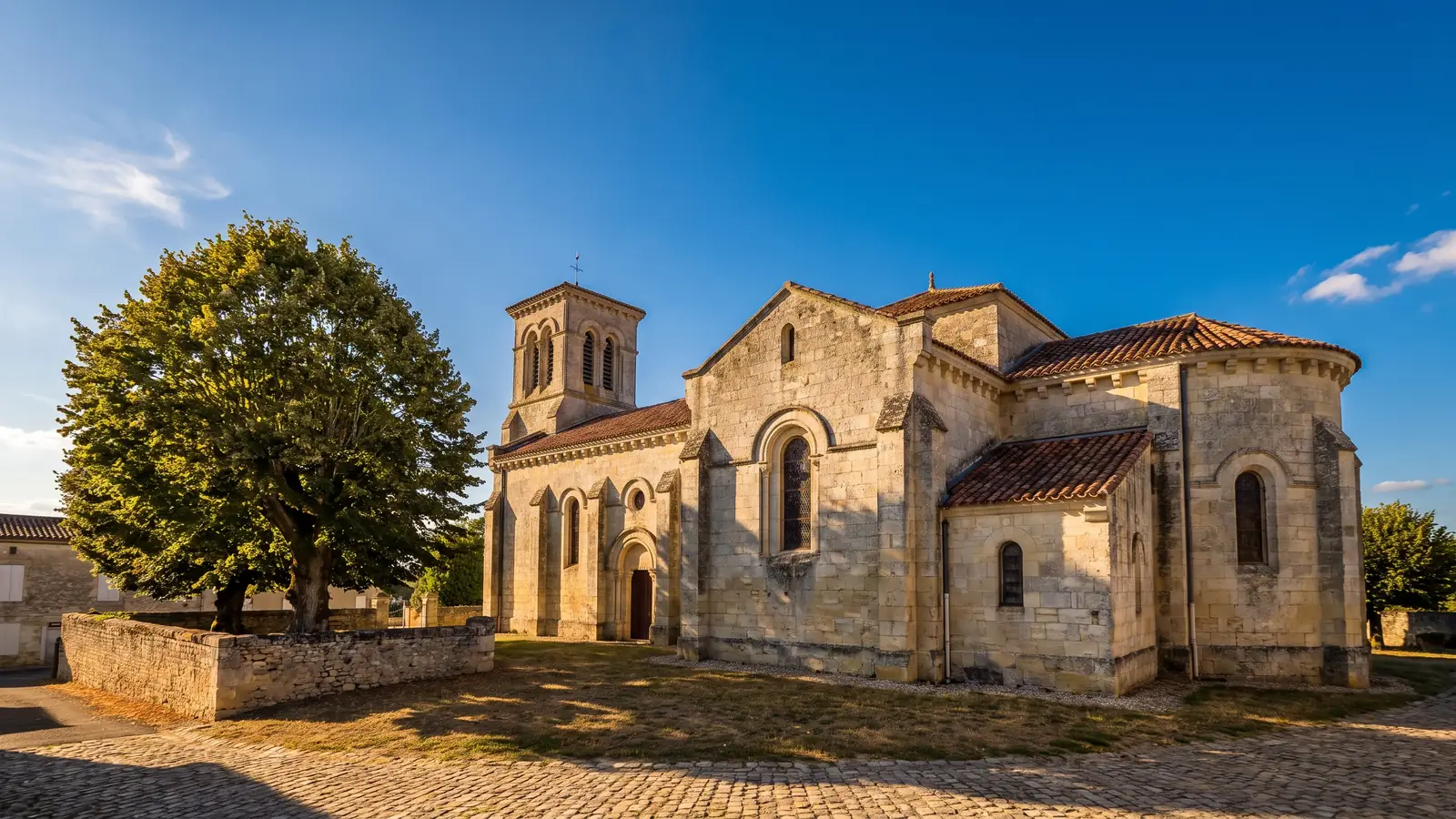
The built heritage of Les Églisottes is modest and rural: a parish church rebuilt in the 19th century and a few privately owned châteaux, none of which are protected as historic monuments. It is a village heritage site, without any spectacular monuments, but one that tells the story of an agricultural and industrial town. Here is what the sources reveal.
St. Peter's Church, rebuilt in 1868
The St. Peter's Parish Church (Saint-Pierre-ès-Liens) was rebuilt in 1868; its cornerstone was laid on May 28, 1868. Bordeaux architect Mr. Alaux designed the rubble-and-dressed-stone building with a spire. It replaced an 11th-century Romanesque church, damaged during the Wars of Religion. The holy water font and stained-glass windows were donated by wealthy families in the parish. It is sometimes described as “Neo-Romanesque,” but its spire makes it more similar to 19th-century religious buildings in Gironde: we will therefore stick to a cautious description. Contrary to what one might read due to confusion with a town of the same name, this church is not classified as a Historic Monument, no more so than any other building in the town. This is a point we want to make clear, as there is a common misconception.
Privately Owned Châteaux
The town has a few rural châteaux, bearing witness to the rural and wine-growing bourgeoisie of centuries past. The Brande-Bergère Castle (18th century) was built by a parish priest with an Irish surname, Father O'Byrne; flanked by two towers and two square dovecotes, it produced a wine that had already been recognized in the standard reference work Féret as early as 1874. The La Tour-Blanche Castle (17th–19th centuries) is now home to a wine-making training center. None of these buildings are listed as historic monuments: they are private or commercial properties that can be seen along the country roads. Here again, we stick strictly to documented facts, without inventing any heritage status. The appeal of Les Églisottes lies elsewhere, in its remarkable industrial history.
The Baudou Factory and Workers' Memories
The history of Les Églisottes is largely industrial: the Baudou factory, founded around 1910, manufactured bicycle tires and later rubber boots, employing more than a thousand workers at its peak. Added to this is one of the largest paper mills in the Gironde department. For a rural village, this is an extraordinary industrial past, one that deserves to have a few common misconceptions corrected. [POP 2026]
From bike tires to Baudou boots
Around 1910, Maurice Baudou set up a rubber factory in the former Reyraud Mill, on the Dronne River. At first, it made bicycle tires, including tires, tubular tires, and inner tubes, including the famous puncture-proof tire “La Sirène”, patented around 1915. Note: These were indeed bicycle tires, not car tires, and there was never any mention of “linoleum,” contrary to what is sometimes reported. Starting in 1935-1936, the factory focused on its signature product: the one-piece molded rubber boot, a product it pioneered. At its peak, more than a thousand workers (as many as 1,300 in the 1960s, according to some sources) worked there: it was one of the canton’s major economic hubs. As late as 1993, the facility was still producing 5,000 pairs of boots per day, the only French manufacturer of compression-molded boots. [POP 2026]
When Production Left Les Églisottes
Contrary to a widespread misconception, one that has even found its way into some encyclopedia entries, the factory did not close “in 2024.” Production moved out of Les Églisottes in the late 1990s after the brand was acquired and relocated to Beaupréau in 1997; the historical sources cited here are insufficient to determine its current industrial status. What took place in 2024 at the site of the former Reyraud mill was an ecological restoration project along the banks of the Dronne River, not a closure. Another chapter in the history of the working class: the Navarre paper mill, established in a mill as early as 1834 and expanded in 1922 to become the largest paper mill in the Gironde; it produced Héraklès notebooks and watermarked paper for the League of Nations before closing in April 1969. Its workers’ housing complex, “Le Rang,” was built from agglomerated cinder (coal waste), a rare example of workers’ housing.
A Village in the History of the 20th Century
This factory was not just an employer; it secured Les Églisottes’ place in history. During World War I, the rubber factory supplied the military with equipment, it even manufactured gas masks. Half a century later, in May 1968, the workers at the Baudou factory went on strike, a local event that underscored the social significance of a plant employing more than a thousand workers in a rural canton. As for the Navarre paper mill, it had, prior to its closure, a prestigious clientele: in addition to school notebooks branded Héraklès, it produced watermarked paper for the League of Nations, in Geneva. For a village of 2,000 residents, this dual industrial history, rubber and paper, has shaped the landscape, the built environment, and the collective memory far more than the vineyards have. That is what makes Les Églisottes so unique within the Gironde region.
| Step | Date | Details (according to sources) |
|---|---|---|
| Baudou Rubber Factory | ~1910 | in the old Reyraud mill, on the Dronne River |
| "La Sirène" Bicycle Tire | ~1915 | puncture-proof tire, first flagship product |
| One-piece molded boots | 1935-1936 | signature product, a pioneer in France |
| The Golden Age of Labor | the 1960s | more than 1,000 (up to ~1,300) workers |
| Start of Production | late 1990s | The Baudou brand was relocated to Maine-et-Loire (1997) |
Common Misconceptions About Les Églisottes
Several claims are circulating about Les Églisottes that deserve to be corrected, with supporting sources, which is the whole point of a reliable guide. The factory, the vineyard, the monuments, the train station: here’s what’s true and what’s false.
The Winery, the Wine, and the Landmarks
One recurring claim is that the factory closed in 2024. That is incorrect. Production left Les Églisottes in the late 1990s after the brand was acquired and moved to Beaupréau in 1997; the historical sources cited here are insufficient to establish its current industrial status. “2024” refers to a project to restore the site to its natural state, not to a closure. It is sometimes said that the factory produced car tires or linoleum. In reality, they were bicycle tires and then molded rubber boots, with no documented use of linoleum. Les Églisottes is also presented as a renowned wine-growing village. This requires significant qualification, the municipality does not have its own appellation; it falls solely under the regional AOCs Bordeaux and Bordeaux Supérieur (which cover almost the entire department), and its territory is primarily forested. Finally, neither the church nor the castles are protected as Historic Monuments: a Mérimée entry titled “Classified Saint-Pierre Church” that one comes across actually refers to a town of the same name in the Yvelines department.
A train station in the town
One last common misconception, and good news for visitors: people often say that “the nearest train station is Coutras.” In reality, there is an Églisottes station, an SNCF stop located within the municipality itself, on the line Paris-Austerlitz – Bordeaux-Saint-Jean. It is served by direct TER Nouvelle-Aquitaine trains to Bordeaux, which is rare for a village of this size, a real advantage for combining train travel with a transfer. Coutras, about ten kilometers away, remains the main rail junction nearby (with connections to Périgueux and Angoulême), but Les Églisottes does have its own train station. You just need to check the schedules on SNCF Connect, since service offerings change from year to year. This clarifies a fact that’s often overlooked, and very useful for planning your trip.
The Double Forest, the Dronne, and the Chalaure
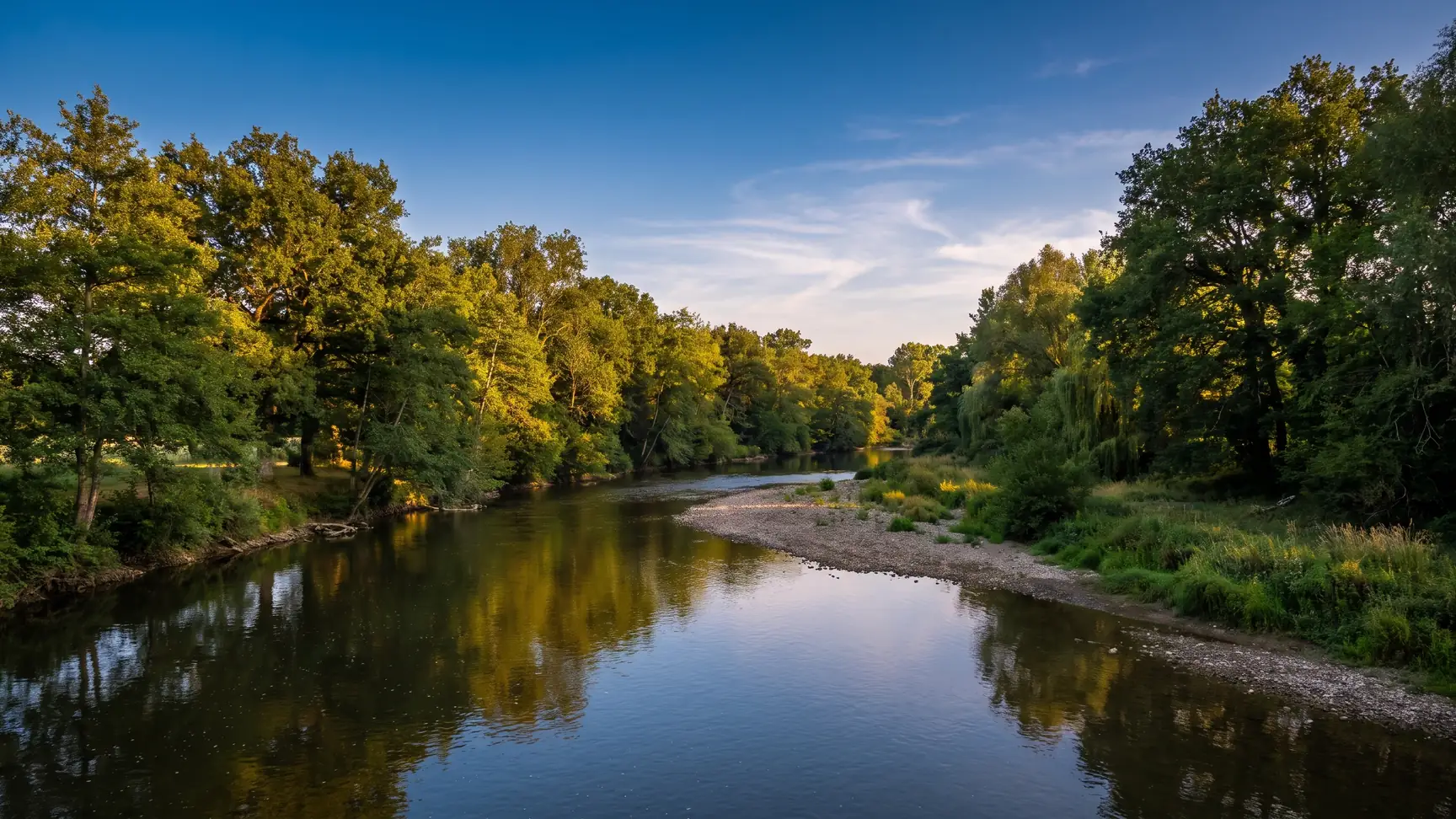
The true setting of Les Églisottes is nature itself: the Forest of La Double, the Dronne River, and the Chalaure Stream, in a countryside that feels more like the Périgord than Bordeaux. A land of water and woods, unassuming and unspoiled, ideal for walking and fishing. Here’s what makes it special.
A land of forests and ponds
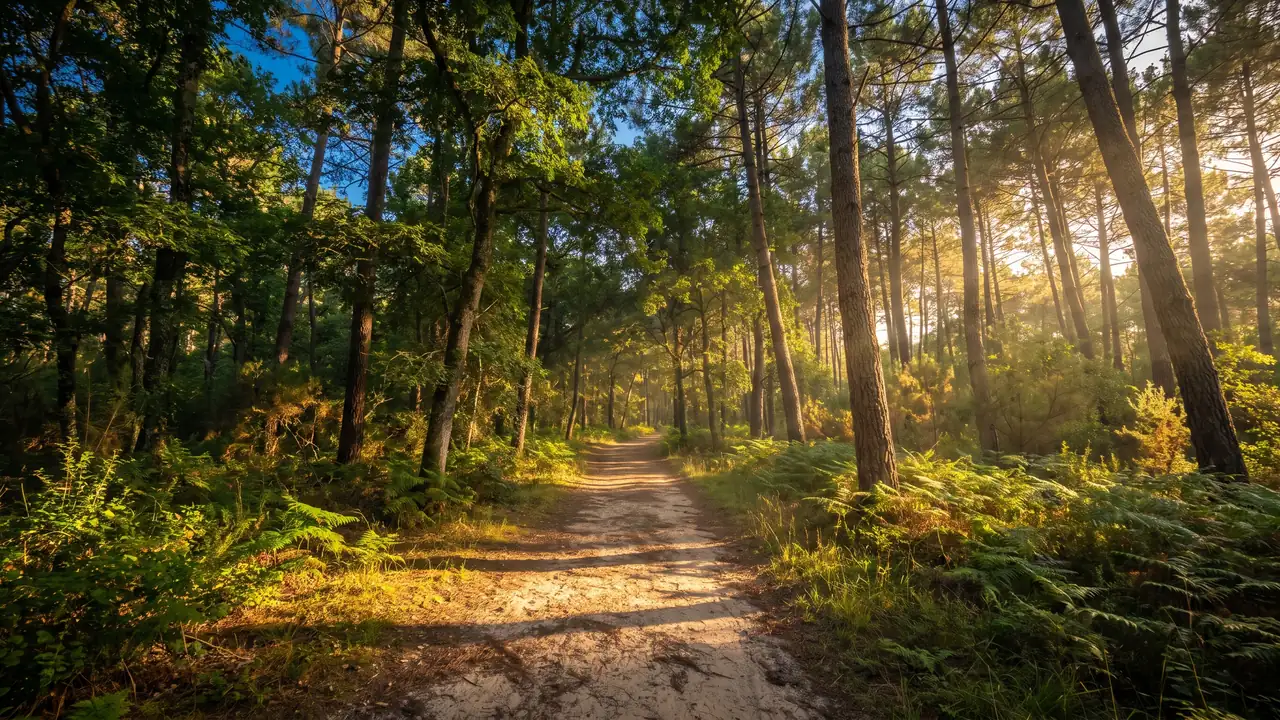
Les Églisottes is on the edge of the Double Forest, this vast woodland that covers the northeastern part of the Gironde department and extends into the Dordogne. It is an oak forest mixed with maritime pines, the latter planted in the 19th century, during the Second Empire, to drain and reclaim land that was once marshy. Ponds, streams, agricultural clearings, and woodlands alternate here: an intimate landscape, rich in shades of green, that contrasts with the vast vineyard horizons found elsewhere in the Gironde. Forests cover more than a third of the municipality. This forested character links Les Églisottes to the Green Périgord, much closer than the Bordeaux region: people come here for the peace and quiet, the walks through the woods, and the cool shade in the summer. It’s one of the most secluded and greenest rural areas in the department.
The Dronne and the Chalaure
Two waterways flow through the town. The Dronne, a lovely river that flows down from the Périgord, runs along the left bank of the town before joining the Isle a little further south, at Coutras. And the Chalaure, a 19.8-kilometer-long stream and tributary of the Dronne, which gave half of its name to the town: originating in the Dordogne, it serves as a natural border between the Gironde and the Dordogne for more than nine kilometers before flowing into the Dronne northwest of the town. Be careful not to confuse it with the Isle, which does not flow through the town (it passes through Coutras). The entire area is part of the large Isle-Dronne watershed, which flows into the Dordogne and then into the Gironde estuary. These calm rivers, lined with alders and willows, are ideal for fishing and strolling, and are home to migratory fish.
At the gateway to the Périgord Vert
This land of water and forests effectively marks the threshold of the Périgord. Crossing the Chalaure River, one enters the Dordogne and the Double Périgourdine, that region of ponds and deep forests immortalized by the writer Eugène Le Roy, author of *Jacquou le Croquant*. The landscape, with its isolated farms, ponds, and oak forests, already belongs to that world, rather than to the Bordeaux region of châteaux and grand crus. Long considered unhealthy and impoverished, the Double was reclaimed in the 19th century through major drainage projects and the planting of pine trees; today it is a haven of unspoiled nature, renowned for its fish-filled ponds and wildlife. For visitors, it offers the promise of an unexpected side of the Gironde: green, secluded, and quiet, a place to seek the tranquility of the woods rather than the bustle of the wine routes. A refreshing escape just an hour from the city of Bordeaux.
What is there to do in Les Églisottes and the surrounding area?

In Les Églisottes, people go to the market on Tuesday mornings, take walks in the Double Forest, and venture out to Coutras, Guîtres, and its tourist steam train. Here, specifically, are the actual, verified activities in the area. Since the village is primarily residential, many of these activities take place in the immediate vicinity, we’ll be sure to mention this each time.
- The Églisottes Market, Tuesday mornings (from 7:30–8:00 a.m.), in the covered market hall in the town center
- The tourist train from Guîtres to Marcenais, ~18 km: steam and diesel locomotives, ~18 km round trip, May 1 through October 31 (Sundays, holidays, and select Wednesdays during the summer)
- The Abbey Church of Notre-Dame de Guîtres, designated a Historic Monument (1901), is the sole remnant of a Benedictine monastery
- Coutras, about 10 km away: the confluence of the Isle and Dronne rivers, the Henri IV Well, and the Church of Saint John the Baptist (both listed monuments), and the site of the 1587 battle
- Canoeing on the Dronne and the Isle, downstream trips, particularly starting from Coutras
- Walks in the Double Forest, trails, ponds, and woodlands, starting from the village
- The Coutras Market, Wednesday and Saturday mornings, about 10 km away
Rail, the Market, and the Forest
Three simple pleasures sum up a stay here. The Tuesday morning market, located under the market hall in the town center, captures the spirit of the village and its surrounding countryside. The Double Forest, just nearby, is perfect for a stroll: shaded trails, ponds, and wooded areas, an ideal setting for a peaceful walk or bike ride. And for fans of railroad heritage, the main attraction is in Guîtres, less than twenty kilometers away: the Guîtres to Marcenais Tourist Train, pulled by former steam locomotives and a 1939 railcar, offering an 18-kilometer round-trip ride through the countryside, with a stop at the Moulin de Charlot and the railroad museum at the station. It runs from May 1st through October 31, especially on Sundays and holidays. A nod to the area’s railway heritage, the very same heritage that fueled the industrial boom in Les Églisottes.
Coutras, Guîtres, and the History of France
Both of these neighboring towns are worth a visit. Coutras (about 10 km away), at the confluence of the Isle and the Dronne, recalls a great military feat: the Battle of Coutras, on October 20, 1587, where Henry of Navarre, the future Henry IV, won his first major military victory over the Duke of Joyeuse, who was killed in battle. The city still preserves the Henri IV Well (designated a Historic Monument in 1911) and the Church of Saint John the Baptist (listed in 1925), with a Romanesque apse and a Gothic nave. It was the first major military victory of the future king. The Renaissance castle in Coutras was dismantled in the 18th century. Although there are no intact fortresses to visit here, the town and its riverbanks retain the charm of a historic city. In Guîtres, the Notre-Dame Abbey Church, listed as a historic monument since 1901, is the only remnant of a former Benedictine monastery, an imposing stone structure on the banks of the Isle River. In just one day, you can experience nature, cultural heritage, and a pivotal moment in French history, all just a few minutes from Les Églisottes.
| Activity | Where / When | Good to Know |
|---|---|---|
| Églisottes Market | downtown · Tuesday morning | under the covered market |
| Guîtres Tourist Train | ~18 km · May–October | steam, ~18 km round trip |
| Guîtres Abbey Church | ~18 km | Listed as a historic monument (1901), on the banks of the Isle |
| Coutras (Battle of 1587) | ~10 km | Henri IV Well, Church (2 MH) |
| Double Forest | from the village | walks, ponds, woodlands |
What is there to see around Les Églisottes?
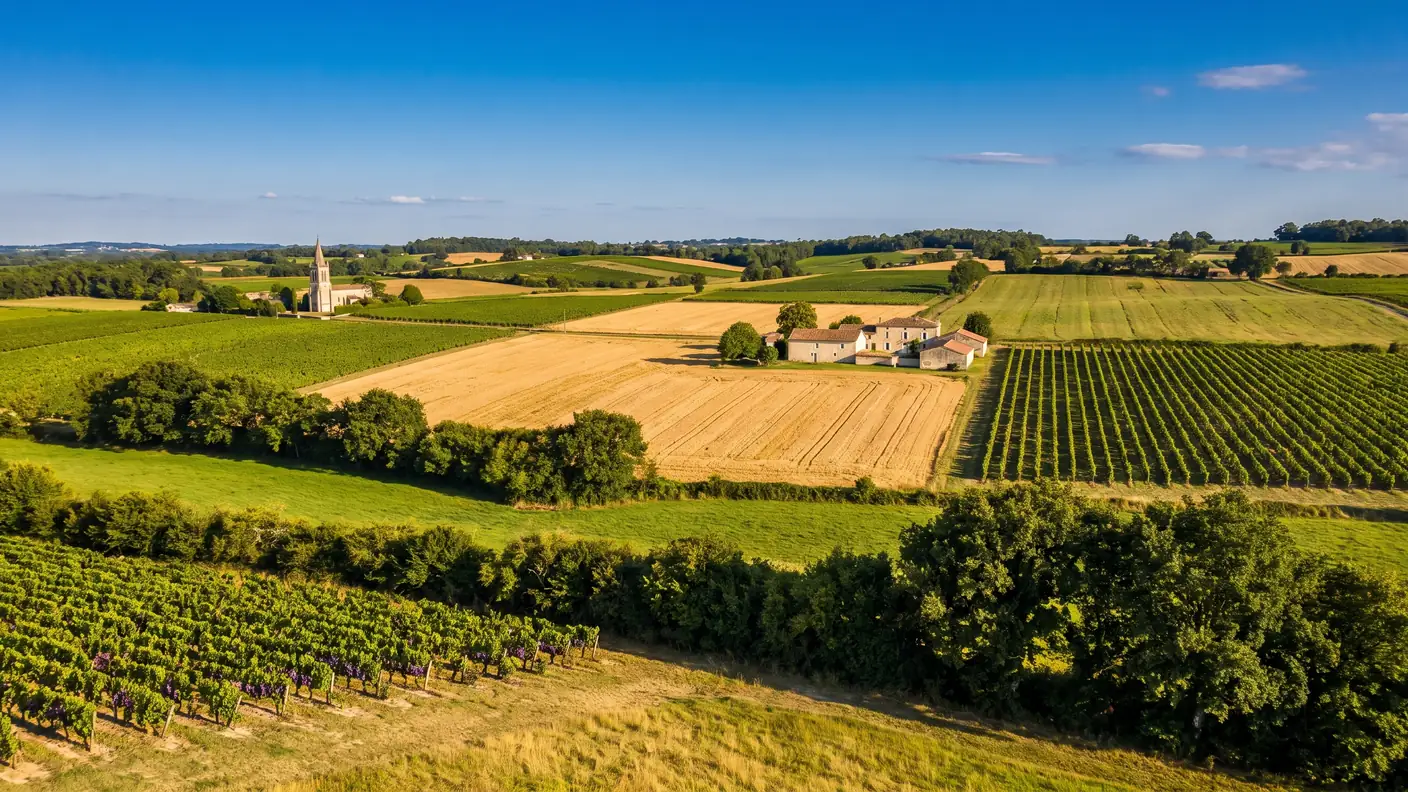
Around Les Églisottes, you’ll discover Coutras and its history, Guîtres and its abbey church, the Double Forest near the Périgord, and, further on, the vineyards of Saint-Émilion and the Isle Valley. A little-known area, nestled among woods, rivers, and historic sites, perfect for a day trip. Here are the must-see attractions.
Coutras, Guîtres, and the Isle Valley
The gateway town to the eastern sector is Coutras, ten kilometers away: a railway hub, a lively market, and, above all, the confluence of the Isle and Dronne rivers, which makes it a pleasant place to stroll along the water’s edge. Unfortunately, its Renaissance castle was dismantled in the 18th century, so there is no intact fortress to visit, but the town still boasts some beautiful historical landmarks, including the Henri IV well. A little further south, Guîtres boasts its Benedictine abbey church and its tourist steam train, on the banks of the Isle. The entire Isle Valley, between Libourne and the Périgord, is a land of water and mills, ideal for canoeing and cycling, and still untouched by mass tourism. Here, you can rent a canoe to drift down the Isle or the Dronne, pass through old fish passes, and have a picnic on a shaded riverbank. It’s a chance to discover an unexpected side of the Gironde, green and river-filled, far from the clichés of the vineyards, a setting that will appeal to families and nature lovers alike.
La Double and the Gateway to the Périgord
To the north and east lies the Double Forest, that vast expanse of oak and pine forests and ponds that straddles the Gironde and the Dordogne. You can already feel the atmosphere of the Green Périgord: ponds teeming with fish, isolated farms, villages built of brick and stone. If you go a little further, you’ll reach Montguyon and Haute-Saintonge, or, to the east, the first villages of the Double Périgourdine, so dear to the writer Eugène Le Roy (the author of Jacquou le Croquant). In contrast, to the southwest, the prestigious vineyard of Saint-Émilion and the wine-growing Libournais region (Pomerol, Fronsac, Lalande) are about 30 minutes away: the perfect way to round out a nature getaway with a day among the grand cru wines. Les Églisottes is thus a unique base, at the crossroads of forest, river, and vineyards; a private chauffeur allows you to explore every aspect of the area.
When is the best time to visit Les Églisottes?
Les Églisottes and the Double Forest are best enjoyed from spring through fall, when the undergrowth is green, the rivers are perfect for canoeing, and the Guîtres train is running. The spring (April–June) brings the forest and meadows to life: it’s the best time of year for walking through the woods, before the heat sets in. Summer (July–August) offers the cool shade of the woods and the refreshing coolness of the ponds, which is especially welcome in this wooded region; it’s also the peak season for canoeing on the Dronne and the Isle, and the Guîtres tourist train runs on Sundays and some Wednesdays. Fall (September–October) paints the Double Forest in magnificent colors and extends the train season through October 31, it’s the season of mushrooms and golden woodlands, an ideal time for nature lovers and photographers. Winter, quieter and wetter, is best suited for seasoned hikers. No matter the time of year, this region of forests and rivers, just an hour from Bordeaux, offers a green getaway far from the crowds. A weekend is enough to discover the highlights.
| Season | Atmosphere | Ideal for |
|---|---|---|
| Spring (April–June) | green forest, meadows, tranquility | walks through the woods, cultural heritage |
| Summer (July–August) | cool, shady spots, ponds, canoeing | family, river, train from Guîtres |
| Fall (Sept.–Oct.) | Colors of the Double, mushrooms | photo, nature, recent train trips |
How to Get to Les Églisottes from Bordeaux
Les Églisottes-et-Chalaures is about 70 km from Bordeaux, or about a 1-hour, 5-minute drive. The route heads northeast through Libourne and Coutras. The town has its own train station on the Bordeaux–Angoulême line; as service schedules are subject to change, check today’s schedule on SNCF Connect. [SNCF 2026]
| Route | Distance | Duration | Details |
|---|---|---|---|
| Bordeaux → Les Églisottes | ~70 km | ~1:05 | Starting at ~€133 for a private chauffeur service |
| Bordeaux-Mérignac Airport → Les Églisottes | ~80 km | ~1 hour 10 minutes | pickup at the terminal |
| Églisottes Station → town center | on site | ~5 min | Direct TER train from Bordeaux |
| Les Églisottes → Coutras | ~10 km | ~13 min | railway junction, market |
By road, you can reach Les Églisottes from Bordeaux in just over an hour, via the highway and then through Libourne and Coutras, before heading into the northern part of the Libournais region. By train, the town has the rare advantage of having its own Églisottes Station, a stop on the Paris–Bordeaux line, served by direct TER Nouvelle-Aquitaine trains from Bordeaux-Saint-Jean (Bordeaux–Angoulême route). The nearby rail junction at Coutras, 10 kilometers away, offers connections to Périgueux and Angoulême. Since service schedules are subject to change, it’s best to check the schedules on SNCF Connect before you leave. [SNCF 2026] To then reach a hamlet, a castle, or a canoe base, or to explore the Double Forest without a car, a chauffeur can handle the last mile; combining rail travel with a chauffeured transfer is particularly convenient here. It’s also the easiest way to arrive with luggage, a bike, or gear, or to head back in the evening after a day spent in nature, without having to worry about the last train’s schedule.
Whether you’re planning a nature getaway in La Double, a tour of the historic sites in Coutras and Guîtres, or a ride timed to coincide with your train arrival, booking a chauffeur service provides a comfortable and punctual trip, book a driver from Bordeaux to Les Églisottes or explore all our destinations.
Frequently Asked Questions
Where is Les Églisottes-et-Chalaures located?
Les Églisottes-et-Chalaures is a commune in the northern part of the Libournais region, in Gironde, on the edge of the Double Forest, about ten kilometers from Coutras and approximately 70 km northeast of Bordeaux. With a population of 2,205, it is a large rural town with an industrial past, crossed by the D674 highway and the Paris–Bordeaux railroad line, which gives it its own train station. Administratively, it is part of the Libourne arrondissement, the Nord-Libournais canton, and the Libournais Urban Community. It is a region of forests and rivers, closer to the Périgord Vert than to the Bordeaux vineyards. From Bordeaux, it’s about a 1-hour-and-5-minute drive, or you can take a direct TER train to the Églisottes station.
How much does a transfer from Bordeaux to Les Églisottes cost?
We offer a fixed-price transfer from Bordeaux to Les Églisottes-et-Chalaures, starting at approximately €165 one way (about 70 km, approximately 1 hour and 5 minutes by car), in a Mercedes sedan or van seating up to 8 passengers, with a professional driver. The trip is direct, door-to-door: pickup at the airport, Saint-Jean train station, or your hotel in Bordeaux, and drop-off at your desired address, including luggage. The fixed quote is provided and confirmed in writing before departure, with no unexpected meter charges. This is a convenient way to reach a hamlet or a château in the area, a canoe rental center on the Dronne River, or to explore the Double Forest without renting a car. While the town does have a train station, a driver ensures door-to-door service and covers the “last kilometer.”
Did the Églisottes factory really close in 2024?
No, that's a common misconception. The Baudou factory, famous for its rubber boots, did not close in 2024. Production moved out of Les Églisottes in the late 1990s after the brand was acquired and relocated to Beaupréau in 1997; the historical sources cited here are insufficient to determine its current industrial status. What took place in 2024 was an ecological restoration project at the site of the former Reyraud mill on the Dronne River, not a closure. Another clarification: the factory manufactured bicycle tires (including the puncture-proof “La Sirène” tire), then molded boots, and not automobile tires or linoleum, as is sometimes reported. At its peak, more than a thousand workers were employed there: this represents a remarkable industrial history for a village.
Is there a train station in Les Églisottes?
Yes, and that’s a rare asset for a village of this size. The Églisottes train station is an SNCF stop located within the town limits, on the Paris-Austerlitz–Bordeaux-Saint-Jean line. It is served by direct Nouvelle-Aquitaine TER trains to Bordeaux (on the Bordeaux–Angoulême route). Contrary to what is sometimes reported, the nearest station is not just Coutras: Les Églisottes has its own. Coutras, ten kilometers away, remains the major rail hub in the area, however, with connections to Périgueux and Angoulême. Since service schedules change from year to year, be sure to check the timetables on SNCF Connect. For the last kilometer to your exact destination, a chauffeured transfer is the ideal way to complete your journey from the train.
What is there to do in Églisottes-et-Chalaures?
This is more of a nature and heritage area than a tourist destination in the traditional sense. Local highlights include the Tuesday morning market in the market hall and walks in the nearby Double Forest (trails, ponds, and woodlands). Nearby, less than twenty kilometers away, is the Guîtres-Marcenais tourist steam train and the Notre-Dame de Guîtres Abbey Church (designated a Historic Monument). About ten kilometers away, Coutras, at the confluence of the Isle and Dronne rivers, preserves the memory of the 1587 battle won by the future Henry IV, with its listed Henry IV Well and church. You can also canoe down the Dronne or the Isle. An executive car service makes it easy to travel between these scattered sites without a car.
Is the town of Églisottes-et-Chalaures a wine-producing area?
Not really, contrary to what one might expect from a village in the Gironde. Les Églisottes-et-Chalaures does not have its own appellation: its territory falls solely under the regional AOCs of Bordeaux and Bordeaux Supérieur, which cover almost the entire department. Above all, it is primarily a forested region: more than a third of the municipality (34%) is forested, on the edge of the Double Forest, a mosaic of oak groves, maritime pines, and ponds. The landscape is therefore more akin to the Périgord Vert than to the hillsides of the grand cru vineyards. This does not prevent it from serving as a good base from which to explore the vineyards of Saint-Émilion and the Libournais region (Pomerol, Fronsac), about thirty minutes away. But Les Églisottes’ identity is rooted in forestry and industry, not winemaking.
Which river flows through Les Églisottes?
Two waterways flow through the town. The Dronne, a lovely river originating in the Périgord, runs along the left bank of the town before joining the Isle further south, at Coutras. And the Chalaure, a 19.8-kilometer-long stream and tributary of the Dronne, which gave half of its name to the town: originating in the Dordogne, it serves as a natural border between the Gironde and the Dordogne for more than nine kilometers before flowing into the Dronne northwest of the town. Be careful not to confuse it with the Isle, which does not flow through the town (it passes through Coutras). The entire area belongs to the Isle-Dronne watershed, which flows into the Dordogne and then into the Gironde estuary. These calm rivers are ideal for fishing and canoeing.
Where does the name Les Églisottes-et-Chalaures come from?
The name, which is a bit confusing, comes from the merger of two former municipalities in the early 19th century, around 1810: Chalaures and Les Églizottes (the old spelling, with a “z”). “Églisottes” is said to refer to several small churches and chapels that no longer exist; “Chalaures” comes from the first parish, established along the old road from Bordeaux to Angoulême, it is also the name of the stream that runs through the town. The name is written in full and in the plural, Les Églisottes-et-Chalaures, and not “Chalaure” in the singular. This dual origin explains why the settlement is scattered across several hamlets and why the town developed as a crossroads, first at the intersection of roads and later of railways, whose history was shaped as much by the fields as by the factories.
What is the distance between Bordeaux and Les Églisottes?
About 70 km by road, or about 1 hour and 5 minutes. The route heads northeast via the highway, passing through Libourne and Coutras, before reaching the northern part of the Libournais region. With a chauffeur service, the fare is fixed and provided in advance, starting at approximately €165 one way (sedan or van, door-to-door price). A nice surprise: the town has its own train station, Les Églisottes, served by direct TER trains from Bordeaux-Saint-Jean, so you can also travel by train and then take a private chauffeur service for the last kilometer. The nearby Coutras transportation hub, ten kilometers away, offers additional connections to Périgueux and Angoulême. Be sure to check train schedules on SNCF Connect, as service changes from year to year.
Is it possible to take the tourist train near Les Églisottes?
Yes, it’s one of the best outings in the area. In Guîtres, less than twenty kilometers away, the Guîtres–Marcenais tourist train is pulled by vintage steam locomotives and a 1939 railcar: it offers a round-trip journey of about eighteen kilometers through the countryside, with a stop at the Moulin de Charlot and a railroad museum at the Guîtres station. It runs from May 1 through October 31, mainly on Sundays and holidays, as well as on certain Wednesdays during the summer, with an afternoon departure. It’s a unique family-friendly activity that pays homage to the area’s railway heritage, the very same heritage that fueled the industrial boom of Les Églisottes. A driver can take you there and back, so you don’t have to worry about parking.
What is the Double Forest?
The Double Forest, or Double Landais, is a vast forested area that covers the northeastern part of the Gironde department and extends well into the Dordogne department. The municipality of Églisottes-et-Chalaures lies on its Gironde border. It is an oak forest (English oak, Pyrenean oak) intermingled with maritime pines, the latter planted in the 19th century, during the Second Empire, to drain what was once marshy land, dotted with ponds, streams, and agricultural clearings. The landscape, with its many shades of green, heralds the “Green Périgord” and contrasts with the vast vineyards of the rest of the Gironde. People come here for walks through the woods, fishing, mushroom hunting in the fall, and the peace and quiet. It is one of the most hidden and greenest corners of the Gironde, just under an hour from Bordeaux.
When is the best time to visit Les Églisottes?
From spring to fall, preferably. Spring (April–June) brings the Double Forest and its meadows to life: it’s the most beautiful season for walking through the woods before the heat sets in. Summer (July–August) offers the cool shade of the woods and the refreshing coolness of the ponds, a welcome respite in this wooded region, and it’s the peak season for canoeing on the Dronne and the Isle; the Guîtres train runs on Sundays and select Wednesdays. Fall (September–October) dresses the forest in stunning colors; it’s mushroom season, and the train runs through October 31. Winter, which is wetter, is best suited for seasoned hikers. No matter the time of year, this region of forests and rivers, just under an hour from Bordeaux, offers a green getaway far from the crowds. A weekend is enough to discover the highlights, combining nature and cultural heritage.
Further Reading
- The neighboring town of L'Isle: see the Coutras Guide (the confluence, the Battle of 1587)
- A village in the Libourne wine region: see the Saint-Denis-de-Pile Guide (the Isle Valley)
- The nearby Cité du Vin: see the Saint-Émilion Guide (UNESCO-designated medieval town and fine wines)
- Understanding our rates and vehicles: see the "Book a Driver" page (sedan & van, fixed-price quote)
- Plan your trip: Book a private driver from Bordeaux to Les Églisottes, or explore all our destinations
Sources and References
- INSEE, 2023 reference population for Églisottes-et-Chalaures, municipal population
- Églisottes-et-Chalaures Town Hall, Heritage, Local History and the Merger of Parishes
- Ministry of Culture, POP, Baudou Factory, Industrial Inventory
- Data and Statistical Studies Division, CORINE Land Cover, Land Use
- SNCF Connect, Gare des Églisottes, Check train service on the day of travel
- Guîtres to Marcenais Tourist Train, Official Website of the Operating Association
Article updated in July 2026.
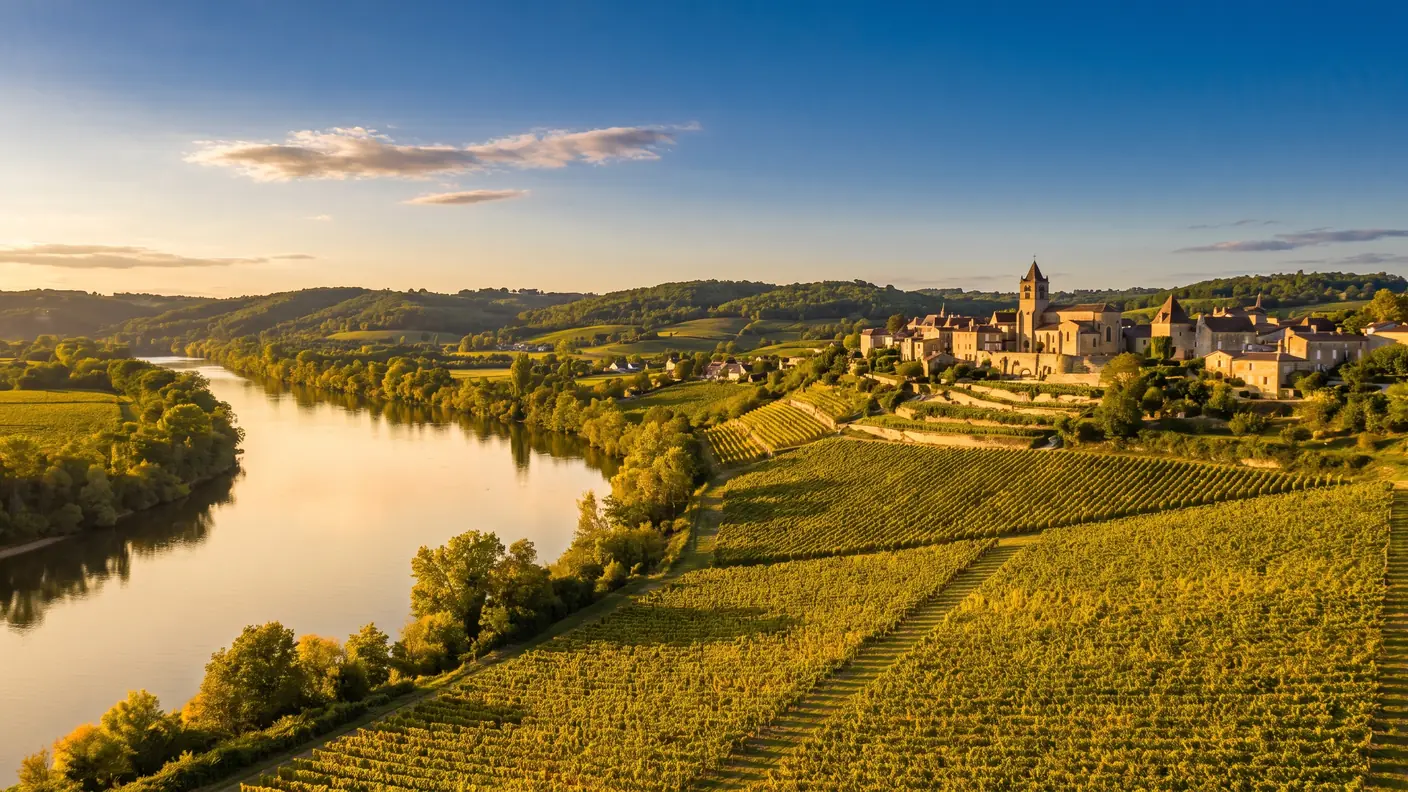
Off to the Double Forest
Direct transfer from Bordeaux (~1 hr 5 min) to Les Églisottes-et-Chalaures and the northern Libournais region, from the airport, train station, or hotel to the village, including luggage. Fixed, written quote, no unexpected meter charges.