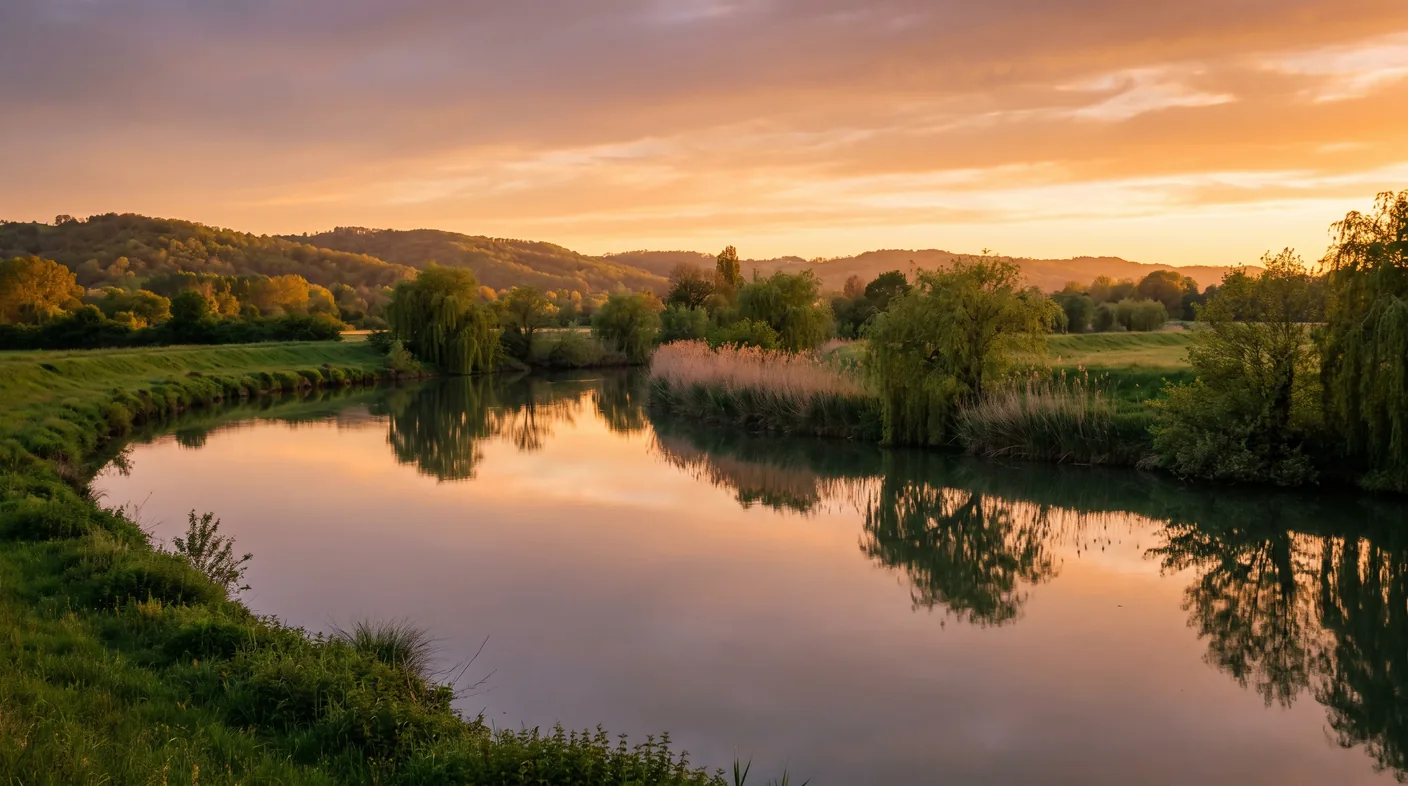
Bordeaux to Cadillac: the ducal bastide
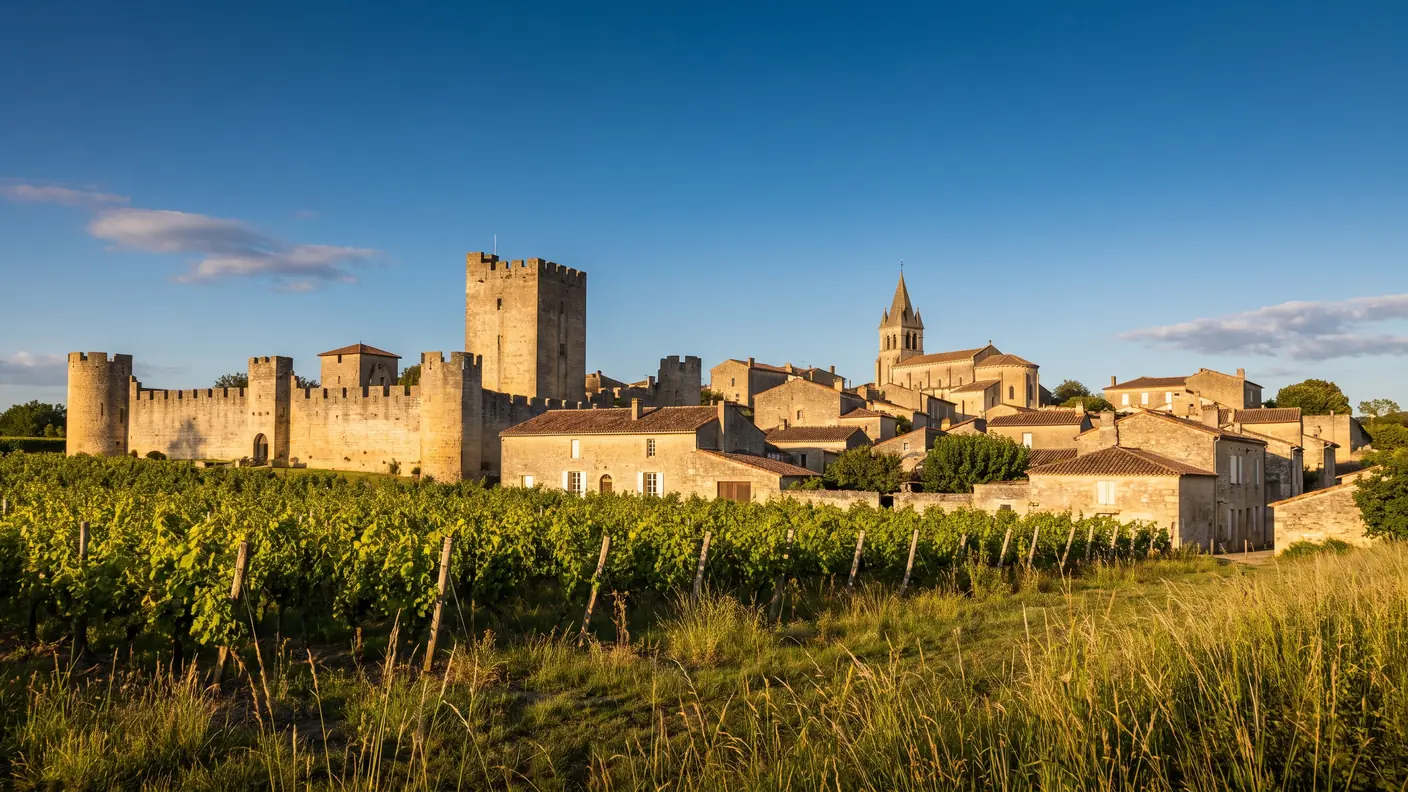
A fortified bastide on the right bank of the Garonne, overlooked by the castle of the Dukes of Épernon. Founded in 1280, surrounded by listed ramparts, home to a palace that became France’s first women’s prison, and the birthplace of a little-known sweet white wine—less than an hour from Bordeaux, across from the Sauternes region.
Cadillac at a Glance
Cadillac is a fortified town on the right bank of the Garonne, dominated by the immense castle of the Dukes of Épernon. Located in Gironde, less than an hour southeast of Bordeaux, Cadillac (Gironde) faces the Sauternes region and is home to a sweet white wine that has long remained in the shadow of its neighbors. Three points should be clarified right away, as they are often overlooked: the town has been officially named Cadillac-sur-Garonne since January 1, 2023, though “Cadillac” remains the common name, as well as the name of the castle and the appellation; its château is classified as a Historic Monument, owned by the State, and served as France’s first women’s prison in the 19th century; finally, contrary to a persistent misconception, the town in the Gironde has never lent its name to the famous automobile brand. At every step, this guide distinguishes verified facts from common misconceptions: INSEE statistics, dates of classification, and common misunderstandings are set straight, backed by supporting sources.
| Landmark | Details |
|---|---|
| Official Name | Cadillac-sur-Garonne (since January 1, 2023) · commonly known as “Cadillac” |
| Location | Gironde (33), Nouvelle-Aquitaine |
| Status | Bastide · Langon District · Entre-Deux-Mers Canton · Convergence Garonne Community of Communes |
| Population | 2,670 residents (INSEE 2023), the residents of Cadillac |
| Must-Sees | Castle of the Dukes of Épernon, ramparts, Cadillac sweet wine AOC |
| From Bordeaux | ~43 km · ~47 min · starting at €87 |
This guide begins by describing Cadillac’s geographic location and the significance of its recent administrative history, followed by the origin of its name, before getting to the heart of the matter: the fortified town founded in 1280, its listed ramparts, the immense castle of the Dukes of Épernon, and its surprising history as a prison. Next comes the great misunderstanding—the supposed connection to the automobile—which we unravel piece by piece, followed by the vineyards and their two eponymous appellations, things to do while you’re there, the surrounding villages, and, finally, the easiest way to get there from Bordeaux. At each stage, facts are linked to a source, and common misconceptions—which abound as soon as one approaches Cadillac—are pointed out and corrected, rather than simply repeated.
Where is Cadillac located?
Cadillac—officially Cadillac-sur-Garonne—is a commune in the Gironde department (33) in the Nouvelle-Aquitaine region. It has the INSEE code 33081 and the ZIP code 33410, and covers a surprisingly small area of approximately 5.44 square kilometers: it is one of the smallest municipal territories in the region. Administratively, it falls under the Langon arrondissement, the Entre-Deux-Mers canton, and the Convergence Garonne community of municipalities. The town lies on the right bank of the Garonne, south of the Entre-Deux-Mers, the vast wine-growing plateau wedged between the Garonne and the Dordogne. Across the river, on the opposite bank, lie the Sauternes region and the left bank of the Graves.
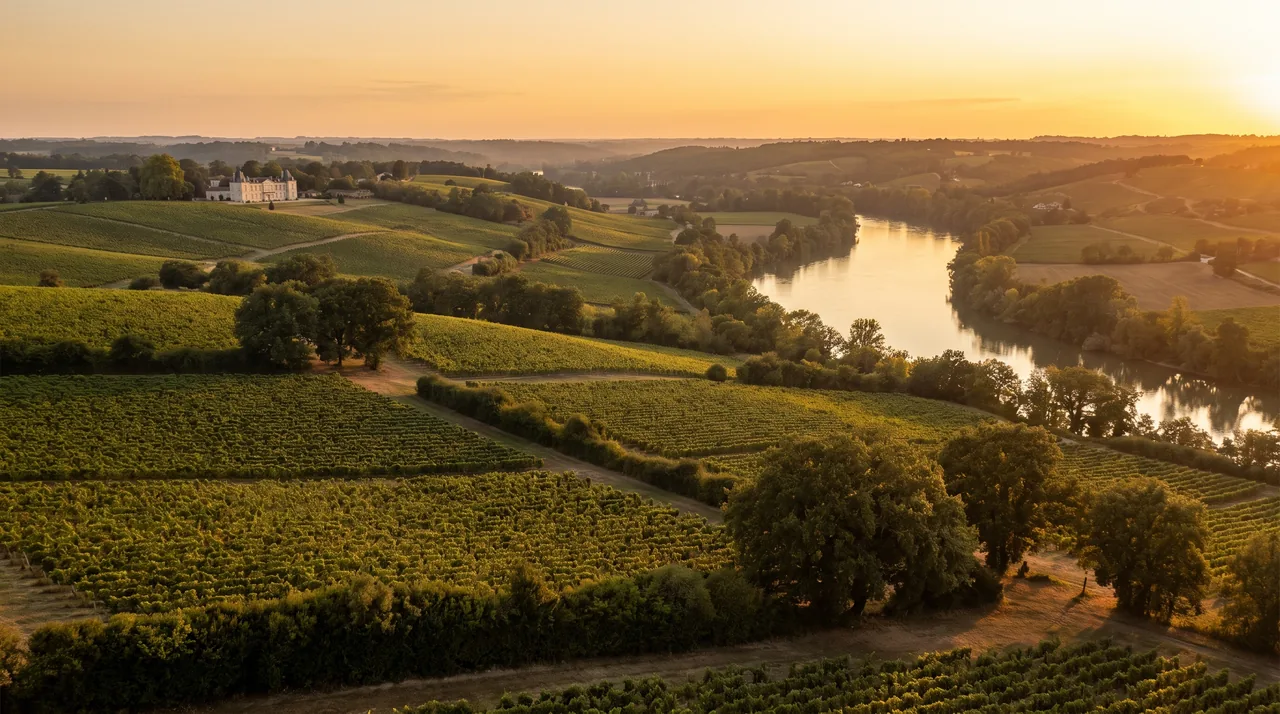
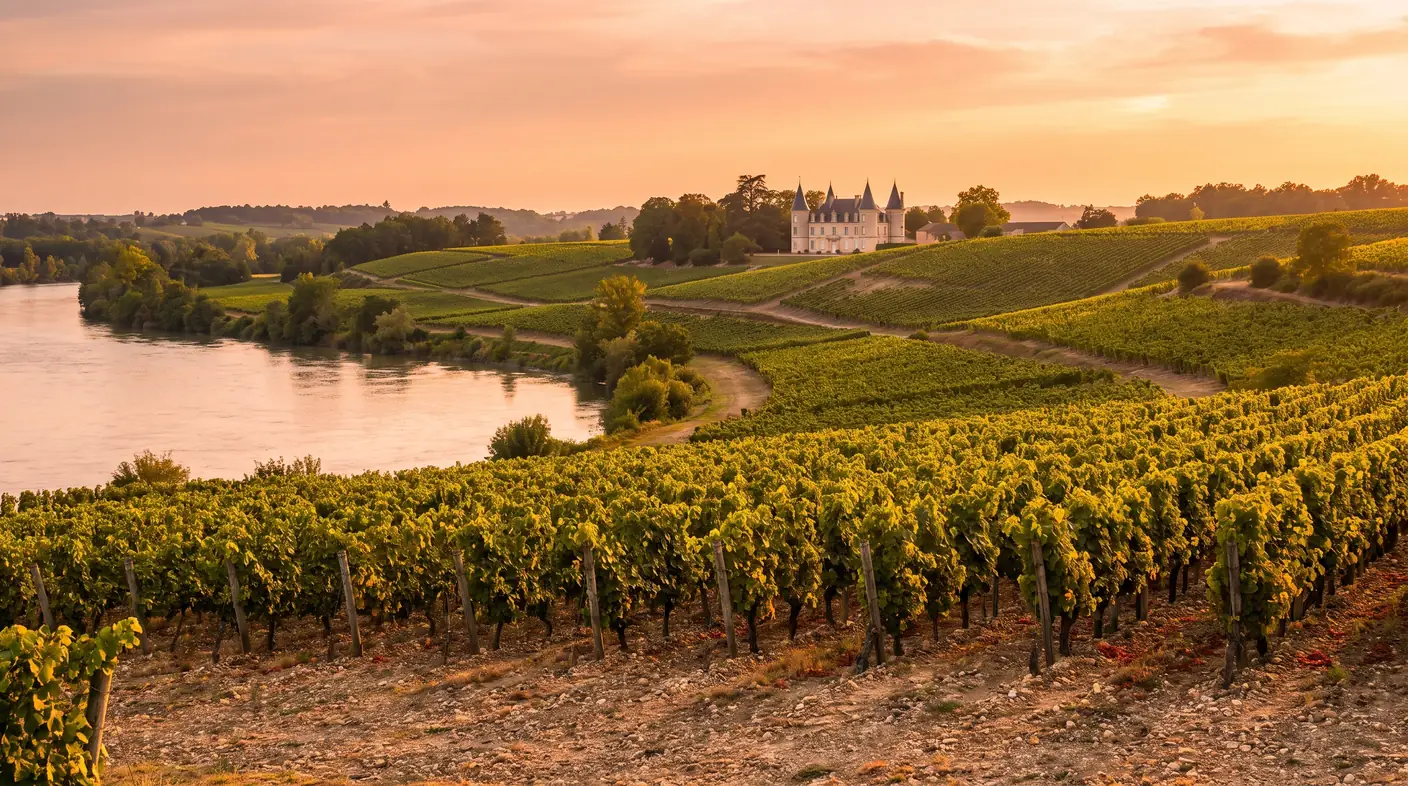
This location on the right bank is the key to the landscape. Cadillac occupies the foothills and the lower slopes overlooking the river: below lie the alluvial plain and the wide, slow-moving Garonne; above, hills covered with vineyards that look out across the water toward the Sauternes vineyards. The town is physically contiguous with Béguey—so much so that the two villages touch—and neighbors Rions, a little further upstream. Toward the left bank, the river is crossed via the Cadillac Bridge, which connects the bastide to Cérons and then, a little further on, to Podensac. Here we are in a region of confluence, where the sweet wine appellations of both banks face each other on either side of the Garonne.
The terrain, while not spectacular, explains it all. The southwest-facing hillsides, which drain toward the river, provide the vineyards with well-oriented slopes, while the Garonne River, flowing below, plays a decisive role in the autumn microclimate that gives rise to the sweet wines. The small municipal territory, one of the most compact in the canton, is concentrated along the riverbank: hence the town’s dense silhouette, clustered around its bastide and castle, without spreading out into the vineyards. It is a landscape with two distinct facets—historical heritage below, vineyards above—that can be taken in at a single glance from the heights of the hillsides.
How far is it from Bordeaux?
From downtown Bordeaux, it’s about 43 kilometers and roughly a 47-minute drive. Be aware of a common misconception: you may sometimes see “34 km,” but that figure refers to the distance as the crow flies, not the actual driving distance. By car, you can reach Cadillac by following the right bank of the Garonne River, or via the A62 and crossing the river, depending on the route you choose. The nearest train station, incidentally, is not on the same bank: it’s the Cérons station, about 2.5 kilometers away on the left bank, connected by the bridge. This short distance makes Cadillac an easy half-day or full-day getaway from Bordeaux.
| From Cadillac | Approx. distance | Note |
|---|---|---|
| Béguey | ~1 km (adjacent) | Neighboring Municipality · Château Reynon |
| Rions | ~5 km | Nearby fortified village |
| Loupiac | ~11 km | Sweet Wines from the Right Bank |
| Cérons | across the bridge | Left Bank · TER Station |
| Bordeaux | ~43 km | ~47-minute drive |
How many people live in Cadillac?
Cadillac is a small town by rural standards, but densely populated for its size. Its municipal population stood at 2,670 according to the 2023 INSEE census, a figure current as of January 1, 2026. See the INSEE source. It’s best to stick with this data point: outdated figures in the range of 2,818 (2018) or 2,846 (2020)—copied from one website to another—are still circulating, but they no longer reflect reality. When applied to an area of just 5.44 square kilometers, this population yields a density of approximately 491 inhabitants per square kilometer—a surprisingly high figure for what the INSEE nevertheless classifies as a “rural town.”
This paradox can be explained by geography: the municipal territory is tiny—one of the most compact in the area—and the entire population is concentrated along the right bank, around the bastide. It is therefore not a large city, but a compact and densely populated town, with no sprawl into the vineyards. Cadillac is, in fact, the central town of its own small urban unit—an agglomeration of four municipalities totaling approximately 5,356 residents in 2023—while also belonging to the outer ring of Bordeaux’s catchment area. It serves both as a local hub, with its shops and market, and as a municipality under the distant influence of the Bordeaux metropolitan area.
A population in slow decline
Over the long term, the trend has been downward. Cadillac had a population of 3,748 in 1968; it has steadily lost residents since then—3,340 in 1975, 2,961 in 1982, 2,582 in 1990, reaching a low of 2,365 residents in 1999. A recovery followed, with a recent peak of 2,846 residents in 2020, before another sharp decline: 2,785 in 2021, 2,727 in 2022, and then 2,670 in 2023—a decrease of 176 residents in just three years. This trend, common to many small wine-growing towns in the inland Gironde, contrasts with the town’s vibrant cultural heritage and tourism sector. The residents are known as the Cadillacais and the Cadillacaises.
| Data | Value |
|---|---|
| Municipal Population | 2,670 residents (INSEE 2023) |
| Area | 5.44 km² |
| Density | ~491 people/km² |
| Demonym | Men and women from Cadillac |
| ZIP Code | 33410 |
| INSEE Code | 33081 |
Where does the name "Cadillac" come from?
The first thing to know about the name “Cadillac” is not its etymology, but an administrative development. As of January 1, 2023, the town is officially named Cadillac-sur-Garonne, pursuant to Decree No. 2022-1225 of September 12, 2022. Until December 31, 2022, it was simply called “Cadillac.” Be careful, however, not to read too much into this change: it is merely a name change, not a municipal merger. The INSEE code 33081 remains unchanged, as does the area of 5.44 square kilometers; the territory has not shifted by a single meter, and the neighboring town of Béguey remains a separate municipality, just as before. “Cadillac” also remains the common name, and above all, the name of the château and the wine appellation, which have not been renamed.
As for the ancient origin of the name, it remains uncertain. The only historically attested form is “Cadilacum,” recorded in 1306. Based on this, toponymists reconstruct a classic Gallo-Roman formation: a personal name followed by the Gallic suffix -acum, which originally denoted a place and, in the late Gallo-Roman period, denoted ownership—hence the gloss “estate of…”. The presumed personal name, *Catilius, is marked with an asterisk: it is a reconstruction, not a documented name. Moreover, specialists do not entirely agree: Dauzat links the root to a Gaulish “Catilus,” while Nègre links it to a Romance name “Catilius.” Let us exercise the customary caution: the name Cadillac is thought to date back to a Gallo-Roman estate, a hypothesis accepted by toponymists, but not a documented certainty.
Cadillac or Cadillac-sur-Garonne?
Both forms coexist, and knowing which one to use helps avoid many misunderstandings. “Cadillac-sur-Garonne” has been the official administrative name since 2023: it is the name found in civil registry documents, on town entrance signs, and in official records. “Cadillac,” on the other hand, remains perfectly acceptable in everyday usage and is still the name of the Château des Ducs d’Épernon as well as the two AOCs. In this guide, we use “Cadillac” when referring to the town in everyday contexts, the castle, or the wine, and “Cadillac-sur-Garonne” when the administrative context requires it. As for the ancient, local Gascon form, it is spelled Cadilhac.
One final detail will amuse those curious about language. The same etymon—the root *Catil-/Cadil-* followed by the suffix *-acum*—has given rise to very different names depending on the region. In the south, in the Occitan-speaking region, it resulted in “Cadillac,” with its -ac ending; further north, the same root evolved into names like “Chailly,” such as Chailly-en-Bière, attested as “Cadiliaco” as early as 808. These are two villages that have nothing in common today, but whose names trace back to the same Gallo-Roman root. As for the question on everyone’s mind—the connection to the car—it deserves its own investigation, which we’ll explore a little further on in this guide.
The fortified town and its ramparts
Cadillac grew out of a medieval urban planning project: it is a bastide, one of those new fortified towns that were built by the hundreds in southwestern France during the 13th and 14th centuries. The principle is the same everywhere: a regular layout, often checkerboard-like, organized around a central square bordered by a market hall—here, the Place de la République. In Cadillac, this grid layout of the new town was superimposed onto an already occupied site, Bourg Saint-Jean, and later enclosed by a stone wall. The orthogonal layout is a common feature of bastides, though it should not be mistaken for a layout drawn with a plumb line: no source provides precise geometric measurements, but the regular spirit of the new town is still evident in the street layout.
A bastide founded in 1280
The date of its founding has been established: 1280. The bastide was founded by Jean I de Grailly, Viscount of Benauges and Seneschal of Guyenne, a prominent figure in English Gascony—for this was the height of Plantagenet Aquitaine, under the sovereignty of King Edward I of England. It was therefore a seigneurial settlement, established by a high-ranking vassal, rather than a direct royal bastide. Jean I de Grailly, whose lineage would leave a lasting mark on the region, died in 1303. The founding of Cadillac was part of a broader movement to establish bastides, which, on both sides of the Franco-English border, served as much to populate and develop the countryside as to secure the territory.
The town only gradually became a stronghold. Fortification began in 1315, and the city walls and gates were not completed until “around” 1366—an approximate date, not a verified year. Thus, nearly eighty-five years elapsed between the founding of the bastide and its complete enclosure by walls. This delay is not surprising: building a wall was costly and time-consuming. Cadillac, strategically located on the Garonne River, then became part of Bordeaux’s defensive system, situated downstream from the river.
The bastide then followed the course of the kingdom’s major events. During his Grand Tour of France, the young King Charles IX stopped there on the night of March 31 to April 1, 1565—a sign of the status the small town on the Garonne had attained. Two centuries later, during the Revolution, Cadillac distinguished itself through its religious loyalty: along with Bordeaux, it was one of the few districts in the Gironde where the majority of the clergy refused to take the oath to the Civil Constitution of the Clergy, promulgated in 1790. A small town, but with a great history.
The two remaining doors
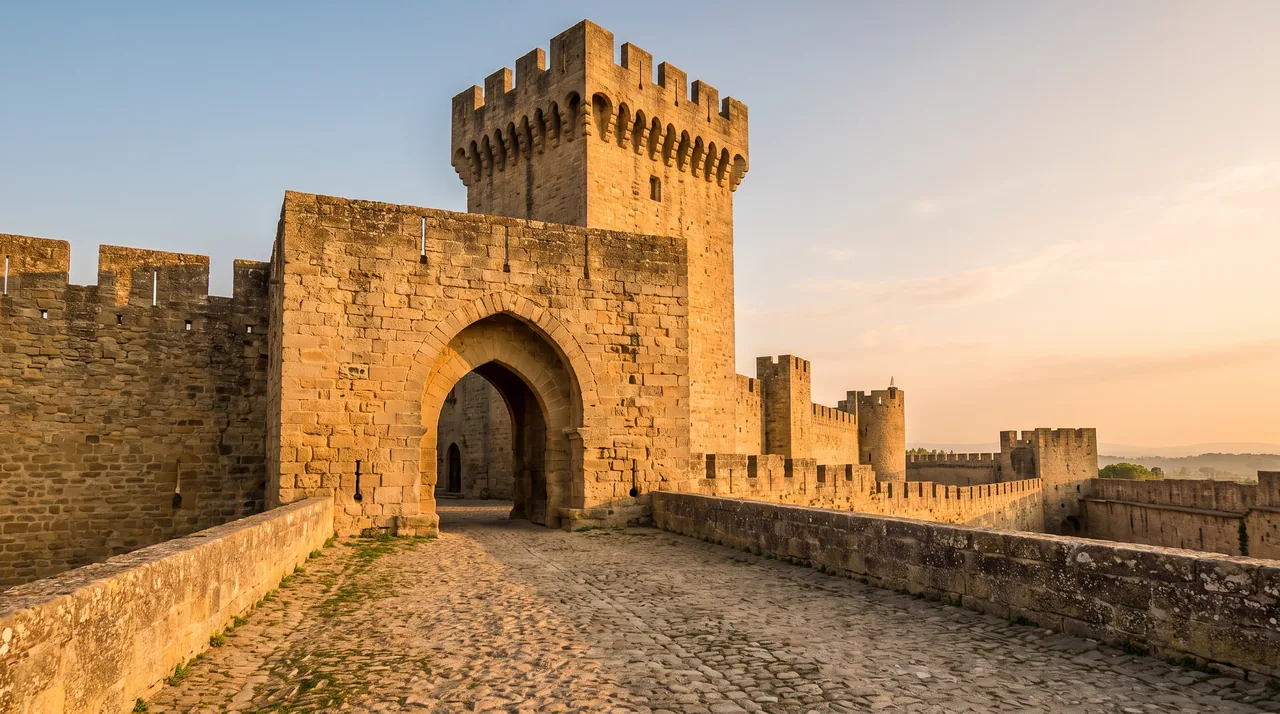
Today, beautiful ruins of this medieval enclosure remain, protected as historic monuments. The ramparts, the city walls, and the gates are listed in the Mérimée entry PA00083501 and are classified—the city walls by decree of April 19, 1881, and the ramparts and gates on July 12, 1886. This is an important clarification, as one sometimes reads that the ramparts have been “listed since 1862”: this is a mistake; 1862 refers to the castle, not the walls. Two gates remain. The Porte de la Mer, to the south on the Garonne side, dates back to the very beginning of the fortifications (starting in 1315); it was through this gate that the city connected to the river. The Porte de l’Horloge, to the east—the former Porte Vernihaut from the early 14th century—was topped in 1772 with a dome and bell turret, giving it its current silhouette. In addition to these two gates, there are three towers and a large section of the city wall.
The Castle of the Dukes of Épernon
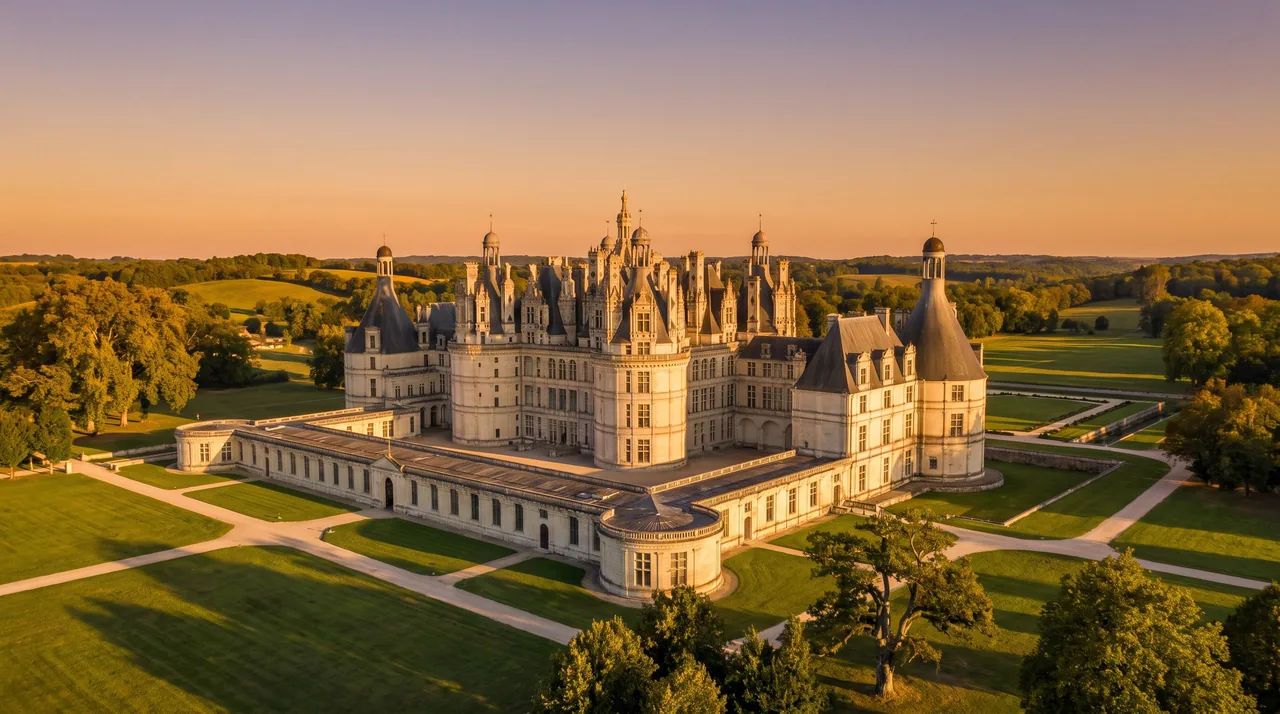
You can’t miss the castle: it alone occupies nearly a third of the bastide’s total area. One point of confusion should be cleared up right away: the “Castle of the Dukes of Épernon” and the “Castle of Cadillac” are not two separate monuments, but one and the same building. To build it, the entire northwestern quadrant of the walled town was razed, including an earlier medieval stronghold. The result is an immense late-Renaissance palace, in no way comparable to the modest bastide that surrounds it—a princely residence set in the heart of a small provincial town.
The Half-King
The man who commissioned this palace was Jean-Louis de Nogaret de La Valette (1554–1642), the first Duke of Épernon. A favorite—known at the time as a “mignon”—of King Henry III, he amassed titles, offices, and wealth to such an extent that he was nicknamed “the Half-King,” as his influence seemed to rival that of the sovereign. It was he who had the château built beginning in 1598–1599, during the reigns of Henry IV and then Louis XIII: we are indeed at the turning point between the Renaissance and the 17th century, and not “at the beginning of the 16th century” as is sometimes mistakenly stated. The structural work is traditionally attributed to the architect Pierre Souffron, but the attribution remains debated—two architects from the Périgord region with the same first name, Pierre I and Pierre II, complicate matters. It is therefore better to write “attributed to” rather than make a definitive claim.
This figure left behind some fascinating traces. It was the Duke of Épernon who, in 1622, provided Louis XIII with the mounted guards that would give rise to the first company of the King’s Musketeers: Cadillac is thus indirectly linked to the origins of the famous musketeers. His study, it is said, was nicknamed “La Moutarde” by his servants, so much were his outbursts of anger and mood swings feared. In 1617, he had the Sainte-Marguerite Hospital built in the city, named in memory of his wife, who died in childbirth at the age of twenty-six. A man of power to the very end, the “Half-King” nevertheless fell from grace and died at the age of eighty-eight.
A courtyard setting
Inside, the château retains a décor worthy of a princely court. Visitors can admire monumental French-style fireplaces, French-style ceilings with painted beams, ornate interior shutters, and above all, an exceptional collection of textiles: the largest collection of period draperies and tapestries from the 16th and 17th centuries preserved by the National Monuments agency, comprising several dozen pieces. This refinement serves as a reminder that the site was not designed as a fortress, but as a stately residence intended to entertain and dazzle.
The castle’s heritage status deserves to be stated accurately, as there are many inaccuracies. The castle, with its moat and garden, is classified as a historic monument—on the 1862 list, supplemented by a decree dated July 12, 1956—under the Mérimée entry PA00083500. It is classified, not “registered”: this distinction matters, as only the gate to the dukes’ vegetable garden is registered (separate entry PA00083502, decree of 1965). One may also come across the reference IA33000088: this refers to a study by the General Inventory, not to a designation. Owned by the State, the castle is now managed and open to visitors by the Centre des monuments nationaux. Just a short walk away, the Saint-Martin Collegiate Church—also known as Saint-Blaise—was founded in 1490 by Gaston III of Foix-Candale, rebuilt between 1541 and 1544, and listed in 2002 (entry PA00083499)—houses the tombs of the Dukes of Épernon in its southern burial chapel.
When the castle became a women's prison
The castle’s fate took a dramatic turn in the 18th century. Due to a lack of maintenance and disuse, its wings, pavilions, and part of its surrounding wall were dismantled around the middle of the century, and the stones were sold. The monument could have disappeared; it was saved by an unexpected use. During the Restoration, in 1818, it was decided to turn it into a prison; the first female inmates arrived around 1822. The Château de Cadillac thus became France’s first women’s prison, and later served as a reform school until 1952, as noted by the Centre des monuments nationaux (verified on July 24, 2026).
The figures give a sense of what this place was like. In 1865, the prison held approximately 500 female inmates, housed in fourteen dormitories set up in the duke’s former state rooms. Throughout the 19th century, some 10,000 women were imprisoned there, under conditions whose harshness was reflected in the high mortality rate. Around 1905, the facility also housed a “school of moral reform” for young girls, modeled after those in Doullens and Clermont-de-l’Oise. A fire ravaged part of the buildings in 1928. Around 1930, the Ministry of Justice even commissioned the Parisian studio Henri Manuel to produce an album of sixty photographs of the “castle-prison”—a chilling testament to a historic site that had become a place of confinement.
The Centre des monuments nationaux now fully acknowledges this paradox: it was most likely the castle’s use as a prison that saved it. Had the prison not been established there in 1818, the building—already stripped of its features and dismantled—would undoubtedly have continued to serve as a stone quarry until it fell into complete ruin. By occupying the premises and maintaining them as best it could, the prison paradoxically preserved the structural framework of the ducal palace—so that today’s visit owes as much to Louis XIII as it does to the 19th-century prison guards.
The Cemetery of the Forgotten
In addition to this history of incarceration, there is a poignant memorial site a short distance away: the “Cemetery of the Forgotten.” This is the former cemetery of the nearby psychiatric hospital, where the anonymous residents of the institution are buried. There are approximately 900 graves and more than 4,000 people buried there between 1921 and 2000, including a section containing 98 World War I veterans “with brain injuries ”—soldiers from the Great War suffering from what we would today call post-traumatic stress disorder. A memorial wall was dedicated there on September 19, 2020, and the site’s perimeter wall has been listed as a historic monument since 2010, with this protection expanded in 2021 (listing PA33000132). The site can be visited via the municipal cemetery.
Did Cadillac give the car its name?
Let’s ask the question frankly, since it always comes up: Did Cadillac give its name to the American car brand? The answer is no. Contrary to a persistent misconception, the Cadillac brand does not owe its name to the city in the Gironde department. The connection, while appealing, doesn’t hold up to scrutiny: the true origin of the name lies some 150 kilometers away, in the Tarn-et-Garonne department, and not on the banks of the Garonne River in the Gironde department.
Here is the well-documented lineage. A certain Antoine Laumet, born on March 5, 1658, in Saint-Nicolas-de-la-Grave, in Tarn-et-Garonne, and died on October 16, 1730, in Castelsarrasin, adopted for himself, once he had moved to Canada, the aristocratic surname “de Lamothe-Cadillac”—the first known document bearing this name is his marriage certificate, dated June 25, 1687, in Quebec City. He borrowed it from the seigneury of Cadillac belonging to Baron de Lamothe-Bardigues, a locality near his native village in Tarn-et-Garonne. His birthplace there is, in fact, listed as a historic monument (entry PA00095884). Under no circumstances does this name refer to the Gironde bastide.
What happened next is better known. In 1701, Antoine de Lamothe-Cadillac founded Fort Pontchartrain du Détroit in North America—now known as Detroit, the future capital of the American automotive industry. Two centuries later, in 1902, on the occasion of the city’s bicentennial, the young Detroit-based automaker chose the name Cadillac in honor of its founder. The brand’s famous coat of arms itself is derived from the “de Lamothe-Cadillac” coat of arms—which Antoine, once again, had largely invented by combining the merlettes of the Baron de Lamothe-Bardigues with the coat of arms of a family from Vir. Nothing in this genealogy has any connection to the Gironde region.
Romance and the Other Cadillacs
There remains the charming story that is sometimes told: Antoine is said to have fallen in love with a young woman from Cadillac, in Gironde, and to have taken her name. It’s an appealing story, but unproven—even Wikipedia mentions it only in the conditional tense, without a single supporting document: it’s a legend, not a fact. Two points put an end to the myth. First, Cadillac is not twinned with Detroit; its only documented twinning is with Canet de Mar, in Spain, since 1987. Second, the name Antoine de Lamothe-Cadillac spread elsewhere without passing through the Gironde again: Mount Cadillac, the highest point in Acadia National Park in Maine, also bears his name, via a seigneury granted to him in 1688. Two “exports” of the name, neither from the Gironde region.
Cadillac Wine: Sweet Wines and the Côtes
The Cadillac wine region presents a classic pitfall: there are two appellations that bear the town’s name, and they share neither the same color, nor the same history, nor the same growing area. On the one hand, the Cadillac AOP, as defined by the INAO, refers to a sweet white wine; on the other, the Côtes de Bordeaux Cadillac appellation refers to a red wine (sources verified on July 24, 2026).
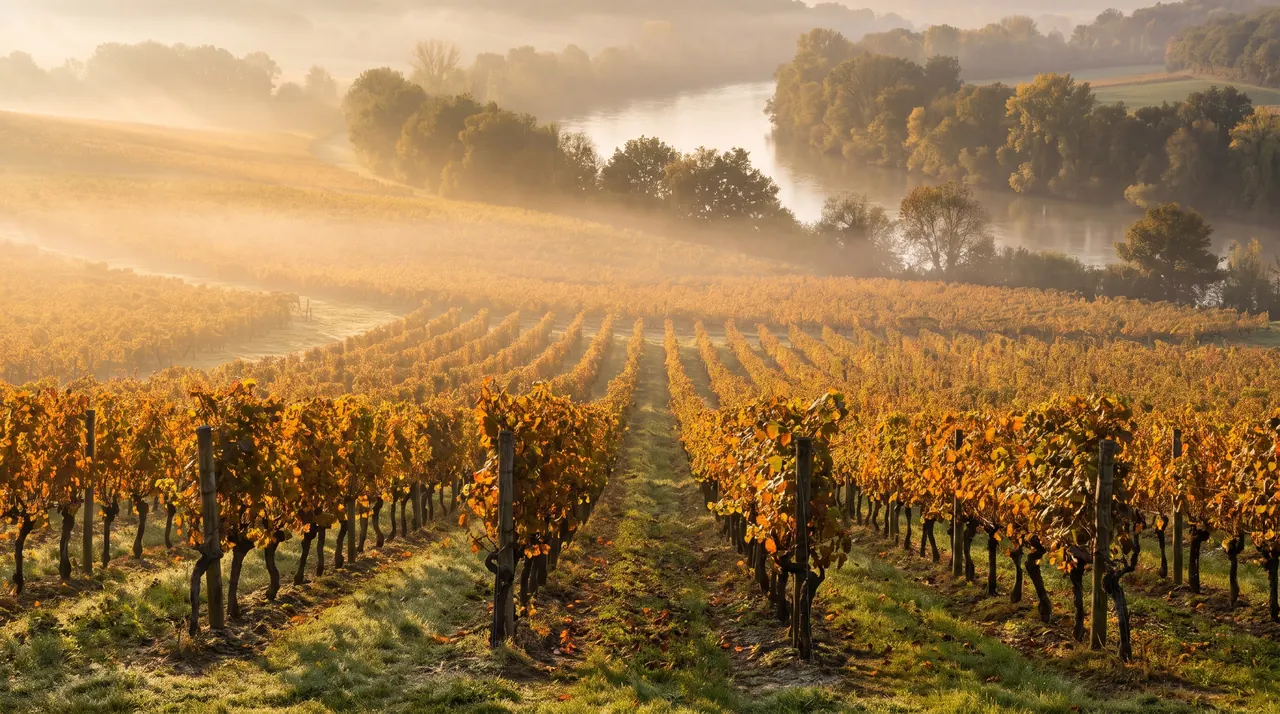
A sweet wine up against a Sauternes
The historic appellation—the source of the town’s quiet pride—is a sweet white wine. The Cadillac AOC was officially recognized by a decree dated August 10, 1973, although the name “Cadillac” had already been authorized as early as November 1955 for these sweet white wines, which had previously been sold under the name “Premières-Côtes-de-Bordeaux.” It stretches along the right bank of the Garonne, across twenty-two communes—including Béguey, Rions, and Villenave-de-Rions—directly across from the Sauternes region. The grape varieties are those of the great white Bordeaux wines: Sémillon makes up the vast majority (around 70%), followed by Sauvignon (20%) and Muscadelle (10%). The grapes are harvested by hand in successive passes, once affected by Botrytis—noble rot—or left to dry on the vine, with a minimum sugar content of 255 grams per liter of must and a residual sugar content of at least 51 grams per liter in the finished wine.
The process is the exact counterpart to that of Sauternes, right across the way. In the fall, the Garonne River exhales damp mists in the early morning that envelop the vineyards on the hillsides; the sun during the day dispels them, and this alternation allows the fungus to concentrate the grapes without causing them to rot prematurely. It is a wine of patience and risk, and that comes at a price: the area under this sweet wine appellation has declined sharply, falling from 128 hectares in 2008 to just 58 hectares in 2023, with a very low average yield of around 17 hectoliters per hectare. Cadillac’s sweet wine region shares this bank with two older neighbors, Loupiac and Sainte-Croix-du-Mont, whose appellations date back to 1936: three sweet wines from the right bank that echo, from one bank to the other, the great sweet wines of the Sauternes region.
Red Cadillac, White Cadillac: two names
Next comes the second appellation—the largest and most recent—and it is a red wine. The Cadillac-Côtes de Bordeaux AOC is one of the geographical designations within the broader Côtes de Bordeaux appellation, established by a decree dated October 31, 2009. It encompasses the red wines of what was previously known as the Premières Côtes de Bordeaux (whose decree dated back to 1937). Note the subtle distinction, which is often misunderstood: only the reds were transferred to the new appellation in 2009; the name “Premières Côtes de Bordeaux” remains in use for sweet white wines. The growing area for this red Cadillac is incomparable to that of the sweet wine: approximately 1,958 hectares claimed in 2023, compared to 58 for the sweet wine. Thus, a single name for two distinct worlds: a niche sweet wine and a more widely distributed red.
To get your bearings and sample both, there’s one place you simply must visit: the Maison des Vins de Cadillac, housed in an 18th-century wine-making charterhouse, “La Closière,” on the hillsides of the right bank (D10, Route de Langon). Here you’ll find both a shop selling wines at estate prices and a Museum of Vines and Wine, where you can learn, appellation by appellation, about the geography of these terroirs—Premières Côtes de Bordeaux, Cadillac-Côtes de Bordeaux, and sweet Cadillac wines—all under one roof.
| Designation | Color | Acknowledgments | Aire (2023) |
|---|---|---|---|
| Cadillac | Sweet white wine | Decree of August 10, 1973 | 22 municipalities · ~58 ha |
| Cadillac-Côtes de Bordeaux | Red | Decree of October 31, 2009 | ~1,958 ha |
| Loupiac, Sainte-Croix-du-Mont | Sweet white wine (neighbors) | Decree of September 11, 1936 | Right Bank |
What to Do in Cadillac?
In Cadillac, you can spend a day visiting one of the largest castles in the Gironde, strolling through a medieval bastide still surrounded by its city gates, shopping at the market under a covered hall, taste a rare sweet wine overlooking the Sauternes region, and stroll along the banks of the Garonne—all within a stone’s throw, as the town is so compact. The itinerary naturally revolves around two focal points: on one hand, the historic sites, including the Château des Ducs d’Épernon, the ramparts, the collegiate church, and the poignant Cimetière des Oubliés; on the other, the art of living, with the Saturday market, the wine cellars, and the river. It’s a pleasure to start with the castle, the town’s monumental heart, before getting lost in the narrow streets of the bastide and then heading up to the hillsides and their vineyards. Here are the main options, which you can tailor to your preferences and the season.
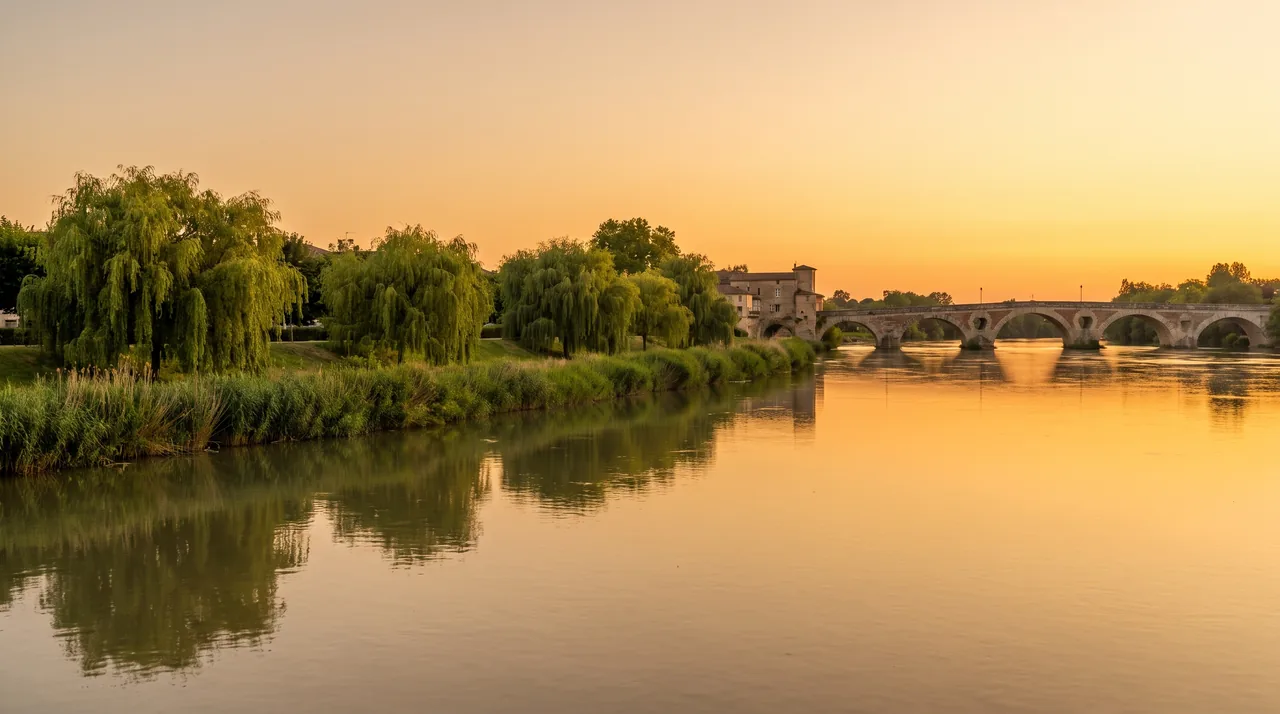
The Castle and the Bastide
The Château des Ducs d'Épernon is a must-see. Managed by the Centre des monuments nationaux and designated a Historic Monument, it is open year-round, with an individual admission fee of around 7 euros and a combined ticket with La Sauve-Majeure Abbey for around 11 euros. One thing to keep in mind: outside of peak season, it’s closed on Mondays, and hours vary depending on the time of year—it’s always best to check the website chateau-cadillac.fr before heading out. Around the palace, the bastide can be explored on foot: you’ll pass under the Porte de la Mer and the Porte de l’Horloge, listed remnants of the medieval city walls, before reaching the Saint-Martin Collegiate Church, whose chapel houses the tombs of the dukes. History buffs can continue on to the Cimetière des Oubliés, on the outskirts of town.
Market, vineyard, and the Garonne River
The other side of Cadillac is that of a lively town. The main event is the Saturday morning market, which takes place around Place de la République and the market hall, in streets closed to traffic: a tradition dating back to the Middle Ages that brings together a fine selection of producers. For wine lovers, the “La Closière” Wine House offers tastings, a shop, and a museum on the hillsides. Along the river, you’ll find the Cadillac Bridge—a 251-meter-long Eiffel-style steel bridge, inaugurated in 1880, which spans the Garonne toward Cérons via the RD11; it is by no means a suspension bridge, as is sometimes mistakenly stated. The river port, with its Épernon pontoon and its landing stage renovated in 2019, welcomes cruise ships and passenger vessels on the Garonne. Finally, a marked walking trail, the “Ducal Castle Loop,” allows visitors to walk around the site in three-quarters of an hour.
- Visit the Château des Ducs d'Épernon (Centre des monuments nationaux, designated a Historic Monument): individual admission is around €7; a combined ticket with La Sauve-Majeure Abbey costs approximately €11. Closed on Mondays outside of peak season—check the hours at chateau-cadillac.fr.
- Go to the Saturday morning market around Place de la République and the market hall, in the pedestrian streets of downtown.
- Explore the bastide's ramparts: the Porte de la Mer (on the Garonne side) and the Porte de l'Horloge (with its bell tower dating from 1772), both designated as Historic Monuments.
- Explore the Saint-Martin Collegiate Church (listed in 2002) and the tombs of the Dukes of Épernon in its burial chapel.
- Pay your respects at the Cemetery of the Forgotten, the former cemetery of the psychiatric hospital, accessible via the municipal cemetery.
- Taste sweet, red, and white wines at the Maison des Vins de Cadillac “La Closière” (D10, Route de Langon), which also houses the Vine and Wine Museum.
- Walk along the Garonne River to the Cadillac Bridge (Eiffel-style, 1880) and the river port, or follow the “Ducal Castle Loop” (45-minute walk).
- Depending on the season, enjoy local events: “Les Baladins à Cadillac” in the summer, “La Ronde de Nuit” in September, or the farmers’ night market along the ramparts.
| Activity | Where / When | Good to Know |
|---|---|---|
| Castle of the Dukes of Épernon | Heart of the Bastide · Year-Round | Listed as a Historic Monument · ~€7 · Closed Mondays during the off-season |
| Market | Place de la République · Saturday morning | Market Hall · Pedestrian Streets |
| City Walls | Sea Gate, Clock Gate | Listed as Historic Monuments (1881/1886) |
| "La Closière" Wine House | D10, Langon Road | Wine Tasting + Vineyard Museum |
| Cadillac Bridge | Toward Cérons (RD11) | Eiffel Type, 1880 · 251 m |
Around Cadillac
Cadillac is an ideal base for exploring the right bank of the Garonne, where stone villages and sweet wine appellations follow one after another just a few kilometers apart. Nearby, Rions (~5 km) is another fortified village, whose walls and Saint-Seurin Church are listed as historic landmarks, and whose metal market hall is nicknamed “aux petits pois” (the “pea-speckled” hall). Béguey, adjacent to Cadillac, is home to Château Reynon. A little further on, Loupiac (~11 km) boasts its sweet wines, its Gallo-Roman villa with mosaics, and the Château du Cros, while Sainte-Croix-du-Mont, further south, hides an astonishing cliff of fossilized oysters beneath its hillsides. All of these stops naturally extend your exploration of Cadillac.
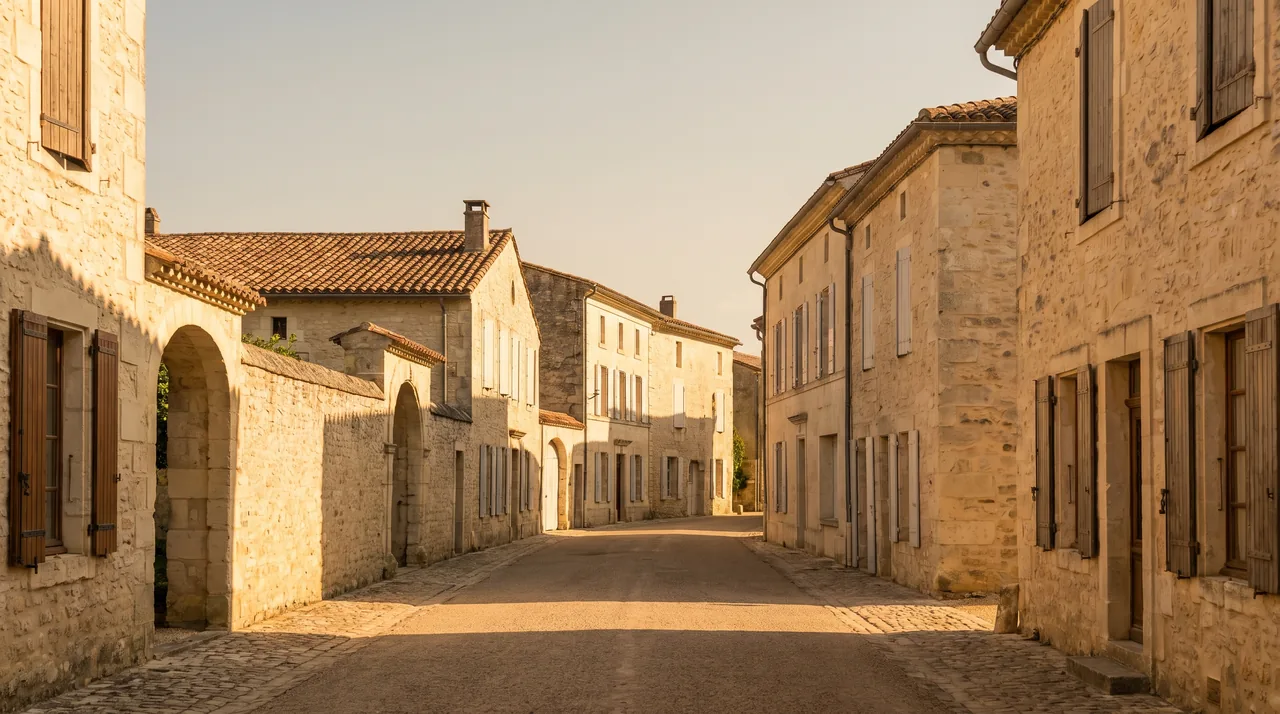
Another great asset of Cadillac is the bridge. Crossing the Garonne, you go in just a few minutes from the right bank—home to sweet wines—to the left bank, home to the Graves and Sauternes regions. On the other side of the river lie Cérons, with its own sweet wine appellation, followed by Sauternes and its legendary wines: this allows you to seamlessly combine the sweet wines of both banks in a single day. Heading inland toward Entre-deux-Mers, about twenty minutes away, the Abbey of La Sauve-Majeure—listed as a UNESCO World Heritage Site as part of the Way of St. James—is the perfect complement to a visit to the château, especially since a combined ticket grants access to both sites. Few areas in Gironde boast such a concentration of heritage and terroirs within such a short distance.
Which stages should be combined with Cadillac?
There are several itineraries to choose from, depending on your preferences. To stay on the right bank and visit a string of villages, head to Rions and its medieval walls, just a few minutes away. To compare the sweet wines from both banks, cross the bridge to Cérons, then continue on to Sauternes and its golden sweet wine. History buffs will want to add Langoiran and its fortress on the banks of the Garonne, or the Abbey of La Sauve-Majeure, a Romanesque masterpiece listed by UNESCO. All these stops are included in our itineraries starting from Bordeaux, which are easy to combine into a single outing.
| Destination | Approx. distance | Interest |
|---|---|---|
| Béguey | ~1 km (adjacent) | Reynon Castle |
| Rions | ~5 km | Listed Fortified Village |
| Loupiac | ~11 km | Sweet · Château du Cros |
| Cérons | across the bridge | Sweet Wines from the Left Bank |
| Sauternes | across the bridge | The Great Sweet Wine of the Sauternes Region |
| Bordeaux | ~43 km | ~47-minute drive |
Traveling to Cadillac from Bordeaux
Getting to Cadillac from Bordeaux is easy: it’s about 43 kilometers and a 47-minute drive. You can follow the right bank of the Garonne or take the A62, crossing the river depending on your route, through a landscape of vineyards and rolling hills that immediately sets the mood. The nearest train station, Cérons, is located on the left bank, about 2.5 kilometers away, connected by a bridge: convenient by train, but less direct for those heading to the bastide and the château. This short distance makes Cadillac an easy day trip and an excellent base for exploring the sweet wines of the right bank or crossing over to the Sauternes region.
How much does the ride cost?
The Bordeaux → Cadillac route is available starting at €87 during the day, for a sedan that seats 1 to 3 passengers. This rate is fixed and confirmed in writing before departure: no meter, no unpleasant surprises upon arrival. Surcharges apply at night, on weekends, and on holidays; for groups of more than 3 passengers, a van replaces the sedan. Extensions to neighboring villages—Rions, Loupiac, or a trip to Cérons and Sauternes—as well as transfers from Bordeaux-Mérignac Airport are quoted on a case-by-case basis, depending on the itinerary and the day’s schedule. The principle remains the same: a price known in advance, tailored to the number of passengers and the desired itinerary.
| Route | Distance / Duration | Rates |
|---|---|---|
| Bordeaux → Cadillac | ~43 km · ~47 min | starting at €87 |
| Nearby villages (Rions, Loupiac, etc.) | variable | based on a quote |
| Bordeaux Airport → Cadillac | variable | based on a quote |
Why hire a private driver?
The answer can be summed up in one word: wine tasting. In Cadillac and on the right bank, you’ll taste sweet wines and reds—often at several estates—and you might want to cross the bridge to Cérons or Sauternes. Getting back behind the wheel between wine cellars would be anything but sensible. Leaving the driving to a private chauffeur means you can fully enjoy the visits, savor every glass to your heart’s content, and travel stress-free from one village to the next along the small wine-growing roads. It also offers the convenience of true door-to-door service: you depart from your address in Bordeaux and return the same way, at your own pace, without a set schedule or the hassle of finding parking. For a relaxed exploration of the bastide and its wines, booking a ride in advance remains the most comfortable option.
Frequently Asked Questions
Where is Cadillac located?
Cadillac—officially Cadillac-sur-Garonne since 2023—is a commune in the Gironde department (33), in the Nouvelle-Aquitaine region, on the right bank of the Garonne River, in the southern part of the Entre-deux-Mers region. It lies across from the Sauternes region, located on the opposite bank. Administratively, it is part of the Langon arrondissement, the Entre-Deux-Mers canton, and the Convergence Garonne community of municipalities. From downtown Bordeaux, it is about 43 kilometers and a 47-minute drive to the southeast. The nearest train station is Cérons, about 2.5 kilometers away on the left bank, connected by the Cadillac Bridge.
What to Do in Cadillac?
You can explore Cadillac in half a day or a full day. The must-see attraction is the Château des Ducs d'Épernon, a designated Historic Monument managed by the Centre des monuments nationaux. Round out your visit with the medieval bastide and its listed gates (Porte de la Mer, Porte de l’Horloge), the Saint-Martin Collegiate Church and its ducal tombs, and the poignant Cemetery of the Forgotten. For a taste of local life, the Saturday morning market, a wine tasting at the “La Closière” Wine House, and a stroll along the Garonne River to the Eiffel-style bridge round out the itinerary. Depending on the season, festivals also liven up the bastide.
Can we visit Cadillac Castle?
Yes. The Château des Ducs d'Épernon, which is owned by the government, is managed and open to visitors by the Centre des monuments nationaux. It is open year-round, but please note the hours: outside of peak season, it is closed on Mondays, and hours vary depending on the time of year (as well as on certain holidays). The individual admission fee is around 7 euros; a combined ticket with La Sauve-Majeure Abbey costs around 11 euros; and admission is free for those under 18. Since opening hours are subject to change, it’s always best to check them on the official website, chateau-cadillac.fr, before visiting.
Did Cadillac give the car its name?
No, that’s a common misconception. The Cadillac automobile brand does not owe its name to the city in the Gironde department, but to Antoine de Lamothe-Cadillac (born Antoine Laumet in 1658 in Tarn-et-Garonne), who founded Detroit in 1701. He had taken his surname from the seigneury of Cadillac located in Tarn-et-Garonne, some 150 kilometers from the Gironde—not from the town of Cadillac on the Garonne. In 1902, on the bicentennial of Detroit, the automobile company took its name in his honor. The romance of an Antoine in love with a young woman from Cadillac (Gironde) is merely a legend, recounted in the conditional tense and unsupported by any documentation.
Cadillac or Cadillac-sur-Garonne?
Both are correct, but not in the same context. Since January 1, 2023, the municipality’s official administrative name has been Cadillac-sur-Garonne, pursuant to the decree of September 12, 2022. This is not a municipal merger, but simply a name change: the INSEE code 33081 and the territory have not changed. “Cadillac” remains the common name and is still used for the castle of the Dukes of Épernon as well as for wine appellations. Therefore, “Cadillac” is used in everyday language and when referring to the castle or the wine, while “Cadillac-sur-Garonne” is used in administrative contexts.
How much does a trip from Bordeaux to Cadillac cost with a chauffeur service?
The Bordeaux → Cadillac route is available starting at €87 during the day for a sedan accommodating 1 to 3 passengers. This rate is fixed and confirmed in writing before departure, with no meter and no surprises upon arrival. Surcharges apply at night, on weekends, and on holidays; for groups of more than 3 passengers, a van replaces the sedan. Extensions to neighboring villages—Rions, Loupiac, or a trip to Cérons and Sauternes—and transfers from Bordeaux-Mérignac Airport are priced based on a quote, depending on the itinerary and the day’s schedule.
What kind of wine does Cadillac produce?
These are two very distinct wines that should not be confused. The Cadillac AOC refers to a sweet white wine made from botrytized grapes harvested by hand through selective sorting on the right bank of the Garonne, across from the Sauternes region; recognized in 1973, it covers 22 communes but now occupies a much smaller area (approximately 58 hectares in 2023). The Cadillac-Côtes de Bordeaux AOC, on the other hand, refers to a red wine, created in 2009 within the Côtes de Bordeaux appellation, covering a much larger area (approximately 1,958 hectares). Thus, the same name is used for both a niche sweet wine and a more widely available red.
How many people live in Cadillac?
Cadillac had a population of 2,670 according to the 2023 INSEE census, a figure current as of January 1, 2026. See the INSEE source. It is best to disregard outdated figures that are still cited here and there, such as 2,818 (2018) or 2,846 (2020). Given an area of only 5.44 square kilometers, this population results in a high density of approximately 491 inhabitants per square kilometer—a consequence of the municipality’s very small size. Over the long term, the population has been declining: it stood at 3,748 in 1968. The residents are known as Cadillacais and Cadillacaises.
Why was Cadillac Castle used as a prison?
After the partial demolition of its wings in the 18th century, the castle was converted into a prison during the Restoration: the decision was made in 1818, and the first female inmates arrived around 1822. It became France’s first central prison and reformatory for women, and remained so until 1952. In 1865, it housed approximately 500 female inmates in fourteen dormitories set up in the former state rooms; nearly 10,000 women were incarcerated there during the 19th century. The Centre des monuments nationaux points out a paradox: its use as a prison likely saved the monument from ruin.
When was the bastide of Cadillac founded?
The bastide of Cadillac was founded in 1280 by Jean I de Grailly, Viscount of Benauges and Seneschal of Guyenne, at a time when Aquitaine was under English rule. It was a seigneurial settlement established on the site of Bourg Saint-Jean. Work on the fortifications, however, did not begin until 1315, and the city walls and gates were not completed until around 1366, making Cadillac a key stronghold in the defense of Bordeaux. Thus, nearly eighty-five years elapsed between the founding of the new town and its complete enclosure by walls.
Is Cadillac Castle a listed or designated historic site?
It is classified, which constitutes the highest level of protection—and not “listed,” as is sometimes mistakenly written. The castle, along with its moat and garden, has been listed as a historic monument since the 1862 list, supplemented by a 1956 decree (Mérimée entry PA00083500). Only the gate to the dukes’ vegetable garden is covered by a separate listing (1965). Note also that the reference IA33000088 refers to a study by the General Inventory and not to a designation. The bastide’s ramparts, meanwhile, have been listed separately since 1881 and 1886.
What is the Cemetery of the Forgotten?
This is the former cemetery of the Cadillac Psychiatric Hospital, which has become a memorial site. It contains approximately 900 graves and more than 4,000 people buried between 1921 and 2000, many of whom were anonymous patients of the institution. Among them is a section containing 98 “brain-injured” soldiers—World War I veterans suffering from mental disorders that today would be classified as post-traumatic stress disorder. A memorial wall was dedicated there on September 19, 2020, and the perimeter wall has been listed as a historic monument since 2010. The site can be visited via the municipal cemetery.
What is the difference between AOC Cadillac and Cadillac-Côtes de Bordeaux?
These are two appellations with the same name but that are entirely distinct. The Cadillac AOC (1973 decree) refers to a sweet, concentrated white wine made from grapes affected by noble rot, produced in 22 communes on the right bank across from the Sauternes region, on what is now a modest area. The Cadillac-Côtes de Bordeaux AOC (2009 decree), on the other hand, refers to a red wine derived from the former reds of the Premières Côtes de Bordeaux, produced across a much larger area. To put it simply: “Cadillac” on its own refers to the sweet white wine; “Cadillac-Côtes de Bordeaux” refers to the red. Confusing the two is the most common mistake people make regarding the city’s wines.
Is the Cadillac Bridge a suspension bridge?
No. It is often claimed that this is a suspension bridge, but that is incorrect: the Cadillac Bridge is an Eiffel-type steel truss bridge, which opened in 1880. Measuring 251 meters in length, it spans the Garonne River, connecting Cadillac on the right bank to Cérons on the left bank via the RD11. It is a fine example of late 19th-century industrial heritage and offers a pleasant view of the river. It should not be confused with suspension bridges, whose structure—a deck supported by cables—is entirely different.
Further Reading
- Book your trip from Bordeaux to Cadillac: a fixed-price quote confirmed in writing, door-to-door, with no obligation.
- All our destinations departing from Bordeaux: castles, vineyards, and villages in the Gironde.
- Rions: The Fortified Village on the Banks of the Garonne.
- Cérons: the little-known sweet wine of the Graves, on the other bank.
- Sauternes: Sweet, Golden Wine and Château d'Yquem.
Sources and References
- Cadillac-sur-Garonne — Wikipedia — geography, history, demographics, heritage
- Cadillac Castle — National Monuments Center — Castle of the Dukes of Épernon, prison, tour
- Cadillac Castle — Mérimée database entry PA00083500 — designated a historic monument in 1862 and 1956
- Ramparts and Gates of Cadillac — Mérimée PA00083501 — Listed in 1881/1886
- AOC Cadillac — Wikipedia — sweet white wine, 1973 decree, 22 municipalities
- Antoine de Lamothe-Cadillac — Wikipedia — founder of Detroit, after whom the brand is named
- INSEE — Cadillac-sur-Garonne (33081) — official population for 2023, area, population density, and municipal grid
Article updated on .
Our Latest Guides
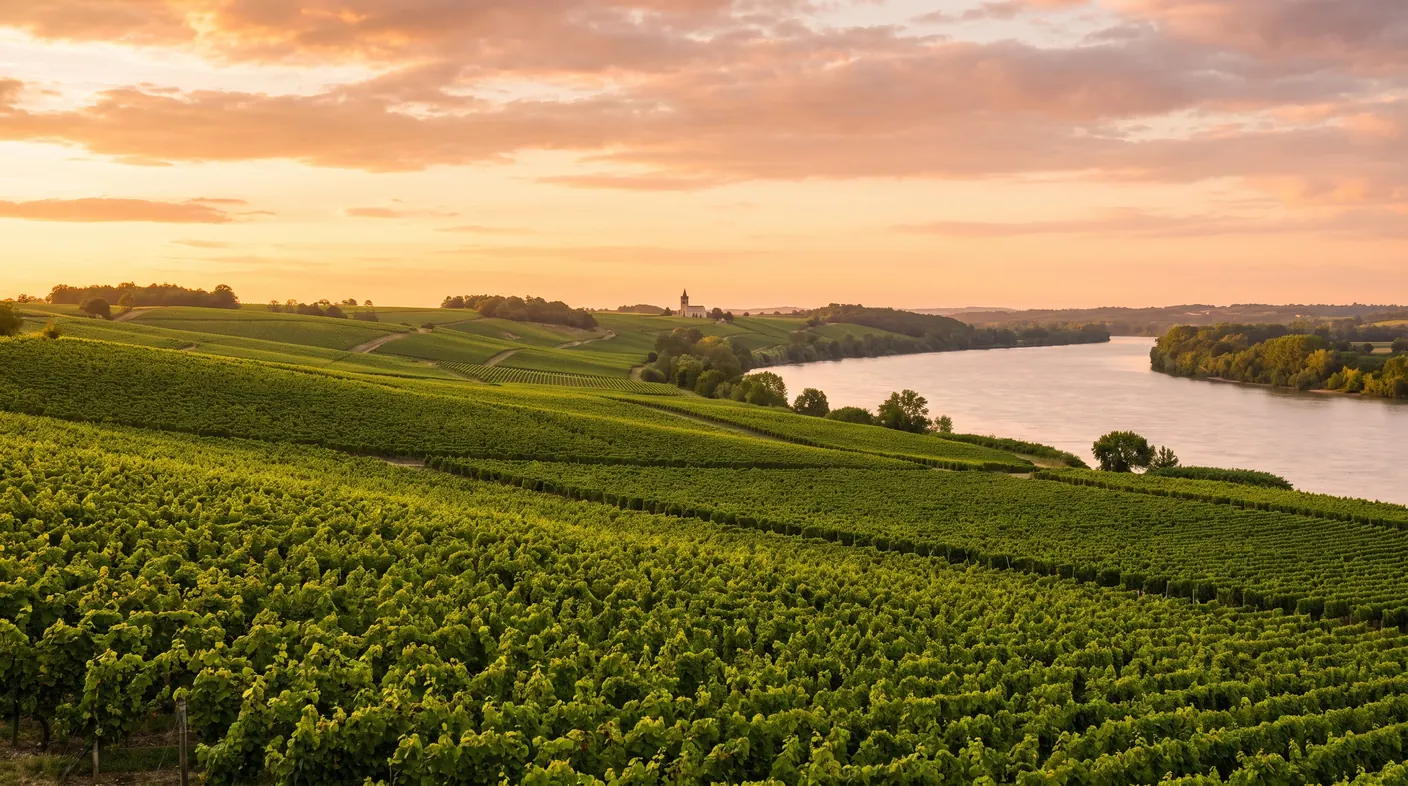
On the way to the bastide of Cadillac
Direct transfer from Bordeaux (~47 min) to Cadillac, its ducal castle, and the vineyards on the right bank. Written, fixed-price quote with no obligation.